Is this assimilation?
These tourists are shocked by what they see during their vacation in Germany — there are no Germans anywhere in this ‘German’ park. pic.twitter.com/jxFxzord9O
— iamyesyouareno (@iamyesyouareno) August 15, 2024

Is this assimilation?
Multiculturalism will (in my opinion) NEVER work when one culture believe they have the duty to kill anyone that does not hold their religious belief. This is what those that hold to “political” Islam believes. This is why many if not most “Palestinians” should not be allowed to immigrate into the West. For instance, Scotland’s First Minister is asking the Scottish people to open their door to future terrorism, plain and simple when he says they should open the door to Gaza refugees.
Now, having said that the true answer is for these people to come to faith in the Lord Jesus Christ. As the Lord said in John 14:6 ..I am the way, the truth, and the life: no man cometh unto the Father, but by me.
The following is what occurs when political Islam is allowed to operate in a once free nation!
‘Multiculturalism is meeting reality once again as Afghan refugees are making their presence known in the countries that welcomed them, and the fun is just beginning. One place that has experienced the richness and vibrance of diversity is Scarborough, North Yorkshire, England, which is a popular vacation spot. It’s easy to see why: It’s on the Yorkshire Coast in a beautiful area, and when its architecturally stunning Grand Hotel was built in 1867, it was the largest hotel in Europe. The hotel still boasts numerous attractions. It is described on Tripadvisor as “one of the town’s landmark features and instantly recognisable on the skyline,” taking “pride of place overlooking the town’s harbour and South Bay.” The description continues: “Our location is ideal in Scarborough from which to enjoy beautiful sandy beaches, promenade walks and all that Scarborough has to offer, all within a short stroll away. LIVE entertainment is available every night with our dazzling cabaret shows featuring professional dancers and entertainers dressed in stunning costumes.” A newer feature of the hotel, however, 200 Afghan evacuees, has quickly changed perceptions of the hotel. The staff, when confronted with complaints, called the complainers “racist.” But that’s an all-purpose objection nowadays, so frequently employed as to be emptied of all meaning. It’s clear that hotel guests at the Grand Hotel had plenty to complain about.
One of the hotel’s recent guests wrote:
Stayed in the hotel while working away contracting in East Yorkshire
I caught scabies and can only presume it was from this filthy hell hole
Also caught a man deficating [sic] into a carrier bag !
What the hell is going on in this hotel.
I would not stay ever again!!
What a shame that the government would do this to a seaside town
Disgrace
As revolting as it is, that bit about the carrier bag shouldn’t surprise anyone. The Wall Street Journal recently noted that new Afghan arrivals at Fort McCoy in Wisconsin were “confused and upset by hygiene practices. Every toilet on base was Western style, with a seat and toilet paper. But a number of Afghans are accustomed to restrooms that allow them to squat so they don’t have to physically touch the toilet. It led to some cases of Afghans relieving themselves outside.” And into carrier bags at the Grand Hotel Scarborough.’https://www.jihadwatch.org/2021/10/afghan-refugees-were-placed-in-a-popular-vacation-hotel-heres-what-happened
‘Author, commentator, and former Islamist Ed Husain has written a disturbing account of life among Britain’s Muslim communities. He raises serious questions about where the doctrine of multiculturalism has led us, and what the future may hold.
As Husain, points out, Muslims are the fastest growing community in Britain. While the population of the UK grew by 10.9% between 2001 and 2016, the Muslim population doubled to 3.2 million, and is projected to reach 13 million by 2050. Husain is a Muslim himself, and points out that, “The problem is not that the Muslim population is increasing: the question is what type of Islam is on the rise in British mosques” (p.4, emphasis his).
Husain travelled to ten towns across the UK to assess what the Muslim communities are like. The book’s chapters recount what he saw and found in his visits to the following towns and cities: Dewsbury, Manchester, Blackburn, Bradford, Birmingham, Cardiff, Belfast, Edinburgh, Glasgow, and finally London. In each case he visited the leading mosque and sometimes one or two other mosques. He asks questions and describes his observations and feelings. The book reads like a travel log, with a conclusion at the end.
First up is Dewsbury, the European central office of the largest Muslim organisation in the world – Tableeghi Jamaat. Tableeghi Jamaat is a hard-line Deobandi movement, and today more than half of Britain’s Mosques are Deobandi. The London tube bomber from 2005 came from Dewsbury, as did Britain’s youngest ISIS suicide bomber, and also Britain’s youngest convicted terrorist.
The main mosque in Dewsbury holds up to 4,000 worshippers – and this is just men. Women are not allowed in the mosque. The women he sees on the streets are all dressed in black, wearing Islamic face coverings. Husain argues that such uniformity of clothing is not seen in Turkey, Syria or Egypt. There are no major retail outlets on the high street, not even a McDonalds. Predictably, Husain finds hard-line literature on the role of women in the Islamic bookshop.
Having previously read the highly recommended book, The Islamic Republic of Dewsbury: A Requiem, by local born and bred newspaper editor Danny Lockwood, I was aware of the seismic cultural shift in this town over the last few decades. It appears that Husain was not. Lockwood says there are no longer any licensed restaurants or clubs in Dewsbury. Saville Town is 99% Muslim with its own particular property bubble. There is a serious drug problem too, with 98% of the drug dealers being Muslim (Lockwood p.141-42).
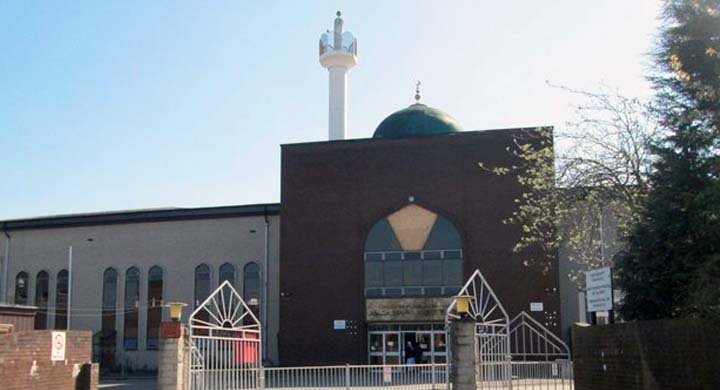
As Husain travels to other towns, they begin to merge into one in the reader’s mind. Fundamentalist literature (of the kind banned in Saudi Arabia) appears to be on sale in virtually every Islamic bookshop he finds. Several mosques do not allow women inside, but some segregate the women. In Blackburn he finds it common knowledge that Whalley Range (Blackburn) is a no-go area for whites. When he drives up and down the high street there, he doesn’t see a single white face.
Husain finds evidence of sharia courts and of women having Islamic marriages that are not recognised in UK law and which therefore offer them no protection if there is a divorce, or their husband engages in polygamy. I have written about this problem before. Husain says that some men have second wives and families abroad. In London he witnesses self-flagellation and finds there are videos of this taking place in multiple towns across Britain.
In some areas, Husain laments that “multiculturalism has now enabled monoculturalism.” I have written before about multiculturalism – an ideology that is opposed to objective moral values, and therefore anti-Christian. Husain is right to point to its disturbing and paradoxical fruit. In his conclusion he notes that there is a growing communalism amongst Muslims in the UK whereby they identify primarily as Muslim and then in an increasingly political manner. He also notes the alarming “spread of caliphism as a social and political aspiration, on the grounds that Britain is flawed and failing” (p.288).
Hussain asks:
“What will happen when Birmingham or Bradford have a Muslim majority and organised caliphists hold the balance of power? Does the city begin by banning alcohol sales, using council funds to remove statues offensive to monotheism, enforcing new school uniforms for girls that exclude short skirts, banning nightclubs and gay bars, or making Fridays a local holiday for communal prayers?
“Caliphism and clericalism are sequestering an entire community away from meaningful contact with mainstream Britain. The cordon sanitaire around many minds will become solidified unless we change course.” (p.289)
Husain concludes by suggesting that we should celebrate six defining traits of British culture. These are: Rule of Law, Individual Liberty, Gender Equality, Openness, Uniqueness, and Racial Parity. Husain notes: “These six qualities are also the outcomes of a Protestant Christian ethic that has moulded today’s Brits” (p.298). He is right about this, but without the Christian foundation from which they were built, these qualities are already crumbling around us. The doctrine of multiculturalism entails an abandonment of these values since no one culture can be seen as any better than another.
Events at Batley Grammar School took place after this book was written. The teacher who showed a cartoon of Muhammad in a lesson about blasphemy remains in hiding to this day. This must be the most powerful lesson ever taught by the school. Everyone now knows that we have a de facto Islamic blasphemy law in effect. Break it and you end up in hiding. Even worse, there was a conspiracy of silence about this by all the mainstream candidates in the recent by-election. None of them spoke up in support of the teacher. They don’t want to risk offending the Muslim voters.
What’s happened in Batley is a parable for the nation. As the Muslim population grows, so does its political influence. Before long, all the mainstream politicians will be desperate to win Muslim votes and will therefore avoid saying anything critical of Islamic practices or culture. Unless there is a dramatic shift, we are on the road to an Islamic Britain. Only a revival of Christianity can turn us off that track and take us to a better future.’https://christianconcern.com/resource/islamic-monocultures-the-fruit-of-multiculturalism/
Dr. Boys sure knows how to STIR the pot!
‘Daegan Miller’s This Radical Land is said to be “an outstanding literary achievement”; however, that can’t be true since it is based upon a whopper. The reader is told, “we are reminded of the true origin story of the American landscape: we all live on land stolen from Native people.”
Afraid not. That is fake history to make snowflakes feel good.
Another writer referred to white men who “took over their [Indian] world,” but where did he get the idea that this world (America) belonged to the Indians? There is an abundance of evidence that today’s Indians replaced another group altogether. How far back must we go to be highly principled—doing the right thing?
However, let’s assume the commonly held belief that the Indians were the original occupiers and “owners” of the land until we choose, at another time, to get into the almost unknown, undesirable, and unpleasant details of prior ownership.
Merely living on the land does not confirm ownership. This issue is the most important factor in the discussion. Riding on horseback across land does not confer or confirm ownership. The land is “owned” when occupied by families in homes and is controlled, defended, tilled, and fenced.
After expulsion from the Garden, God told Adam and Eve that in the future, they and all ancestors would have to live by the sweat of their brow. God was saying, Adam, this is your new home, and as punishment, you will live by the sweat of your brow to produce food to keep your family alive. You will have to fight the bugs, beetles, briers, and brambles until you return to the ground from which you were taken.
Englishman John Locke lived in the 17th century and agreed with God. Locke is known as the “Father of Liberalism,” who greatly influenced the French and American Revolutionary leaders. He argued in the late 1600s in his Second Treatise of Government that God gave the earth for man’s common good, but land can only be “owned” when a man’s labor, which obviously belongs only to him, is mixed with the land to improve it. That would be removing stones, swamps, trees, and other obstacles. It would involve building a home or other structures on it. The land would be his when he tills the ground, plants seed, and brings in a harvest.
Locke taught that each person has property in his own person—that is, each person literally owns his own body. With that body, he can acquire or own property by using his body to improve the land. That means a man purchases land not with silver but with the sweat of his brow.
With that accomplished, the land is his. He has put himself into the land. He has removed it from common property and made it his by working it with his own hands.
Locke lived when the king claimed a divine right to rule everything and everyone, and the king owned everything. The land was held by tenants who used the land and served in the king’s army when needed. The tenants had sub-tenants who actually worked the land, but the king owned everything.
After 1492, Spain and Portugal started making outrageous ownership claims throughout the Western Hemisphere. They claimed vast territory that they had not seen and had no plans on settling. Pope Alexander VI stepped into the morass, hoping to untangle the knots by dividing the hemisphere between Spain and Portugal. Of course, Alex had no authority to deal with international and national land claims. Unless a nation built a substantial permanent settlement on the land they claimed and were willing and able to defend it, a claim meant little to nothing.
On the North American continent, the various Indian tribes made the same bogus claim as European kings about owning the land.
The same principle of land ownership applicable to our world would also apply to the Moon or Mars. Who can claim ownership of either? The first nation that landed on the Moon was America, followed by Russia and Japan; however, landing there could not justify ownership. However incredible it was, only a fool would suggest that success could qualify as ownership.
If a nation lands on the Moon, it must explore the land, erect buildings, build streets, water systems, power stations, and produce breathable oxygen from the soil and rocks since there is no breathable atmosphere. Oxygen on the Moon is abundant, but it is very difficult to become usable to men. There is more than 40 percent oxygen on the Moon’s mass, but the soil and rocks must be heated, thereby forcing oxygen to emerge so it can be useful to humans. Various scientific entities are looking at different ways for extracting oxygen from Moon rock, so researchers are examining potentially cheaper ways to produce oxygen on the Moon.
NASA scientists have many ideas about how to extract it. Simply heating lunar soil to a very high temperature causes gaseous oxygen to emerge. Or, they can collect the rocks and “either treat it with chemicals or blast it with heat, and you can free up unlimited quantities of oxygen both for breathing and for rocket fuel.”
The first nation to make the Moon livable can claim “ownership” to that portion of it.
The Indian tribes who fought for “ownership” of the land could not legitimately claim ownership only because they rode across the land on horseback or claimed to have been the first men to occupy the land. Furthermore, they believed if any land was not used or occupied for a year or more, anyone could claim it. War between Indian tribes was almost constant because they believed that the stronger tribe had a natural right to subdue the weaker ones. Fighting was a way of life for Indians. They kept resisting the Whites because to admit Whites were stronger was to admit the white man’s right to occupy the land the Indians had traditionally used.
Unquestionably, the Indian/White conflict about land is a mixed bag. There was a clash of cultures and disagreements as to right and wrong. Moreover, there were many failures and massacres on both sides, with numerous treaties made and broken by each group. Fools and bigots claim that it was the Indians’ fault, while others declare it all the fault of Whites.
According to Indian law, the white men owned the land because they were stronger and could hold it by force. Of course, white men were not bound by Indian law, but they are bound by discovering (or claiming) land, removing the stones, trees, and debris, building homes, barns, and corrals, farming and fencing it.
Early Americans “bought” the land by their own sweat. They didn’t steal it from anyone.’http://donboys.cstnews.com/native-american-indians-did-not-own-land-because-they-rode-across-it-on-horseback
 | Elise on NY Times Warns Companies From… |
 | Martin on School Boards, Hot Mics &… |
 | pacanter7 on Creation News and Views Januar… |
 | Scriptural Vision on Climate Change & Community… |
 | crisscross767 on Prophetic Signs in the He… |
 whatyareckon