
Stars
All posts tagged Stars
Genesis 11:9
“Therefore is the name of it called Babel; because the LORD did there confound the language of all the earth: and from thence did the LORD scatter them abroad upon the face of all the earth.”

‘Sometimes, as I research these Creation Moments, a headline screams to be noticed even before I have read the article concerned. One such headline that I noticed declared: “Prehistoric cave art suggests ancient use of complex astronomy.” There are so many presuppositions in that headline. The first is the use of the word prehistoric. The word historic refers to the timescale of human beings, so prehistoric implies something from before there were human beings on the Earth. However, the Bible does not allow for any prehistory – well, except perhaps 5 days. What the headline is getting at is that the art it is about to describe was supposedly done by creatures that were not fully evolved into human beings. Secondly, the headline refers to “complex astronomy”. The astronomy concerned should have been too complex for these primitive cave men.
Researchers from the University of Edinburgh, examining yet again the cave drawings at Lascaux, France, determined that these early people understood the precession of the Earth’s orbit, and an ancient comet strike.
We have discussed before that the reason these people were living in caves is not because they were primitive, but because they had only just arrived at the area, having migrated after the Tower of Babel incident. The drawings show how highly civilized they were, and their knowledge of complex astronomy confirms this. These astounding examples of cave art and science are fully understandable within a biblical worldview, whereas those using an evolutionary worldview are constantly taken by surprise.’https://creationmoments.com/sermons/astronomy-in-the-petroglyphs-2/?mc_cid=7acb646fb9&mc_eid=00c1dcff3c
 |
| OUT OF THIS WORLD! Did you know that the moon is moving away from us? When astronauts went to the moon, they left mirrors on the surface so that laser light could be sent to the moon, bounce off the mirror, and return to the earth. We can measure the time this round trip takes so accurately that the exact distance to the moon can be measured within a fraction of an inch. The moon is moving away from us at about 2 inches/year (called lunar regression). This means the moon is getting farther away each year, and as we go back in time, the moon was closer to the earth. At this measured rate of recession, the moon would have been touching Earth less than 2 billion years ago. It is commonly taught by evolutionists that the moon exists because material spun off of the earth as it was forming about 4.5 billion years ago. Astronomer Edouard Roche long ago calculated that from Earth’s surface to 11,500 miles out, any object would be torn to pieces by Earth’s gravitational forces. Therefore, the belief that the moon came from material originating from the earth has enormous problems because it would have been torn to pieces. Also, if the moon were truly 4.5 billion years old, it would be much farther out in space than the distance we see today. God created the moon on Day 4 less than 10,000 years ago – which means it has only moved a mere ½ mile since creation. The simplest explanation is that the moon is not that old. The moon’s distance from Earth testifies that it is young. “The belief that the moon came from material originating from the earth has enormous problems”https://mailchi.mp/435ebacf7a37/not-of-this-world?e=8233d90bcd |
‘Sometimes when you are standing outside on a dark night, you may see a “shooting star.” But, is it really a star? NO! It is a random space rock speeding through our atmosphere, burning up with tremendous frictional heat, causing light to streak across the sky. If it is a large enough chunk of rock, it will not entirely burn up, but hit the earth and make an impact crater. How many impact craters are here on Earth? It is estimated that there are about 100. How many impact craters are on the moon? There are 5,185 moon craters that are more than 12 miles across, but if you count the craters less than one-half mile in diameter, it brings the total to about one million! Why are there more craters on the moon than on Earth?
Earth has an atmosphere that burns up space rocks; the moon does not. Without our atmosphere, rocks could be routinely plummeting through our homes at night. Fortunately, our atmosphere is almost 50 miles thick, and as space rocks encounter it, friction is produced, and rocks are disintegrated. Did our atmosphere develop by chance over millions of years? If so, we should find billions of meteorites buried within the rock layers of the earth. We do not. Our atmosphere was set up from the beginning to protect life on Earth. It did not happen by accident and chance; our atmosphere was created by God to protect us! So as you “wish upon a falling star,” thank the One who made it all possible.’ From an email sent by http://www.searchforthetruth.net/
Genesis 1:16 “And God made two great lights; the greater light to rule the day, and the lesser light to rule the night: [he made] the stars also.”

‘Let’s say that you drop by a friend’s house, and you find her at one end of the kitchen with a sponge mop in her hands. Three-quarters of the kitchen floor is wet. That picture provides you with a type of clock. You know that she has been mopping the kitchen floor for awhile and is nearly done.
It’s much the same in space. There is a great deal of dust in between the Earth, the moon, all the other planets, and the sun. However, you won’t need to send your friend with the mop to clean it up because the sun and planets slowly sweep this dust from space. If you have ever seen a meteor or “shooting star” streak through the night sky, the bright trail was probably made by a particle no larger than a grain of sand. The Earth was doing its part in the solar system’s ongoing janitorial work. Yes, some of this space dust actually ends up in our homes!
Unlike what often seems to be true in our homes, there is a limited supply of dust in space. It is, however, still a huge amount. Like your friend’s kitchen floor, we might get an idea of how long the Earth, the sun and the other planets have been around by finding out how much of that dust has already been cleaned up. According to scientists’ own figures, our Earth and the rest of the solar system could not have been around more than 10,000 years!
This is such a mystery to scientists who believe that things are billions of years old that some have even suggested that this dust doesn’t follow the laws of physics. However, this is no mystery to those of us who know that the Bible provides for only about 6,000 years of Earth history – and therefore only about 6,000 years of space dust janitorial service!’https://creationmoments.com/sermons/a-janitorial-service-in-space-2/?utm_source=rss&utm_medium=rss&utm_campaign=a-janitorial-service-in-space-2&mc_cid=c2038361e4&mc_eid=00c1dcff3c
Psalm 8:1
“O LORD our Lord, how excellent is thy name in all the earth! who hast set thy glory above the heavens.”
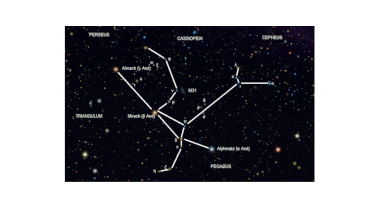
‘There are a number of blurry, indistinct, cloudy-looking objects in the night sky which are not pinpoints of light as the stars are. One hundred ten of these are the so-called Messier objects, which were cataloged by one Charles Messier – a French astronomer who lived from 1730 through 1817. These are a mixture of objects. Some of them we would now call nebulae – quite literally, nebulous clouds of interstellar dust and gas. Examples of these are M8 – the Lagoon Nebula in the constellation of Sagittarius, and M42 – the famous Orion Nebula. Others are star clusters, such as The Pleiades, in Taurus – an object mentioned in the Bible, which is cataloged as M45. Still others are actually other galaxies, such as M104, the Sombrero Galaxy, or M31 – the Andromeda Galaxy.
Why did Messier catalog such a wide variety of different objects without commenting on their differentiation? The answer is that he wasn’t actually interested in those objects. He cataloged them, rather, as a police officer catalogs data from a possible suspect in order to eliminate them from the inquiry. Messier was interested in comets – which also, from a distance, look like blurry objects. The difference is that comets, being Solar System objects, move from night to night, whereas his cataloged objects appear fixed relative to the stars.
The Hebrew word for star includes what we call stars today and other objects, such as Messier’s objects. All were made by God and declare His glory.’https://creationmoments.com/sermons/not-comets/?mc_cid=2e23f5c024&mc_eid=00c1dcff3c


