
Received text
All posts tagged Received text
“The Trinitarian Bible Society is pleased to present a documentary on the life and work of Franz Delitzsch, a scholar and a friend of the Jews, who translated the New Testament into Hebrew. From 2010 to October 2025, we revised Delitzsch’s New Testament, bringing it into closer conformity with the Greek Received Text and presenting it in a more accessible form of Hebrew. We give thanks to the Lord that this project has been completed.”
Delitzsch’s conversion
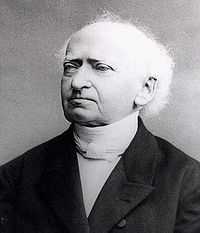 “One of Delitzsch’s friends, a man named Schütz, had a great concern for Delitzsch’s soul. Schütz had a great love towards Christ, and longed for Delitzsch to be delivered from the dangerous rationalism in which he had immersed himself. Delitzsch resisted for a long time, but then Christ delivered him. He later wrote,
This very day I could point out the place (in one of Leipzig’s) streets where a light from above put me into the same state as Thomas when he exclaimed ‘My Lord and my God!’ Henceforth I became a theologian, and familiar with students who had been awakened by the mercy of God … the years from 1832 to 1834, my last three years at the university, were the happiest of my life; they were the spring of my spiritual life, the days of my first love.”
This is a podcast from the Trinitarian Bible Society defending the continued use of the Authorized Bible/King James Bible.
This article/video argues that John 5.39 in the Authorised (King James) Version correctly begins with the imperative ‘Search the scriptures’, rather than the indicative ‘You search the scriptures’ found in modern versions. Through careful analysis of the Greek grammar, context, and doctrinal implications, it contends that the imperative is the correct translation, Christ’s intent, and the Bible believing principle of sola scriptura.
Most of the modern versions either omit or place in brackets the last few words of John 5 verse 3 and the whole of verse 4, and it is often asserted that these words are of doubtful authority or that they are spurious. However, the evidence makes it quite clear that in the majority of the copies and versions over a wide area retained the disputed words as an authentic part of the inspired text.


