
Lord Jesus
All posts tagged Lord Jesus
‘The old saying is that men never learn from history, with the addition that those that do learn from history are doomed to stand by and watch it repeat itself. Mark Twain said that history doesn’t repeat itself, but it does rhyme. Regardless of your opinion on the repeatability of history, as we already saw in Part 2, the church itself follows a certain cycle that appears to be unbroken since the first century. It’s not very likely for that to change any time soon.
The Inverse-Square Law
Growing up I loved listening to Kent Hovind’s Creation Science seminars. I still remember distinctly his description of the inverse-square law and how it pertains to orbital mechanics, specifically as part of his theory on the Flood and the collapse of the theorized ice canopy that may have surrounded the Earth before the Flood. Simply put: the closer an object approaches to a mass, its gravitational velocity is affected inversely-squared proportionate to its distance; moving the moon 1/3 of the distance closer to the Earth would increase its gravitational pull 9 times (32). Hovind’s application was (is) a comet that struck the ice canopy and collapsed it onto the poles, the comet’s velocity being increased exponentially as it approached the Earth.
I can just imagine the reader scratching his head, wondering what in the world this has to do with anything. Never fear: I shall explain.
As a premillennialist/pre-trib dispensationalist, I believe in a precipitated decline of everything before a catastrophic apocalypse, preceded by a “rescue” of Christ’s church. It’s not “escapism” as such since the church has endured and will endure any amount of tribulation as a sign of her faithfulness, yet “The Tribulation” as an event is for Israel, not the body of Christ. After all, it’s called “the time of Jacob’s trouble,” not the church’s trouble. As we approach this “event horizon,” it would appear that the processes and cycles seen throughout church history are accelerating. Here I offer two examples as observed personally.
Peter Ruckman is widely held to be one of the staunchest proponents of the King James Bible, as well as pre-trib premillennialist moderate dispensationalism. His work sparked a movement that started Bible institutes on just about every inhabited continent, published hundreds of books, some of which have been translated into multiple languages, and sent hundreds if not thousands of pastors and missionaries into the ministry. He himself fleshed out the very cycle that we are discussing, as quoted in Part 2. So, why is it surprising to anyone that the “ruckmanite” movement has evolved into the machine that spits out identical clones, something that Dr. Ruckman himself denounced vehemently, and (I have it on good authority) the leadership at Ruckman’s former church (Bible Baptist Church of Pensacola, Florida) dislikes even the mention of the “cycle” that Dr. Ruckman himself warned of? While the Pensacola manifestation of this process hasn’t reached the point of creating a bronze-cast statue of the founder or a three-story mural of the deceased pastor and his wife complete with cases of their favorite soft drinks left as an offering, the reverence with which Ruckman’s positions, teachings, and even attitudes are held has created its own kind of “monument” in the Florida Panhandle and in the “ruckmanite” camp around the world, all within the span of a few decades, especially during Bro. Ruckman’s decline at the end of his life.
More recently and even more visibly, Steven Anderson made a name for himself using social media, railing on homosexuals and forging a patented brand of theology including aspects of antisemitism/anti-zionism, calvinistic replacement theology, post-trib “anti-dispensationalism” (clearly misunderstanding that premillennialism is itself a dispensational position), his “reprobate” theory, and other bizarre private interpretations of the scriptures, all with a view to generate friction and create notoriety for himself. With the help of a professional video producer, he created “documentaries” slyly promoting his strange doctrines, even going as far as titling the Arabic translation of his film Marching to Zion as The Lies of the Jews. However big his following at one time, he quickly splintered his movement into numerous factions thanks to a series of “excommunications” and executive decisions about churches established under his ministry. Many of his former allies have distanced themselves from him, especially after an attempt to hide some abuse by members of his own family. Others fled his authoritarian-style grasp and started churches espousing various false doctrines from modalism to teaching that salvation can be “lost” by ceasing to believe on Christ (as if it were the individual’s faith that saved him). This particular cycle-within-a-cycle had a very short lifespan, basically petering out within a decade of its inception.
While previous manifestations of this cycle have dragged on for decades or even centuries, more recently they appear to have a more rapid lifespan, exhausting themselves quickly. My pet theory is that it’s a spiritual “inverse-square law” leading up to the catching away of the church, where heresy becomes more common even among believers as the great falling away accelerates. After all, Christ did warn His followers about being deceived in the last days, and we are certainly getting close to the end, so it stands to reason that deception would be on the rise.
Just Another Brick in the Wall
When the younger fundamentalists started leaving churches and the “Recovering” moniker was adopted, I had some hope that this movement would be different, and that churches would start seeking a move of the Holy Spirit. Unfortunately, my cynical side won that wager. There are undoubtedly many sincere believers that are truly seeking a recovery, whether from the frequent abuse in churches, or to figure out what is real as opposed to the religious fakery that is so rampant in churches today. Yet just as we see throughout church history, the sincere are promptly overshadowed by the ambitious, and the progression of the cycle can only be delayed, not prevented.
In this case, the “Family” that grew up around the various anonymous Twitter parody accounts and moved to a Facebook group started to feel a lot like the very “fundamentalism” that these participants had left. Getting kicked out of the group without notice or appeal has become a common occurrence, while the leadership have assumed a kind of control that is little different from any authoritarian religious movement out there. When Eric Skwarczynski, the founder and host of the Preacher Boys Podcast, announced that he no longer considers himself a Christian, the reaction from both sides of the “Recovering” discussion was about what you would expect. While some aspects of the response were measured and reasonable, others bore the distinct markings of the us-vs-them division so common among fundamentalist churches.
Eric’s defection would require its own series of articles to address, and that’s something we have no interest in doing. Suffice it to say that after detailing scores of instances of abuse, cover-ups, manipulation, and obfuscation in Baptist and evangelical churches, he decided that he had had enough and renounced his faith. We could talk about John 6:66 or apostasy in general, but the reality is that the behavior of professing Christians led this man to renounce his faith. He will give an account of himself to God at some point. What is truly at issue here is the system that he saw, the filth that he exposed, and the results of his experiences, both at the hands of “fundamentalists” and the “Recovering” crowd.
Of course there were responses; what else is a podcast good for? Instead of focusing on the church’s responsibility for Eric’s apostasy, The Church Split decided to argue moral standards, saying that an atheist or agnostic has no authority, lacking an objective moral standard. The point is valid, but irrelevant to the topic at hand. What is at issue here is the same issue that caused the “Recovering” group to head out in the first place: the body of Christ is in direct disobedience to its Head. As a result, the church has no objective moral standard now, since her behavior is diametrically opposed to the commands that Christ gave us to love one another.
There is absolutely a place to oppose false doctrine. It is certainly necessary to warn against apostasy. Objective morality is without question a fundamental issue. However, Eric’s departure was due to the failures of the church. Again we refer to John 17:
20 Neither pray I for these alone, but for them also which shall believe on me through their word;
21 That they all may be one; as thou, Father, art in me, and I in thee, that they also may be one in us: that the world may believe that thou hast sent me.
Christ’s prayer to the Father indicates that our role in this world as Christ’s body is to give evidence of Christ’s authority as the Son of God. Simply put: if people don’t believe in God, it’s the church’s fault. You don’t have to like it, but those are Christ’s words on the matter. Eric’s apostasy is ultimately the church’s fault. But since it’s easier to call for someone else’s head than call for repentance within our own “camp,” we see the standard response: finger-pointing and the blame game. How is this different from the hated “fundamentalists”? How is it not hypocritical to point at Tony Hutson’s carryings on or John Hamblin’s vapidity, while in turn blasting a victim of the church’s REBELLION against her Saviour? No, Will and Brian aren’t attacking Eric’s dress standards or the length of his hair, or the music he listens to; yet the end result is the same: ignoring the root issue to point fingers at the fruit of the problem. Granted, their treatment of the situation is nowhere as “cringe” as the typical IFB pastor’s response to an internet sensation, but it still misses the root issue completely. Eric’s problem isn’t that he’s logically inconsistent: Eric’s problem is that the church is logically inconsistent. As he stated in an interview with Jimmy Hinton:
My faith has been hurt very deeply by, again, not by Hollywood or rock stars or all the people I was told were the threats. Like, for me, you know, I struggle to see people who claim to be transformed by the Holy Spirit, living in a way and acting in a way, covering for things in a way, that far exceeds what I see happening in places like Hollywood, or places like, you know, places like secular places that I was warned about. And so for me, you know, it’s affected my ability to believe in there being some radical, transformative “power” to this.
I totally understand Galatians 5:16-17. I get it, the “in Christ” of 2 Corinthians 5:17 is the saved person’s spirit added to the body of Christ. I know all the doctrines; that’s not where the issue is. The issue is the part about walking worthy of our Saviour. It’s the practice, not the doctrine. How can a person behave like a lost person, or even worse than a lost person, all the while claiming to have the Holy Spirit residing inside of him? How can churches ignore child rapists in their ministries, cover up for serial adulterers, and fellowship with peeping toms, all the while pointing fingers at Harvey Weinstein and Jeffrey Epstein? Eric’s point is absolutely correct: the gospel calls for repentance, something that has been thrown out the window in IFB churches in exchange for bigger ministries, larger bus routes, and more “conversions.” We see the fruit of this cheap, flippant approach to God’s holiness: a church that is poor, wretched, miserable, blind, and naked.
Eric Skwarczynski grew up in IFB churches and left because of the hypocrisy. Unfortunately, that hypocrisy didn’t disappear once he stepped outside of the circles in which he grew up. While it may seem attractive to point fingers at the other group, everyone that claims the name of Christ is equally responsible for the way in which He is portrayed. The “Recovering Fundamentalists” aren’t the enemy, the “IFB” aren’t the enemy, and Eric or lost people aren’t the enemy. Do you want to know who the true enemy is? Let’s ask the apostle James:
James 4:4 Ye adulterers and adulteresses, know ye not that the friendship of the world is enmity with God? whosoever therefore will be a friend of the world is the enemy of God.
When you do the world’s work for them and distract from God’s glory, you become the enemy of God. When Eric is discouraged and walks away from the faith, it is the church’s fault, and instead of attacking him, we need to take some time to look inward and see where we went wrong. Our bickering, dissension, backbiting, and overall disobedience is doing the devil’s work for him.
All These Lives
I am still an independent Baptist. I believe the doctrinal positions espoused by the Baptists to be closest to the Bible in any organized group of churches in the world. I have no intention of changing my position or taking “Baptist” off of the name of any churches that the LORD sees fit to allow me to plant in my field of service. As such, it’s important to take stock of our situation as believers and make sure that we truly are following the scriptures as we claim to do. If our wake is littered with broken families, bitter wounded, and discouraged former believers like Eric, then we can only assume that we missed something somewhere; it’s certainly not the Bible’s fault.
Let’s look at an example from economics. “Capitalism” has become a dirty word in politics and the legacy news media, and is constantly blamed for everything that might possibly go wrong in any country with even a modicum of economic freedom. Of course, the real problems are caused not by capitalism which is simply the free exchange of goods and services, but instead are caused by corporatism which is the interference of the state (government) in commerce, preferring certain corporations over others. There are all sorts of issues that arise once the state begins to regulate business: regulatory capture, the use of regulations by established companies to prevent competition from entering the marketplace; lobbying, purchasing preferential treatment from politicians; and collusion, establishing virtual monopolies with government assistance, are among the many tactics used by entrenched corporations to use the power of the state against the consumer.
When these tactics are employed, immediately the socialists condemn “capitalism” as the culprit and insist that more government intervention is the solution, ignoring that it was government intervention that created the issues in the first place. Ultimately, it’s not actually “capitalism” that caused these problems, but it is always the scapegoat.
Let’s apply this truth to the church. The “church” is a called-out assembly of believers, assembling for the purpose of the One that called her out of the world. The “church” is never a construction, a 501(c)(3) corporation, a convention, or a “camp,” yet these are always what the world perceives as “the church.” Therefore, when those organizations that call themselves “churches” hurt others, lie, steal, manipulate, or misrepresent Christ, it is unfortunately Christ’s body that is blamed, even if that body wasn’t even involved.
It is not Christ that does these horrible things, yet He gets blamed for them. Much like Nathan told David:
2 Samuel 12:14 Howbeit, because by this deed thou hast given great occasion to the enemies of the LORD to blaspheme, the child also that is born unto thee shall surely die.
There is a price to be paid when Christ is reproached by our sin and wickedness. When churches cover up and marginalize sexual abuse in the pulpits, when spiritual abuse is the norm in churches, and when those who hold the truth do so in unrighteousness, Christ is dishonored and there must be a reckoning.
Conclusion
The answer is not nor has it ever been to split or separate from the body of Christ, form a new denomination, start a new movement, or attempt to distance ourselves from the problem by claiming independence. Yes, we’re independent Baptists, but we’re still in the same body and we will still stand before the Judgment Seat of Christ alongside every other believer regardless of what name was on the church sign (or if they even had a church sign). We’re all in the same boat together, and Christ’s command that we be as one in Him is still valid, even if your brother uses the wrong Bible version.
Unfortunately, sin in the camp will eventually affect everyone, just like with Achan and Ai. The 36 dead at Ai had obeyed God’s commands perfectly; they hadn’t stolen anything from Jericho: Achan did, and he survived the battle just fine. His sin affected others, and the LORD withdrew His hand of blessing and protection from the entire nation. As with Daniel’s prayer, a collective repentance is required before we can expect God’s blessing on our churches.
Daniel 9:5 We have sinned, and have committed iniquity, and have done wickedly, and have rebelled, even by departing from thy precepts and from thy judgments:
6 Neither have we hearkened unto thy servants the prophets, which spake in thy name to our kings, our princes, and our fathers, and to all the people of the land.
Even though Daniel himself was a godly man, he recognized himself as being part of the problem. We will never see God’s blessings on us until we realize that WE are the problem and repent.’https://www.kjvchurches.com/recovering-part-5-more-of-the-same/
If you have read the “About” me for this blog you know I am an independent Baptist. I was saved (accepted the Lord Jesus Christ) when I was a very young lad through the ministry of an independent Baptist Church where I also followed the Lord in baptism and heard some good preaching from His Word. However, having now walked with the Lord these many, many years I have seen a lot of “things” within “Christianity” that did and do bother me. Today, I came across the following and thought I would share it with you. This is only the first Part so i will share the others later.
‘Over the last few years there has been a significant movement to rethink “fundamentalism,” a term often applied to churches that would qualify to be listed in our database here at KJV Churches. Largely driven by younger believers, mostly Millennials, this movement has questioned many of the positions and attitudes held by a number of prominent figures who purport to hold to “Old Time Religion” or the “Old Paths,” and without a doubt there are many valid questions and rebukes necessary in many sectors of “fundamental” Christianity.
In this series, we intend to deal with a number of the real issues that should be addressed with regard to the supposed “Old Time Religion” and “fundamentalism,” but at the same time it is our desire to inspect the attitudes displayed by the “Recovering Fundamentalist” movement. As with most things, there are ditches on both sides of the road, and while a strong argument can be made against the traditional model that frequently covers up sin, overlooks abuse, and welcomes “fallen” men while ignoring and blaming the victims, we must be careful not to allow a knee-jerk reaction that will result in the same rotten attitudes, ungodly spirit, and combative approach that is many times the fruit of the “fundamentalists.”
Meddling Millennials
The generational divide between the majority of the church leadership, made up of Generation X and Baby Boomers (of disrespectful “OK, Boomer” fame), and the up-and-coming Millennials, the generation to which this author belongs, has been the cause for a lot of conflict. We Millennials have a very different approach to certain things which makes us appear to be a threat to many people, especially those who appreciate their authoritative positions and perceive any question as a threat or assume that any disagreement is an attack. The older generations must understand that a person presenting a question is not necessarily seeking to supplant whoever is in authority. Often it is done in a spirit of reconciliation, hoping to correct a wrong, perceived or real, and to restore respect for whoever was in error. Simply put, most Millennials aren’t interested in sweeping things under the rug, regardless of the consequences.
My generation experienced the Internet as young people, so we remember the days before instant, worldwide communication was possible even though many of us met our spouses and best friends online. We’re the pre-Internet generation that has in a very real sense shaped the Internet as it exists today. Our unique experiences have created a group of people, from 25-40 years old, that believe that respect is earned and can be lost, authority does not automatically deserve respect, and that age does not automatically mean wisdom (Job 32:9) when it departs from the word of God. As a result, our generational perspective does not automatically follow that of our predecessors. We are more likely to investigate a man’s character and testimony, and not just assume that he was a great man because he was a “great soul winner”. We’ve seen too many “great men” go to prison to assume that large numbers of “conversions” or a big Bible College are the marks of spirituality.
Personally, I’ve long since stopped identifying with men or movements, since many that I respected as a child turned out to be problematic, to say the least, once I reached adulthood. It’s true that there are Biblical commands to respect those that have positions of authority, but all too often the warnings and responsibilities of those tasked with those positions have been ignored, while the man in question hides behind a “man of God” moniker and rejects all criticism as an attack on “the ministry.” I don’t even know how many times as a child that I heard my pastor preach grave warnings about speaking out against the pastor (him, of course), talking about she-bears, lightning strikes, and leprosy attacks, as if he himself were Elisha, Elijah, or Moses. Another shocking recollection is of the pastor (same man) claiming that the church funds were low because he had chosen not to receive his salary, and that God wasn’t blessing the church as a result.
It is the unfortunate reality of modern “Christianity” (“Churchianity” is much more accurate, since it’s more about the “church” than it is about Christ) that those in places of authority heartily accept the “benefits” that come with being the CEO of a government-recognized 501(c)(3) charity, yet ignore the stern warnings in the Scriptures about how to deal with God’s flock (Acts 20:28-29; 1 Peter 5:2-3; 2 Peter 2:3; Hebrews 13:7, 17, etc.). Too many pastors have assumed the right to skin God’s sheep at will, abusing Christ’s flock and manipulating the LORD’s heritage for their own benefit, be it physical (just look at the average BMI of Baptist pastors), monetary, or spiritual, seeking the preeminence that belongs exclusively to the LORD. Now, lest the reader assume that fingers are being pointed at Generation X or the “Boomers,” allow me to clarify: this danger exists in any generation, for any pastor, who ignores the scriptures and seeks his own benefit instead of that of the body of Christ.
Assuming anyone is still reading at this point, there may be some anger in that so far nothing has been said against those meddlesome “Recovering Fundamentalists.” Don’t worry, we’ll get there. But since the “Recovery” movement is a response to the real problems in so-called “Fundamentalism,” those issues should be addressed first, which will allow us to see how this new movement started and why, and we’ll be better prepared to address the issues that they themselves face and the problems they are causing for themselves and for the body of Christ. Don’t worry: there are plenty of problems to go around, and there is plenty of blame to be shared.
What’s the Big Deal?
Over the last few decades the focus of self-professed fundamentalist churches has shifted from the glory of God, edification of the body, and the evangelization of the lost to a pragmatic approach to maintaining the status quo of church attendance, bus ridership, and financial giving. Paris Reidhead’s warning against pragmatism in his famous sermon Ten Shekels and a Shirt (listen to it if you haven’t already) has been completely ignored by the body of Christ. While it may be easy for “conservative” churches (traditional music, KJV only, etc.) to point fingers at “megachurches” with their sports complexes, coffee shops, and polo-shirt-wearing “campus pastors,” we must take stock of our own attitudes and recognize that our own religious system focuses on itself and its own self-propagation more than the glory of God and the spiritual edification of the body.
The results of this sad state of “Christianity” is that young people have started to look behind the curtain and realize that the “Holy Spirit” that is talked about so frequently is really just emotionalism dressed up as spirituality in order to sell a religious program. Thus, it’s no wonder that the sales tactics of a sleazy used car salesman are employed to fill the pews, and that the same approach to maintaining the membership is used, despite the differing content. Don’t believe me? Consider this question:
“What if we take away the cool music and the cushioned chairs? What if the screens are gone and the stage is no longer decorated? What if the air conditioning is off and the comforts are removed? Would his Word still be enough for his people to come together?” – David Platt
The question is valid regardless of who said it; many “fundamentalists” revere serial adulterers and child molesters, so I don’t care what you think about Platt, nor does it matter what I think about him. Consider about the question and imagine how many of the “members” of your church would still faithfully attend if there were no comfortable seats, if there were no heating or air conditioning. How many of the young people would come if it wasn’t for the goodies or fun activities? If all your church did were to assemble, stand together for two or three hours, sing a few hymns a cappella, and listen to the word preached and Christ glorified for two hours, how many would be left at the end of a year? What would the tithing records look like? How many missionaries would you be able to support? How would you pay the mortgage?
You see, we Millennials were sold a bill of goods. We were told that Christ was all that mattered, but we saw that the reality was very different. Just so that we’re clear, that’s called hypocrisy and it’s one of the things that irritates the LORD the most. And, it’s not very appreciated by young people that believed you when we were young and then saw the results of your hypocrisy. So, it’s understandable when young people who would have served God wholeheartedly if they had an example to follow, instead leave church, develop a resentful attitude, or look for a place where they can truly serve God without the humanistic impediments that are so rampant in many “fundamental” churches.
Conclusion (don’t worry, there’s more to come)
So, we haven’t gotten around to bashing those pesky “Recovering Fundamentalists” yet. That’s ok, there’s plenty of blame and rebuke to go around. In a future post we will start to unpack the response, good and bad, of the Millennial generation to the problems we addressed in this post. Just keep in mind that the most important problem to deal with is OUR problem, just like Christ said:
Either how canst thou say to thy brother, Brother, let me pull out the mote that is in thine eye, when thou thyself beholdest not the beam that is in thine own eye? Thou hypocrite, cast out first the beam out of thine own eye, and then shalt thou see clearly to pull out the mote that is in thy brother’s eye. (Luke 6:42)
Do you want to “see clearly” to deal with the issues that someone else has? Great! Start with yourself, just like I must start with myself. When you recognize and deal with the problems at home, you’ll both be more objective and more merciful with the errors of others (Galatians 5:1). But if you start in the flesh and only look at the mistakes of others, you’ll just create more strife, division, and contention (Proverbs 13:10).’https://www.kjvchurches.com/recovering-part-1-meet-the-millennials/
John 1:29
“The next day John seeth Jesus coming unto him, and saith, Behold the Lamb of God, which taketh away the sin of the world”.
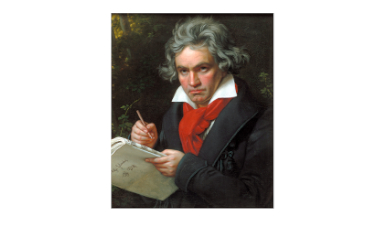
‘One of my favorite classical composers is Ludwig van Beethoven. While Bach wrote theological notes in the margins of his manuscripts, and his well-thumbed Bible also contained comments, Beethoven’s music is honest in its skepticism. There is power and passion in it, as well as a great deal of anger.
Beethoven rarely wrote church music, but, when he did, he gave it everything. His own assessment of his work suggests that he considered his Mass in D Minor (the Missa Solemnis) to be his greatest work. Following the liturgy of a Roman Catholic mass, in five sections, the work concludes with Agnus Dei – a liturgical prayer, sometimes used in certain Protestant churches. For example, the Church of England Prayer Book has this prayer, translated thus:
O Lamb of God, that takest away the sins of the world, have mercy upon us.
O Lamb of God, that takest away the sins of the world, grant us thy peace.
In this section, Beethoven keeps repeating the word miserere (“have mercy”) over and over again, as if he is saying he is unable to find mercy. After this, the music suddenly breaks into an angry fugue.
Beethoven spent much of his life in anger. He was angry with God for his various infirmities, especially his deafness, which was total by the time of the premier of Missa Solemnis.
We praise God for creative geniuses like Beethoven. Unlike the man himself, we give Him all the honor and glory, for the mercy He has shown us.’https://creationmoments.com/sermons/beethoven-and-the-lamb-of-god-2/?mc_cid=3287fd12f2&mc_eid=00c1dcff3c
To the church at Rome (NOT the Roman Catholic Church) Paul wrote I beseech you therefore, brethren, by the mercies of God, that ye present your bodies a living sacrifice, holy, acceptable unto God, which is your reasonable service Romans 12:1. Sadly, in this day of mega-churches and easy beliefism that word “holy” is so often neglected either on purpose or ignorance of true Biblical Christianity. It will be interesting to see how much different the following new “church” will be different from the Hillsong group and if it will be a place of carnal worldly entertainment or true Biblical HOLINESS!
‘On his final Sunday as pastor of Hillsong Atlanta, Sam Collier reflected on the crucial role justice, trust and safety play in the health and growth of a church and expressed his confidence in God’s sovereignty as he prepares for the next season of ministry.
“We are living in a new generation. And this generation is focused on justice, on calling out what’s right and what’s wrong, and making sure that we’re living honestly in all of our actions, while in the previous generation, we handled a lot of these ills behind the scenes,” the 33-year-old pastor told The Christian Post.
“Now more than ever, one of the things that the Church can learn is, it’s important to let people know that they can be safe. It’s just so paramount. Justice, safety, trust matters more than anything. People used to assume trust as soon as they came into the church. Now, people are saying, ‘Prove it to me.’”
Collier understands firsthand what it means to be tasked with rebuilding trust in the face of ministry scandals. On Wednesday, Collier, the first-ever African American lead pastor of a Hillsong church, announced he would be stepping down from his position as controversy continues to swirl around the global church and its founder, Brian Houston.
“With all of the documentaries, scandals, articles, accusations and the church’s subsequent management of these attacks it’s become too difficult to lead and grow a young Church in this environment,” he wrote in a public statement.
And after a brief sabbatical, during which Collier and his wife, Toni, plan to reset and rest, the couple and their ministry team will launch a new church, Story Church, on Easter Sunday 2022.
But the pastor acknowledges that rebuilding in the current climate will come with challenges.
“Transitioning into Story Church, so many people have questioned, ‘Well, we hear what happened over here, but what’s going to make you different? What policies are you putting in place?’” the pastor said. “We’re imperfect; somebody is going to make a mistake. But when somebody makes a mistake, what are we going to do to reassure members and congregants that they can trust us with their lives and their investment?”
Ahead of Story Church’s opening, Collier and his leadership team are partnering with a team of experts, including a chief culture officer and fellow pastors, to “really go deep on how we can guarantee that safety.” And like Hillsong Atlanta, Story Church will be focused on racial reconciliation and modeling unity amid division.
“Racial reconciliation is our number one reason for existing besides salvation,” Collier, who is also an author and founder of A Greater Story Ministries, contended.
“There are so many churches within Atlanta; Atlanta doesn’t need another church. But what we believe is that Atlanta needs a church that is focused on uniting our world. In such a polarizing climate, no matter how you vote, no matter how you look, no matter where you come from, there should be a safe place for believers, for believers to gather under one name, and that’s Jesus.”
“We can work out our differences,” he added. “I believe if we all come to the table and become unified about being unified, we can change the world.”
This time, Collier is looking forward to shepherding a young church without the shadow cast by the scandals that have plagued Hillsong over the last two years.
Speaking before hundreds gathered for an emotional final Sunday service, the pastor reflected on the moment in 2020 that Brian Houston and his wife, Bobbi, told the Colliers they’d be launching Hillsong Atlanta in early 2021.
“We were in,” he said, reflecting on the excitement that came with being affiliated with one of the world’s most well-known churches and the opportunity to realize their vision of a unified church focused on racial reconciliation.
“We would be announced as the first-ever African American couple to lead a Hillsong Church. We were excited to be the Jackie Robinson of the situation.”
But shortly after Hillsong Atlanta was announced, over the next few weeks, Collier estimated “there was probably an article every single week” about a scandal surrounding a Hillsong Church or its leadership.
In December 2020, Carl Lentz, the famed leader of Hillsong Church in New York City, was fired over “leadership issues” and moral failures, including being unfaithful to his wife.
In early 2021, it was revealed that former Hillsong Dallas Lead Pastor Reed Bogard and his wife, Jess, were under investigation for leadership failures when they abruptly resigned in January of that year.
Later that year, Darnell Barrett, who served on the leadership of the church’s Montclair, New Jersey, branch resigned after sending a sexual photo to a church volunteer. Around this time, Hillsong leadership was made aware that documentaries about the church were going to be released.
But amid all the headlines and negative media attention surrounding the church, which has about 80 branches in 21 countries, Collier said he sought to faithfully lead his young congregation.
“I said, ‘Well, God, if I want to ever leave, what’s the sign?’” he recalled. “God said to me, ‘The moment you begin to lose trust, and you cannot continue the growth or the expansion of the vision is the moment that you should leave.”
In August 2021, Brian Houston, who founded the church in 1983, was accused of covering up his father’s crimes against underage boys, and criminal charges were brought against him in Australia. Though he denied the allegations, the charges led Houston to step down as Hillsong’s Global Pastor in January.
At that time, Collier said, Hillsong Atlanta leadership “started to notice that there was a shift that started to happen in our ministry,” adding: “People started to become more and more skeptical of not just the global church, but our church.”
During this time, the pastor said donors, members, and even Hillsong Atlanta staff would tell him, “This is not what we came to church for. We didn’t come to church to continuously go through scandal after scandal after scandal. We’re not sure we can trust this.”
“In that moment, the Holy Spirit reminded me, ‘I told you, the moment you can no longer continue to build the ministry because of the scandal, because of the mistrust, is the moment for you to go,'” he shared.
On Monday, March 21, Collier formally informed Hillsong of his resignation. Two days later, Houston formally resigned as global senior pastor in the wake of recent revelations that two women made serious complaints of misconduct against him in the last 10 years. Collier publicly announced his resignation hours later.
“Between Monday and Wednesday, things did speed up. And why did they speed up? Because, as a global church, we entered into crisis mode,” Collier said. “There’s one goal for me as a pastor, and that’s that you will be able to trust the church you attend and that you will feel safe. And that’s my decision.”
Though the Colliers are leaving Hillsong entirely, the pastor stressed that the global churches “are not our enemies.” He shared a brief video of Phil Dooley — who has taken over for Houston — giving Collier the church’s blessing.
“Hillsong Church is so excited that we’re continuing,” Collier said, adding that he and Dooley “speak almost every day.”
Story Church, he said, will remain in the same location as Hillsong Atlanta, with the same worship team, and likely, the majority of the congregation.
“Same people, same goodness, new name,” the pastor said. “There is a multicultural movement being birthed here. We want you to be a part.”
Collier knows there’s work to do ahead of him — but he expressed repeated confidence in God’s sovereignty over the future of Story Church. He added that coincidentally, the end of Hillsong Atlanta comes a symbolic nine months after its launch.
“Hillsong has been the ground on which the seed is planted,” he said. “[God] does nothing on accident. He used that incubation period to birth somebody new … I believe God for the new.”’https://www.christianpost.com/news/sam-collier-says-trust-plays-crucial-role-in-health-of-church.html
The fruit of Hillsong is evidence that Hillsong was and is not good ground upon which the seed of the Gospel may be planted!


 whatyareckon