
Good Ole Charles ‘Darwin proposed that evolutionary changes occur by a long series of small incremental changes over long periods of time. Six decades later Richard Goldschmidt proposed that evolution happened by sudden large changes resulting in new organisms with new structures and functions, which he called “hopeful monsters”. A group of evolutionary biologists at University of California Santa Barbara claim to have found an example of a sudden large change brought about by mutations in a single gene in a plant named Aquilegia coerulea, otherwise known as the Colorado Blue Columbine.
They noticed that approximately one quarter of the population of A. coerulea in central Colorado had flowers that lacked the distinctive nectar spurs seen in Columbine flowers. Instead, the flowers had an extra row of sepals. They studied the genetics of normal and spurless plants and found the change resulted from mutations to a gene named APETALA3-3. The mutations made the gene non-functional.
Hodges, a professor of Biology at UC Santa Barbara explained: “This finding shows that evolution can occur in a big jump if the right kind of gene is involved. When it’s broken, those instructions aren’t there anymore, and that causes it to develop into a completely different organ, a sepal.” He went on to comment: “We did not have a good example of a hopeful monster due to a single genetic change until now.”
The researchers wondered how the loss of function mutations survived in such a large proportion of the population, especially as the mutant flowers lacked nectar spurs. The plants are normally pollinated by moths that feed by inserting their proboscis into the spur, which positions the moth’s head in the right place to collect pollen. According to Scott Hodges, “To get that many of this mutant type really suggests that there’s selection favouring it somehow.” It turns out the mutant plants can be pollinated by bees so they could still reproduce, but the selection advantage that enabled them to survive and thrive was the fact that aphids and deer, which feed on Columbines, did not like the mutant plants as much as the normal plants.
References: ScienceDaily 16 February 2022; Current Biology 16 February 2022 doi: 10.1016/j.cub.2022.01.066
Editorial Comment: Richard Goldschmidt (1878-1958), who proposed the “hopeful monster” theory also recognised that some sudden large changes result in loss of function and he called these “hopeless monsters”. As the mutant columbines can survive, due to being disliked by aphids and deer, they not hopeless, but they are not hopeful either.
As the researchers admit, the change was caused by a gene being broken, i.e. a loss of genetic information. That is degeneration, not evolution. The plant has not gained a structure it did not have before. In fact, it has lost an important structure, the nectar spurs, which reduces its options for being pollinated. If moths with their long proboscises try to feed from the centre of the flower, rather than from the nectar spurs their heads are not close enough to collect any pollen.
The extra row of sepals is not a new structure, and the broken gene didn’t form them. The plant already had sepals. The extra row results from the loss of the signal to make petals muddling the complex sequence of genetic control that occurs during flower formation.
An extreme form extra sepals resulting from muddled genetic signalling occurs in flowers known as green roses. In these the flower bud can only make sepals, and it makes multiple rows of them resulting in a cluster of green sepals with no other flower parts. These are definitely “hopeless monsters” as they cannot reproduce themselves, but they survive because people like them and propagate them by grafting. Creation Research has several specimens in our collection of unusual plants.’https://creationfactfile.com/6475/hopeful-monster-flowers/


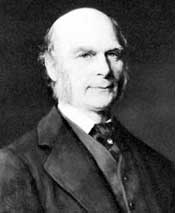

 Down House lies nestled in the beautiful Kentish countryside of southern England. This fabulous residence housed the eminent naturalist, his wife and ten children for a period of forty years. It was here that he conducted much of his research and developed his theory of evolution by natural selection. It was in the study at Down House that he wrote his most influential work,
  onslaught of evolutionary propaganda, which began as soon as I entered the house. Purchasing my ticket from the gift shop, I was left to peruse the large bookshelf of contemporary works on evolution by some of today’s most prominent atheistic scientists. The narration on the audio device used on the guided tour is by none other than naturalist extraordinaire,
  mantel in Darwin’s study is an engraved portrait of Lyell, testament to the profound impact he had on Darwin’s life. Elsewhere in the house is the first edition of Lyell’s book Principles of Geology which Darwin took with him on the Beagle voyage (1831–1836). Lyell promoted the view known as uniformitarianism, meaning he assumed that geological processes observed today had operated essentially in the same way and at the same rates in the past. Thus the slow erosion of river valleys seen today, or the gradual depositing of sediments, were understood to indicate that deep valleys and extensive sedimentary rock strata must have been formed slowly over millions of years. According to this view, the rocks provide a picture of Earth’s long history, and one of a slowly changing world, with fauna and flora appearing and disappearing over long periods of time. This provided the ‘bedrock’ upon which Darwin could build his theory of evolution, which posited natural selection as the mechanism by which new species arose. However, it is crucial to note that the Lyellian view of geology was not a theory derived solely from geological observation and scientific enquiry. Rather, there was an ideological bias involved too; as Lyell himself admitted, he wished to “free the science [of geology] from Moses” (see
  banner with the title ‘Darwinism versus Christianity?’ poses this question to museum visitors:


 whatyareckon