I do not live in Michigan but I do receive emails from Rescue Michigan and this is an email received this afternoon. We MUST wake up wherever we live for this “trans” push is not from above but from the very pit of Hell!
‘Two weeks ago, we sounded the alarm and launched a petition to Lansing against the Child Sexual Mutilation Act, HB 4087.
Since then, something amazing happened: the bill, which had a committee hearing on May 16, suddenly went NOWHERE.
This is unusual. Normally, when a bill gets a hearing in committee, there’s a vote the next week to send it to the House floor.
Instead, not only did nothing happen, but a Lansing source contacted us to say the bill was stopped.
That’s great news, but now is the time to double down the pressure and make certain that Lansing lawmakers know that the public is discovering the truth of this depraved piece of legislation.
Just yesterday, I was distributing literature at a local fair when a 16-year-old girl approach our booth.
She was de-transitioning.
At age 11, when she felt depressed, her doctor told her she was really a boy. He put her on puberty blockers, and her supportive parents bought her a chest binder.
Now having decided she doesn’t want to be a boy after all, she is detransitioning – and her parents do not support her reverting to the sex that she naturally is.
If you’ve seen the Matt Walsh documentary, “What Is A Woman?” – which just received 110 million views when published on Twitter two nights ago – you know how prevalent this child sexual abuse is – and how terrible are the consequences of permanent sex-alteration.
There is an entire movement persuading children that they were born in the wrong body and the solution is permanent sex-change procedures like puberty blockers, mastectomies, and even genital surgery.
Under House Bill 4087, the Child Sexual Mutilation Act, children could run away from their parents and obtain sexual mutilation, paid for by private organizations, without their parents’ consent.
Tell Lansing lawmakers right now: OPPOSE THE CHILD SEXUAL MUTILATION ACT! According to the bill’s official analysis: “Under the bill, a homeless or runaway youth could consent to, contract for, and receive medical, dental, or behavioral health examinations, care, or treatment without a parent’s or guardian’s permission, authority, or consent.”
Remember: Democrats believe sex changes and puberty blockers are medical care. They call sexual mutilation “gender affirming care” for “trans youth.”
As many people have meticulously documented in agonizing, painful detail, radical transgender activists target children, tell them their insecurities are based on “gender dysphoria,” and encourage them to become transgender themselves. And they’ve been hugely successful.
Tell Lansing lawmakers right now: OPPOSE THE CHILD SEXUAL MUTILATION ACT! This is a basic issue of parental rights.
There is no other reason why legislation is needed to allow runaways to obtain medical treatments without their parents’ consent.
There aren’t even words to describe how sick this is.
But this is the legislation they’re advancing right now.‘
🏃Italian trans-identifying male, Valentina Petrillo breaks record and wins 8th women’s title 👇200m F50 women’s category win at the Italian Indoor Masters Championships March 12th https://t.co/VlMKoqBFXSpic.twitter.com/2gCabcxq72
‘What state is the church in when a Christian college fires a Christian lecturer for defending a Christian understanding of sexuality? This week, news broke of Dr Aaron Edwards, a lecturer at Cliff College, Derbyshire, a Methodist Bible college, who was sacked and even threatened with a counter-terrorism referral for sharing a tweet on human sexuality that went viral. The father of five was told that for sharing the Christian view of sexuality, he had brought “the college into disrepute.” Tim Dieppe is joined by Aaron on this week’s Round the Table, as well as Joe Boot, founder of the Ezra Institute, to discuss how changes in the UK Church’s doctrine on marriage and sexuality is leading to more confusion and cases like this. How are faithful Christians now to respond?’
‘Explaining the origin of sex is widely recognized as a major dilemma after 150 years of attempts to answer it by some of the world’s leading evolutionists. Since Darwin revolutionized the world with his theory, this “masterpiece of nature” is acknowledged as one of evolutionists’ most difficult evolutionary problems, second only to the origin-of-life problem.[1]
Sexual differences are widespread in animals, but no single rule explains them.
The dominant theory is that asexual reproduction somehow slowly evolved into sexual reproduction. However, the evidence is both overwhelming, and widely recognized even by evolutionists, that evolution by small steps cannot bridge the transition from asexual to sexual reproduction. Sexual reproduction cannot occur until both functional and compatible male and female reproductive systems exist. If any part of any component does not exist, reproduction will not occur. Nonetheless, evolutionists continue to look for ways to solve the problem of the origin of sex. One current example is a study by Yadav et al.[2] This study, rather than solve the problem, actually illustrates how difficult it is.
Evolutionists not only readily admit that “eukaryotic sexual reproduction is a mystery,” but also that the “ubiquity of eukaryotic sexual reproduction is a mystery.” In other words, the fact that eukaryotic sexual reproduction exists everywhere in life, from invertebrates to vertebrates, from plants to insects and animals must be explained. Furthermore, a variety of very different types of eukaryotic sexual reproduction systems are observed (see list below). For example, fungi “undergo alternative modes of sexual reproduction (unisexual, pseudosexual, and parasexual) in the laboratory and in nature that share features with alternative sexual processes observed in animals and plants (parthenogenesis, hybridogenesis, gynogenesis, and apomixis).”[3]
Most animals, including humans, after birth live out their entire lives and reproduce as either one sex or the other. With some animals, and many plants, a variety of sex types exist. These will now be briefly described to illustrate the problem this poses for evolution.
The Basic Kinds of Sexual Designs
Unisexual refers to an organism that can reproduce without requiring both male and female gametes. Unisexual plants’ flowers contain either stamens or carpels, but not both. Examples in the plant kingdom include papaya, cucumber, maize, tapioca, pumpkin, musk melon, castor bean, birch, pine (using cones), and watermelon.
Bisexual plant flowers contain both stamens and carpels and require both male and female gametes to reproduce. Common examples include rose, sunflower, hibiscus, lily, and mustard. Attempts to determine patterns related to why some plants can reproduce unisexually, while others require bisexual support, have failed.
Simultaneous hermaphroditism exists in a single organism which has both types of reproductive organs when mature. Consequently, they produce both male and female gametes. In simultaneous hermaphrodites, self-fertilization is possible in some species, but absent in others. Examples include vascular plants, worms, snails, slugs, barnacles, bryozoans (moss), and trematodes (flukes).
Sequential hermaphroditism produces eggs (female gametes) and sperm (male gametes) at different stages in their life. The change from one sex to another is a normal event as part of the organism’s reproductive cycle. The change from male to female is called protandry or protandrous hermaphroditism, and from female to male is called protogyny or protogynous hermaphroditism. Sequential hermaphroditism is actually common in many fish, gastropods, and certain plants.
Bidirectional hermaphrodites possess the capacity for sex change in either direction, male to female and female to male, an alternation potentially repeated several times during the organism’s lifetime.
Pseudosexualincludes animals that experience a tertiary physical attraction which mimics sexual attraction but no transfer of gametes occurs. The problem with this behavior is that it does not normally involve successful reproduction.[4]
Parasexualreproduction is a system that results in the recombination of genes from different individuals, but does not involve meiosis nor the formation of a zygote by fertilization as in sexual reproduction. The main examples include fungi and many unicellular organisms.[5]
Parthenogenesis, is a form of reproduction in which an egg develops into an embryo without being fertilized by sperm. It usually results in the development of a female; and very rarely males. Rotifers, along with several insect species, including aphids, bees, wasps, and ants can reproduce by parthenogenesis.
Hybridogenesis, also called sexual parasitism, involves the selective transmission of one of the parental genomes, while the other genome is renewed by mating with the corresponding species. [6]
Gynogenesisis a system of asexual reproduction that requires the presence of sperm but not the contribution of its DNA. The paternal DNA dissolves, or is destroyed by another means, before it can fuse with an egg. The egg cell then is able to develop, unfertilized, into an adult using only maternal DNA. Most gynogenesic animals are fish or amphibians. Why this reproductive mode even exists, given that it combines the disadvantages of both asexual and sexual reproduction, remains another unsolved problem in evolutionary biology.[7]
Androgenesisis the male equivalent of gynogenesis, where the father is the sole contributor of DNA. Thus a zygote is produced with only the paternal nuclear genes.[8]
Apomixisis asexual reproduction in which seeds are produced from unfertilized ovules. Examples include the genera Crataegus (hawthorns), Amelanchier (shadbush), Sorbus (rowans and whitebeams), Rubus (brambles or blackberries), Poa (meadow grasses), Nardus stricta (doormatgrass), Hieracium (hawkweeds) and Taraxacum (dandelions).
Attempts to Explain the Variety of Reproductive Methods Fail
In their PNAS paper (ref. 2), the authors attempt to theorize how and why organisms could have evolved so many different systems for mating-type determination. This, they claim, could advance the understanding of the evolution-of-sex problem itself. Actually, their attempt creates additional major difficulties for understanding the evolution of sex. For example, they write:
the systems by which sex is defined are highly diverse and can even differ between evolutionarily closely related species. While the most commonly known form of sex determination involves males and females in animals, eukaryotic microbes can have as many as thousands of different mating types for the same species. Furthermore,… several examples are also present among vertebrates suggesting that alternative modes of sexual reproduction evolved multiple times throughout evolution.[9]
It is widely recognized that the evolution of sex is an enormous problem: “no other problem has sowed as much confusion” as have attempts to explain the origin of sexual reproduction.[10] As Richard Dawkins asked, “why did sex, that bizarre prevision of straightforward replication, ever arise in the first place? … This is an extremely difficult question for evolutionists to answer” which he admitted he was “going to evade” due to “the difficulty which theorists have with explaining the evolution of sex.”[11] The late Lynn Margulis added in the introduction of her book on sex was so difficult that “becoming sexual [beings] is one [topic] which we will try to steer well clear of throughout this book.”[12]
How Yaiv et al., in their PNAS Article Deal with the Origin of Sex Problem
Yaiv et al. proposed that the variety of sex behaviors they documented did not evolve from some hypothetical original sexual reproduction system, but rather evolved multiple times. They openly stated that “sexual reproduction evolved multiple times throughout evolution.” The problem is, if sex is unlikely to have evolved once, it is far more unlikely to have evolved as many as 12 different times to explain the different sexual systems listed by Yaiv and noted above.
The authors’ phraseology implies that animals can choose their method of reproduction, as if it were a conscious choice made by the organism. They write,
some species have found alternatives to sexual reproduction, and prefer to grow clonally and yet undergo infrequent facultative sexual reproduction. These organisms are mainly invertebrates and microbes.[13]
Summary
Most evolutionists believe that evolution explains the origin of all types of sexual reproduction but struggle to determine when, how, and why sex evolved. The PNAS paper reviewed here is no exception. All past attempts fail, and the paper reviewed here, published in a leading American science journal, is another example of the norm. Now evolutionists have to explain the evolution of over a dozen types of sexual reproduction. But they must admit that sexual reproduction is evolutionarily conserved, meaning that, when examined historically, it has been shown to have not changed.[14] In other words, no evidence exists that any of the sexual systems the authors discussed have evolved. All evolutionists can do is attempt to speculate how one sex system could have evolved into another reproductive method.
References
[1] Trivers, Robert. The evolution of sex: A review of the masterpiece of Nature: The evolution and genetics of sexuality. The Quarterly Review of Biology 58(1):62-67, March 1983.
[2] Yaiv, Vikas, et al. On the evolution of variation in sexual reproduction through the prism of eukaryote microbes. Proceedings of the National Academy of Sciences 120(10). 3 March 2023; https://doi.org/10.1073/pnas.2219120120.
[4] Dias, Brian, and David Crews. Regulation of pseudosexual behavior in the parthenogenetic whiptail lizard, Cnemidophorus uniparens. Endocrinology 149(9):4622–4631, September 2008.
[5] Mishra, Abhishek, et al. Parasexuality of Candida species. Frontiers in Cell Infection Microbiology 11:796929; doi: 10.3389/fcimb.2021.796929, 2021.
‘Transhumanism is a movement that holds that scientific and technological advances can be used to improve humanity. For example, to increase life-span, to get rid of diseases through gene modification, to implant electronic microchips for security purposes, or to monitor a person’s location, purchases, and movements. Some of this might seem only vaguely relevant to creation science apologetics. However, at its heart it is a godless movement, and ultimately is one that is justified by belief in evolution. Creation Ministries International first tackled the question of transhumanism in 2011. Fast forward to 2023 and it is being promoted more than ever by notable academics and leading forums, together with well-funded research grants such as one from President Biden’s government.’https://creation.com/transhumanism-image-of-god
Psalm 119:130 “The entrance of Your words gives light; it gives understanding to the simple.”
‘According to evolutionary thought, humans came from ape-like creatures. These ape-like creatures came from reptiles through many steps. Likewise reptiles ultimately came from fish, through many steps. Evolutionists say that with each major stage, more parts were added to the brain. The final development, and the greatest of all, is the cerebral cortex.
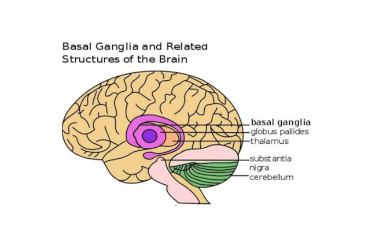
According to this theory, one of the oldest parts of the brain is the part deep inside. Evolutionists claim that this part of the brain, called the basal ganglia, comes from our reptilian past. They have described this part of the brain as “primitive.” It controls such simple things as movement and spatial memory. These are basic functions needed by reptiles. Of course, the evolutionary view that the basal ganglia is primitive was never scientifically researched.
Then researchers started to examine the workings of the basal ganglia. They have concluded that the deep structures of the brain that are supposed to be primitive are actually quite sophisticated. In fact, these so-called reptilian structures rival the cerebral cortex in sophistication. These structures receive input from all parts of the cortex. And all the neurochemicals found anywhere else in the body are also found in these structures. In other words, there is absolutely no evidence of their being primitive.
‘Given the challenges facing Big Science and Big Media these days (21 Jan 2023), it’s hard to know if a paper is a product of a chatbot, a paper mill, or a spoofer. This one from University College London seems too goofy to be genuine.
Split-second of evolutionary cellular change could have led to mammals (University College London, 23 Jan 2023).
A newly-published hypothesis, led by a UCL researcher, suggests a momentary leap in a single species on a single day millions of years ago might ultimately have led to the arrival of mammals – and therefore humans.
We wouldn’t be surprised if John Martin and Paolo D’Avino are planting a hoax to see if Darwinians will take them seriously. If so, they had to get cooperation from the press office, because this could reflect badly on this once proud and honorable college founded in 1826 to spread public education to the common man. If this is “education” now, the common man and woman needs to be home schooled.
Published in the Journal of Cell Science, Professor John Martin (UCL Division of Medicine) thinks a single genetic molecular event (inheritable epigenetic change) in an egg-laying animal may have resulted in the first formation of blood platelets, approximately 220 million years ago.
In mammals and humans, platelets are responsible for blood clotting and wound healing, so play a significant role in our defence response. Unlike our other cells, they don’t have nuclei – so are unique to mammals, since other classes of animal such as reptiles and birds have blood clotting cells with nuclei.
It gets goofier. Humans are related to the duck-billed platypus?
The researchers suggest that millions of years ago a mammalian ancestor – possibly an animal related to the duck-billed platypus – underwent the very first formation of platelets, thanks to a sudden genetic change in the nucleus of its blood clotting cells that meant normal cell division did not take place causing the cells to increase in size.
The story could pass muster in the Darwin Party because it includes all the usual requirements: storytelling form, high perhapsimaybecouldness index, completely materialistic, driven by chance, and contributing to human evolution.
The paper is open access if anybody wants to check it out: Martin and D’Avino, “A theory of rapid evolutionary change explaining the de novo appearance of megakaryocytes and platelets in mammals,” Journal of Cell Science (135:24), 22 Dec 2022.
It’s not April Fool’s Day yet, but we’re not buying it. This must be a hoax. Can some of our readers browse the paper and see if there is any serious basis for the claim? Does it show signs of a parody? How can anyone believe that instant platelets became inherited by Mrs Platypus, she laid an egg and humans hatched out? (roughly speaking).
One odd thing is that a Google search for this hypothesis is not getting much traction. Perhaps the Darwin Party is trying to see if creationists will fall for their latest scam. Sorry. We know Darwinists are immoral storytellers, but this is over the top.’https://crev.info/2023/01/instant-mammals-lol/






 whatyareckon