Here’s what Gordon College states on their website saying ‘Gordon is a vibrant community of believers, a place where Christian faith frames all aspects of the experience—from residence life to athletics to academics. We want students to think deeply and holistically about how their faith informs their influence in society—now and well into the future. Intentional programming and organic relationships propel students to grow in Christian character and deepen their trust in Jesus.’
However, what they state and what they do is different for ‘Gordon College in Wenham, Massachusetts, this week cancelled three speaking engagements with a speaker who sparked student protests for his alleged “misogynist” and “transphobic” comments.
The speaker, Marvin Daniels—an ordained minister and executive director of The Hope Center—spoke in chapel at the evangelical school on Monday. According to Gordon’s student publication, The Gordon Review, Daniels was scheduled to address the school in three more sessions as part of “Deep Faith Week.” But those were cancelled after students objected to Daniels’ chapel address on social media and announced a walkout.
During his chapel talk, Daniels addressed issues of gender and sexuality, affirming the categories of male and female. Then, speaking about what he called “a culture in chaos,” Daniels added, “We got individuals that say, ‘I feel like I’m a female,’ and they get a chance to participate in female activities. Back in the day I wish that would work. I would have been saying ‘I feel like a female,’ so I can get into girls’ locker room. Come on now.”
Daniels also addressed issues related to dating and premarital sex, stating: “It’s amazing to see that even in the church, my Christian brothers (are) out there treating young ladies like they’re urinals and I am concerned about that.”
He added: “And I’m concerned about my Christian sisters who dress like they desserts on a menu and then they get upset when a brother wants to place an order.”
During the service, students began to react via social posts. “Who does he think he is?” asked one student on Instagram with the moniker ‘Gordon Gossip Girl.’
Another account, @AlanaGordonCollege, posted details of a student rally in solidarity with women and the LGBTQA+ community “traumatized by the degrading statements made in chapel this morning.” It was planned for after Daniels’ session that evening.
A student account stated: “We believe the words Daniels chose to make his point were hateful to both women and the trans community as well as many others . . . We want to show Gordon that they cannot continue inviting someone who will spread more hate than love.”
Shortly after the chapel address, Gordon College president Michael Hammond e-mailed the student body to say he would “personally address” them in a session that evening but Daniels would not.
This is what Paul the church planter wrote in 2Corinthians 6:1-10 We then, as workers together with him, beseech you also that ye receive not the grace of God in vain. 2 (For he saith, I have heard thee in a time accepted, and in the day of salvation have I succoured thee: behold, now is the accepted time; behold, now is the day of salvation.) 3 Giving no offence in any thing, that the ministry be not blamed: 4 But in all things approving ourselves as the ministers of God, in much patience, in afflictions, in necessities, in distresses, 5 In stripes, in imprisonments, in tumults, in labours, in watchings, in fastings; 6 By pureness, by knowledge, by longsuffering, by kindness, by the Holy Ghost, by love unfeigned, 7 By the word of truth, by the power of God, by the armour of righteousness on the right hand and on the left, 8 By honour and dishonour, by evil report and good report: as deceivers, and yet true; 9 As unknown, and yet well known; as dying, and, behold, we live; as chastened, and not killed; 10 As sorrowful, yet alway rejoicing; as poor, yet making many rich; as having nothing, and yet possessing all things.
This is what is happening in today’s church planting efforts. ‘The Association of Related Churches, or ARC, is arguably the biggest church planting organization in North America. It’s also one of the most embattled . . . with scandals involving ARC pastors hitting the news with shocking regularity. In this episode of The Roys Report podcast, former ARC pastor Jeff Thompson explains why. In 2012, Jeff says he was enamored with ARC’s model of “launching large”—of starting a church with a big capital investment, top-notch worship team, and professional marketing. But when that effort flopped, Jeff began to question the biblical basis of ARC’s methods. He says the movement glorifies success as measured in attendance and budgets—but it minimizes sin, especially among its pastors. Pastor Jeff Thompson shares much more in this extremely important and timely podcast.’
Yep, ‘This is what happens when the self-appointed preachers of tolerance and respect don’t get their way.
LGBTQ activists have covered Citipointe Christian College in foul graffiti.
The school, which made national headlines this month for asking parents to agree to a Christian view of sexuality as a condition of enrolment, has been forced to remove signage to prevent further vandalism.
Staff have received a barrage of abuse, including death threats.
‘Be more respectful, or we’ll destroy your property.’
‘Be tolerant like us, or we’ll kill you.’
It’s a hell of an argument against people exercising their religious freedom.
Speaking of argument, everyone knows opponents of the Religious Discrimination Bill are not really trying to stop children being expelled from Christian schools for being gay. We know this because there’s not a single example of it ever happening. Not one.
What opponents of the Religious Discrimination Bill really want to stop is the LGBTQ worldview ever being criticised in a Christian School. We know this because they have said so. Repeatedly.
It is telling that critics of Citipointe Christian College’s enrolment contract were not satisfied when it was rescinded.
That’s because critics were less outraged by the contract than by the Christian worldview that informed the contract; specifically that homosexuality is a sin, and that gender is a fixed biological reality.
What activists really want is for Christians to agree that Christian beliefs on sexuality and gender are wrong. In short, activists are demanding Christians be less Christian.
A gay former Citipointe Christian College student told SBS that ‘language condemning homosexuality was very damaging to himself and other young people’.
It was so damaging that he completed 12 years at the school. And he wasn’t expelled for being gay. He graduated.
But, you know, the ‘language’!
A Parents, Family and Friends of Lesbians and Gays (PLAG) spokeswoman said Citipointe Christian College needed to do more than scrap the enrolment contract and remove the principal, they needed to ‘show that they have changed their thinking’.
‘They need to come out publicly stating that there has been an error in their judgment and their thinking, and they agree that they were wrong,’ she said.
Well sure. But why stop there? Perhaps PLAG could do a full audit of Christian doctrines and advise the Citipointe community which ones they should change. Whatever’s left, after the gays and lesbians have redacted the bits and pieces they don’t like, could be called the Bible.
Just days after the Citipointe College contact became public, The Guardian pointed out that Penrith Christian College had a statement of faith that listed homosexuality and transgenderism as ‘not acceptable to God’.
How this is news, I am not quite sure.
There’s an old adage in journalism that news is not a dog biting a man; news is a man biting a dog. Similarly, one would think news is not a Christian school promoting a Christian worldview; news would be a Christian school promoting the LGBTQ worldview.
The Guardian reported breathlessly that Penrith school’s statement of faith is attached to enrolment forms and parents are asked if they have ‘read and understood’ it.
Rationalist Society of Australia president Dr Meredith Doig described the school’s beliefs as ‘appalling’ and warned that ‘schools like Penrith and Citipointe are just the tip of the iceberg’.
‘Their biblically-based anti-LGBTI views will become much more commonly seen if the Religious Discrimination Bill is passed,’ she said.
In other words, Christian views will become much more commonly seen if Christian schools are allowed to freely express their Christian views. This, rather than the imagined gay child expelled by hateful Christian teachers, is the real problem opponents of the Religious Discrimination Bill have.
Psychologist Paul Martin agreed the problem at Citipointe was not just the controversial enrolment contract but that ‘many people in evangelical Christian communities and even in evangelical conservative Protestant families still hold on to outdated beliefs about homosexuality’.
So, Dr Martin believes the problem with many Christians is that they still hold Christian beliefs.
Dr Martin insists that Christianity needs to move with the times, ‘the times’ being a euphemism for ‘fashion’. The problem for Dr Martin is that Christians aren’t trying to be fashionable, they are trying to be true to what they believe is the word of God, which puts their views beyond the times.
The psychologist continued: ‘What has happened at the school is so harmful that it could – for some people – be the trigger for suicidality.’
Jude 1:7 Even as Sodom and Gomorrha, and the cities about them in like manner, giving themselves over to fornication, and going after strange flesh, are set forth for an example, suffering the vengeance of eternal fire.
‘One way to get a Nobel prize in something, you’ve got to break some new ground or discover something no one has ever seen. In the world, the making of a printing press or light bulb changes everything. People still try to invent a better mousetrap. It happens. The phone replaced the telegraph and now our mobile devices, the phone.
Everyone can learn something new from scripture. You might even change or tweak a doctrine you’ve always believed. On the whole, you don’t want to teach from the Bible what no one has ever heard before. The goal is the original intent and understanding of the Author.
From the left comes progressivism. The U. S. Constitution, just over two hundred years old, means something different than when it was written. Loosely constructed, it has a flexible interpretation into which new meanings arise. Hegelian dialectics say a new thesis comes from synthesis of antithesis and a former thesis. Everything can be improved.
Early after the inspiration and then propagation of the Bible, men found new things no one ever saw in scripture. Many of these “finds” started a new movement. People have their fathers, the father of this or that teaching, contradictory to the other, causing division and new factions and denominations. Some of these changes become quite significant, a majority supplanting the constituents of the original teaching.
At the time of the Reformation, it was as if the world first found sole fide and sole scriptura. Men often call justification the Reformation doctrine of justification. This opened a large, proverbial can of worms. Many could read their own Bible in their own language. Others now dug into their own copy of the original languages of scripture. Skepticism grew. “If we didn’t know this before, what else did they not tell us.” It became a time ripe for religious shysters and this practice hasn’t stopped since then.
Socinus
The Italian, Laelius Socinus, was born in 1525 into a distinguished family of lawyers. Early his attention turned from law to scripture research. He doubted the teachings of Roman Catholicism. Socinus moved in 1548 to Zurich to study Greek and Hebrew. He still questioned established doctrine and challenged the Reformers. Laelius wrote his own confession of faith, which introduced different, conflicting beliefs. They took hold of his nephew, Faustus Socinus, born in 1539.
Faustus rejected orthodox Roman Catholic doctrines. The Inquisition denounced him in 1559, so he fled to Zurich in 1562. There he acquired his uncle’s writings. His doubt of Catholicism turned anti-Trinitarian. The Reformation did not go far enough for Socinus. His first published work in 1562 on the prologue of John rejected the essential deity of Jesus Christ.
Socinus’s journeys ended in Poland, where he became leader of the Minor Reformed Church, the Polish Brethren. His writings in the form of the Racovian Catechism survived through the press of the Racovian Academy of Rakow, Poland. His beliefs took the name, Socinianism, now also a catch-all for any type of dissenting doctrine.
Socinianism held that Jesus did not exist until his physical conception. God adopted Him as Son at His conception and became Son of God when the Holy Spirit conceived Him in Mary, a Gnostic view called “adoptionism.” It rejected the doctrine of original sin.
Socianism denied the omniscience of God. It introduced the first well developed concept of “open theism,” which said that man couldn’t have free will under a traditional (and scriptural) understanding of omniscience.
Socinianism also taught the moral example theory of atonement, teaching that Jesus sacrificed himself to motivate people to repent and believe. His death gave men the ability to be saved by their own works, who weren’t sinners by nature anyway.
Unitarians
The work of Socinus lived on in the belief of early English Unitarians, Henry Hedworth and John Biddle. Socinian belief was helped along also by its position of conscientious objection, a practice of refusing to perform military service. This principle was very popular with many and made Socinianism much more attractive to potential adherents. The First Unitarian Church, which followed Socianism as passed down through its leaders in England, was started in 1774 on Essex Street in London, where British Unitarian headquarters are still today.
As the Puritans of colonial America apostatized through various means, Unitarianism, a modern iteration of Socinianism took hold in the Congregational Church in America. After 1820, Congregationalists took Unitarianism as their established doctrine. The doctrine of Christ diminished to Jesus a good man and perhaps a prophet of God and in a sense the Son of God, but not God Himself.
Spirit of Skepticism
I write as an example of the diversity in the history of Christian doctrine and why it takes place. When you read the beliefs of Socinians, you easily see them in modern liberal Christianity. They influence on religious cults that deny the deity of Jesus Christ.
A limited amount of skepticism wards away the acceptance of false doctrine. Better is a Berean attitude (Acts 17:11), searching the scripture to see if these things are so, and what Paul wrote in 1 Thessalonians 5:21, proving all things, holding fast to that which is good.
As I grew up among fundamentalists and independent Baptists, I witnessed regular desire to find something new in the Bible. Many sermons espoused interpretations I had never heard and didn’t see in the text. A preacher often said, “God gave it to me.” You should know God used the man because no one had seen such insights into scripture.
The same spirit of doctrinal novelty continues today in many evangelical churches. The same practice led Joseph Smith in his founding of Mormonism. Many cults arose in 19th century America under the same spirit of skepticism of established historical doctrines.
The Temptation of Novel Teaching
The temptation of novel teaching preys on anyone. Faustus Socinus accepted many orthodox doctrines of his day. He rejected Christ as fully God and fully human because it was contrary to sound reason (ratio sana). This steered Socinians toward Enlightenment thinking, where human reason took the highest role as arbiter of truth.
When I was in college in the early 70’s Cornerstone University was then Grand Rapids Baptist College and Seminary. It was considered by many to be one of the more liberal schools in the General Association of Regular Baptist Churches (GARBC). Today, the school is no longer an approved school of the GARBC, the name has been changed and the school seems to have become even more liberal in that diversity, equity and inclusion are now the HOT TOPICS! It is so very true that many (Christian) organizations do not become stronger but weaker (less conservative and more liberal) as time passes!
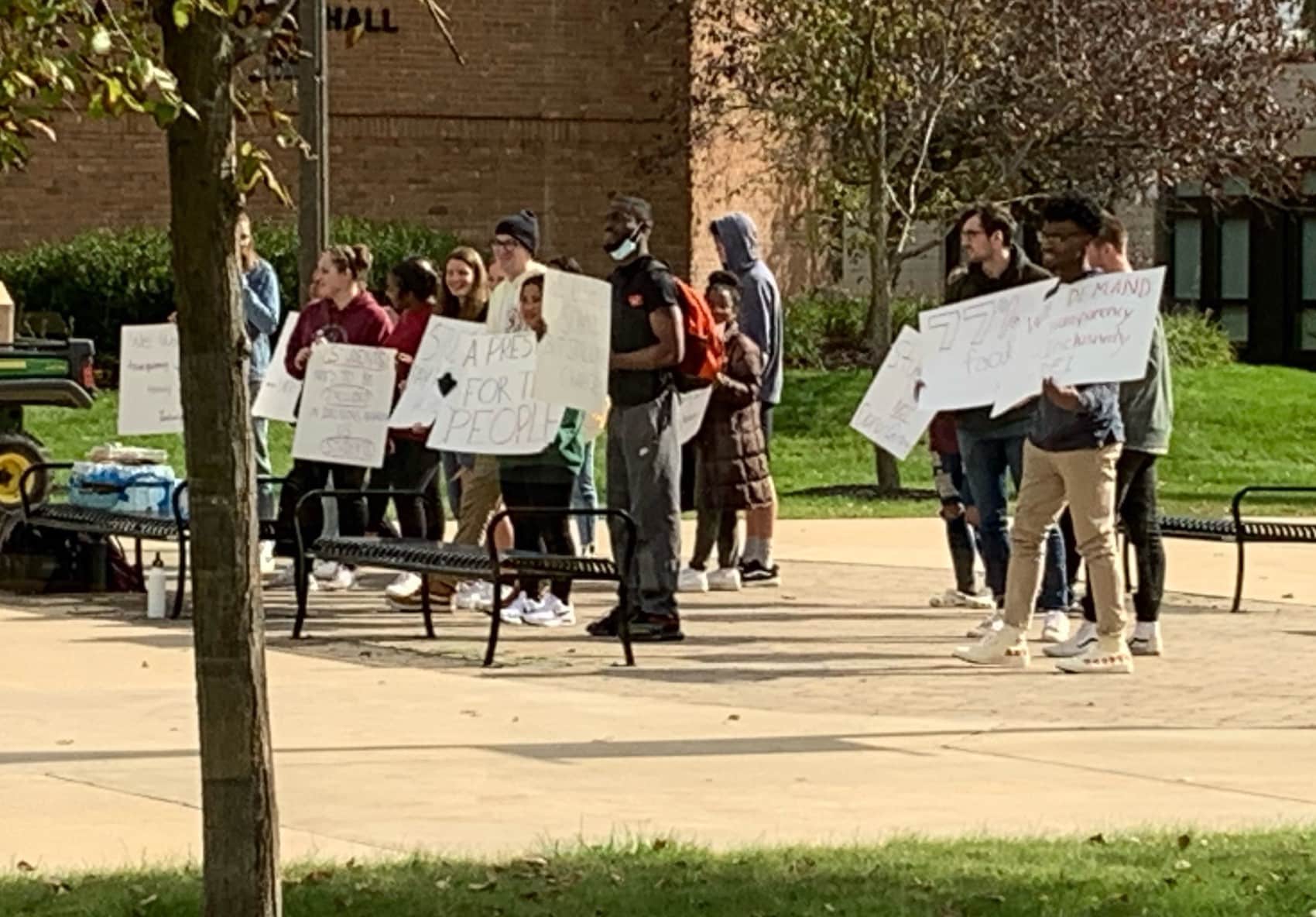
‘About 15 students and one alumnus gathered Friday outside the chapel at Cornerstone University in Grand Rapids, Michigan, to protest the inauguration of Cornerstone President Gerson Moreno-Riaño.
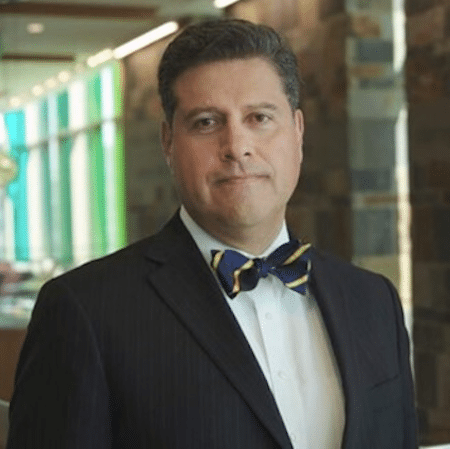
The student-led demonstration is the third protest this week concerning Moreno-Riaño, a Colombian-born immigrant who was hired in May to replace retiring president, Joseph Stowell.
On Thursday, Cornerstone’s faculty voted no confidence in Moreno-Riaño. Earlier in the week, 299 alumni submitted a letter to the board, accusing Moreno-Riaño of reversing progress the university had made regarding diversity, equity, and inclusion (DEI).
Drew Parker, a recent alumnus and one of the organizers of the protest, said the student protesters didn’t feel like they knew what was going on at the university and called for transparency and inclusivity. The students also urged for a return of several faculty and staff who advocated for DEI and disappeared during Moreno-Riaño’s first four months in office.
Parker said he and others wanted to protest peacefully and respectfully and in a way that loves even those with whom they disagree.
Give a gift of $25 or more to The Roys Report this month, and you will receive a copy of “Fractured Faith: Finding Your Way Back to God in an Age of Deconstruction” To donate, click here.
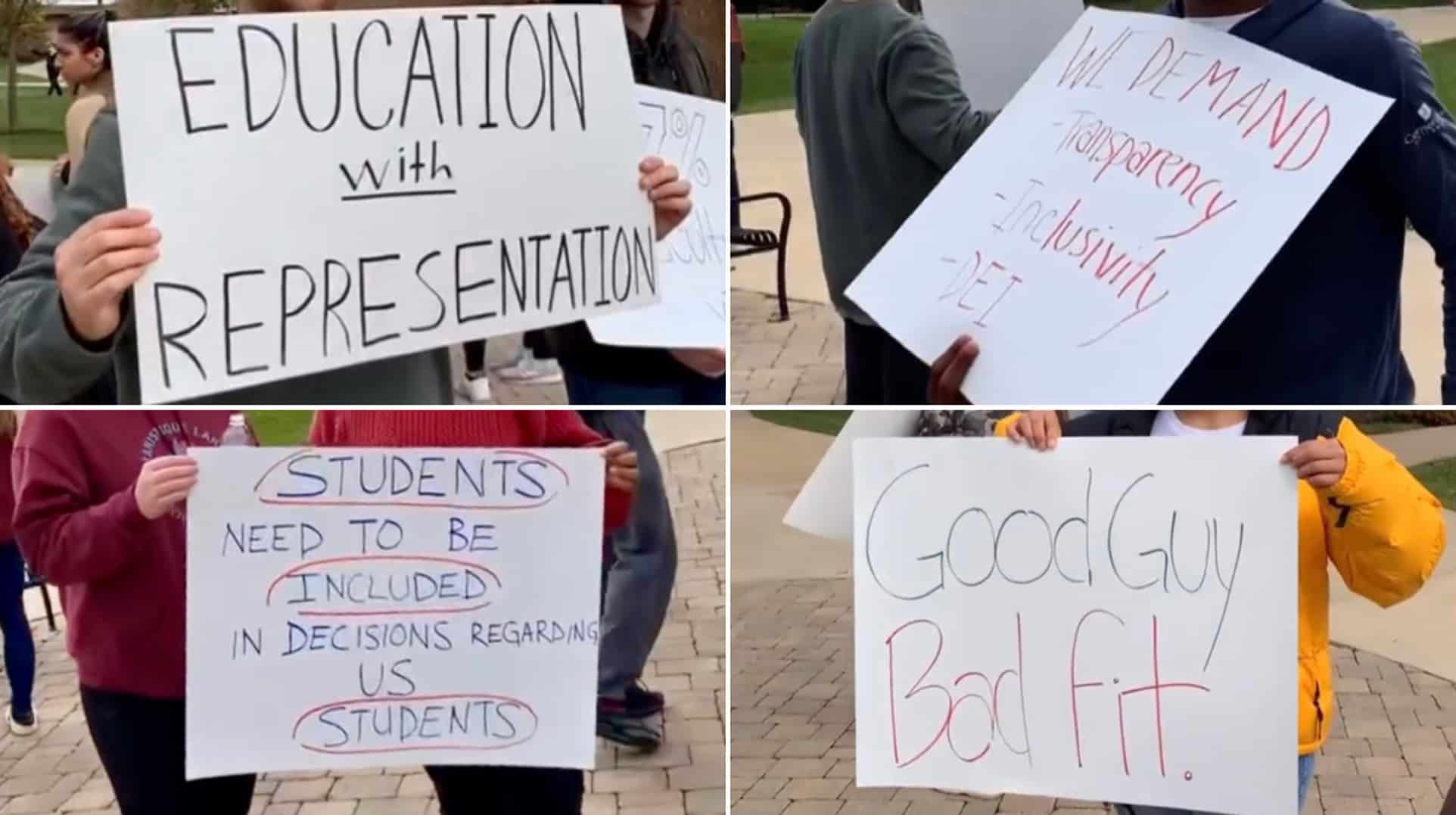
The group of protestors held signs that read: “Education with Representation”; “We love our school but still need changes”; “Students need to be included in decisions regarding us students”; “a President for the People”; “We demand transparency and inclusivity”; and “DEI unifies.”
On October 22, 2021, students at Cornerstone University in Grand Rapids, Michigan protest incoming school president Gerson Moreno-Riaño. (Photos Courtesy of CU Students)
Meanwhile, the inauguration proceeded as planned. And even though he recently resigned from his role assisting with fundraising a couple weeks ago, former president Joe Stowell participated in the program.
Stowell prayed the Lord would equip students “to love mercy, do justice, and to walk humbly with the Lord.” And he prayed for the board, faculty, staff, and administration for the “transforming presence” of God in their responsibilities.
The event was livestreamed but experienced an apparent technical issue when Moreno-Riaño took the microphone. There was no audio for the first minutes of Moreno-Riaño’s speech. All the other speakers were broadcast without issue.
A couple of nationally known conservative speakers were no-shows at the inauguration. Former Heritage Foundation president Kay Coles James and author Peter Wood were originally listed as speakers.
Instead, local community leaders and pastors, a few of whom are minorities spoke. They welcomed the new president, asking for the university to welcome him, too.
“Be there for him, support him,” said Bill Pink, the African American president of Grand Rapids Community College. “He doesn’t mind being challenged. He doesn’t mind questions. He will need your support. He will need your encouragement.”
Gerson Moreno-Riaño
No mention was made of the faculty’s vote of no-confidence at the inauguration nor the protest. But Carole Bos, board chairman, said in her speech that the search committee was unanimous in supporting Moreno-Riaño as the university’s next president.
“Know this, at every turn, we were committed to the Lord’s will,” she said.
She added that while transitions are hard, the university’s leaders would not move forward “in a spirit of fear.”
“It’s not easy to live in America right now,” she said. “I hope they see us with one voice, unified, praising the One who created us.”
Moreno-Riaño spoke on Moses and said that God uses imperfect people to accomplish his purposes for the sake of his glory.
“It’s amazing to consider the fact that our Great Lord chooses to accomplish His great purpose on earth through the lives of fallen, sinful, fragile and imperfect people,” he said.
Concerns about alleged ‘social justice agenda’
The recent conflict is the result of several years of turmoil at the school due to diversity and social justice initiatives begun under Stowell. While many celebrated the initiatives, others felt they went too far.
Cornerstone University has increasingly adopted a “social justice agenda,” said Deborah Hirschhorn, a student who transferred out of Cornerstone last year.
Hirschhorn said staff and students were encouraged to read “White Fragility,” a book on racism by Robin DiAngelo, a professor of multicultural education at Westfield State University. Conservative students felt like they couldn’t express their opinions, and the director of diversity would walk around campus wearing a Malcolm X hat, she said.
The “straw that broke the camel’s back,” said Hirschhorn’s mother, Lisa, was a Jan. 27, 2020, chapel address by Michelle Higgins, an advocate for Black Lives Matter.
In response, Ryan Hoogerheide, a student resident assistant, crafted a letter, arguing that chapel services no longer “centered on the Word of God.”
Hoogerheide shared his letter with six people, but the letter quickly spread to 150 people and 40 signed it, he said at a university meeting in February 2020. A recording of the meeting was given to The Roys Report.
On October 22, 2021, students at Cornerstone University in Grand Rapids, Michigan protest incoming school president Gerson Moreno-Riaño. (Photo Courtesy of CU Students)
Soon after, the university held a town-hall meeting, attended by students, faculty, staff, and parents. At that meeting, Hoogerheide apologized for the hurt the letter caused, and encouraged students to listen to other perspectives and study the issues.
Susan Burner, the director of campus ministries at the time, said at the meeting that students wouldn’t be given an opportunity to publicly discuss the issues at the town hall, but could do so at follow-up meetings. She urged a time of learning. But the university had to close for COVID soon after the town hall meeting.
According to Diana Whan, whose son attends Cornerstone, the town hall meeting failed to alleviate the concerns of some parents and students.
“You started seeing arguments and disagreements happening,” she said. “And it kind of broke up that camaraderie, that culture of acceptance.”
Shift under Moreno-Riaño
When Moreno-Riaño was hired, the school shifted away from its prior focus on social justice and equity, the alumni letter submitted this week alleges.
In the past four months, eight faculty or staff involved in DEI initiatives suddenly left Cornerstone, including two vice presidents, the director of diversity, two professors, a director of campus ministries, the campus pastor and an associate dean. These were the employees who collectively spent “decades” working towards inclusivity, the alumni letter states.
Bob Sack, Cornerstone’s vice president for advancement, would not comment on whether the employees were fired or resigned.
“We are troubled by news which suggests that Cornerstone, under the new presidency of Dr. Gerson Moreno-Riaño, is headed in a direction which goes against our stated mission statement,” the signers wrote.
The departure of the faculty and staff has driven students of color to seek support outside the university, the alumni letter states.
Cornerstone, however, has recently hired a new diversity director, its website states, and plans to hire a chief diversity officer.
Despite current disagreements on how things have been handled in the past, Parker insisted the conversation over diversity doesn’t have to be contentious. Instead, he said protesters said they hope to be a part of respectful dialogue.
‘With the recent 50th anniversary of Martin Luther King Jr.’s death, many evangelical Christians have been celebrating his life. The Gospel Coalition hosted the MLK50: Gospel Reflections from the Mountaintop conference, lauding his life and work, and calling on the church to reflect on racial unity then and now.
Unorthodox Theology Martin Luther King Jr’s theology was very liberal. In papers he wrote during his time at Crozer Theological Seminary he made his views clear. He said that the evidence for the Virgin Birth is “is too shallow to convince any objective thinker.” He stripped the doctrines of the divine sonship of Christ, the virgin birth and bodily resurrection of all literal meaning, saying, “we [could] argue with all degrees of logic that these doctrines are historically and [philosophically] untenable.” In another paper he wrote:
[A] supernatural plan of salvation, the Trinity, the substitutionary theory of the atonement, and the second coming of Christ are all quite prominent in fundamentalist thinking. Such are the views of the fundamentalist and they reveal that he is oppose[d] to theological adaption to social and cultural change. … Amid change all around he is willing to preserve certain ancient ideas even though they are contrary to science.
He did not believe these doctrines even though the Bible taught them. Instead he rejected them as superstition because they did not fit his notions of modern science. The doctrines he was rejecting are fundamental to Biblical Christianity.
After graduating from college, we do not see a radical change in King’s theology, or a repudiation of his former unorthodox views. Although he did not explicitly preach these liberal beliefs, his messages were still consistent with them. His message would fall under the banner of black liberation theology – he preached a form of Christianity that was reworked to apply to physical freedom of the slaves. The central theme of his Christianity was not Jesus Christ, the son of God coming to earth, it was the deliverance of the Israel from their slavery in Egypt. In his famous “mountaintop” speech, when he was listing the seminal events of history, he mentioned the Exodus, not Christ’s death and resurrection.
Liberation theology is a secularization of Christianity, using the Bible as a framework to speak to people’s longing for freedom. It is an abandonment of the message of the Bible. Instead of applying the full breath of scriptural to the hearers, it constructs a new theology to appeal to your worldly needs. This fits perfect with King’s denial of fundamental beliefs in the supernatural events scripture records. He didn’t need to believe them if he was just repurposing a few events from scripture to construct his own story of the world.
MLK at the University of Minnesota
Immoral Life There is substantial evidence that Martin Luther King Jr.’s private life and character was unworthy of a minister of the Gospel, or even of a Christian. The FBI monitored him for many years, wrongly and unconstitutionally using their surveillance powers to get damaging information to discredit him for political purposes. This monitoring included following him on his travels around the country and placing recording devices in his hotel rooms. The FBI claimed to have evidence, both anecdotal and on audio recording of King committing adulteries on many occasions. They even went to the point of sending him an anonymous letter threatening him with the release of this information and encouraging him to commit suicide. The FBI records on King will remain sealed until at least 2027.
We do not have to take the word of the FBI to believe that MLK was not a man who lived a righteous life. Dr. Ralph Abernathy, a close friend of King’s, admitted as much in his book, And the Walls Came Tumbling Down. He wrote that even the night before his assassination, King had committed adultery with multiple women. The consensus among historians is that Martin Luther King Jr. was repeatedly unfaithful to his wife.
It is right to commend and remember King for what he got right, including the equality of all nationalities and non violent protests against injustice. But we must not ignore his failings. As with any other historical figure, we must be honest about King, complementing and emulating what he did well, and condemning him where he was wrong. Christians must not forget, in their rush to crown him their hero, that he lived a wicked life and denied the very basics of orthodox Christianity. It is deceptive and wrong for evangelical Christians to claim King as a brother in Christ, when all the evidence suggests that he was not.’http://discerninghistory.com/2018/04/was-martin-luther-king-jr-a-christian/




 whatyareckon