
John Bolton has written that ‘The headlines out of Syria are eye-catching: There are signs the Assad government may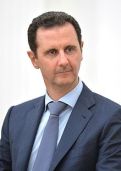 be planning another chemical attack. American pilots have struck forces threatening our allies and shot down a Syrian plane and Iranian-made drones. The probability of direct military confrontation between the U.S. and Russia has risen. Yet the coverage of these incidents and the tactical responses that have been suggested obscure the broader story: The slow-moving campaign against Islamic State is finally nearing its conclusion — yet major, long-range strategic issues remain unresolved.
The real issue isn’t tactical. It is instead the lack of American strategic thinking about the Middle East after Islamic State. Its defeat will leave a regional political vacuum that must be filled somehow. Instead of reflexively repeating President Obama’s errors, the Trump administration should undertake an “agonizing reappraisal,” in the style of John Foster Dulles, to avoid squandering the victory on the ground.
First, the U.S. ought to abandon or substantially reduce its military support for Iraq’s current government. Despite retaining a tripartite veneer of Kurds, Sunni Arabs and Shiite Arabs, the capital is dominated by Shiites loyal to Iran. Today Iraq resembles Eastern Europe in the late 1940s, as the Soviet anaconda tightened its hold. Extending Baghdad’s political and military control into areas retaken from ISIS simply advances Tehran’s power. This cannot be in America’s interest.
Iraq’s Kurds have de facto independence and are on the verge of declaring it de jure. They fight ISIS to facilitate the creation of a greater Kurdistan. Nonetheless, the Kurds, especially in Syria and Turkey, are hardly monolithic. Not all see the U.S. favorably. In Syria, Kurdish forces fighting ISIS are linked to the Marxist PKK in Turkey. They pose a real threat to Turkey’s territorial integrity, even if it may seem less troubling now that President Recep Tayyip Erdogan’s plans have turned so profoundly contrary to the secular, Western-oriented vision of Kemal Atatürk.
Second, the U.S. should press Egypt, Jordan and the Gulf monarchies for more troops and material assistance in fighting ISIS. America has carried too much of the burden for too long in trying to forge Syria’s opposition into an effective force. Yet even today the opposition could charitably be called “diverse.” It includes undeniably terrorist elements that are often hard to distinguish from the “moderates” the U.S. supports. Getting fresh contributions from Arab allies would rebalance the opposition, which is especially critical if the U.S. turns away, as it should, from reliance on the Iraqi forces dominated by Tehran.
Third, the Trump administration must take a clear-eyed view of Russia’s intervention. The Syrian mixing bowl is where confrontation between American and Russian forces looms. Why is Russia active in this conflict? Because it is aiding its allies: Syria’s President Bashar Assad and Iran’s ayatollahs. Undeniably, Russia is on the wrong side. But Mr. Obama, blind to reality, believed Washington and Moscow shared a common interest in easing the Assad regime out of power. The Trump administration’s new thinking should be oriented toward a clear objective: pushing back these Iranian and Russian gains.
Start with Iran. Tehran is trying to cement an arc of control from its own territory, through Baghdad-controlled Iraq and Mr. Assad’s Syria, to Hezbollah-dominated Lebanon. This would set the stage for the region’s next potential conflict: Iran’s Shiite coalition versus a Saudi-led Sunni alliance.
The U.S.-led coalition, enhanced as suggested above, needs to thwart Iran’s ambitions as ISIS falls. Securing increased forces and financial backing from the regional Arab governments is essential. Their stakes are as high as ours — despite the contretemps between Qatar and Saudi Arabia (and others) — but their participation has lagged. The U.S. has mistakenly filled the gap with Iraqi government forces and Shiite militias.
Washington is kidding itself to think Sunnis will meekly accept rule by Iraq’s Shiite-dominated government or Syria’s Alawite regime. Simply restoring today’s governments in Baghdad and Damascus to their post-World War I boundaries would guarantee renewed support for terrorism and future conflict. I have previously suggested creating a new, secular, demographically Sunni state from territory in western Iraq and eastern Syria. There may well be other solutions, but pining for borders demarcated by Europeans nearly a century ago is not one of them.
At the same time, the U.S. must begin rolling back Russia’s renewed presence and influence in the Middle East. Russia has a new air base at Latakia, Syria, is involved in combat operations, and issues diktats about where American warplanes in the region may fly. For all the allegations about Donald Trump and Russia, the president truly in thrall to Moscow seems to have been Mr. Obama.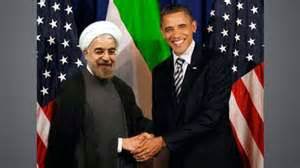
Russia’s interference, particularly its axis with Mr. Assad and Tehran’s mullahs, critically threatens the interests of the U.S., Israel and our Arab friends. Mr. Assad almost certainly would have fallen by now without Russia’s (and Iran’s) assistance. Further, Moscow’s support for Tehran shatters any claim of its truly being a partner in fighting radical Islamic terrorism, which got its modern start in Iran’s 1979 revolution. Both Iran and the Assad regime remain terror-sponsoring states, only now they are committing their violence under Russia’s protective umbrella. There is no reason for the U.S. to pursue a strategy that enhances Russia’s influence or that of its surrogates.
As incidents in Syria and Iraq increasingly put American forces at risk, Washington should not get lost in deconfliction negotiations or modest changes in rules of engagement. Instead, the Trump administration should recraft the U.S.-led coalition to ensure that America’s interests, rather than Russia’s or Iran’s, predominate once ISIS is defeated.’ https://www.gatestoneinstitute.org/10601/post-isis-strategy
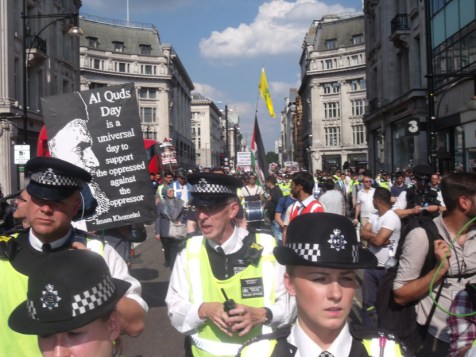 London, where Hezbollah terror organization flags were permitted to fly.

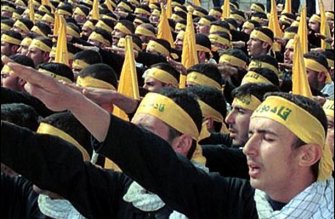 can bring a Hezbollah flag to show support for the political wing of Hezbollah. This is because the political wing of Hezbollah is not a proscribed organization.”
 support of the Palestinians and condemned Israel. In the past, Corbyn has referred to both Hamas and Hezbollah, as his friends. Since becoming leader of the Labour Party, Corbyn has been accused of ignoring a rise in anti-Semitism in the party.’
 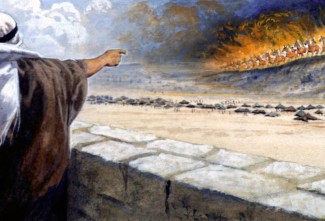 LORD is round about his people from henceforth even for ever’ Psalm 125:2.
 Down House lies nestled in the beautiful Kentish countryside of southern England. This fabulous residence housed the eminent naturalist, his wife and ten children for a period of forty years. It was here that he conducted much of his research and developed his theory of evolution by natural selection. It was in the study at Down House that he wrote his most influential work,
 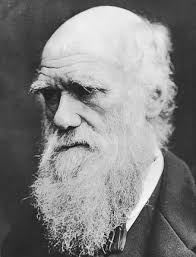 onslaught of evolutionary propaganda, which began as soon as I entered the house. Purchasing my ticket from the gift shop, I was left to peruse the large bookshelf of contemporary works on evolution by some of today’s most prominent atheistic scientists. The narration on the audio device used on the guided tour is by none other than naturalist extraordinaire,
 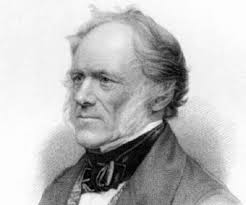 mantel in Darwin’s study is an engraved portrait of Lyell, testament to the profound impact he had on Darwin’s life. Elsewhere in the house is the first edition of Lyell’s book Principles of Geology which Darwin took with him on the Beagle voyage (1831–1836). Lyell promoted the view known as uniformitarianism, meaning he assumed that geological processes observed today had operated essentially in the same way and at the same rates in the past. Thus the slow erosion of river valleys seen today, or the gradual depositing of sediments, were understood to indicate that deep valleys and extensive sedimentary rock strata must have been formed slowly over millions of years. According to this view, the rocks provide a picture of Earth’s long history, and one of a slowly changing world, with fauna and flora appearing and disappearing over long periods of time. This provided the ‘bedrock’ upon which Darwin could build his theory of evolution, which posited natural selection as the mechanism by which new species arose. However, it is crucial to note that the Lyellian view of geology was not a theory derived solely from geological observation and scientific enquiry. Rather, there was an ideological bias involved too; as Lyell himself admitted, he wished to “free the science [of geology] from Moses” (see
  banner with the title ‘Darwinism versus Christianity?’ poses this question to museum visitors:
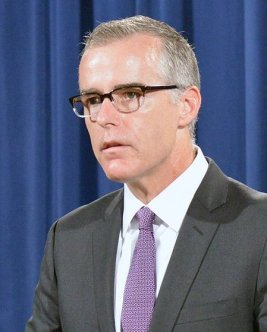 Hillary’s support for the state senate in Virginia, has now put the entire FBI apparatus at the disposal of a key Democratic Party constituency group, the LGBTQ lobby, with “Q” meaning queer.
 23,000 ISIS supporters in this country that are known about at present, have gone on to social media to create social divide and to attempt to weaken their perception of government security in this.”


