Genesis 1:24 “And God said, Let the earth bring forth the living creature after his kind, cattle, and creeping thing, and beast of the earth after his kind: and it was so.”
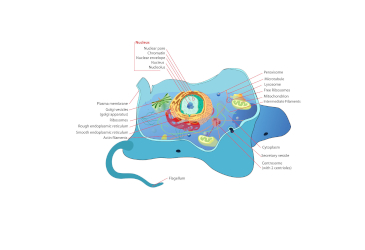
‘According to the Encyclopaedia Britannica, animals evolved from unicellular eukaryotes. Eukaryotes are cells that contain a clearly defined nucleus. This membrane enables the two stages (coding and decoding) of protein synthesis to be separated. According to the encyclopaedia, this has enabled different types of cell to evolve to do different jobs. However, no mechanism seems to be available whereby the extra information needed for this variety of cells would be created. Plants and fungi are also presumed to have evolved from such eukaryotes, but they both have semi-rigid cell walls. Animal cells do not, and it is this property that evolutionists suppose has led to the wide variety of movements and other abilities peculiar to animals.
At every stage in a supposed evolutionary process there needs to be a spontaneous production of new genetic information. Yet, the only mechanisms seen are the coding and decoding of existing information. Information is copied from DNA to RNA, then transferred in order to construct proteins.
This is why the biblical account of where animals came from is so much more scientific. The Bible refers to animals reproducing after their kind. The biblical kinds of animals comprise those pools of genetic information, outside of which animals do not breed. So all the information needed for every variety of cell and organism was found in the DNA of those kinds as originally created. Information, genetic or otherwise, is not produced by random accidents – it is planned and designed.’https://creationmoments.com/sermons/origin-of-animals/?mc_cid=f4a834dfec&mc_eid=00c1dcff3c
Genesis 1:29 “And God said, Behold, I have given you every … tree, in the which is the fruit of a tree yielding seed; to you it shall be for meat.”
‘Presumably, before the fall into sin, we didn’t have any bad cholesterol, or at least it didn’t do any damage in our bloodstream. The so-called “bad cholesterol” is low-density-lipoprotein. It’s called bad because it tends to cause our arteries to clog unless countered by the so-called “good cholesterol” or high-density-lipoprotein.
Based on earlier research, scientists wanted to test the idea that substances in orange juice could improve levels of good cholesterol. Volunteers had their cholesterol levels checked on a regular basis during the test period. After six weeks of a low cholesterol diet, they were to drink one glass of orange juice every day for four weeks. The result was a 5 percent increase in the good cholesterol. Then they drank two glasses of orange juice per day for four weeks. The result was another 7 percent increase in good cholesterol. Then they were directed to drink three glasses per day. The result was a 27 percent overall improvement. Surprisingly, researchers found that five weeks after they stopped the three glasses-a-day portion of the experiment, their good cholesterol remained high.
Psalm 40:3 “And he hath put a new song in my mouth, even praise unto our God: many shall see it, and fear, and shall trust in the LORD.”
‘Evolutionists often claim that language and music evolved independently of each other. However, new research along several lines is showing that there is a close connection between music and language.
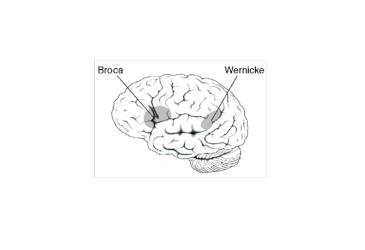
Researchers have been studying the effect of music on verbal comprehension. Electrical activity within the brain was tracked, using electrodes attached to the scalps of volunteers. They found that those volunteers who had just heard the trilling of flutes, for example, identified the word “bird” a split second faster than those who had not heard the music. This effect is called priming. When volunteers heard a church anthem, they more quickly identified the word “devotion” than those who did not. The study showed that these effects were consistent, whether the words had concrete meanings, were cultural references, or were abstract concepts. Other research has shown that when a region of the brain called Broca’s area is damaged, both recognition of harmonic chords as well as language are impaired, also suggesting a connection between language and music.
Both music and language are gifts of God. As the Psalmist noted, the songs he sang were placed into his mouth by God. Genesis tells us that Adam and Eve could talk the day they were created. While music isn’t mentioned, we see that within a couple of generations, they were making musical instruments and must therefore have played music.’https://creationmoments.com/sermons/music-and-language-are-linked-3/?mc_cid=6889ab039f&mc_eid=00c1dcff3c
‘You have likely heard it said, or said it yourself, “Everywhere we look we see design.” Obviously, one would fully expect believers in biblical creation, and advocates of Intelligent Design, to attest to design in the creation—hence the many books and countless articles in magazines like Creation, journals, newspapers, and on the web, plus the plethora of videos on DVD and online.
Living things certainly look designed. Some people are surprised to learn that even well-known, militant atheists and evolutionists will admit this fact, as the following three cases illustrate. Let’s hear first from British biologist Richard Dawkins:
“Living things are not designed, but Darwinian natural selection licenses a version of the design stance for them. We get a short cut to understanding the heart if we assume that it is ‘designed’ to pump blood.”2
Director of The Skeptics Society (US) Michael Shermer agrees:
“The design inference comes naturally. The reason people think that a Designer created the world is because it looks designed.”3
So does American evolutionary biologist and Intelligent Design critic Jerry Coyne:
“If anything is true about nature, it is that plants and animals seem intricately and almost perfectly designed for living their lives.”4
In the above instances, Dawkins, Shermer, and Coyne had living organisms in mind. But on a cosmic scale, too, top scientists affirm design. Charles Townes (1915–2015), who shared the Nobel Prize for Physics in 1964, unashamedly affirmed the universe was God-made:
“Intelligent design, as one sees it from the scientific point of view, seems to be quite real. This is a very special universe: it’s remarkable that it came out just this way. If the laws of physics weren’t just the way they are, we couldn’t be here at all. The sun couldn’t be there, the laws of gravity and nuclear laws and magnetic theory, quantum mechanics, and so on have to be just the way they are for us to be here.”5
So, to repeat, wherever we care to look we observe design. This being so, why is it that many people today seem unable (or unwilling) to accept the evidence of their eyes?
Design denial
Recall that Richard Dawkins actually admits that “a short cut to understanding” living things is gained by assuming that they are designed—even though he emphatically rejects that any designing intelligence was involved; and certainly not the God of the Bible. He is very insistent upon this point, but also inconsistent! And those who disagree with him—who believe instead that the Creator God is behind all the design we see—he calls deluded. Of course, not all atheists and sceptics go as far as Dawkins in their rhetoric. Nevertheless, an increasing number of people in our secular society are buying into the lie that design denial is synonymous with (even necessary for) scientific integrity. They are persuaded that design denial is an entirely sensible position.
‘Talk about design if you really must, but whatever you do, don’t bring God into the discussion.’ That, they claim, is bad science! I am reminded of the line from Shakespeare’s Hamlet, “The lady doth protest too much, methinks.”6 You can substitute “lady” with any spokesperson for the secular scientific establishment who claims that it is unscientific to follow the trail from designed things to the Designer—a claim that is contrary to the Bible (e.g. Romans 1:20). No, we really should follow where the scientific evidence leads us. We have nothing to fear from facts, only fact-denying dogma. Beware of those who say otherwise, whatever their credentials.
Anything that has the hallmarks of intimidation and propaganda should be treated as such. The following words are very apt, a fictional description of the ruling Party of the totalitarian state of Oceania, in George Orwell’s dystopian novel Nineteen Eighty-Four: “The Party told you to reject the evidence of your eyes and ears. It was their final, most essential command.”7 Again, applying this to the evidence of design before our eyes, we say no. If it looks like a duck, walks like a duck, and quacks like a duck—it is most likely a duck. If something looks designed, and the assumption of design will actually help our understanding of it, it is special pleading to claim that the ‘science’ of Mother Nature, Lady Luck, and Father Time has made the Designer God redundant. In recent years, new scientific evidence has not been kind to the idea that unguided natural selection and genetic mutations over deep time produces sophisticated design (see ‘Evolution explains everything about life’).8
The Maker’s marks
The hallmarks of design are everywhere we care to look. In making the point that Jesus was far greater than Moses, one Bible writer wisely affirmed, “For every house is built by someone, but the builder of all things is God” (Hebrews 3:4). This is not the place to delve further into that passage, but don’t miss the message: if the architect and construction workers are the ones who deserve the credit for an impressive house, the One who is “builder of all things” even more so.
When something “looks designed” (Shermer), even “perfectly designed” (Coyne), we do indeed get “a short cut to understanding” (Dawkins) if we acknowledge it to be so. Trying to avoid this leads to a sort of cognitive dissonance, a conflict between two contradictory ideas—as in, ‘it looks designed, let’s pretend it’s designed as it’ll help us understand it, but let’s be sure to keep telling ourselves it is not designed.’
In his most recent book, Return of the God Hypothesis (2021),9 Stephen Meyer reminds his readers that:
“… many of the founders of modern science did not just assume that the universe had been designed by an intelligent agent. They also argued for this hypothesis based on discoveries in their fields of study. Johannes Kepler … Robert Boyle … Carl Linnaeus. Many other individual scientists made specific design arguments based upon empirical discoveries in their fields.”10
These great scientists of the past, rather than denying the design that stared them in the face (and suffering cognitive dissonance), delighted in it! This was a vital factor in their fruitfulness as outstanding scientists.
‘Delighting in design’ is certainly true of the editorial team of CMI’s Creation magazine, as well as the many authors and graphic artists who contribute to each new issue. Consider subscribing if you don’t already receive it—read, learn, and share it with others.
Let us avoid the foolish mistake of ascribing greatness to the things that are made. Christians should also help friends, colleagues, and family members to avoid this pitfall. Instead, we must be sure to worship the Maker whose marks we have observed in His manufactured creatures—evidence for God’s Grand Design is all around us. Merely to delight in the created designs themselves, while robbing our Creator of the glory that is rightfully His, is sheer idolatry (see Romans 1:25).
Published: 13 December 2022
References and notes
This first appeared in CreationExtra, CMI-UK/Europe, March 2022. Return to text.
Dawkins, R., The God Delusion, Bantam Press, London, p. 182, 2006 (emphasis added). Return to text.
‘Cambridge Dictionary has been accused of giving in to “woke activists” by changing its definition of “woman” to be inclusive of those who identify as transgender.
‘As we begin to emerge from the tunnel of the COVID crisis and all of the biowarfare, information warfare, WHO, WEF and US Department of Homeland Security mismanagement which has caused so much damage, we are being presented with a “Great Reset” vision of a fourth industrial revolution, transhumanism, and a new class structure of Physicals, Virtuals, Machines and “Davos Man” Overlords which is being globally pitched by the World Economic Forum and its acolytes as the inevitable outcome.
Pointing out the naivety and flaws in the reasoning of Klaus Schwab and his wingman Yuval Noah Harari is a favorite trope of those writing from an alternative perspective. This recent essay, titled “The Dangerous Populist Science of Yuval Noah Harari” (06 July 2022, Current Affairs) provides an example of the ease with which Harari’s popularized dark visions can be dissected and revealed as sensationalist tripe. As author Darshana Narayanan summarizes, “The best-selling author is a gifted storyteller and popular speaker. But he sacrifices science for sensationalism, and his work is riddled with errors”. Based on my reading, the same critiques apply to the books “COVID-19: The Great Reset” and “The Great Narrative” by Klaus Schwab and Thierry Malleret. But the power of the WEF and its global army of trained agents to direct public policy at both national and transnational levels forces us all to take their poorly reasoned arguments and dark musings seriously.
It is one thing to criticize someone else’s vision of the future, but quite another to develop a compelling alternative. I have been traveling the world, trying to advance the cause of medical freedom and help others make sense out of what we have all experienced over the last three years. During these travels, I have found that many leaders from the various independently developed resistance groups often speak of similar things; a rejection of centralized authority, a need to build organizational structures which will not merely recapitulate the same leadership failures of present social, political, and corporate structures, and a vague sense of a more decentralized world. This is often posited as the alternative to the globally centralized, utilitarian/marxist/command economy, Malthusian corporatist/fascist vision promoted by the WEF, and increasingly by the United Nations, World Trade Organization, Bank of International Settlements/Central banks and the World Health Organization.
Is the dark vision of the fourth industrial revolution, transhumanism, fusion of man and machine, and total centralized control by a small group of unelected elite Overlords inevitable, as Klaus Schwab and Yuval Noah Harari would have us believe?
I recently learned of Christopher Michael Langan, who has been quietly developing one alternative vision which incorporates many aspects of what I have heard many global leaders within the medical freedom movement beginning to explore. Mr. Langen refers to this vision and model of an alternative future as “The Cognitive-Theoretic Model of the Universe” (CTMU). When I first read about these ideas, they struck me as truly transformational in the same way that my first introduction to Mattias Desmet’s “Mass formation” theories have been. It is useful to remember that this theory of Mr. Langan was developed well before the COVIDcrisis, even though much of what he envisions and describes is prescient in retrospect.
By all accounts, Mr. Langen may be one of the most intelligent currently living individuals on the planet, and like many with an IQ measured greater than 150, it can be a challenge for the vast majority of us to follow some of his more advanced logic and writing. In his commitment to living a “double-life strategy”, on one side a regular guy, doing his job and exchanging pleasantries, and on the other side coming home to perform equations in his head and working in isolation on his Cognitive-Theoretic Model of the Universe, I find many similarities with the way I have chosen to live my own life. Plus, he lives with his wife Gina (née LoSasso), a clinical neuropsychologist, in northern Missouri where they own and operate a horse ranch. I don’t know about you, but this sounds like someone I would like to meet and spend some time with.
Christopher Langen, weightlifter, construction worker, cowboy, forest service firefighter, farmhand, for over twenty years, a bouncer on Long Island, New York, and a super genius.
Here is a lightly edited transcript of the video clip attached above:
We’re approaching a juncture, and this is really a bifurcation into possible futures. One of those futures will take us toward a centralized form of government. It’s more or less like a hive. A certain cohort of elites are going to be in charge and everybody else is going to be… They’ll be the overclass and everybody else will be a kind of underclass, which serves them and does pretty much what they’re told.
On the other hand, we can go in another direction, which is to distribute responsibility and decision making power over everybody. And of course, that takes enhanced intelligence and responsibility. So there’s a certain challenge associated with this. We have to make up our minds very quickly how we’re going to do this. If we want to distribute responsibility, then the first thing that we need is a sound understanding of human nature and the nature of reality, and this is what I propose to bring to bear on the problem.
Mr. Langen refers to the two alternative futures which he has focused on as involving singularities, alternative nodes through which humanity will pass. His language for describing these two consists of “Metareligion as the human singularity” and the “Technology singularity”. The technology singularity which he envisions is very aligned with the fourth industrial revolution/transhumanism dystopian corporatist/fascist government described by Schwab, Malleret, and Harari.
What I find particularly relevant to the current challenge of visualizing an alternative to the mutterings of the WEF and its acolytes is Christopher’s vision of a separate reality from the one that they wish to use in “shaping” a future.
Mr. Langen’s 2002 publication “The Cognitive-Theoretic Model of the Universe: A New Kind of Reality Theory” provides an example of the densely reasoned complex explanations which he often provides, in which he discusses concepts which rely on language and terms which he has had to personally develop because the English language is not sufficient to allow him to adequately express his ideas and insights. Fortunately for neophytes such as myself, his 2018 essay “Metareligion as the Human Singularity” (published in the journal “Cosmos and History: The Journal of Natural and Social Philosophy”, vol. 14, no. 1) is much more accessible.
If, like me, you find the vision, thought and insights which I have tried to capture with the quotes below to be useful in imagining a better, decentralized future which offers a more desirable vision of the future, I recommend reading the entire work and then venturing a journey into the many podcast interviews and writings of this home grown American genius and philosopher.
To understand his own identity, man requires a coherent and therefore monic self-model reflecting its psychological coherence and relating it to all levels of reality. That is, man requires a valid interpretation of the human individual in society, and of the individual and society in reality at large. This interpretation must take the form of an unbroken correspondence spanning the extended relationship between man, as an inhabitant of reality, and reality in its most basic and universal form; man must see himself as an integral part of reality, and reality as an extension of his own being within a single unified ontology or metaphysics. In short, man and reality must share a common metaphysical identity.
Where metaphysics is a language expressing the relationship between mental and physical reality, spirituality can be understood as the metaphysical essence of human identity, and religion as its organizational manifestation. In its various benign forms, religion provides man with self-understanding and a sense of community … a model of the individual and his or her relationship to other people, society, and reality at large. Religion tells people who they are, and mankind what it is, by establishing their relationship to the global environment on the spiritual level; it is a binary relationship of man to his real environment, and where the global environment of each human being includes all others, the relationship of mankind to itself.
The spiritual model of self, the extended man-reality relationship required by religion, is thus a stratification of human identity from the individual to ultimate reality, the level of reality that cannot be explained in terms of anything prior to itself or any sort of exterior embedment. This follows from the fact that man is embedded in reality and thus shares all of its most general and ubiquitous properties, up to human limitations of structure and dynamics. Parallel to this degree of extension is the outward extension of self that is sought in certain Asian religious traditions; the self becomes ever more expansive as its hidden depths are plumbed.
But here we must note that the phrase “ultimate reality” is necessarily a partial description of God, incorporated in the (otherwise variously defined) identity of all viable monotheistic religions. Any God not incorporating ultimate reality could exist only in a properly inclusive reality partially beyond His influence and creative power, and would thus come up short in virtually every major strain of monotheism. On the other hand, this description holds regardless of any more specific properties incorporated in various definitions of God.
DUALISM: REALITY TORN IN TWO
In mainstream social and economic theory, a human being is understood as a mechanistic automaton driven by individual self-interest and governed by impersonal laws of nature and rules of behaviorism. Human automata are subject to conditioning on the basis of individual self-interest, which is a function of the individual’s pleasure and happiness, freedom from want, pain, and sadness, and standards of biological fitness including survival and reproduction, all of which inhabit a standardized economy with a monetary metric. Man is thus simplistically viewed as an economic agent subject to monetary control, through centralization of which the entire future of mankind can in principle be mechanistically determined by the calculated pushing of buttons. Obviously, this dualistic view of man represents a complete negation of human dignity and sovereignty, reducing the human race to cattle. It is also incompatible with any kind of religion other than that referred to by Marx as an “opiate of the masses”.
Sound familiar? This is the vision which unites the writings of Schwab, Malleret, and Harari, and by extension the World Economic Forum. This “man as economic agent” is essentially the fundamental unifying model currently shared by the WEF and its globalist affiliate organizations.
Langen then launches into some definitions before describing his alternative.
For present purposes, a “singularity” is a point at which a system must undergo a directional break, jump through a limit, or be redefined in order to survive regardless of how it may evolve before or after. Accordingly, it can be understood as a kind of systemic destiny, an inevitable convergence of possible paths or trajectories of systemic evolution. Paths converge on points, and where such a point marks a sharp change in the smooth overall trajectory of a system, it comprises a kind of systemic “metapoint” which can be seen as marking a systemic mutation or change of inertia. This provides a tentative mathematical conceptualization of “singularity” for social systems.
The related forms of dualism thus far discussed — Cartesian dualism, naturalism, NOMA [the “non-overlapping magisteria” of science and religion], and so on — are opposed to the human need for a coherent spiritual identity. This implies a bifurcation or divergence, a human evolutionary choice between two possible adaptations or destinies respectively corresponding to the anthropic and technological aspects of an impending “singular” transformation. Each possible destiny corresponds to the dominance of one aspect over the other, and may be associated with its own conventional type of singularity.
On one side is the Human Singularity, a mass realization of the expansive spiritual identity of the human species. Basically, this is the mass spiritual awakening that we have been led to expect by, e.g., certain currents in “New Age” thought. The prototype for this kind of singularity is the Omega Point of Pierre Teilhard de Chardin, representing an evolutionary terminus and divine spiritual unification event through which mankind, and reality itself, will achieve “Christ-Consciousness” and be forever transformed.
On the other side is the Tech Singularity, seminally formulated by the celebrated mathematician John von Neumann as the approaching juncture at which “technological progress will become incomprehensively rapid and complicated”, prior to which “the ever-accelerating progress of technology … gives the appearance of approaching some essential singularity [italicized for emphasis] in the history of the race beyond which human affairs, as we know them, could not continue” (Ulam, 1958). In short, von Neumann foresaw an uncontrollable technological quickening, a sudden acceleration of complexity followed by the transformation (or extinction) of humanity.
Most discussions of the Tech Singularity have been naive to the point of disingenuity, boiling down to starry-eyed encomiums to the power of human intelligence to inventively couple with reality on the physical level of being using technological marvels both real and imagined, including implants, prosthetics, genetic engineering, virtual realities, and above all, a merging of human intelligence with AI. The problem with such discussions is that they seem to inhabit a socioeconomic and political vacuum, whereas in fact, the singularity concept is fraught with worrisome complications involving economic and sociopolitical factors apart from which it cannot be properly evaluated.
The Human and Tech Singularities relate to each other by a kind of duality; the former is extended and spacelike, representing the even distribution of spiritual and intellectual resources over the whole of mankind, while the latter is a compact, pointlike concentration of all resources in the hands of just those who can afford full access to the best and most advanced technology. Being opposed to each other with respect to the distribution of the resources of social evolution, they are also opposed with respect to the structure of society; symmetric distribution of the capacity for effective governance corresponds to a social order based on individual freedom and responsibility, while extreme concentration of the means of governance leads to a centralized, hive-like system at the center of which resides an oligarchic concentration of wealth and power, with increasing scarcity elsewhere due to the addictive, self-reinforcing nature of privilege. (Note that this differs from the usual understanding of individualism, which is ordinarily associated with capitalism and juxtaposed with collectivism; in fact, both capitalism and collectivism, as they are monopolistically practiced on the national and global scales, lead to oligarchy and a loss of individuality for the vast majority of people. A Human Singularity is something else entirely, empowering individuals rather than facilitating their disempowerment.)
The existence of two possible singularities presupposes a point of bifurcation or divergence beyond which the evolutionary momentum of mankind must carry it. Presently, all of the momentum belongs to the Tech Singularity; it is preferred by the financial, corporate, and governmental interests which drive the general economy. This momentum is reinforced by the seeming unavailability of alternatives, i.e., the nonexistence of any other track onto which society might be steered in order to escape an oligarchical AI lockdown. It is one thing for humankind to awaken en masse to its impending enslavement through a seemingly inevitable Tech Singularity; it is quite another to have a superior alternative clearly in view.
In order to reach any alternate destination whatsoever, humanity must understand what has been driving it toward the Tech Singularity. At this point, the reason is clear: the virtually automatic concentration of wealth and power, which has been observed to occur under both capitalism and socialism, fractionates humanity into an overclass and an underclass between which all else is crushed out of existence as though by the jaws of a vise. That is, the top and bottom levels of society become the jaws of a vise which, due to the screwing down of the upper jaw against the anvil-like lower jaw, crushes the middle class and all meaningful competition out of existence, thus normalizing the hive through the economic, physical, and psychological standardization of its drones and workers.
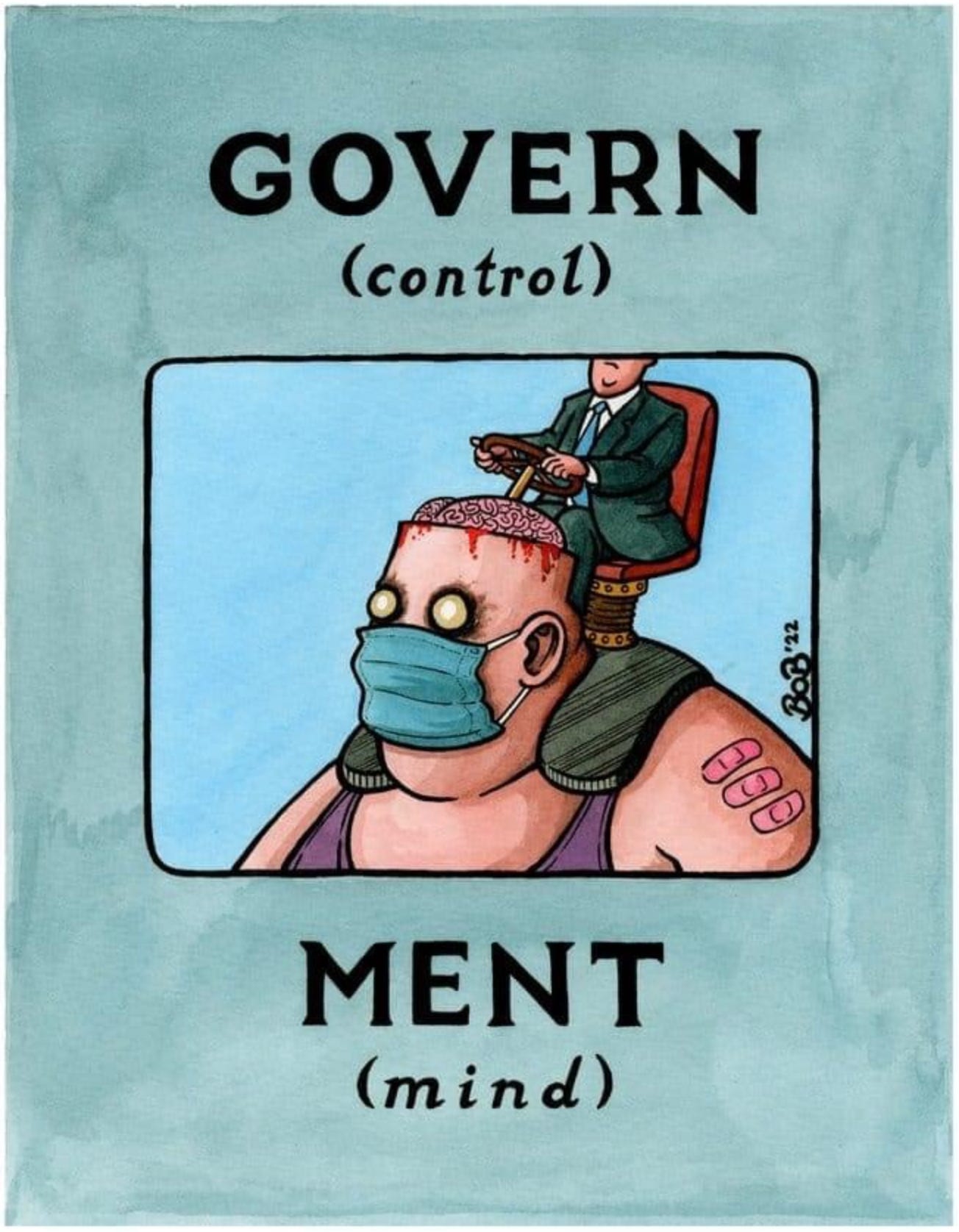
For reasons that should by now be evident, let us call this process a “parasitic divergence” — i.e., an organized divergence of humanity into a parasitic overclass and a relatively impoverished underclass serving as its mind-controlled host, mirroring the gruesome effects of certain obligate parasites on the organisms they attack — and acknowledge that it is driven by the self-reinforcing and therefore accelerating acquisition of wealth, power, and technological control by the rich. Left to run away with itself, this process ultimately leads to a “singular” concentration of wealth and power … a kind of sociopolitical-economic “black hole” that never stops gravitating. As the top jaw of the vise grows smaller, denser, and stronger, the bottom jaw grows larger and weaker; and as human utility becomes increasingly concentrated, every significant increase in the wealth of the overclass translates into a greater amount of misery for the underclass, arbitrarily diminishing the net utility of mankind.
Parasitic divergences have occurred many times in history, but the present one is different. Due to the double whammy of globalization and powerful surveillance and coercion technology, the one now in progress is geographically ubiquitous and quite possibly irreversible. If humanity is to save itself from the insectile, hive-like future associated with a Tech Singularity, the Human Singularity must prevail, empowering mankind to exert sufficient control over the production, distribution, and application of technology to prevent its unlimited oligarchical abuse. To bring this about, it is not enough to merely distribute a cognitive avoidance mechanism out of which the moneyed elite can buy and bribe their way as usual, given the absence of a well-defined alternative direction in which humanity can proceed; rather, an alternative direction must be defined and universally distributed in cognitive and attitudinal form. In short, in order to have a meaningful mass awakening, the content of the awakening must be defined and distributed to the members of humanity, thus immunizing them against parasitic mind control. Because this content must be spiritual, the involvement of religion is unavoidable.
I think that these words and vision speak for themselves. I once again remind that they were first published in 2018. As far as I am concerned, this essay gets the closest to the emergent sense of an alternative future consistent with what many in the medical freedom movement have been groping towards of any that I have ever read.’https://rwmalonemd.substack.com/p/two-possible-futures-for-humanity#play





 whatyareckon