
 |
| OUT OF THIS WORLD! Did you know that the moon is moving away from us? When astronauts went to the moon, they left mirrors on the surface so that laser light could be sent to the moon, bounce off the mirror, and return to the earth. We can measure the time this round trip takes so accurately that the exact distance to the moon can be measured within a fraction of an inch. The moon is moving away from us at about 2 inches/year (called lunar regression). This means the moon is getting farther away each year, and as we go back in time, the moon was closer to the earth. At this measured rate of recession, the moon would have been touching Earth less than 2 billion years ago. It is commonly taught by evolutionists that the moon exists because material spun off of the earth as it was forming about 4.5 billion years ago. Astronomer Edouard Roche long ago calculated that from Earth’s surface to 11,500 miles out, any object would be torn to pieces by Earth’s gravitational forces. Therefore, the belief that the moon came from material originating from the earth has enormous problems because it would have been torn to pieces. Also, if the moon were truly 4.5 billion years old, it would be much farther out in space than the distance we see today. God created the moon on Day 4 less than 10,000 years ago – which means it has only moved a mere ½ mile since creation. The simplest explanation is that the moon is not that old. The moon’s distance from Earth testifies that it is young. “The belief that the moon came from material originating from the earth has enormous problems”https://mailchi.mp/435ebacf7a37/not-of-this-world?e=8233d90bcd |
Creation Science
All posts tagged Creation Science
This article is quite lengthy but well worth the read so just click the link and enjoy the rest of this inspiring testimony.
‘He never desired to be an educator, this remarkable man whose distinguished academic career spanned 68 years and eight decades. And yet, as Dr. David R. Boylan turns 100 on Friday, July 22, 2022, he is still teaching to anyone who will lend a listening ear. And he is still brilliant.
“I never expected, intended, or even thought about being in education,” said Dr. Boylan in a recent interview with Faith Baptist Bible College. “I was an engineer. I had no idea I was going into teaching.”
Boylan excelled in his career, both in research and in teaching. An oil canvas photo of him as the sixth dean of the College of Engineering at Iowa State University hangs in the conference room of Marston Hall as evidence. Advancements in the fields of fertilizer and agriculture are results of his extensive research and patents. The changed lives of those who sat under his teaching in his college Sunday school class are living testimonies. And Faith Baptist Bible College and Theological Seminary in Ankeny, Iowa, has a 100-year legacy of its own whose longevity can be partially credited to the contributions of Dr. Boylan as a former president, faculty, and board member.

Early Years
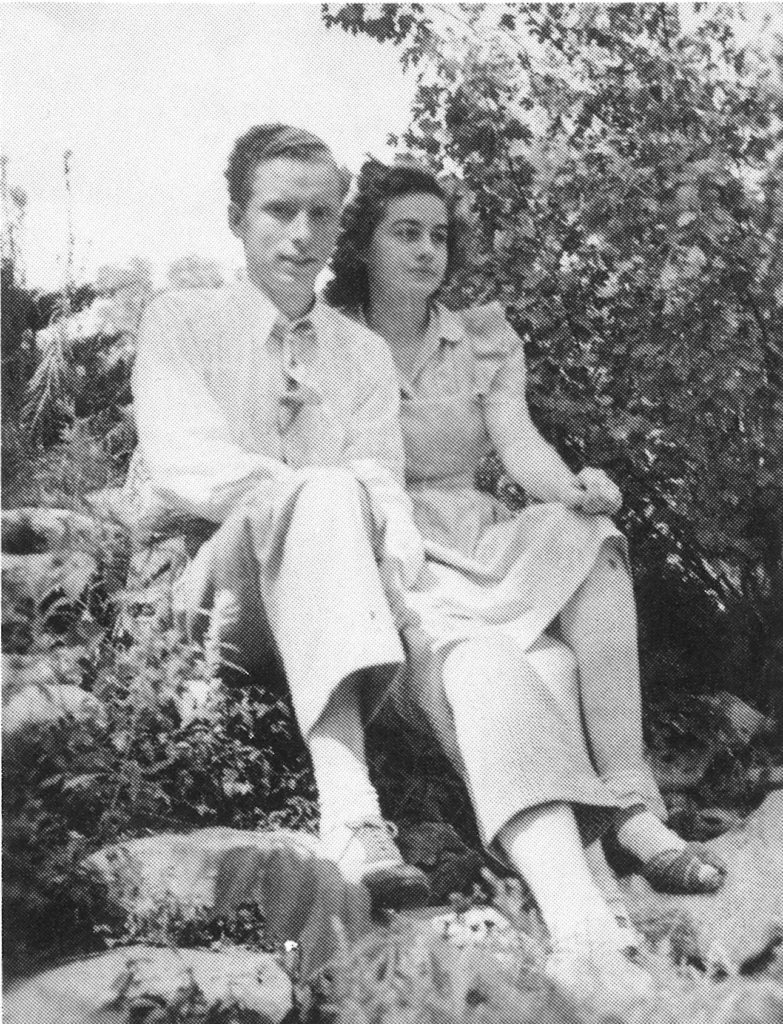
David Ray Boylan was born in Belleville, Kansas, a city of 2,000 people located 155 miles northwest of Topeka near the Nebraska border. His father, an accomplished man in his own right, was an Air Force major who flew combat missions in World War I. The Boylans moved from Belleville to Kansas City early in David’s life, and he spent the majority of his childhood there.
“My young career, I picked up the idea of building things, mechanical things,” said Boylan. “I remember as a young kid in Belleville, Kansas, (I was a little kid), they dug the ditches for the pipelines by hand. I noticed they were using tree limbs to clean their shovels out, so right then, I made little shovels out of orange crates. That was the only place I could get some wood as a kid. I guess I had a desire to do things and that grew. Even until now, I still like engineering.”
Boylan accepted Christ when he was in his early teens. Both his mother and father were Christians, and he was raised in a Christian home. They attended a Baptist church in Kansas City during most of his teenage years and later attended Central Bible Hall where he sat under the teaching of Walter L. Wilson, who co-founded and was the first president of Kansas City Bible Institute, which later became Kansas City Bible College, and finally merged with Midwest Bible College to form Calvary Bible College. The spiritual nourishment David received while attending Central Bible Hall wasn’t the only positive development that occurred. It was also where he met his eventual wife, Juanita.
Engineering Career
Following graduation from high school, David attended the University of Kansas where he earned a Bachelor of Science in Chemical Engineering in 1943. He and Juanita married on March 24, 1944, around the time she also graduated from the University of Kansas with a degree in Bacteriology. The newlyweds moved to the East Coast where David began his engineering career with the General Chemical Company in Camden, New Jersey. He advanced rapidly in his field, becoming a project engineer at General Chemical, then a Senior Chemical Engineer at American Cyanamid Company. David was successful and happy with his work. He had no intention of changing careers. God had other plans.
“All of a sudden, things began to happen,” said Dr. Boylan. “Some would call it coincidence. When coincidences begin to pile up, it’s no longer coincidence.”
The Boylans had settled into life on the East Coast. Mrs. Boylan was a homemaker with a two-year-old and a new baby. A young married couple with multiple children and a stable income did what most people do at that stage of life: they bought a new washing machine. By the 1940s more than half of American households had electric washing machines. Many of these featured new technology; not all of it was perfected, from an engineering standpoint.
“We bought a new washing machine with a powered wringer,” recalled David. “My wife caught her arm in the wringer. She had a new baby and couldn’t take care of the baby, and a two-year-old she couldn’t help.”
It was right at this same time that David had changed jobs to another company as a plant manager. As fate would have it, the company unexpectedly went out of business. The combination of unfortunate events all at once convinced David that these happenings were no longer just coincidences.
“I didn’t have a job,” said Boylan. “We had a baby. We had a family…but no income. I had no choice but to go home (to Kansas).”
Before they settled back into life in “The Wheat State,” David was approached by a friend who gave some advice that changed the course of the rest of his life.
Moving to Ames, Iowa; Early Years at Iowa State College
“Somebody said, ‘Why don’t you go up to Ames, Iowa, and see if you can get a job?’” recalled Boylan. “I had never been to Iowa. I went to Ames on a weekend and got a job as a graduate assistant at Iowa State College (as it was called in those days) and stayed there 60 years. I started off getting my PhD in engineering, and I taught in engineering. I enjoyed every moment.”
Boylan’s illustrious career at Iowa State began in 1948. The College of Engineering (one of the oldest and largest programs in the nation) was so impressed with his real-world experience that he was named Assistant Professor of Theoretical and Applied Mechanics and a graduate assistant in Chemical Engineering. Boylan completed his Doctor of Philosophy from Iowa State College in 1952 (it was renamed Iowa State University on July 4, 1959).
By the time he finished graduate school, Dr. Boylan was promoted to Assistant Professor of Chemical Engineering and eventually Professor of Chemical Engineering in 1956. The three years that followed were some of the most pivotal of his career as his reputation in the engineering field soared to new heights due to his research and development in fertilizer processes and technology.
On March 1, 1959, Dr. Boylan was named Associate Director of the Iowa Engineering Experiment Station at Iowa State University, where he oversaw 160 engineers, graduate assistants, and hourly staff. The purpose of the station was to do research and provide engineering solutions for projects that were relevant at that time, which included the digital computer, soil analysis of highway construction, the manufacturing of fertilizer, and the color television.
Spiritual Life; Impact as a College Sunday School Teacher
While Boylan was rising in the ranks of academia during the 1950s, he didn’t let his career take priority in his life. He kept his spiritual life in a condition that would have passed the strictest Rockwell hardness testing—an important trait for one who consistently taught creation in a public university, often facing resistance from colleagues. He never caved under pressure.
As the cards have poured in for Dr. Boylan’s 100th birthday, many have mentioned his commitment to creation science in a public school environment, according to his daughter, Elizabeth McKee.
“He never ‘fought’ his opponents,” recalled Elizabeth, “but treated them with respect. In return, he gained respect, if not agreement in views.”’https://faith.edu/faith-news/the-scholarly-centenarian-dr-david-boylan-turns-100/
Psalm 119:89-90
“For ever, O Lord, thy word is settled in heaven. Thy faithfulness is unto all generations: thou hast established the earth, and it abideth.”

‘There are those that claim that Evolution is a scientific theory. Scientific theories can be subject to the scientific method. If the same test or experiment is carried out under the same conditions, on different days or locations, the results should still be the same.
The existence of scientific methodology suggests that ideas, referred to as science, actually divide under two headings. The first of these would be the testable, repeatable scientific ideas, which refer to situations here and now. These can be referred to as Observable or Operational Science. This is, in fact, the real science. Not only is there nothing unbiblical about Operational Science, we can insist that such science would not be possible without a rational, biblical worldview.
The other scientific heading would be Historical Science. This is the type of science that refers to one-time, single events that allegedly happened in the past. Because these events are one-time events, they are not repeatable, nor are they falsifiable, because we do not have a time machine to go back and test things. Evolution must fall into this second category. Therefore, the alleged event, when non-living molecules got together to form a living cell, cannot be repeated. Evolution is not testable, and is therefore not Operational Science.
Some might point out that biblical creation is similarly untestable, and must be Historical Science. Although this is true, it merely serves to remind us that science is not the ultimate test of truth. The revelation of God’s word in the Bible is that ultimate truth.’https://creationmoments.com/sermons/can-we-test-evolution-2/?mc_cid=3f99a6adb5&mc_eid=00c1dcff3c
1 Thessalonians 5:21
“ Prove all things; hold fast that which is good.”
‘Science has an elevated position in Western society. There are those who would try to put Christians down, by saying “You have faith, but I have science”. Science, in the abstract, is therefore assumed to be the ultimate truth, and the universal standard, against which everything must be tested.
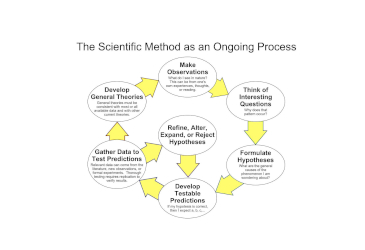
This, it is suggested, is because science is tested. As a high school science teacher, I would suggest to my students that scientific processes could develop as follows: The problem to be investigated is stated. A hypothesis is then developed, which seems to explain this problem, and accompanying observations. After this, an investigation—often by experiment—is designed to test the hypothesis. For this to occur, the hypothesis must be testable, and, indeed, falsifiable. To say that a hypothesis is falsifiable does not imply that it is, or even could be, false. It simply means that it is theoretically possible that an investigative result might disprove the hypothesis.
For example, our hypothesis that hot water hurts is falsifiable, given that you could plunge your hand into boiling water, to see if it feels comfortable. In practice, we know that this would indeed hurt, supporting your hypothesis. Finally, you would carry out your investigation or experiment, record the results, and from them draw a conclusion, that your investigation either supports or disproves your hypothesis.
This important concept of scientific methodology is only possible, because we expect a rational universe, with scientific laws that make sense, and that do not change. Such a rational universe is only possible within a biblical worldview, where random chance events do not take place.’https://creationmoments.com/sermons/method-in-our-science-2/?mc_cid=aff60bfceb&mc_eid=00c1dcff3c
Genesis 1:14-15
“And God said, Let there be lights in the firmament of the heaven to divide the day from the night; and let them be for signs, and for seasons, and for days, and years: and let them be for lights in the firmament of the heaven to give light upon the earth: and it was so.”
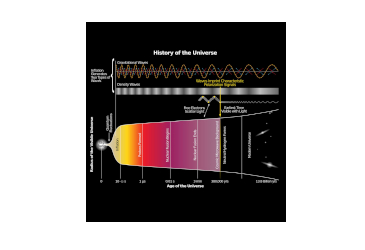
‘Many secular cosmologists believe that the universe came into existence in a singularity, as a result of a quantum event about 14.7 billion years ago. However, this so-called Big Bang theory is not without its problems. Principle among these is the Horizon Problem, which refers to the fact that Big Bangers cannot account for the Cosmic Microwave Background being the same temperature in all directions. This phenomenon would have required different parts of the universe coming to thermal equilibrium by radiation moving at the speed of light. Yet the maximum distance this radiation could travel is considerably less than the size of the universe.
In the 1980s, theoretical physicist Alan Guth proposed the Inflation Theory. In this model, a very rapid expansion of the universe happened from 10-36 seconds to 10-32 seconds after the Big Bang event. This allowed the entirety of the universe to be in close contact for a while, enabling transfer of energy between all parts of the universe.
There is no scientific evidence for this inflation, which is sometimes called the Big Fizz. The extremely short timescale of the event, at the beginning of a period of extremely deep time, gives the whole theory an impression of being a convenient construction, just to make the math work.
Moreover, it creates new problems of its own. There are several different models of inflation, and recent work suggesting that evidence for inflation is now available, turns out simply to disprove some of the models, without validating the concept itself.
As biblical creationists, we know that none of these models are correct. God has explained how and why the universe was created in the first chapter of the Bible.’https://creationmoments.com/sermons/the-big-fizz-2/?mc_cid=7678cb4794&mc_eid=00c1dcff3c
In Job chapter 40 and verse 15 and following we read about a creature called “Behemoth”. https://fb.watch/e3g3yEqhWX/


 whatyareckon