
Christian schools unfortunately change through the years as do churches and preachers. Some change for the better and others for the worse. This is the story of Bob Jones University.
‘Earlier we documented Bob Jones University (BJU) stepping into ecumenical compromise with Franklin Graham. See BJU Embraces Franklin Graham’s Ecumenical Movement. That was the latest among many excursions, engineered by BJU president Steve Pettit, into non-separatist evangelicallism and the ecumenical movement. From Dr. David Beale’s new book Christian Fundamentalism in America I included a brief excerpt in the BJU/Graham article above and in the BJU: Compromised Spiritual Sanctification for Secular Pragmatism article. Dr. David Beale has written an article to expand on and bolster his argument. That article follows. (Originally appeared 12/14/21).
“After being the premier fundamentalist academic institution for eighty-seven years, BJU elected Dr. Steve Pettit in 2014, as the president who steered the University out of separatist Fundamentalism into the inclusive, Broad Evangelical movement,” David Beale, Christian Fundamentalism in America (Maitland, FL: Xulon, 2021), 179, 530.
• Dr. Andy Naselli, in his 2006 BJU dissertation, scorns independent, Fundamental Baptists for giving invitations to “surrender oneself to God.” Naselli criticizes the practice and calls it a “second blessing.” Naselli unsuccessfully tried to identify the Fundamentalist movement with Keswick extremes on the baptism of the Holy Spirit. Naselli then identified with Broad Evangelicalism. He now serves on the faculty of John Piper’s College and Seminary, which are Reformed Charismatic schools urging every Christian to seek all NT gifts, including tongues and healing. Piper claims that “Signs and wonders” and all spiritual gifts of 1 Corinthians 12:8-10 are valid for today and must be “earnestly desired.” Piper says, “Prophecy and tongues will continue until Jesus comes.”1 Naselli is a pastor of Piper’s Bethlehem Baptist Church.
Naselli seeks to transform Fundamentalists into Evangelicalism. In 2019, Dr. Pettit brought Naselli back to BJU to present the lectures for the annual Steward Custer Lecture Series. Naselli’s books were promoted. The late Dr. Custer all his life had been a stalwart Fundamentalist. Naselli represents Broad Evangelicalism. The bond between BJU and Evangelicalism has been clear since the beginning of Pettit’s administration.
• Dr. Sam Horn was executive vice president for enrollment and ministerial advancement at Bob Jones University when, on 2-7-2020, Dr. Pettit announced to all, “Dr. Horn is greatly honored today, and BJU is honored to have one of its own become the next president of The Master’s University and Seminary.” Horn succeeded Dr. John Stead. Dr. John MacArthur, a leading Evangelical, had led The Master’s University and Seminary as president from 1984 to 2018. Dr. Pettit preached for John MacArthur in a conference that year (2020). John Street, Chair of Biblical Counseling at The Master’s University, spoke at BJU’s CoRE Conference March 9–10, 2020. Street is an adjunct professor at Southern Baptist Theological Seminary. By claiming that the word Fundamentalism can have no single definition,2 BJU leaders claim the label separatist but practice non-separatism (inclusivism). With such a notion, BJU attempts to sit on both sides of the fence—Fundamentalism and Evangelicalism—at the same time.
• Under Dr. Pettit’s administration, BJU students are permitted to bond with churches of denominations harboring apostasy.3 The following churches (underscored below) are among those approved for BJU students to attend.
• Covenant Community (Taylors, SC): An Orthodox Presbyterian Church (OPC). On one of their website videos, the pastor poured water on a little child’s head and said, “This is like Abraham’s ‘baptizing his whole house’” (Genesis 17). The pastor substituted the word baptism for the word circumcision and called it regeneration. Augustine and Roman Catholicism devised and standardized this doctrine, which assumes an OT circumcisional regeneration for Jewish males.4 Romanism transformed that doctrine into NT water baptismal regeneration to elect infants. Forms of that doctrine passed into Reformed theology. John Calvin insisted that OT circumcision engrafted the Jewish infant into the covenant [elect] family of God; thus, NT baptism engrafts a newborn child into the body of Christ.5 Reformed doctrine leads many to believe the seed of regeneration is implanted at infant baptism, though salvation might occur later.6
• Woodruff Road Presbyterian Church (Simpsonville, SC), PCA church.
• Second Presbyterian Church (Greenville, SC): A Presbyterian Church in America (PCA). This church’s senior pastor is Dr. Richard Phillips, adjunct professor and member of the Board of Trustees at Westminster Theological Seminary, which enforces no dress codes and allows the use of alcoholic beverages.7
➢ Richard Phillips is also on the Board of Directors of (1) the Alliance of Confessing Evangelicals; (2) the Council of The Gospel Coalition, and (3) the Council of the Gospel Reformation Network.8
➢ On October 12, 2019, at Phillips’ Second Presbyterian Church, Dr. Pettit participated in a Conference on Reformed Theology.
• To begin chapel on February 5, 2018, Dr. Pettit announced, “We are honored this morning to have as our guest Dr. Gene Fant,” president of North Greenville University, a Southern Baptist Convention (SBC) school. Fant was welcomed with a standing ovation.9 The so-called “SBC Conservative Resurgence” has now spiraled into a deadening mix.10
• Calvary First Baptist Church (Greenville, SC): SBC church.
• Roper Mountain Baptist Church (Greenville): SBC church.
• Rock Springs Baptist Church (Easley, SC): SBC church. Dr. Pettit, BJU President, spoke here October 6, 2019.
• White Oak Baptist Church (Greenville, SC): Affiliated with the Southern Baptist Convention, the South Carolina Baptist Convention, and the Greenville Baptist Association. Their lead pastor is Lonnie Polson, BJU Division Chair of Communication of the School of Fine Arts. Their music director is Jeff Stegall, BJU Associate Professor in the Theatre Arts Department.
• For the article, “Bob Jones University Embraces Franklin Graham’s Ecumenical Movement: HaveYou Finally Seen Enough?” click the following link: BJU Embraces Franklin Graham….
• Dr. Steve Pettit permits dress style, music, and entertainment of the world’s style. For the Artist Series of January 27, 2015, he brought in the music group, “Cantus,” which includes beer drinkers and known homosexuals.11
• The following letter was sent to me on 10-14-2021 from a concerned grandfather who has grandchildren at BJU:
In 2021, at Bob Jones University, the first of the fall semester’s artist series was conducted on October 7 in the FMA. The program was titled “Symphonic Hollywood: Featuring the Music of Lee Holdridge.” The guest conductor was Richard Kaufman. The featured selections were beautifully done, and each was announced by Kaufman, interspersed with lavish praise on BJU and its leadership. Kaufman mentioned his background which included his participation with a Los Angeles orchestra in which he played violin for the recording of music for “Animal House,” a raunchy R-rated movie. He expressed no regret for its production. On the contrary, he mentioned that his contribution helped launch his career as a conductor. Not once did he mention any conflict between Christian beliefs and the moral cesspool of Hollywood. Nor did he give any confirmation of Christian belief. Yet he gave the impression that a believer could function contentedly in such an environment. Toward the end of the program, Jay Matthews and another representative, on behalf of the University, awarded Kaufman with a certificate and plaque granting him lifetime membership as an honorary alumnus of BJU. In the program notes on Kaufman, the bio states that “his wife Gayle is a former dancer and actress in film, television, and on Broadway, and his daughter, Whitney, is a highly successful singer and actress.”
All of this conveys to BJU students that a vocation in the worldly Hollywood scene is perfectly acceptable and, indeed highly commendable. The artist series productions have in recent years included more Broadway-type productions, mingled with the brilliant work of such Christian artists as Dan Forrest. “Broadway” sums up the philosophy of the new Bob Jones University— broad and inclusive.
Students are not learning to distinguish the true from the false kinds of entertainment, evangelicalism, and life-styes. This is lamentable and tragic. There was a day when Bob Jones University could be trusted to instill in its students the virtues of a separated godly lifestyle. Now the University simply wants to “fit into” the culture, to accommodate and even imitate its behavior.
Conclusion
Believers identified with the SBC, PCA, OPC, etc. are lending credibility to false teachers and false gospels. The believer who willingly does such is living in sin. People all over the country know that BJU is Evangelical. It is old news. Evangelicals often say, “Identification is a non-essential.” That mindset constitutes the difference between Evangelicalism and Fundamentalism! Indifference is dangerous! It is a path God forbids! “For he that biddeth him God speed is partaker of his evil deeds” (2 John verse 11). One’s personal relationship with the Lord Jesus Christ determines his church identification! “Look to yourselves, that we lose not those things which we have wrought, but that we receive a full reward” (2 John vs. 8). We must never entangle the message of the gospel with man-made organizations and institutions that harbor false gospels.
“Take heed therefore unto yourselves, and to all the flock, over the which the Holy Ghost hath made you overseers…. After my departing shall grievous wolves enter in among you, not sparing the flock. Also, of your own selves shall men arise, speaking perverse things, to draw away disciples after them” (Acts 20:28–30).
Every moment of our lives, we are building our ministries upon either the foundation of gold, silver, and precious stones, or upon a foundation of wood, hay, and stubble. “Every man’s work shall be made manifest: for the day shall declare it, because it shall be revealed by fire; and the fire shall try every man’s work of what sort it is” (1 Corinthians 3:11–13). “For we must all appear before the judgment seat of Christ; that every one may receive the things done in his body, according to that he hath done, whether it be good or bad. Knowing therefore the terror of the Lord, we persuade men” (2 Corinthians 5:10–11a). “And now, little children, abide in him; that, when he shall appear, we may have confidence, and not be ashamed before him at his coming.” (First John 2:28). In Romans 1:1, Paul introduces himself as “a servant of Jesus Christ, called to be an apostle, separated unto the gospel of God.”
Charles H. Spurgeon promised his church, “That I might not stultify [invalidate] my testimony, I have cut myself clear of those who err from the faith, and even from those who associate with them. What more can I do to be honest with you?”12
Dr. Bob Jones Sr. so often cried, “Earnestly contend for the faith. Stand up and fight.”
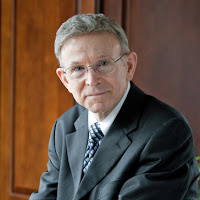
David Beale (Enlarged 12-8-21)
David Beale taught courses on Fundamentalism and Evangelicalism for some thirty years at Bob Jones University and Seminary. He is a prolific writer and historian. Since Dr. Beale retired in 2010 he has taught and preached in schools and churches.
Originally Published December, 14 2021.
FOOTNOTES:
1) John Piper, Signs and Wonders: Then and Now.
2) Letter from a BJU leader to David Beale (2021).
3) BJU Representative Church List
4) Augustine, City of God, 6.26–27; Enchiridion: On Faith, Hope, and Love 43; cf. 93; Sermon 294; and On Forgiveness of Sins, and Baptism 1.27.
5) John Calvin, Institutes of the Christian Religion (4.15.1—22).
6) L. Berkhof, Systematic Theology (Grand Rapids: Eerdmans, 1939), 632–42.
7) Letters from a recent graduate to David Beale (2021); see Paul M. Elliott, Christianity and Neo-Liberalism: The Spiritual Crisis in the Orthodox Presbyterian Church and Beyond (Unicoi, TN: Trinity Foundation, 2005).
8) https://www.bestbiblecommentaries.com/revelation-commentary-richard-phillips/.
10) George Houghton, “Are Conservative Southern Baptists Fundamentalists?” Faith Pulpit, January/February 2004 at: https://faith.edu/faith-news/are-conservative-southern-baptists fundamentalists/; J. Gerald Harris, The Rise and Fall of the Conservative Resurgence: The Southern Baptist Convention: 1979-2021 (Taos, NM: Trust House, 2021); and David Beale, “SBC Today,” in Baptist History in England and America: Personalities, Positions, and Practices (Maitland, FL: Xulon Press, 2018), 581–83.
11) Typical Cantus music and culture
12) Charles H. Spurgeon, “No Compromise,” Sermon No. 2047, delivered on the Lord’s-Day morning, October 7, 1888.’https://indefenseofthegospel.blogspot.com/2021/12/facts-enlarged-discussion-by-dr-david.html


 whatyareckon