
‘ANTARCTIC FLOWERING PLANTS “A CLIMATE WARNING”: Scientists from Italy and UK have been
studying the plants on Signy Island, a small island near Antarctica. They found two native flowering plants named Deschampsia antarctica and Colobanthus quitensis have increased their growth rate and range of habitation over the past decade. They are low growing grasses that grow in clumps on an otherwise rocky, snow-covered island. Researchers suggest the increased grow rate and expansion is the result of warmer summer temperatures and less trampling by fur seals. Whilst the changing conditions are good for these two plants the researchers are concerned that increased temperatures may allow non-native species to gain a foothold and cause “irreversible biodiversity loss and changes to these fragile and unique ecosystems”. They concluded that if global warming proceeded according to the worst case scenario proposed by the IPCC “Earth’s climate by as soon as 2030 could resemble warmer periods such as those recorded during the mid-Pliocene”.
References: Science Alert 19 February 2022, Current Biology 14 February 2022, doi: 10.1016/j.cub.2022.01.074.
ED. COM. These researchers admit the earth has been warmer in the past. Whilst we don’t agree with the
evolutionary timetable that places the Pliocene warm period millions of years ago, we agree there is ample evidence in the fossil record of a warmer world with lush vegetation in the past. So why do these
researchers complain about new warming and new growth? A warm environment with plenty of lush
vegetation makes for a better place for living things than the present cold, barren environment of the
islands around Antarctica.
Similar changes have happened in the northern hemisphere, where we know from history some frozen
wastelands, such as Greenland and Iceland were once warm enough for people to live and grow crops.
The dire predictions about “non-native” species moving in exposes the hypocrisy of modern
environmentalists – they believe in evolution, which is a process of survival of the fittest. The whole concept of “native” species assumes these plants evolved here and cannot live anywhere else. The reality is these plants survive here because others can’t, and there is no reason they could not or should not grow somewhere else given the opportunity. Currently these two Antarctic grasses are the fittest, but if the climate changes and other plants can move in, the new more successful ones will be the fittest.
Again, we are left with the hypocrisy of environmental evolutionists – they claim to believe in continual
evolution, but they don’t want anything doing it!
The IPCC’s latest report, with all its dire predictions, came out in August 2021 and has now been endorsed
by the United Nations.’https://creationresearch.net/wp-content/uploads/2022/Enews/enews-20220303.pdf
Big Bang
All posts tagged Big Bang
Good Ole Charles ‘Darwin proposed that evolutionary changes occur by a long series of small incremental changes over long periods of time. Six decades later Richard Goldschmidt proposed that evolution happened by sudden large changes resulting in new organisms with new structures and functions, which he called “hopeful monsters”. A group of evolutionary biologists at University of California Santa Barbara claim to have found an example of a sudden large change brought about by mutations in a single gene in a plant named Aquilegia coerulea, otherwise known as the Colorado Blue Columbine.
They noticed that approximately one quarter of the population of A. coerulea in central Colorado had flowers that lacked the distinctive nectar spurs seen in Columbine flowers. Instead, the flowers had an extra row of sepals. They studied the genetics of normal and spurless plants and found the change resulted from mutations to a gene named APETALA3-3. The mutations made the gene non-functional.
Hodges, a professor of Biology at UC Santa Barbara explained: “This finding shows that evolution can occur in a big jump if the right kind of gene is involved. When it’s broken, those instructions aren’t there anymore, and that causes it to develop into a completely different organ, a sepal.” He went on to comment: “We did not have a good example of a hopeful monster due to a single genetic change until now.”
The researchers wondered how the loss of function mutations survived in such a large proportion of the population, especially as the mutant flowers lacked nectar spurs. The plants are normally pollinated by moths that feed by inserting their proboscis into the spur, which positions the moth’s head in the right place to collect pollen. According to Scott Hodges, “To get that many of this mutant type really suggests that there’s selection favouring it somehow.” It turns out the mutant plants can be pollinated by bees so they could still reproduce, but the selection advantage that enabled them to survive and thrive was the fact that aphids and deer, which feed on Columbines, did not like the mutant plants as much as the normal plants.
References: ScienceDaily 16 February 2022; Current Biology 16 February 2022 doi: 10.1016/j.cub.2022.01.066
Editorial Comment: Richard Goldschmidt (1878-1958), who proposed the “hopeful monster” theory also recognised that some sudden large changes result in loss of function and he called these “hopeless monsters”. As the mutant columbines can survive, due to being disliked by aphids and deer, they not hopeless, but they are not hopeful either.
As the researchers admit, the change was caused by a gene being broken, i.e. a loss of genetic information. That is degeneration, not evolution. The plant has not gained a structure it did not have before. In fact, it has lost an important structure, the nectar spurs, which reduces its options for being pollinated. If moths with their long proboscises try to feed from the centre of the flower, rather than from the nectar spurs their heads are not close enough to collect any pollen.
The extra row of sepals is not a new structure, and the broken gene didn’t form them. The plant already had sepals. The extra row results from the loss of the signal to make petals muddling the complex sequence of genetic control that occurs during flower formation.
An extreme form extra sepals resulting from muddled genetic signalling occurs in flowers known as green roses. In these the flower bud can only make sepals, and it makes multiple rows of them resulting in a cluster of green sepals with no other flower parts. These are definitely “hopeless monsters” as they cannot reproduce themselves, but they survive because people like them and propagate them by grafting. Creation Research has several specimens in our collection of unusual plants.’https://creationfactfile.com/6475/hopeful-monster-flowers/
‘SCIENTISTS’ BALDERDASH BEATS GURUS: An international team of researchers have conducted a survey to see whether people have higher regard for statements made by scientists compared with spiritual leaders, even if the people don’t understand what has been stated. To do this they presented people with apparently erudite statements that were really nonsense generated by a computer algorithm that puts together modern-day buzzwords and technical terms into grammatically correct but meaningless sentences. The statements were neither overtly scientific or religious. The team surveyed 10,195 participants from 24 countries, asking them to rate how credible they found the statements. The sources of the statements were ascribed to either a person with a fictitious name and described as “a spiritual authority in world religions” or to someone else with a different fictitious name yet described as “a scientific authority in the field of particle physics”. Overall, the survey revealed people gave higher credibility rating to the “scientific authority” source than the “spiritual leader”, even by people who identified as being “religious”. The research team called this phenomenon the “Einstein effect” and summarised their results: “across all 24 countries and all levels of religiosity, scientists held greater authority than spiritual gurus”. They then concluded: “These findings suggest that irrespective of one’s religious worldview, across cultures science is a powerful and universal heuristic that signals the reliability of information”.
References: Science Alert 13 February 2022; Nature Human Behaviour published online 7 February 2022, doi: 10.1038/s41562-021-01273-8.
ED. COM. This last statement may also sound like it came out of the balderdash producing algorithm, but it does make sense if you understand the term “heuristic” which means enabling someone to discover or learn something for themselves. Therefore, these researchers were claiming that people see science, and therefore the teachings of scientists, as the way to find the truth. It is interesting that even people who considered themselves religious put scientists above spiritual leaders. This has provably happened in the Christian church over the past century and a half, as the evolutionary words of Darwin, Lyell, Dawkins and Attenborough and their followers have been elevated above the Word of God on Six Day Creation, Noah’s Flood and other Biblical issues.
It pays to remember that when something is not true, it won’t ever be made true by being said by scientists, no matter how many university degrees they may have. To find the truth you need to go to the One who is the truth – The Lord Jesus Christ. He spoke the truth and backed up His words with actions that only the Creator could do.
Finally, don’t let anyone bluff you with ‘heuristic’ balderdash or big words. If something looks or sounds like balderdash it probably is, and being said by a scientific or religious authority will not change that. God’s Word uses plain language, meant for all to understand. If someone claiming to have scientific or religious authority tries to make it more complicated than it is, or change the plain meaning to suit current popular theories, don’t let them confuse you. If someone tries to bluff you with big words don’t be intimidated. Politely ask them to explain. If they can’t give you an answer in plain language, they probably don’t know what they are talking about.
We were recently called upon to deal with this issue when we were asked about a book by Ken Coulson, a Science PhD who proposed a new theory that to many appears to reconcile Darwin’s and Lyell’s theories with Genesis. The same author also made claims about dogs and evolution. For our response to both his claims see the questions:
What do you think of the book ‘Creation Unfolding’ by Ken Coulson? Is it evolutionist? Answer here.
Dogs have undergone many changes since people have been breeding them. Surely this is evolution? Answer here. Also see the item on dog genes in this newsletter below.
Further questions related to the issue of scientific authority:
A School Chaplain claims students lose faith unless we teach God used evolution. How do you reply? Answer here.
Can you show me one error made by Richard Dawkins? Answer here.‘https://mailchi.mp/creationresearch.net/creation-research-email-update-23rd-february-2022?e=ce21bf0337
Genesis 1:14 “And God said, Let there be lights in the firmament of the heaven to divide the day from the night; and let them be for signs, and for seasons, and for days, and years:”
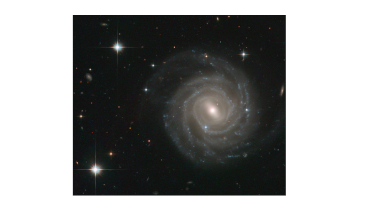
An explosion causes material to be distributed randomly, and, on average, fairly evenly in all directions. But deep-time astrophysicists have a problem because their alleged Big Bang would appear to have produced a universe with a considerable amount of order.
Now it is important to be fair on secular astrophysicists. Although the dichotomy that I have set up is the impression of the Big Bang held by the average person, with only High School scientific training, we should remember that serious astrophysicists view things differently. They do not believe in an explosion that filled up space with matter; they believe in a rapid expansion, from nothing, of space itself, as well as the material in it. But the general accusation still holds. The Big Bang theory cannot account for the structure of the universe.
The universe is highly structured. Stars are grouped into galaxies. The galaxies themselves are not uniformly distributed but arranged into clusters of galaxies.
Of the many models suggested to overcome this problem, most involve material in the universe cooling, so that gravity could draw clumps of material together that would eventually begin the nuclear fusion required to form stars.
While research into gravitational fields and stellar motions is justified, we know that the relevant forces and structures were caused by design. It is God who put the stars in place and who orders their motions. The structure of the universe is fully consistent with God having created it according to His good purpose.’https://creationmoments.com/sermons/structure-in-the-universe/?utm_source=rss&utm_medium=rss&utm_campaign=structure-in-the-universe&mc_cid=42297a9061&mc_eid=00c1dcff3c
Genesis 1:7-8 “And God made the firmament, and divided the waters which were under the firmament from the waters which were above the firmament: and it was so. And God called the firmament Heaven. And the evening and the morning were the second day.”

Big Bang astrophysicists are having a bit of a Big Bang bother over trying to work out whether or not the universe is flat. There are some astrophysicists who claim the universe is flat, and others who claim the universe is round. According to Big Bang scientists, space has more dimensions than we can envisage. Even the “simplest” analogy they can make suggests that the universe is on the surface of a four-dimensional sphere, expanding into that fourth dimension. If one could send a rocket far enough in a straight line in any direction, then it would eventually come back on itself – if the universe is round. Yet, other observational evidence suggests that universe is flat – that if a rocket sets off in one direction, it would never return.
A recent New Scientist article made some explanations about these disagreements, and this highlighted why the mysteries arise. For example, one observation concerns “lensing”, where light is bent by gravitational fields of stars and planets. The article explains: “That is because the extra lensing implies the presence of extra dark matter, which would pull the universe into a finite sphere instead of a flat sheet.” But this assumes the existence of dark matter. As we have discussed in previous Creation Moments, dark matter is really a “fiddle factor”, designed to help Big Bang sums work. Creationist cosmological explanations, starting from the Bible, do not require dark matter and don’t require impossible multi-dimensional universes.’ https://creationmoments.com/sermons/big-bang-bother/?utm_source=rss&utm_medium=rss&utm_campaign=big-bang-bother&mc_cid=015d91feea&mc_eid=00c1dcff3c
Psalm 119:11 “Thy word have I hid in mine heart, that I might not sin against thee.”

‘A recent New Scientist article has suggested that morality is something which evolved rather than being a gift of God. It is hard to see how this might be so. For example, an animal that remains faithful to its mate might seem to be at an evolutionary disadvantage, as there is no robust variety in the genetic makeup of the pair’s offspring, whereas a male that freely mates with every female in sight has a wide genetic variety in its offspring. The seemingly moral behavior would, therefore, be anti-evolutionary.
The New Scientist article argues that many animals exhibit altruistic behavior. They cite the following examples:
Chimpanzees reconcile after a squabble and console each other after a defeat, rats share food with another rat pal, and wolves, fully aware of the danger, defend each other against a grizzly bear.
Since such behavior exists, the author argues, it must have been an evolutionary favorable adaptation that caused it. However, this is a very subtle example of the logical fallacy known as circular reasoning. In order to suggest that morality is a product of evolution, the author has had to assume that evolution is true. It is not. When freed from the need to believe the unscientific concept of evolution, we can see that seemingly altruistic behaviors by animals are exactly the sort of things we should observe in a world created by our great and good Creator.’https://creationmoments.com/sermons/the-evolution-of-morals/?utm_source=rss&utm_medium=rss&utm_campaign=the-evolution-of-morals&mc_cid=f67e27cad6&mc_eid=00c1dcff3c
The above video is Professor John is Head of Reactive Chemistry at St Andrews University and a Fellow of the Royal Society for Chemistry speaking on the origin of life. .
Matthew Cserhati wrote in CREATION magazine Vol. 42, No. 1, 2020 pages 46, 47 that ‘ACCORDING TO evolutionary theory, living things developed from simpler to more complex organisms over billions of years via several major innovations. One such big step was the evolution of multicellular organisms from single-celled ones. This is a crucial phase of evolution, because multicellular organisms allow for multiple cell tissue types. This in turn permits more variability in living beings, allowing for mutations and natural selection to supposedly create a larger variety of organisms.1
Evolution in a test tube?
You might have heard evolutionists make bold claims about experiments which have supposedly shown this important hypothetical step in evolution actually happening. One example involves laboratory experiments with green algae. These algae include single-cell species from the genus called Chlamydomonas (see fig. 1). Another algal taxon (group) is called Volvox, which includes multi-celled globeshaped algae species of up to several thousand cells (see fig. 2). Between these two forms there are several other taxa with intermediate numbers of cells (see fig. 3);2 e.g. Gonium, which is made up of 8–32 cells. Evolutionists propose that the multicellular Volvox once evolved from a unicellular algal species like Chlamydomonas, through several intermediary stages with progressively greater cell numbers.
The experiment
Researchers took several groups of the single-celled Chlamydomonas and put them into test tubes with a singlecelled predator (the protozoan Paramecium tetraurelia) which could consume them. After 750 generations, the researchers discovered that some of the Chlamydomonas had taken on a multicellular form. This way the algae were large enough so that the predators could not eat them.3 They were not ‘fully’ multicellular, breaking apart into single cells before dividing, but seemed to go through a coordinated life cycle. Evolutionists claim that this is a demonstration of at least a significant part of evolution from single-cell forms to multicellular forms, repeating a portion of the history of life. But is it?
The genetics of multicellularity Chlamydomonas and Volvox are very similar at a genetic level even though they look very different.4 What caused this change from single-celled existence to at least a form of multicellularity in Chlamydomonas? Certain genes necessary for multicellularity exist in Volvox. One such gene codes for a protein which is sticky. The cells secrete this sticky material, which keeps them anchored in it, creating a multicellular form. Volvox, the multicellular species, has more copies of this gene than the single-celled Chlamydomonas. It is significant that both species have the same gene, leaving the question unanswered as to how this gene, necessary for multicellularity, supposedly evolved in the first place. Researchers also found that several thousand (up to 20% of) Chlamydomonas genes behaved differently after the test tube experiments than at the beginning.5 This suggests that the environment (the presence
of the predator species) caused the Chlamydomonas cells to take up a multicellular form by switching genes on or off (called epigenesis). Evolution from microbes to men requires new genes with new functions to arise, but these experiments show no evidence of any such new genes. It was known that the genes for the multicellular form already existed in the single-cell species. In other words, the single-celled form already had the potential for multicellularity, needing only to be ‘switched on’ by this environmental cue. Whether it was enhanced by the natural selection of types with high sticky-protein production or not is an interesting question, but the point is still the same—no new genes, no new information, no evolution. This process of a single-celled alga becoming multi-celled involves thousands of genes, and it is in any case inconceivable that they would all evolve in such a short time. But it takes only a short amount of time for these genes to merely change their expression and/ or be selected for, as opposed to the genes themselves arising over millions of years of evolution. It is even possible that these algae species devolved from the multicellular Volvox form to the single-celled Chlamydomonas form through genetic loss. This would certainly be consistent with biblical creation, and with the mutational deterioration going on in living things.
Summary and conclusion
Evolutionists would have us believe that they were able to rapidly ‘evolve’ a species exhibiting a type of multicellularity from unicellular forms in a very short time. This would give us the impression that a major and important evolutionary step has been observed happening, and that it can occur easily and rapidly. However, this picture is false, as we have seen. There is no evidence of a single new gene being produced, and not the slightest indication of how the genetic machinery for multicellularity could have evolved in the first place. When we look at the finer details, as usual we see that the evidence supports creation and not evolution. The evidence implies that these organisms used a highly complex genetic mechanism for switching from a single-celled state to a multicellular state. This mechanism didn’t evolve but already existed, simply needing to be activated. It was created so as to permit this effect. According to Genesis 1:12, “The earth brought forth vegetation, plants yielding seed according to their own kinds”. Neither plants nor green algae such as Chlamydomonas evolved, but are rather the result of God’s creation. The Creator designed even singlecelled algae to be incredibly complex and with a built-in capacity to adapt to various environments.’


 whatyareckon