
The following is from an email sent by https://creationresearch.net/.
 |
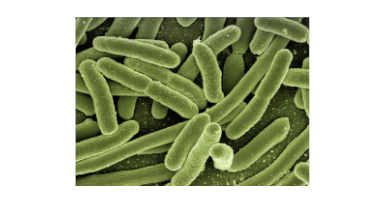
| BAD BACTERIA HAVE BROKEN GENES. We all carry an enormous population of microbes, known as the “microbiome,” in our digestive systems and on other internal and external body surfaces. These include some bacteria that can cause serious disease if they get into body tissues and organs, but most of the time they are harmless or even beneficial as long as they stay in the right place. Scientists at University of Queensland have studied digestive system bacteria to find out what makes some bacteria harmless, i.e. “good bacteria” that stay in their place, while other variants of the same species are “bad bacteria” which invade the body and do cause disease. They investigated a common bacterium known as E coli and found the disease-causing variants had mutations that prevented them from making cellulose, which would normally be part of their cell surface. Mark Schembri of University of Queensland’s Institute for Molecular Bioscience, explained: “The mutations we identified stopped the E. coli making the cell-surface carbohydrate cellulose and this led to increased inflammation in the intestinal tract of the host. The result was a breakdown of the intestinal barrier, so the bacteria could spread through the body.” He summarised their findings: “The ‘good’ bacteria make cellulose and ‘bad’ bacteria can’t.” Sumaira Hasnain, another of the researchers, commented: “Our finding helps explain why certain types of E. coli become more dangerous and provides an explanation for the emergence of different types of highly virulent and invasive bacteria.” The researchers also found mutations that disrupt cellulose production in Shigella and Salmonella, two other intestinal bacteria that can make people ill. In the title of their research paper they describe this disease causing change in different species of bacteria as a “convergent evolutionary pathway”References: ScienceDaily 21 February 2024; University of Queensland News 22 February 2024; IFL Science, 22 February 2024; Nature Communications 21 February 2024 doi: 10.1038/s41467-024-45176-4ED. COM. The “emergence” of dangerous bacteria in a population of otherwise harmless bacteria is change, but it is not evolution. The bad bacteria have lost a function due to a broken gene. That is degeneration, i.e. a downhill process, not upwards evolution. Furthermore, the disease causing bacteria are still the exactly the same species of bacteria as the harmless bacteria. This study is a reminder that mutations do cause real change in living things but do not make new living things or improve existing living things. These mutated bacteria fit well into the Biblical history of the world – all living things, even bacteria, were created good, but are now degenerating and becoming less complex because we live in a world degraded by human sin and God’s judgment.For more on mutations see the Creation Conversations show “Mutations are Us, but we are not evolving” here. DID YOU MISS THESE QUESTIONS on mutations and bacteria?If we started with no mutations, did they evolve or did God deliberately create them? Answer here.Bacteria Evolution: Lenski’s E coli experiment. Has it shown bacteria can evolve new information? Answer here |
 |
| HUMANS VERSUS SNAILS IN VALUE. The Research Institute for the Environment and Livelihoods at Charles Darwin University, Australia conducted an online survey of 2,139 Australians about what they would give priority to saving from destruction in a bushfire (wildfire). Participants were asked to choose from a list of 11 options, including people, animals, plants and buildings, which one was most important or least important to rescue. The options included a person who had not been warned of the approaching fire, a person who ignored warnings, a group of koalas, a population of rare but not unique wallabies, and a population of native snails whose loss would result in extinction of that species. As expected, the participants gave highest to saving a person. The snail species got the thumbs down and came out with a negative priority, i.e. most people choose it as least important. Researchers found this both “fascinating and troubling” that people “valued human life more than the extinction of an entire non-human species”. They also commented “our society values one human life more than the millions of years of evolution that can be eclipsed almost instantaneously in the extinction of another species.”References: The Conversation 13 February 2024; Conservation Biology 19 December 2023 doi: 10.1111/cobi.14230.ED. COM. Rather revealing about the perverted Green Value for fellow humans held by the researchers don’t you think? We must never forget that the true value of anything is determined by its creator. The theory of evolution holds human beings as valueless blobs of cells that came into existence by mindless chance random processes, with no more value than snails, which came into existence by the same mindless process. However, the results of this survey show that deep down the surveyed people know that humans have intrinsic value that is above other living things. That value comes from the fact we are made in the image of Christ our Creator, who made us to be more than just part of an ecosystem, but to have fellowship with Him and each other. Jesus Christ reminded us of His special care for people when He taught his followers that our Heavenly Father does care about other livings, but we are more valuable than they are. See Matthew 10:30-32, Luke 12:6-8.For more insights of snails and slugs from a Biblical perspective see Simon Terry’s presentation on Creation Conversations here. |
 |
| CRUSTACEAN SILK EVOLVED SIX TIMES. Silk is a protein fibre, best known for being produced by silkworms (larvae of moths). Other insects including bees and flies also make silk. Less well-known silk producers include tiny water dwelling shrimp like crustaceans called amphipods. Two scientists from University of Santa Barbara (USA) carried out a survey of silk producing amphipods using preserved and living specimens from many different places. Adding data from the scientific literature they drew up an evolutionary tree and concluded silk production had evolved independently many times and is therefore an example of convergent evolution. They also collected genetic material from some living amphipods and found two genes that also occur in silkworms. Siena McKim, one of the researchers commented that silk making is unlikely to date back to a common ancestor between moths and amphipods, so why and how these genes arose is “is what keeps me up at night.” Reference: Science (AAAS) News 12 January 2024.ED. COM. We have an instant cure for this biologist’s insomnia – forget about trying to fit such diverse creatures as moths and amphipods into artificial evolutionary trees and accept that living things were created as separate distinct kinds. Finding the same genes is not an indicator of a common ancestor, but evidence of the Creator who gave the same genetic information to different kinds where He wanted them to have the same function. |


 whatyareckon