
Adam/Eve
All posts tagged Adam/Eve
Psalm 40:3
“And he hath put a new song in my mouth, even praise unto our God: many shall see it, and fear, and shall trust in the LORD.”
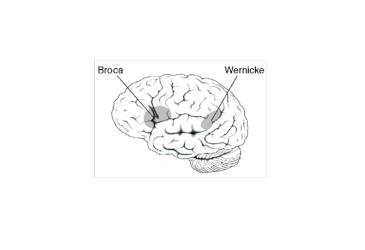
‘Evolutionists often claim that language and music evolved independently of each other. However, new research along several lines is showing that there is a close connection between music and language.
Researchers have been studying the effect of music on verbal comprehension. Electrical activity within the brain was tracked, using electrodes attached to the scalps of volunteers. They found that those volunteers who had just heard the trilling of flutes, for example, identified the word “bird” a split second faster than those who had not heard the music. This effect is called priming. When volunteers heard a church anthem, they more quickly identified the word “devotion” than those who did not. The study showed that these effects were consistent, whether the words had concrete meanings, were cultural references, or were abstract concepts. Other research has shown that when a region of the brain called Broca’s area is damaged, both recognition of harmonic chords as well as language are impaired, also suggesting a connection between language and music.
Both music and language are gifts of God. As the Psalmist noted, the songs he sang were placed into his mouth by God. Genesis tells us that Adam and Eve could talk the day they were created. While music isn’t mentioned, we see that within a couple of generations, they were making musical instruments and must therefore have played music.’https://creationmoments.com/sermons/music-and-language-are-linked-3/?mc_cid=6889ab039f&mc_eid=00c1dcff3c
‘Is evolution compatible with Adam and Eve and the Fall of Man? Keller says it is. This question relates to an article by Time Keller on the Gospel Coalition website. Tim Keller (MDiv, Gordon-Conwell Theological Seminary; DMin, Westminster Theological Seminary) is founder of Redeemer Presbyterian Church (PCA) in Manhattan, chairman of Redeemer City to City, and founder of The Gospel Coalition.
Tim Keller was asked: If biological evolution is true and there was no historical Adam and Eve, how can we know where sin and suffering came from?
His brief answer was: Belief in evolution can be compatible with a belief in a historical fall and a literal Adam and Eve. There are many unanswered questions around this issue. https://www.thegospelcoalition.org/article/sinned-in-a-literal-adam-raised-in-a-literal-christ/
Keller followed this statement with a detailed article, which is mainly the opinions of theologians about the style of literature in Genesis followed by Keller’s own interpretation of Romans 5 and I Corinthians 15.
Keller states he believes in an historical Adam and Eve but does not explain how this is compatible with evolution, since Darwin himself described evolution as the “war of nature” and claimed that long ages of famine and death brought about “the production of higher animals”. (Darwin, Origin of Species, 1859) This is the exact opposite of God’s description of the original created world as “very good”(Genesis 1:31).
So we wonder if has ever bothered to compare such processes to what God said in Genesis 1 and 2, or if Keller really understands evolution, and the processes claimed to bring it about, so let us do that.
Modern day evolutionists use less emotive terms than Darwin, such as “selective advantage” but the process is still the same. This is a flat denial of Genesis 1, which culminates with God looking at all that He had made and declaring it to be “very good” (Genesis 1:31). Darwin and his successors also regard human beings as simply “higher animals,” which is another complete denial of Genesis. Human beings are unique creations made in the image of God.
Keller tries to avoid the issue by referring to various theologians who clearly do not believe Genesis 1 and 2. For example Keller refers to Bruce Waltke who claims that forming Adam from dust of the ground could mean “the author might be speaking figuratively in the same way, meaning that God brought man into being through normal biological processes.”
Keller and Waltke (and their followers) should take note: there are no normal biological processes that turn dust into people. It works the other way around, i.e. people turn to dust – it is happening all the time, but that is a destructive death process and the opposite of a creative process.
Keller spends a lot of time naming names such as C. S. Lewis and hiding behind their opinions. After meandering through the opinions of such theologians Keller summarises his section on Genesis: “In summary, it looks like a responsible way of reading the text is to interpret Genesis 2-3 as the account of an historical event that really happened.” If that is what Keller really believes, he should say so straight away and affirm what the text actually states.
So let us clearly state what the Biblical text does says. The first thing we are told about the creation of human beings is they were special creations made in the image God (Genesis 1:27-28). We are then given details of how God did this in Genesis 2. Adam was made from “dust of the ground,” i.e. raw materials, not some pre-existing animal, and Eve was created from tissue taken from Adam. This is either an accurate description of what God actually did or it is a fairy tale. If it is a fairy tale it has no authority, and sceptics, liberal theologians and other unbelievers are justified in scoffing at it.
There is a theory promoted by John Stott and others that God somehow “stamped His image” on a pair of the evolving hominins that had come into being by evolutionary processes, but this cannot be reconciled with the description of the creation and man and woman in Genesis. For more a more detailed critique of this theory see the question: HUMAN EVOLUTION? Does it create any problems for Christians who believe it? Answer here.
Anyone reading Genesis 1 and 2 will straight away see that it is not compatible with the evolutionary story of how human beings arrived on the planet, and what a ‘non-good’ state the world was in if evolution was true.
Keller claims he believes in a historical Fall of Man but does not go into details concerning Genesis 3 or the chapters that follow, so let us provide them. After judging the serpent and promising a Saviour who would defeat the serpent, God sentenced Adam and Eve to death and cursed the ground. From then on the living world degenerated into violence, disease and general degradation – all things that are not good. If death, disease and struggle had already been in the world, these would not be punishments. Again, there is a clear incompatibility between Genesis and evolution.
Rather than dealing with the actual events of the Fall of Man, Keller goes straight to Romans 5 and 1 Corinthians 15 and correctly states that Paul believed in a literal Adam and we should too. However, Keller reveals his own “pick and mix” attitude to the Bible when he states:
“The key for interpretation is the Bible itself. I don’t think the author of Genesis 1 wants us to take the “days” literally, but it is clear that Paul definitely does want readers to take Adam and Eve literally. When you refuse to take a biblical author literally when he clearly wants you to do so, you have moved away from the traditional understanding of biblical authority.” (word “days” in inverted commas in original)
What Keller really means is that he doesn’t want to take the days of Genesis 1 literally, presumably so as not to upset those who believe in an old earth and millions of years of evolution.
If Keller wants to use the Bible as the key to interpreting itself, let’s see what it says about the days in Genesis. In Exodus we are told that God spoke and wrote down the Ten Commandments, which include this statement:
“Remember the Sabbath day, to keep it holy. Six days you shall labour, and do all your work, but the seventh day is a Sabbath to the Lord your God. On it you shall not do any work, you, or your son, or your daughter, your male servant, or your female servant, or your livestock, or the sojourner who is within your gates. For in six days the Lord made heaven and earth, the sea, and all that is in them, and rested on the seventh day. Therefore the Lord blessed the Sabbath day and made it holy.” (Exodus 20:8-11)
It is clear from the context God is speaking about real days, not some vague long periods or symbolic times. We would also remind Keller that the Creator who spoke and wrote down these words is Christ, who made all things (John 1:3).
For further details see the question: CREATION DAYS: Were the days of creation, as described in Genesis 1, real 24 hour days? Answer here.
Keller goes on to explain how we can benefit from Christ’s death. He states: “We are in covenant with him, not because we are related biologically but through faith.”
This is half-truth. Yes, we are in a covenantal relationship with Christ through faith, but it is only effective because we are biologically related, and Christ is our Kinsman Redeemer. Only a relative can be a Kinsman Redeemer. If we go back through the generations, the entire human race can be subsumed into Adam. All human beings, including Christ in His incarnate form, are descendants of Adam, so we are biologically related to both Adam and Christ, and that is why the covenant applies to us.
Keller skips over the real link between Adam, Christ and us, and completely ignores how death really came into the world. Paul makes it very clear that Adam’s sin brought death into this world, and Christ’s death and resurrection brings eternal life in the next. This is the real basis of Paul’s “one man” principle in Romans 5. One man, Adam, brought sin and death into the world; one man, Christ, paid the penalty, which made forgiveness and new life freely available for all people.
Finally, we have a challenge for Keller and all evangelical Christians who believe that Christ’s death and resurrection will bring them eternal life in a New Heaven and Earth. Think carefully about this question: What will that new world be like? If God created the first earth through a long process of struggle and death, and declared that to be “very good” can we trust Him to keep those things out of the New Heaven and Earth that Christ’s death and resurrection enables us to live in for eternity? Sadly the Gospel Coalition is increasingly characterised by such half truths concerning the gospel. Wake up guys!’https://askjohnmackay.com/tim-keller-on-evolution-adam-is-evolution-compatible-with-adam-and-eve-and-the-fall-of-man-keller-says-it-is/
‘The existence of humans suggests that, at some point, there must have been a first human. Neither evolutionists nor creationists deny this. However, creationists believe that Adam (Genesis 1–2) was the first human. But whether the first human was Adam or some unnamed, recently-evolved person, where did that person learn to speak?
Evidence suggests that humans do not learn to speak unless they are taught by someone who already knows how to speak. Additionally, the archaeological record indicates that fully-developed languages have been in existence as long as humans have been (Elgin 1973, 44). For these reasons, Curtis, in a 1990 article, argues that a personal creator was responsible for the existence of the first human.
Linguistic Evidence
Linguistic research suggests that languages have not evolved from a prehistoric development period (Eglin 1973, 44). Rather, languages have always existed with the same communication potential as they currently possess. In fact, it is possible that they even held greater communication potential in the past.

Archaeological Evidence
The archaeological finds from the past 100 years of excavations have demonstrated that written language appears well developed in the earliest records of civilization. For example, the Ebla tablets date to about 2000 BC. These tablets contain writing in a fully-developed, phonetic language.
How Do People Learn How to Speak?
Some Darwinian anthropologists have suggested that if, in the process of evolution, there was a transition from animal to man, this transition would have included the acquisition of language. However, one of these anthropologists, Humbolt, realized that man cannot speak without already being human. For him, this created an unsolvable problem regarding the origin of speech (Lyell 1873).

Another problem with determining the origin of speech from an evolutionary perspective is that in so-called primitive cultures, the languages tend to be more complex than in more advanced cultures. Furthermore, animals with the physical capability to use logical speech do not do so. Studies have shown that animals that respond to commands do so based on vocal tones rather than the spoken words. Thus, all attempts to solve the evolutionary origin of language have failed.

Every child that learns how to speak learns from someone who already knows how to speak. There do not seem to be any exceptions to this rule. Feral children who grow up without contact with spoken language did not learn to speak until they came into contact with speaking individuals. Once they had heard speech, they were able to learn how to speak (Tomb 1925).
What Does this All Mean?

Since multiple languages appear to have existed in fully developed forms in the earliest known civilizations, it appears that the languages do not have one common root. Rather, each language appeared independently of the others.
This evidence aligns well with the biblical account. From the creation of Adam until the Tower of Babel, there was only one language on earth (Genesis 11:1). Curtis suggests that God taught the first man, Adam, to speak. It is clear that Adam spoke a well-developed language because he was able to name the animals (Genesis 2:19). From that point on, each generation learned to speak from the previous one.
Later, when God confused the languages at the Tower of Babel (Genesis 11:7), He miraculously created a number of additional unrelated, fully-formed languages. The pattern of language learning continued. Each person learned to speak from the previous generation.
Conclusion
The scientific evidence obtained through linguistic and archaeological studies suggest that the first human who learned how to speak must have learned from someone who already possessed the capability of speech. This first person must have learned from someone of a higher order than humans. This correlates well with the biblical account of God’s creation of Adam. Adam must have received the ability and knowledge to speak from God himself. The study of language demonstrates that there must be a creator God. No human can speak a language unless that person has been taught. Furthermore, languages have not arisen from some lesser forms of communication. They appeared early in history, fully developed. The languages present today do not share a common root, suggesting that they appeared as separate, well-developed languages. This accords well with the account of the Tower of Babel.
References
Curtis, William M. 1990. “Human Language Demands a Creator.” The Proceedings of the International Conference on Creationism 2:1, 69–72.
Elgin, Suzette H. 1973. What is Linguistics? Englewood Cliffs: Prentice-Hall Inc.
Lyell, C. 1873. Antiquity of Man, 4th Ed., 518.
Tomb, J. W. 1925. “On the Intuitive Capacity of Children to Understand Spoken Language.” British Journal of Psychiatry 1, 553–555.’https://newcreation.blog/how-did-humans-learn-to-speak/?mc_cid=c226022714&mc_eid=2abe4a38b0
‘Is evolution compatible with Adam and Eve and the Fall of Man?” as Keller says it is?
This question relates to an article by Time Keller on the Gospel Coalition website. Tim Keller (MDiv, Gordon-Conwell Theological Seminary; DMin, Westminster Theological Seminary) is founder of Redeemer Presbyterian Church (PCA) in Manhattan, chairman of Redeemer City to City, and founder of The Gospel Coalition.
Tim Keller was asked: If biological evolution is true and there was no historical Adam and Eve, how can we know where sin and suffering came from?
His brief answer was: Belief in evolution can be compatible with a belief in a historical fall and a literal Adam and Eve. There are many unanswered questions around this issue.
Keller followed this statement with a detailed article, which is mainly the opinions of theologians about the style of literature in Genesis followed by Keller’s own interpretation of Romans 5 and I Corinthians 15.
Keller states he believes in an historical Adam and Eve but does not explain how this is compatible with evolution, since Darwin himself described evolution as the “war of nature” and claimed that long ages of famine and death brought about “the production of higher animals”. (Darwin, Origin of Species, 1859) This is the exact opposite of God’s description of the original created world as “very good”(Genesis 1:31).
So we wonder if has ever bothered to compare such processes to what God said in Genesis 1 and 2, or if Keller really understands evolution, and the processes claimed to bring it about, so let us do that.
Modern day evolutionists use less emotive terms than Darwin, such as “selective advantage” but the process is still the same. This is a flat denial of Genesis 1, which culminates with God looking at all that He had made and declaring it to be “very good” (Genesis 1:31). Darwin and his successors also regard human beings as simply “higher animals,” which is another complete denial of Genesis. Human beings are unique creations made in the image of God.
Keller tries to avoid the issue by referring to various theologians who clearly do not believe Genesis 1 and 2. For example Keller refers to Bruce Waltke who claims that forming Adam from dust of the ground could mean “the author might be speaking figuratively in the same way, meaning that God brought man into being through normal biological processes.”
Keller and Waltke (and their followers) should take note: there are no normal biological processes that turn dust into people. It works the other way around, i.e. people turn to dust – it is happening all the time, but that is a destructive death process and the opposite of a creative process.
Keller spends a lot of time naming names such as C. S. Lewis and hiding behind their opinions. After meandering through the opinions of such theologians Keller summarises his section on Genesis: “In summary, it looks like a responsible way of reading the text is to interpret Genesis 2-3 as the account of an historical event that really happened.” If that is what Keller really believes, he should say so straight away and affirm what the text actually states.
So let us clearly state what the Biblical text does says. The first thing we are told about the creation of human beings is they were special creations made in the image God (Genesis 1:27-28). We are then given details of how God did this in Genesis 2. Adam was made from “dust of the ground,” i.e. raw materials, not some pre-existing animal, and Eve was created from tissue taken from Adam. This is either an accurate description of what God actually did or it is a fairy tale. If it is a fairy tale it has no authority, and sceptics, liberal theologians and other unbelievers are justified in scoffing at it.
There is a theory promoted by John Stott and others that God somehow “stamped His image” on a pair of the evolving hominins that had come into being by evolutionary processes, but this cannot be reconciled with the description of the creation and man and woman in Genesis. For more a more detailed critique of this theory see the question: HUMAN EVOLUTION? Does it create any problems for Christians who believe it? Answer here.
Anyone reading Genesis 1 and 2 will straight away see that it is not compatible with the evolutionary story of how human beings arrived on the planet, and what a ‘non-good’ state the world was in if evolution was true.
Keller claims he believes in a historical Fall of Man but does not go into details concerning Genesis 3 or the chapters that follow, so let us provide them. After judging the serpent and promising a Saviour who would defeat the serpent, God sentenced Adam and Eve to death and cursed the ground. From then on the living world degenerated into violence, disease and general degradation – all things that are not good. If death, disease and struggle had already been in the world, these would not be punishments. Again, there is a clear incompatibility between Genesis and evolution.
Rather than dealing with the actual events of the Fall of Man, Keller goes straight to Romans 5 and 1 Corinthians 15 and correctly states that Paul believed in a literal Adam and we should too. However, Keller reveals his own “pick and mix” attitude to the Bible when he states:
“The key for interpretation is the Bible itself. I don’t think the author of Genesis 1 wants us to take the “days” literally, but it is clear that Paul definitely does want readers to take Adam and Eve literally. When you refuse to take a biblical author literally when he clearly wants you to do so, you have moved away from the traditional understanding of biblical authority.” (word “days” in inverted commas in original)
What Keller really means is that he doesn’t want to take the days of Genesis 1 literally, presumably so as not to upset those who believe in an old earth and millions of years of evolution.
If Keller wants to use the Bible as the key to interpreting itself, let’s see what it says about the days in Genesis. In Exodus we are told that God spoke and wrote down the Ten Commandments, which include this statement:
“Remember the Sabbath day, to keep it holy. Six days you shall labour, and do all your work, but the seventh day is a Sabbath to the Lord your God. On it you shall not do any work, you, or your son, or your daughter, your male servant, or your female servant, or your livestock, or the sojourner who is within your gates. For in six days the Lord made heaven and earth, the sea, and all that is in them, and rested on the seventh day. Therefore the Lord blessed the Sabbath day and made it holy.” (Exodus 20:8-11)
It is clear from the context God is speaking about real days, not some vague long periods or symbolic times. We would also remind Keller that the Creator who spoke and wrote down these words is Christ, who made all things (John 1:3).
For further details see the question: CREATION DAYS: Were the days of creation, as described in Genesis 1, real 24 hour days? Answer here.
Keller goes on to explain how we can benefit from Christ’s death. He states: “We are in covenant with him, not because we are related biologically but through faith.”
This is half-truth. Yes, we are in a covenantal relationship with Christ through faith, but it is only effective because we are biologically related, and Christ is our Kinsman Redeemer. Only a relative can be a Kinsman Redeemer. If we go back through the generations, the entire human race can be subsumed into Adam. All human beings, including Christ in His incarnate form, are descendants of Adam, so we are biologically related to both Adam and Christ, and that is why the covenant applies to us.
Keller skips over the real link between Adam, Christ and us, and completely ignores how death really came into the world. Paul makes it very clear that Adam’s sin brought death into this world, and Christ’s death and resurrection brings eternal life in the next. This is the real basis of Paul’s “one man” principle in Romans 5. One man, Adam, brought sin and death into the world; one man, Christ, paid the penalty, which made forgiveness and new life freely available for all people.
Finally, we have a challenge for Keller and all evangelical Christians who believe that Christ’s death and resurrection will bring them eternal life in a New Heaven and Earth. Think carefully about this question: What will that new world be like? If God created the first earth through a long process of struggle and death, and declared that to be “very good” can we trust Him to keep those things out of the New Heaven and Earth that Christ’s death and resurrection enables us to live in for eternity? Sadly the Gospel Coalition is increasingly characterised by such half truths concerning the gospel. Wake up guys!’https://askjohnmackay.com/tim-keller-on-evolution-adam-is-evolution-compatible-with-adam-and-eve-and-the-fall-of-man-keller-says-it-is/
‘One of the earliest moments of the whole Bible is God clothing the man and woman with a modest garment as opposed to nudity and their fig leaves. Their coats God made are a Hebrew word for tunic all the way to the floor and long sleeves. This is the same word used to describe the priestly robes. Genesis 3:21 says, God “clothed them.” God wants people clothed.
Why in particular do young women want to take the will of God on clothing in a different direction? God wants them clothed, but they want to take their clothes off in front of people. Even when they’re wearing clothes, they’re tight. I’ve walked behind so many males and females in these colder winter months, both wearing pants. Two were in front of me at the bank today, and consistently young women wear leggings, a garment that could be mistaken for paint, leaving nothing to the imagination. The male usually wears loose fitting trousers and the woman has some kind of very tight pants, which is mostly what differentiates them from what the man wears.
Young women are wearing their underwear in public, tiny little things that barely cover anything. They are scriptural nudity. They leave a lot of their skin and body parts uncovered on purpose. They are going for people seeing their legs, their breasts, their navel, their bellies, and many other things in between. When they choose a skirt, they on purpose choose one that is well above the knee. They also stand in a manner, one leg in front of the other, for a fuller exposure. The shoes, whatever kind and if any, accentuate a bare leg.
All of what I’m describing, that young women are doing, is wrong. That’s now why I’m writing this. There are many biblical arguments against young women dressing like they do today, and sadly how professing Christian women are dressing, or worse undress, especially because churches are not teaching on it. They don’t preach biblical dress standards or enforce them, even defend or justify unscriptural dress for young women. I’m writing this to explain the tragedy of the undressing of the young woman.
The first tragedy is that God isn’t pleased. He isn’t being honored by these young women because of their dress. God’s angels cover themselves in His presence. An argument for modesty for a woman is shamefacedness, which relates to the presence of God. The pure in heart shall see God. These young women are not pure in heart. They are not ashamed. They glory in their shame. They snub the holiness of God.
Also while I was standing at the bank today, a woman twice in exclamation said the two words, “holy ___________,” the latter word a crude word for excrement. She said it to a younger woman, while looking down at something together. The nature of those words is what these young women are doing with their undressing. They are made in the image of God and they are profaning that image with their immodesty.
The second tragedy is that these young women are defrauding their fathers. Their fathers or their brothers may not care. I say brothers, because I think of the Shulammites brothers in Song of Solomon chapter eight, who protected their younger sister by guarding her modesty and her virginity. If she was a wall, they would reward her, and if she was a door, they would enclose her with boards of cedar. Instead of enclosing her, some fathers and brothers are exhibiting her in her nudity today.
Today the young woman may say that the brother or a father, which seems to be absent, would not have a right to enclose her with boards of cedar. That is for her to decide. What scripture says is that when she is a door, that is, she gives intimate access to herself, that she is defrauding her father. He is to give her away, not her giving herself away. 1 Corinthians 7:36-38 says that she belongs to the father to give away. That’s a joke in today’s culture, a joke protected by the actual me-too movement.
A young woman, who undresses herself in public, is giving herself away to everyone. She is intimate to everyone. She is defrauding her father of that right, but she is also defrauding her future husband, profaning herself, making herself common. She isn’t special any more. She isn’t unique. She is a trampled garden in the parlance of what the brothers were protecting. They were saving her beautiful garden for a future husband. She would have greater value. So, third, she’s defrauding a future husband.
Fourth, the unclothing young woman forsakes future intimacy when she takes off her clothes in public, related to what I said in the previous paragraph. She isn’t the gift she once was and by her choice, so, fifth, she has become easy for someone, who will not have to be a man or show manly qualities. He can avoid a father, because she has given herself to not just him, but everyone who sees her. She has done this because she wanted to. She loses this. She can get some of it back, but once she’s out there, she can never get all of it back. She’s lost something. This matters too, because it will never be as special now. She’ll never know.
Related to the previous paragraph, she is opting for less of a man or not a man at all. A real man would only go through her father. A real man would have the confidence to do so. She has narrowed her pursuers to those who need it easy for them. She has made it easy. Those so-called men who take that easy road will have an easy woman. She has made it that way.
Seventh, is a comparison to fly paper. Fly paper attracts flies. Everything sticks on it. The young woman who undresses might have in mind who she wants to look at her skin, objectifying her, making her a mere object of lust by her choice. However, she’s going to have everyone else sticking to that fly paper as well. Every creepy minded and practicing person will be in on her show.
Someone might say that the above undressed young woman just lacks the confidence to wait, the satisfaction with God, with Jesus Christ, what is characteristic of a true Christian, to stay covered and wait for the right person. That’s all true too, but she’s getting the lust of every man in public. Maybe she thinks that is high praise, that men like seeing skin, her skin and body parts. That doesn’t require anything but lust and sin.
Eighth, the young woman who takes her clothes off in public is encouraging more of that with others. She is offending one of these little ones. She might not be taken advantage of to the extent that someone else is, but she will be partly at fault for it. She is downgrading the culture. She is turning it into Sodom and Gomorrah, a place for a righteous soul to have his soul vexed and for unbelievers to be made twice the children of hell they once were. She is doing that.
I’ve given you eight reasons explaining the tragedy of young women taking their clothes off in public. There are actually many more than these eight and those are all bad too. None of them are good. There is no good reason for young women to take their clothes off in public. You can take some time to meditate on these eight. They are enough reasons to stop this practice.’https://kentbrandenburg.com/2021/01/27/the-tragedy-of-young-women-taking-their-clothes-off-in-public/
“Wives, submit yourselves unto your own husbands, as it is fit in the Lord.” (Colossians 3:18)
‘This instruction has created an undue amount of “interpretation” over the past century. The terminology is not unclear, but the culture (particularly in the Western world) has resisted the idea that God has specifically designed the structure of the family—beginning with the role of the wife and mother in the home.
She is to “submit” to her husband. The Greek word is hupotasso, a compound term that simply describes an “orderly arrangement.” Obviously, the instructions assume obedience to the design for human procreation “from the beginning of the creation” (Mark 10:6-7) and an understanding of the judgment handed down to humanity in Genesis 3.
That sentence on women (through Eve) is placed on all women, since “Adam was not deceived, but the woman being deceived was in the transgression” (1 Timothy 2:14). Also included in the description in Genesis 3:16 is that the woman will “long” (Hebrew teshuqateh) for her husband, and her husband will “have power” (Hebrew mashal) over her.
The arrangement, therefore, is designed to prevent further debility and to protect the woman through the man’s willing obedience to love her sacrificially and unconditionally, as “Christ loved the church.”
Ultimately, of course, all obedience is voluntary. Wives are to “arrange” themselves under their husband’s authority, knowing that the instructions are given by an omnipotent and omniscient heavenly Father whose care for each of us is greater than we can imagine.
This basic family structure is “fit in the Lord,” promising us that our obedience will ensure His care and blessing within the most intimate of all human relationships.’https://www.icr.org/article/12440/?utm_source=phplist9140&utm_medium=email&utm_content=HTML&utm_campaign=November+10+-+Family+Structure%3A+Wives


 whatyareckon