Science
1 Thessalonians 5:21
“ Prove all things; hold fast that which is good.”

‘Science has an elevated position in Western society. There are those who would try to put Christians down, by saying “You have faith, but I have science”. Science, in the abstract, is therefore assumed to be the ultimate truth, and the universal standard, against which everything must be tested.
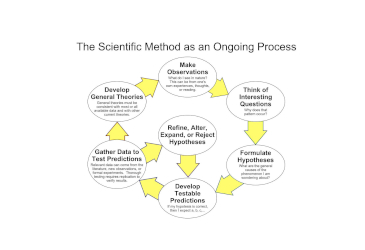
This, it is suggested, is because science is tested. As a high school science teacher, I would suggest to my students that scientific processes could develop as follows: The problem to be investigated is stated. A hypothesis is then developed, which seems to explain this problem, and accompanying observations. After this, an investigation—often by experiment—is designed to test the hypothesis. For this to occur, the hypothesis must be testable, and, indeed, falsifiable. To say that a hypothesis is falsifiable does not imply that it is, or even could be, false. It simply means that it is theoretically possible that an investigative result might disprove the hypothesis.
For example, our hypothesis that hot water hurts is falsifiable, given that you could plunge your hand into boiling water, to see if it feels comfortable. In practice, we know that this would indeed hurt, supporting your hypothesis. Finally, you would carry out your investigation or experiment, record the results, and from them draw a conclusion, that your investigation either supports or disproves your hypothesis.
This important concept of scientific methodology is only possible, because we expect a rational universe, with scientific laws that make sense, and that do not change. Such a rational universe is only possible within a biblical worldview, where random chance events do not take place.’https://creationmoments.com/sermons/method-in-our-science-2/?mc_cid=aff60bfceb&mc_eid=00c1dcff3c
Genesis 1:14-15
“And God said, Let there be lights in the firmament of the heaven to divide the day from the night; and let them be for signs, and for seasons, and for days, and years: and let them be for lights in the firmament of the heaven to give light upon the earth: and it was so.”

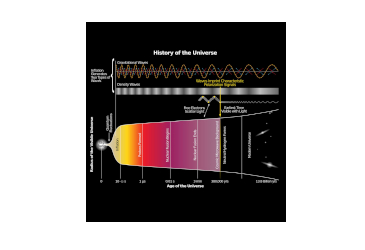
‘Many secular cosmologists believe that the universe came into existence in a singularity, as a result of a quantum event about 14.7 billion years ago. However, this so-called Big Bang theory is not without its problems. Principle among these is the Horizon Problem, which refers to the fact that Big Bangers cannot account for the Cosmic Microwave Background being the same temperature in all directions. This phenomenon would have required different parts of the universe coming to thermal equilibrium by radiation moving at the speed of light. Yet the maximum distance this radiation could travel is considerably less than the size of the universe.
In the 1980s, theoretical physicist Alan Guth proposed the Inflation Theory. In this model, a very rapid expansion of the universe happened from 10-36 seconds to 10-32 seconds after the Big Bang event. This allowed the entirety of the universe to be in close contact for a while, enabling transfer of energy between all parts of the universe.
There is no scientific evidence for this inflation, which is sometimes called the Big Fizz. The extremely short timescale of the event, at the beginning of a period of extremely deep time, gives the whole theory an impression of being a convenient construction, just to make the math work.
Moreover, it creates new problems of its own. There are several different models of inflation, and recent work suggesting that evidence for inflation is now available, turns out simply to disprove some of the models, without validating the concept itself.
As biblical creationists, we know that none of these models are correct. God has explained how and why the universe was created in the first chapter of the Bible.’https://creationmoments.com/sermons/the-big-fizz-2/?mc_cid=7678cb4794&mc_eid=00c1dcff3c
“Did humans and dinosaurs co-exist? Are dinosaurs in the Bible? See what lab tests show about the actual age of dinosaur bones.”https://fb.watch/dk-SHDPLD9/
Job 38:4
“Where wast thou when I laid the foundations of the earth? declare, if thou hast understanding.”

‘Every day, all over the Earth, plants engage in chemical warfare against insects and animals that would eat them. When this drama is described by evolutionary scientists, they usually talk about plants as though the plants were skilled chemists who developed their abilities on their own.
For example, the leaves of the oak tree contain tannins. Tannins form complexes with proteins so that, when eaten, they have little nutritional value. An evolutionary account of how this arrangement came about describes how the trees supposedly developed this strategy for self-defense. Stories like this make one wonder how oak trees gained so much knowledge about animal digestion and chemistry. Some species of milkweed and dogbane produce powerful muscle relaxants that can be fatal to humans.
One might picture, in the far distant past, white-smocked milkweeds working in the chemistry lab. Other “doctor” milkweeds are feeding various concoctions to humans in cages to test their responses. When one tries to account for this without a Creator, the picture can become silly.
The Bible provides an answer that makes a great deal more sense. In Job 38 and 39 the Lord – the Creator – asks Job about dozens of aspects of the creation. In His questioning, He asks Job about the source of the knowledge and abilities found in living things. The answer, of course, is that the creating God, and no one else, designed, built and taught the creation. Other answers simply can’t satisfy.’https://creationmoments.com/sermons/plant-self-defense-3/?mc_cid=90ceddb138&mc_eid=00c1dcff3c