
natural Selection
All posts tagged natural Selection
Job 38:4
“Where wast thou when I laid the foundations of the earth? declare, if thou hast understanding.”
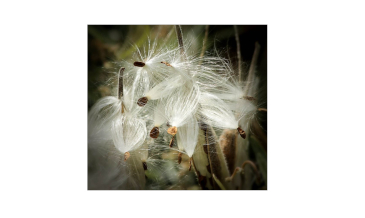
‘Every day, all over the Earth, plants engage in chemical warfare against insects and animals that would eat them. When this drama is described by evolutionary scientists, they usually talk about plants as though the plants were skilled chemists who developed their abilities on their own.
For example, the leaves of the oak tree contain tannins. Tannins form complexes with proteins so that, when eaten, they have little nutritional value. An evolutionary account of how this arrangement came about describes how the trees supposedly developed this strategy for self-defense. Stories like this make one wonder how oak trees gained so much knowledge about animal digestion and chemistry. Some species of milkweed and dogbane produce powerful muscle relaxants that can be fatal to humans.
One might picture, in the far distant past, white-smocked milkweeds working in the chemistry lab. Other “doctor” milkweeds are feeding various concoctions to humans in cages to test their responses. When one tries to account for this without a Creator, the picture can become silly.
The Bible provides an answer that makes a great deal more sense. In Job 38 and 39 the Lord – the Creator – asks Job about dozens of aspects of the creation. In His questioning, He asks Job about the source of the knowledge and abilities found in living things. The answer, of course, is that the creating God, and no one else, designed, built and taught the creation. Other answers simply can’t satisfy.’https://creationmoments.com/sermons/plant-self-defense-3/?mc_cid=90ceddb138&mc_eid=00c1dcff3c
John 1:10
“He was in the world, and the world was made through Him, and the world did not know Him.”
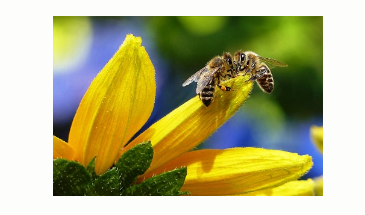
‘Scientists have, for the first time, successfully communicated with honeybees in their own language! Scientists have for some time known how to interpret many of the elements of the bees’ so-called “waggle dance.” This dance is used by scouts to communicate the location of food sources to the food gatherers in the hive.
A couple years ago researchers decided to see if they could confirm their understanding of bee communication. But how do you talk to a bee and get confirmation that she understood what you said? Scientists decided that the only way to do this was to build a robot bee through which they could communicate. The first attempts at building a robot bee acceptable to real bees did not work well. Early models were viciously attacked.
Scientists finally perfected a computer-controlled robot bee that real honeybees accepted. These scientists describe honeybee language as elegant and precise. Yet they found they had learned enough bee language to communicate successfully a food source and its location to real bees. They also discovered that they have much more to learn about bee language. As a result, it may someday be possible for farmers to direct bees to crops that need pollination.
Just as bees can best understand other bees, we humans can best understand other humans. That explains why, when God our Creator wished to communicate with us, He became a human being. That human, Jesus Christ, taught us about God; and He also made peace with God for us, making possible the forgiveness of our sins.’https://creationmoments.com/sermons/robot-bee-communicator-2/?utm_source=rss&utm_medium=rss&utm_campaign=robot-bee-communicator-2&mc_cid=c83190c013&mc_eid=00c1dcff3c
| ELEPHANTS LOSE TUSKS “BY EVOLUTION” claim media reports. During the civil war in Mozambique (1977-1992) ivory poachers killed elephants and sold the tusks to finance their war. During this time the population of elephants declined drastically. The elephant population is now making a comeback, but with a change – more female elephants are lacking tusks. Before the war about 18.5% of females were tuskless, but 33% of females born since the war do not have tusks. A group of scientists led by Shane Campbell-Staton and Robert Pringle of Princeton University studied the elephant population of Gorongosa National Park in Mozambique, using records from an elephant conservation organisation and videos taken in the park from before the war. They found tuskless mother elephants had equal numbers of daughters with and without tusks, and had twice as many daughters as sons. They then analysed genomes of the elephants in the park and found the tuskless females carried mutations in two genes named MEP1a and AMELX. The AMELX gene is on the X chromosome, and mutations of it in humans are known to cause defective tooth growth in females and are lethal to males. This pattern of inheritance, known as X-linked dominant, male-lethal, would explain the skewed sex ratio of the tuskless mother’s offspring and the number of tuskless daughters. Putting these genetic and population studies together, the research team, along with all the reports in the news sources, claim the increase in tuskless females is a case of rapid evolution. The research team entitled their research paper “Ivory poaching and the rapid evolution of tusklessness in African elephants”. They summarised their findings as: “This study provides evidence for rapid, poaching-mediated selection for the loss of a prominent anatomical trait in a keystone species”. References and Links: Science (AAAS) News 21 October 2021, Nature News 21 October 2021, ABC News 22 October 2021, and Science 22 October 2021, doi: 10.1126/science.abe7389.ED. COM. The summary is correct, but the headlines are all wrong. This is a classic case of selection, but nothing has evolved. Poachers selectively killed elephants with tusks which allowed the already existing tuskless elephants with the tuskless gene to survive, and increase in numbers. But that did not make them evolve. This is unnatural selection at work, but it is no different from legitimate farmers using selective breeding to increase the number of animals that have a desirable trait, such as hornlessness, in farm animals. However, in this case, the increased trait is a defect, since tusks help elephants to push over branches and trees and dig holes as they forage for food and minerals, so loss of them is a negative. Overall, this study is a good reminder that the world has changed, but it has not evolved. It has gone from good to bad to worse – the opposite of evolution, but exactly what the Bible tells us. |
| https://mailchi.mp/creationresearch.net/creation-research-email-update-3rd-november-2021?e=ce21bf0337 |
Genesis 7:2 “Of every clean beast thou shalt take to thee by sevens, the male and his female: and of beasts that are not clean by two, the male and his female.”
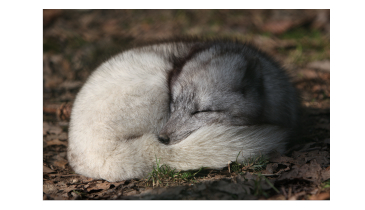
‘Christians and non-Christians alike sometimes assume that natural selection is an inevitable part of Darwinian evolutionary theory, and that if we reject Darwinism, then we need to reject natural selection also. This is not so – natural selection, correctly understood, is a friend of creationism and is actually incompatible with evolutionary ideas.
All living things contain genetic information, leading to a wide variety of possible traits. Consider mammals, which have white fur (which is actually usually transparent fur without pigmentation, but which looks white from a distance). Such species may well be acclimatized to cold, snowy environments. For example, the Arctic Fox and the Red Fox have developed from a common ancestor. This is NOT evolution. Foxes – which are part of the dog-wolf kind, or baramin – contain information to produce different levels of fur pigmentation. Foxes with little or no fur pigmentation would not easily be seen, either by predators or prey, on a snowy background. Those foxes were more likely to survive there, so we say that those genes were naturally selected from a large range of existing genetic information. But this is not evolution because no new genetic information appeared.
In the past, we might have called this process “micro-evolution”. Micro-evolution is a misleading term, so we recommend that it is not used anymore; use the term speciation instead. New species are produced by natural selection, but only within an existing biblical kind or baramin. Natural selection happens. Evolution never happens.‘https://creationmoments.com/sermons/natural-selection/?utm_source=rss&utm_medium=rss&utm_campaign=natural-selection&mc_cid=5c3f6d6578&mc_eid=00c1dcff3c


