
<p><a href=”https://vimeo.com/240534263″>Creation Moments_Trunk Debunked</a> from <a href=”https://vimeo.com/user72715814″>Jim Park</a> on <a href=”https://vimeo.com”>Vimeo</a>.</p>
Evolution
<p><a href=”https://vimeo.com/240534263″>Creation Moments_Trunk Debunked</a> from <a href=”https://vimeo.com/user72715814″>Jim Park</a> on <a href=”https://vimeo.com”>Vimeo</a>.</p>
‘Sooner or later, anyone involved in the subject of Christian apologetics will be asked about the existence of death and suffering. The question can take many forms: Why is there so much suffering in the world? Why does God allow it? What about suffering caused by natural evil? Historically, the Christian response to this question has been to explain that the original creation, which was declared by God to be “very good” (Genesis 1:31), did not contain such aberrations as death and suffering. Apologists then typically point to the historical event of the Fall as that which allowed sin and death to enter and corrupt the created order (Romans 8:20–22). Such a response is a biblical one, yet many are seemingly oblivious that this answer can only be used consistently within a ‘young-Earth’ framework. While correctly pointing to the Fall as an explanation for death and suffering, many apologists who accept the evolutionary long-age paradigm of earth history are unaware of the massive inconsistency. Old-Earth belief directly undercuts the biblical defence against objections posed by death and suffering. The secular paradigm is built upon ‘dating’ methods and assumptions which place death, suffering, disease, cancer and carnivorous activity long before the Fall of man. Thus, pointing to the Fall as the terminus a quo2 for death and suffering is logically inconsistent, and many thoughtful skeptics have picked up on this.’
‘A recent example occurred on the Unbelievable podcast hosted by Justin Brierley. This is the UK’s leading apologetics podcast that brings believers and unbelievers together for discussion and debate. I listen to the show regularly and greatly enjoy the content. Recently, an episode aired which featured Christian philosopher Paul Copan.3 Paul is well known for his book Is God a Moral Monster? which attempts to explain many of the difficult passages in the Old Testament (see also this review of Copan’s book, co-authored with William Lane Craig, Creation out of nothing). As part of the show, listeners were invited to submit questions for him. The central part of the show featured what I considered an illuminating, yet frustrating, exchange between Paul and an atheist caller.’
‘This sorry episode clearly demonstrates that the age of the earth is not a secondary, peripheral issue, related only to the creation-evolution debate. It is absolutely pivotal in determining how we answer fundamental questions relating to death and suffering. If we are inconsistent, astute sceptics, like this caller, will pick up on it. It also demonstrates the irrational fear that so many Christian apologists have over the age issue, causing them to repeatedly make these types of contradictory statements. This fear seems to be driven by the incorrect assumption that deep time has been irrefutably demonstrated. However, such an assumption is unwarranted given the abundant evidence available today that the deep time paradigm is flawed.
The solution really is quite simple: rather than trying to invent different explanatory models or interpretations of Genesis that can accommodate millions of years, we need to realise that the Bible can and should be taken at face value. Its explanation for the origin of suffering and death needs no alteration and the problem only appears when secular evolutionary assumptions are imported into our theology (see Plumbing and paradigms). It is those compromising assumptions that need to be thrown out! Only then can we present the biblical explanation of death and suffering without contradictions.’ https://creation.com/age-of-the-earth-christian-apologists?utm_campaign=infobytes_au&utm_content=Popular+Christian+apologist+explains+away+%27very+good%27+creation&utm_medium=email&utm_source=mailing.creation.com&utm_term=AU+World+IB+-+2018.04.13
The truth of the matter is that there really are no secondary doctrines. All Bible doctrine is important.
<p><a href=”https://vimeo.com/222692365″>That's a Fact – Creation Days</a> from <a href=”https://vimeo.com/icr”>Institute for Creation Research</a> on <a href=”https://vimeo.com”>Vimeo</a>.</p>
Recently Thomas Fretwell ‘…decided to pay a visit to the family home of Charles Darwin.  Down House lies nestled in the beautiful Kentish countryside of southern England. This fabulous residence housed the eminent naturalist, his wife and ten children for a period of forty years. It was here that he conducted much of his research and developed his theory of evolution by natural selection. It was in the study at Down House that he wrote his most influential work, On the Origin of Species. The house today is a museum run by English Heritage and still features many of the original decorations and furniture from his time, as well as a good selection of exhibitions and equipment relating to his scientific work.
Of course, given that this was the home of Charles Darwin, I was prepared for the 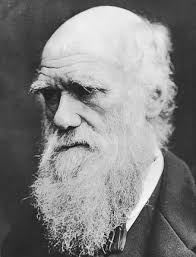 onslaught of evolutionary propaganda, which began as soon as I entered the house. Purchasing my ticket from the gift shop, I was left to peruse the large bookshelf of contemporary works on evolution by some of today’s most prominent atheistic scientists. The narration on the audio device used on the guided tour is by none other than naturalist extraordinaire, Sir David Attenborough. However, those looking for a display of scientific evidence to support Darwin’s theory will be disappointed, finding nothing more than a few musings from his personal journals and a taxidermy display of the oft-used ‘proof’, the Galápagos finches.
Some of the most significant influences on the ideas of Charles Darwin were those of geologist Charles Lyell. This is clearly reflected at Down House. Hanging above the 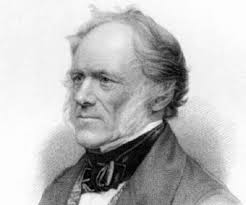 mantel in Darwin’s study is an engraved portrait of Lyell, testament to the profound impact he had on Darwin’s life. Elsewhere in the house is the first edition of Lyell’s book Principles of Geology which Darwin took with him on the Beagle voyage (1831–1836). Lyell promoted the view known as uniformitarianism, meaning he assumed that geological processes observed today had operated essentially in the same way and at the same rates in the past. Thus the slow erosion of river valleys seen today, or the gradual depositing of sediments, were understood to indicate that deep valleys and extensive sedimentary rock strata must have been formed slowly over millions of years. According to this view, the rocks provide a picture of Earth’s long history, and one of a slowly changing world, with fauna and flora appearing and disappearing over long periods of time. This provided the ‘bedrock’ upon which Darwin could build his theory of evolution, which posited natural selection as the mechanism by which new species arose. However, it is crucial to note that the Lyellian view of geology was not a theory derived solely from geological observation and scientific enquiry. Rather, there was an ideological bias involved too; as Lyell himself admitted, he wished to “free the science [of geology] from Moses” (see here).1
Perhaps the most telling part of the museum displays is the section that addresses the subject of evolution and Christianity. It is here that the anti-Christian nature of the worldview of Darwinism becomes visible. In a prominent section of the museum, a large banner with the title ‘Darwinism versus Christianity?’ poses this question to museum visitors:
“It is possible to accept Darwin’s theory and to believe in a God or gods. Why then did some Christians reject it?”
This might seem like a conciliatory statement, until you read the answer on the banner just below:
“One reason is that it is not possible to see the Book of Genesis as the literal story of creation and accept Darwin’s theory of evolution.”
In other words, it is possible to be a Christian and accept Darwin’s theory, but only if you are willing to reject the history found in the book of Genesis. It is pivotal that Christians understand this message: it is either Darwin or Genesis. Trying to have both means that Genesis must be reinterpreted. Those who tread this path have basically placed the words of Charles Darwin above the Word of God—there is simply no way of avoiding the charge of compromise. So, right at the heart of the Down House museum we have a perfect example of the underlying issue in the Creation/Evolution controversy: the authority of the Word of God.
As I left the house I thought of all the thousands of people, including many children on school trips, who would read these signs and take this message as truth. Darwin is so revered in our culture and education system that many consider evolution as an almost sacred doctrine. The final banner I saw was a quote from Darwin:
“I’m sorry to inform you that I do not believe in the Bible as divine revelation, and therefore not in Jesus as the son of God.”2
Make no mistake this is the message of Down House! This is why Christians need to be equipped to respond to the challenges of evolution and raise up a generation of Christians who will stand on the authority of the Word of God.’ http://creation.com/on-holy-ground-down-house?utm_source=streamsend&utm_medium=email&utm_content=29174697&utm_campaign=Are%20you%20%27just%20a%20New%20Testament%20Christian%27?%20-%20AU
It’s too late for Darwin who willingly rejected God and His provision of eternal life through faith in the Lord Jesus Christ. However, it is not too late for you. Jesus said “I am come a light into the world, that whosoever believeth on me should not abide in darkness. 47 And if any man hear my words, and believe not, I judge him not: for I came not to judge the world, but to save the world. 48 He that rejecteth me, and receiveth not my words, hath one that judgeth him: the word that I have spoken, the same shall judge him in the last day. 49 For I have not spoken of myself; but the Father which sent me, he gave me a commandment, what I should say, and what I should speak. 50 And I know that his commandment is life everlasting: whatsoever I speak therefore, even as the Father said unto me, so I speak” John 12: 46-50. Don’t be as foolish as Darwin!
In my own opinion, Australian Creationist, John Mackay destroys the Professor in this debate. The ultimate question is; how did LIFE come from non-life?!


 whatyareckon