Vaccine passports create a two tiered society! This is HEALTH apartheid!!!! THE ONLY CHOICE WE THE CITIZENS HAVE ARE THOSE EXPERIMENTAL VACCINES THE GOVERNMENT HAS APPROVED. WE CANNOT USE INVERMECTIN OR HYDROXYCHLOROQUINE! NO FREEDOM OF CHOICE HERE!!! As the Premier of New South Wales said she doesn’t want to be around the UNVAXXANATED ! The UNVAXXANATED are in the eyes of the government UNCLEAN Lepers!!!
‘Media release: New COVID-19 digital certificate simplifies proof of vaccination
9 June 2021
Senator the Hon Linda Reynolds CSC
Minister for the National Disability Insurance SchemeMinister for Government Services
Everyone who has received all required doses of their COVID-19 vaccination can now access the recently launched COVID-19 digital certificate.
Minister for Government Services, Senator the Hon Linda Reynolds CSC, said the new record makes it simple and easy for people to show their COVID-19 vaccination status.
“The COVID-19 digital certificate makes proof of vaccination accessible anytime, anywhere,” Minister Reynolds said.
“We’re also giving people control over the level of vaccination history they share, as the certificate only shows your COVID-19 vaccination status.
“Once your provider has reported both doses of an approved vaccine, you’ll be able to access your COVID-19 digital certificate online through myGov or in the Express Plus Medicare app.
“I’m encouraging all Australians to ensure you’ve linked your Medicare account to myGov.
“Linking Medicare to myGov is simple, and more than 10 million Australians have already completed this process.”
The Morrison Government is securing the health and safety of all Australians, and Medicare’s trusted systems are making this happen.
“We’re guaranteeing everyone in Australia can get free COVID-19 vaccinations and making sure you can easily show proof of your immunisation,” Minister Reynolds said.
The following is from an email received from the left leaning https://theconversation.com/au telling a BIG Porkie concerning coal and the climate scam! The writer of the article states ‘Coal has been back in the news this week in major ways.
First, a senior UN official urged Australia and other OECD members to quit coal by 2030, or see climate change wreak havoc on our economy and, inevitably, life as we know it.
Next, UK scientists today say Australia must leave 95% of coal in the ground to have any hope of stopping the planet warming beyond 1.5℃.
And yet, quietly in the background, the coal market reached a record high. If you’re anything like me, you may have seen this news and wanted to pull your hair out.
But in today’s lead story John Quiggin, an economist from the University of Queensland, reassures us that placing too much weight on the fluctuations of the coal market would be a mistake.
He explains Australia is perfectly capable of phasing out coal-fired electricity by 2030 and replacing it with a combination of solar and wind, backed by storage.
It’d be easy and relatively cheap to do, too. All we need is “a modest amount of political will”.’
Isaiah 44:24“Thus saith the LORD, thy redeemer, and he that formed thee from the womb, I [am] the LORD that maketh all [things]; that stretcheth forth the heavens alone; that spreadeth abroad the earth by myself;”
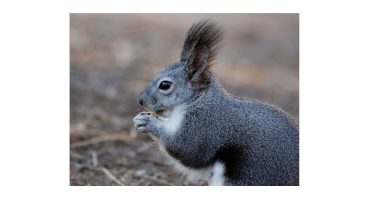
‘Who would have thought that squirrels would tell us how old the Grand Canyon is? Yet, creation scientists tell us that the tassel-eared squirrel, who lives near the rim of the canyon in Arizona, has done just that.
Tassel-eared squirrels are found on both the north and south rims of the canyon. Scientists have assumed that the squirrels were there before the canyon was formed, supposedly millions of years ago. However, since the canyon has kept the two populations apart for so long, the differences between them should show what millions of years of evolution will do to squirrels.
There are minor differences between the squirrels on the north rim and the south rim. But they’re not even enough to classify the squirrels as separate species. North rim squirrels have white tails and black bellies. Squirrels on the south rim have white bellies and dark tails. But many north rim squirrels have coloration like those on the south, and many on the south rim are colored like those on the north. Creation scientist Dr. John Meyer has carefully studied these squirrels. He has concluded that the squirrels on the north and south rim are actually one population that has a complete range of fur colors.
The Australian Greens Party is a far left Marxist party as most if not all Green Parties are. The sad part of all this is that most of the major Australian political parties are going along with many of the Greens’ issues. The non-use of Ivermectin is just one of those issues!
‘The fight for press freedom continues with Sky News Australia subjected to hours of questioning regarding its editorial choices.
Sky News Australia Chief Executive Paul Whittaker opened the Senate Inquiry into Media Diversity by rubbishing accusations that the network deliberately peddled Covid conspiracy theories. Whittaker called the assertion, ‘frankly ridiculous!’
The inquiry was put together by a Greens MP from the far-left minor party that routinely criticises Sky New Australia’s centre-right position. Senator Sarah Hanson-Young chaired the inquiry accompanied by Labor Senator Kim Carr.
Senator Hanson-Young’s topic of the day was ‘Covid-Lies’, an idea that she repeatedly used interchangeably with unresolved political subjects that remain the topic of global debate.
The inquiry unfolded in a politicised atmosphere set up by Sarah Hanson-Young, whose personal website features a ‘take action’ talking point devoted to attacking Murdoch media.
‘In an embarrassing move, Senator Hanson-Young blocked Rebel News journalists Alexandra Marshall and Avi Yemini from covering the inquiry online – apparently violating her devotion to media diversity.
Senator Hanson-Young’s specific complaint about Sky News Australia revolved around it being ‘allowed’ to discuss Ivermectin on-air as a potential treatment for Covid.
After failing to correctly pronounce Ivermectin repeatedly throughout her questions, the Senator eventually resorted to calling it ‘horse wormer’.
“Do you accept that Sky News has created and published content that is either directly or indirectly promoted disinformation about Covid and Covid-Lies in relation to restrictions, health measures, cures?” asked Hanson-Young.
Sky News Australia replied to the entire day’s questioning with an official statement.
“We operate within the same legal framework as all media and are subject to both the Commercial Television Industry Code of Practice and the Subscription Broadcast Television Codes of Practice.
“There is no evidence that Sky News breaches existing regulations or that the current regulatory framework is failing, or that further regulatory intervention is required.
“Indeed, it should be noted we have not been found in breach of the Codes of Practice for more than ten years.”
As a major news network, Sky News Australia maintains that it involves a wide range of discussion involving scientists, epidemiologists, GPs, pharmacists, researchers, chief health officers, politicians, doctors, and bureaucrats.
“But it now appears commonplace to discredit any debate on contentious issues as ‘misinformation’.
“So, the question becomes, why does a tech giant, YouTube, and faceless, nameless individuals backed by an algorithm, based in California, get to decide that holding governments and decision makers to account is ‘misinformation’? Why do they get to decide what is and isn’t allowed to be news?” added the official statement.
Despite insisting that Sky News Australia must only publish Covid information approved by the prime minister, state premiers, and the World Health Organisation – Senator Hanson-Young’s comments about Ivermectin proved inaccurate against the facts.
Its entry into the Covid conversation was heavily politicised by the American election. Ivermectin remains the subject of peer-reviewed studies, ongoing trials, and experimental use around the world – none of which involve horse paste.
Australia’s own Monash University in alliance with the Peter Doherty Institute of Infection and Immunity proved that Ivermectin could kill Covid within 48 hours under laboratory conditions.
Globally speaking, the discussion on Ivermectin is far from over, with its off-label use against Covid widespread in Africa and South America. Public health experts, medical scientists, and South African health practitioners have banded together in a campaign to achieve formal approval for its use. There are similar stories in the Philippines and Latin America.
Senator Young’s main reasoning for wanting all discussion of Ivermectin banned was because it conflicted with official advice from the Therapeutic Goods Administration. It is difficult to find an example of this method being used to censor discussion on a media broadcaster.
Hospital admissions and injures associated with Ivermectin come from people consuming non-human approved animal treatments not the Ivermectin discussed in the studies. One could argue that governments banning the distribution of Ivermectin are the real cause behind these accidents.
Considering the ‘Ivermectin topic’ is central to both YouTube’s strikes and the Senator’s desire for stricter government regulation over the content of media broadcasters, it’s essential that this narrative is examined.
Ivermectin was not the only glaring inaccuracy brandished by those accusing Sky News Australia of misleading the public.
Labor Senator Kim Carr questioned Whittaker over a petition asking for a Royal Commission into media diversity.
This turned out to be ex-Prime Minister Kevin Rudd’s e-petition of ‘over half a million signatures’. The petition was earlier revealed to be riddled with computer-generated signatures and fake names, accounting to Sky News host Sharri Markson’s earlier investigation.
“Greens Senator Sarah Hanson-Young has used this petition to launch a media inquiry into two ASX-listed companies; News Corp Australia and Nine Entertainment, to have a whole Senate inquiry into the media industry, so this petition is being used as the basis for policy formation,” explained Sharri Markson.
The fake names on Rudd’s petition included ‘this sucks’, ‘Nacho cheese’, and ‘Jesus Christ’ which were generated by off-shore bot accounts.
The inaccuracy of the petition and its subsequent failure to trigger a Royal Commission was not mentioned at the inquiry.
The Inquiry into Media Diversity played out like a witch trial against Sky News Australia specifically.
Several Sky News Australia hosts declined to partake.
“There’s only one reason why I didn’t appear at today’s Senate hearing. I will not be party to a witch hunt, nor waste my time in the services of satisfying the paranoid fantasies of a failed former PM. The Senate Committee on Media Diversity came about as a result of a petition organised by former PM Kevin Rudd,” said Rita Panahi on Alan Jones.
Anti-Murdoch voices have waged campaigns to cancel the network for many years – including the use of anonymous online trolls to harass advertisers.
The situation did not become serious until YouTube issued a strike against the digital arm of the media empire in July of 2021.
YouTube is a commercial earner for Sky News Australia with almost two million subscribers. Three strikes in 90 days results in an immediate and permanent suspension of the account, regardless of size.
Sky News Australia was forced to remove twenty-three videos that allegedly violated YouTube’s policy on Covid misinformation. The videos included content up to a year old.
“Specifically, we don’t allow content that denies the existence of COVID-19 or that encourages people to use Hydroxychloroquine or Ivermectin to treat or prevent the virus. We do allow for videos that have sufficient countervailing context, which the violative videos did not provide,” said a statement from YouTube.
The majority of the content in question fell under the banner of ‘opinion’ rather than news, but YouTube did not provide any further clarity for their strike.
To be clear, YouTube’s policies are not a statement of absolute fact, but a compliance order to keep the material on their platform consistent with the health guidance from various authorities – even if this information is contested or later shown to be false. Strikes are not removed if health information changes.
Sky News Australia Chief Executive Paul Whittaker pointed this inconsistency out to the inquiry. Whittaker also strongly rejected the claim that Sky News Australia promoted an anti-vaccination narrative.
“Sky News Australia strongly supports vaccination. Any claims to the contrary are false and a blatant attempt to discredit and harm our news service,” said Whittaker.
When Lucinda Longcroft, Director of Public Policy, Google Australia and New Zealand was asked to provide examples of left-wing content removed by YouTube, she took the question on notice.
“Our Covid-19 misinformation policies are applied equally to all YouTube content and channel owners,” said Longcroft, but did not offer any data to prove the point.
It is a widely held opinion that YouTube applies its community standards unequally to users, with many conservative accounts taken down while fringe accounts – such as domestic terror group Antifa – remain up.
“YouTube’s actions make clear that it is not a neutral platform, but a publisher selectively broadcasting content and censoring certain views, while allowing videos that are patently false, misogynistic, and racist to proliferate. […] With no transparency provided, Sky News took the proactive approach of removing a batch of videos, all published during 2020, from online platforms to ensure ongoing compliance with YouTube’s arbitrary editorial guidelines,” Mr Whittaker added.
Social Media platforms such as YouTube, Facebook, Twitter, and Instagram have become significant tools for political parties during election campaigns. As such, there is growing concern of foreign interference in Australian politics by these entities, especially when they brazenly remove elected members of parliament like Craig Kelly.
Platforms exist in a special legal limbo, where they are immune from prosecution regarding the third-party content they host on the proviso they refrain from engaging in publishing privileges. Under American Law, they are distinct from publishers and yet in the last few years they have made headlines for selective political censorship.
Whittaker insisted that the videos taken down by YouTube had no public complaints – which begs the question why they were flagged in the first place. He wrote to Google’s CEO in the hope of clarification, but received nothing in return, not even an acknowledgement of the query.
Australia’s media landscape has taken a bizarre path to this inquiry.
Chief among those leading the anti-Murdoch charge are full-time campaigner ex-Prime Minister Kevin Rudd and occasional contributor ex-Prime Minister Malcolm Turnbull. While the men come from opposing sides of politics, they share a history of unkind headlines enjoyed by readers at their expense.
The inquiry soon expanded to criticism regarding Sky News Australia allowing alternative discussion on Climate Change before accusing some of its hosts of racism.
This was swiftly followed by Hanson-Young asking Whittaker how many of his staff were female before elaborating that they were ‘rather young’. Her point was to suggest a power imbalance between young female producers and the more experienced network hosts.
Implying that young women are not capable of doing their jobs because of their age and gender is considered a sexist remark by most people. Whittaker was similarly bewildered by Hanson-Young’s line of questioning, pointing out that there is plenty of support for producers to do their jobs.
Inquiries are normally launched from an impartial basis so that the search for truth can be conducted without prejudice.
Psalm 51:6 “Behold, thou desirest truth in the inward parts: and in the hidden [part] thou shalt make me to know wisdom.”
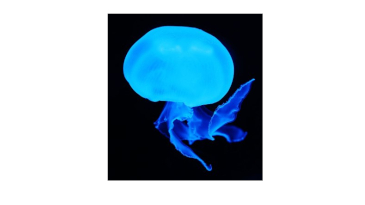
‘Jellyfish and their cousins are often described as the simplest animals without nervous systems. Because evolutionary scientists have thought jellyfish were such simple creatures, and because many of them show up early in the fossil record, jellyfish were said to be among the earliest animals to evolve.
Marine biologists have been surprised to learn that the modern populations of jellyfish and their cousins are actually much more complex than they ever suspected. Creationists point out that because there are so many of these creatures, there was also probably a large population in the past. The more common a creature is, the more likely it is to be found in the deeper rocks of the fossil record.
More recently, scientists have learned that the supposedly simple nervous system of the jellyfish is actually not so simple. They have confirmed that at least one type of jellyfish has a nervous system with the same advanced features found only in mammals and humans. Most animals generate electrical impulses using sodium. However, like humans, this jellyfish can generate different kinds of impulses depending on whether sodium or calcium is used. Thus, the jellyfish can send twice as much information through its nervous system as most other animals!
Even the Left leaning THE CONVERSATION carried an article concerning the new law here in Australia, that seems to me, takes away even more of our freedoms and privacy. All this is occurring under a supposed CONSERVATIVE Federal government! Is this law truly meant to catch REAL criminals or is it to actually meant to spy on those citizens that may not swallow all the Kool Aid handed out by government? Personally, laws such as this only provides more reasons why many do not trust the government! With that said ‘A new law gives Australian police unprecedented powers for online surveillance, data interception and altering data. These powers, outlined in the Surveillance Legislation Amendment (Identify and Disrupt) Bill, raise concerns over potential misuse, privacy and security.
The bill updates the Surveillance Devices Act 2004 and Telecommunications (Interception and Access) Act 1979. In essence, it allows law-enforcement agencies or authorities (such as the Australian Federal Police and the Australian Criminal Intelligence Commission) to modify, add, copy or delete data when investigating serious online crimes.
What’s more, legal hacking by law enforcement may make it easier for criminal hackers to illegally access computer systems via the same vulnerabilities used by the government.
What’s in the law?
The bill introduces three new powers for law-enforcement agencies:
“data disruption warrants” allow authorities to “disrupt data” by copying, deleting or modifying data as they see fit
“network activity warrants” permit the collection of intelligence from devices or networks that are used, or likely to be used, by subject of the warrant
“account takeover warrants” let agencies take control of an online account (such as a social media account) to gather information for an investigation.
There is also an “emergency authorisation” procedure that allows these activities without a warrant under certain circumstances.
However, the new bill gives agencies unprecedented interception or “hacking” powers. It also allows “assistance orders”, which could require selected individuals to assist government hacking or face up to ten years in prison.
Why do police argue this bill is required?
According to the Department of Home Affairs, more and more criminal activity makes use of the “dark web” and “anonymising technologies”. Previous powers are not enough to keep up with these new technologies.
In our view, specific and targeted access to users’ information and activities may be needed to identify possible criminals or terrorists. In some cases, law enforcement agencies may need to modify, delete, copy or add content of users to prevent things like the distribution of child exploitation material. Lawful interception is key to protecting public and national security in the fight of global community against cybercrimes.
How does lawful data interception work?
“Lawful interception” is a network technology that allows electronic surveillance of communications, as authorised by judicial or administrative order. There are standards (which means regulations and rules) for telecommunication and internet service providers to achieve this, such as those recommended by the European Telecommunications Standards Institute.
Law-enforcement agencies may require service providers to hand over copies of communications data, decrypted data, or intercepted data without notifying users. Service providers may also have to make available analytical tools such as graphs or charts of target behaviours.
What are the privacy concerns?
The Office of the Australian Information Commissioner and others have also raised privacy concerns. The bill may impact third parties who are not suspected in the investigation of criminal activities. In particular, the bill can authorise access to third party computers, communication and data.
The Human Rights Law Centre argues the proposed broad powers can potentially compel any individual with relevant knowledge of the targeted computer or network to conduct hacking activities. In some cases this may clash with an individual’s right to freedom from self-incrimination.
Enabling law enforcement agencies to modify potential evidence in a criminal proceeding is also a major issue of concern. The detection and prevention of inappropriate data disruption will be a key issue.
The implementation of the new warrants needs to be in line with Privacy Act 1988 which was introduced to promote and protect the privacy of individuals and to regulate Australian government agencies and organisations. Where some agencies may have exemption against the Privacy Act, it is important to balance between public safety and privacy impacts.
What are the security issues and impacts?
The Identify and Disrupt Bill is a part of an extensive set of Australian digital surveillance laws, including the Telecommunications and Other Legislation Amendment (Assistance and Access) Act 2018 (TOLA), and the Telecommunications (Interception and Access) Amendment (Data Retention) Act 2015 (the Mandatory Metadata Retention Scheme).
Under the Identify and Disrupt Bill, access can be gained to encrypted data which could be copied, deleted, modified, and analysed even before its relevance can be determined. This significantly compromises users’ privacy and digital rights.
Modern encryption can be very hard to crack, so hackers often exploit other vulnerabilities in a system to gain access to unencrypted data. Governments too are reportedly using these vulnerabilities for their own lawful hacking.
Specifically, they depend on “zero-day exploits”, which use software vulnerabilities that are unknown to software vendors or developers, to hack into a system. These vulnerabilities could be exploited for months or even years before they are patched.
A conflict of interest may arise if law enforcement agencies are using zero-day exploits for lawful hacking. To protect citizens, we would expect these agencies to report or disclose any software vulnerabilities they discover to the software manufacturers so the weakness can be patched.
However, they may instead choose not to report them and use the vulnerabilities for their own hacking. This puts users at risk, as any third party, including criminal organisations, could exploit these so-called zero day vulnerabilities.
It’s not an abstract concern. In 2016, the CIA’s secret stash of hacking tools itself was stolen and published, highlighting the risk of these activities. The Chinese government has claimed the CIA was hacking targets in China for more than a decade using these and similar tools.
Government use of hacking tools may result in worse cyber security overall. The warrant powers given to Australian law enforcement agencies may protect public safety and national interests, but they may also provide powerful means for adversaries to access government data.
This includes the data and online accounts of targeted individuals like state officials, which may significantly impact national security. This possibility needs to be considered in light of the passing of the new bill.
Sleepy ‘Old Joe Biden has become notorious for only answering scripted questions from preselected reporters, as he did again Thursday when the feeble and weary president said, “Ladies and gentlemen, they gave me a list here,” and then referred to “the first person I was instructed to call on.” Likewise notorious has been his consistent practice, particularly at press conferences regarding Afghanistan, of turning his back and leaving a roomful of reporters shouting questions. And so it was no great surprise Friday when Biden said during his meeting with Israeli Prime Minister Naftali Bennett: “I’m not gonna take any questions, because of the prime minister being here, on, uh, Afghanistan now, but I’ll be available at another time.” When?
After all, this is the president who on July 2 said this in response to questions about Afghanistan: “I want to talk about happy things, man. Look, it’s Fourth of July. I’m concerned that you’re asking me questions that I will answer next week, but it’s the holiday weekend. I’m going to celebrate it. There’s great things happening.”
Nearly two months and several massive disasters in Afghanistan later, the Biden administration still seems to want to focus on happy things and avoid unpleasant questions. On Saturday, as Bryan Preston has noted, Biden’s handlers refused to release the names of the two “high-profile” Islamic State jihadis who were supposedly killed in the recent American drone strike. Why would the administration withhold such information from the public? This kind of unnecessary secrecy has only invited speculation that there was no drone strike at all, or that it failed, and that Biden’s handlers concocted the whole thing in order to give the appearance of decisiveness in the wake of the catastrophe in Kabul.
Amid all this stonewalling, Biden’s handlers released a statement in the president’s name Saturday, depicting Biden as saying: “This morning, I met with my national security team in Washington and my commanders in the field. We discussed the strike that U.S. forces took last night against the terrorist group ISIS-K in Afghanistan. I said we would go after the group responsible for the attack on our troops and innocent civilians in Kabul, and we have. This strike was not the last. We will continue to hunt down any person involved in that heinous attack and make them pay. Whenever anyone seeks to harm the United States or attack our troops, we will respond. That will never be in doubt. I thanked General McKenzie for his leadership of that mission, and for his commitment to the safety of our troops in Afghanistan.”





 whatyareckon