
MORNING & EVENING:
DAILY READINGS
by C. H. SPURGEON
JANUARY 23 — AM
“I have exalted one chosen out of the people.” — Psalm 89:19
Why was Christ chosen out of the people? Speak, my heart, for heart-thoughts are best. Was it not that He might be able to be our brother, in the blest tie of kindred blood? Oh, what relationship there is between Christ and the believer! The believer can say, “I have a Brother in heaven; I may be poor, but I have a Brother who is rich, and is a King, and will He suffer me to want while He is on His throne? Oh, no! He loves me; He is my Brother.” Believer, wear this blessed thought, like a necklace of diamonds, around the neck of thy memory; put it, as a golden ring, on the finger of recollection, and use it as the King’s own seal, stamping the petitions of thy faith with confidence of success. He is a brother born for adversity, treat Him as such.
Christ was also chosen out of the people that He might know our wants and sympathize with us. “He was tempted in all points like as we are, yet without sin.” In all our sorrows we have His sympathy. Temptation, pain, disappointment, weakness, weariness, poverty — He knows them all, for He has felt all. Remember this, Christian, and let it comfort thee. However difficult and painful thy road, it is marked by the footsteps of thy Saviour; and even when thou reachest the dark valley of the shadow of death, and the deep waters of the swelling Jordan, thou wilt find His footprints there. In all places whithersoever we go, He has been our forerunner; each burden we have to carry, has once been laid on the shoulders of Immanuel.
“His way was much rougher and darker than mine Did Christ, my Lord, suffer, and shall I repine?”
Take courage! Royal feet have left a blood-red track upon the road, and consecrated the thorny path for ever.
JANUARY 23 — PM
“We will remember Thy love more than wine.” — Song of Solomon 1:4
Jesus will not let His people forget His love. If all the love they have enjoyed should be forgotten, He will visit them with fresh love. “Do you forget my cross?” says He, “I will cause you to remember it; for at My table I will manifest Myself anew to you. Do you forget at I did for you in the council-chamber of eternity? I will remind you of it, for you shall need a counsellor, and shall find Me ready at your call.” Mothers do not let their children forget them. If the boy has gone to Australia, and does not write home, his mother writes — ”Has John forgotten his mother?” Then there comes back a sweet epistle, which proves that the gentle reminder was not in vain. So is it with Jesus, He says to us, “Remember Me,” and our response is, “We will remember Thy love.” We will remember Thy love and its matchless history. It is ancient as the glory which Thou hadst with the Father before the world was. We remember, O Jesus, Thine eternal love when Thou didst become our Surety, and espouse us as Thy betrothed. We remember the love which suggested the sacrifice of Thyself, the love which, until the fulness of time, mused over that sacrifice, and long for the hour whereof in the volume of the book it was written of Thee, “Lo, I come.” We remember Thy love, O Jesus as it was manifest to us in Thy holy life, from the manger of Bethlehem to the garden of Gethsemane. We track Thee from the cradle to the grave — for every word and deed of Thine was love — and we rejoice in Thy love, which death did not exhaust; Thy love which shone resplendent in Thy resurrection. We remember that burning fire of love which will never let Thee hold Thy peace until Thy chosen ones be all safely housed, until Zion be glorified, and Jerusalem settled on her everlasting foundations of light and love in heaven.
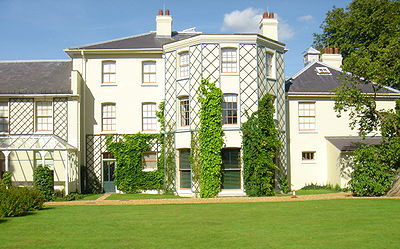 Down House lies nestled in the beautiful Kentish countryside of southern England. This fabulous residence housed the eminent naturalist, his wife and ten children for a period of forty years. It was here that he conducted much of his research and developed his theory of evolution by natural selection. It was in the study at Down House that he wrote his most influential work,
 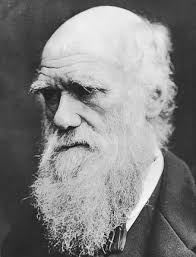 onslaught of evolutionary propaganda, which began as soon as I entered the house. Purchasing my ticket from the gift shop, I was left to peruse the large bookshelf of contemporary works on evolution by some of today’s most prominent atheistic scientists. The narration on the audio device used on the guided tour is by none other than naturalist extraordinaire,
 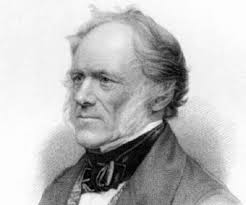 mantel in Darwin’s study is an engraved portrait of Lyell, testament to the profound impact he had on Darwin’s life. Elsewhere in the house is the first edition of Lyell’s book Principles of Geology which Darwin took with him on the Beagle voyage (1831–1836). Lyell promoted the view known as uniformitarianism, meaning he assumed that geological processes observed today had operated essentially in the same way and at the same rates in the past. Thus the slow erosion of river valleys seen today, or the gradual depositing of sediments, were understood to indicate that deep valleys and extensive sedimentary rock strata must have been formed slowly over millions of years. According to this view, the rocks provide a picture of Earth’s long history, and one of a slowly changing world, with fauna and flora appearing and disappearing over long periods of time. This provided the ‘bedrock’ upon which Darwin could build his theory of evolution, which posited natural selection as the mechanism by which new species arose. However, it is crucial to note that the Lyellian view of geology was not a theory derived solely from geological observation and scientific enquiry. Rather, there was an ideological bias involved too; as Lyell himself admitted, he wished to “free the science [of geology] from Moses” (see
  banner with the title ‘Darwinism versus Christianity?’ poses this question to museum visitors:


 whatyareckon