
Mental Health
All posts tagged Mental Health
The following article is concerning ‘mental illness’ and how churches handle those who are diagnosed with such. It is interesting that Paul said in Philippians 4:8 Finally, brethren, whatsoever things are true, whatsoever things are honest, whatsoever things are just, whatsoever things are pure, whatsoever things are lovely, whatsoever things are of good report; if there be any virtue, and if there be any praise, think on these things.
Thinking takes place in the mind. In Scripture, the mind and heart are closely related and according to the following two passages that is where our thoughts originate. Matthew 15:19 For out of the heart proceed evil thoughts, murders, adulteries, fornications, thefts, false witness, blasphemies:
Mark 7:21 For from within, out of the heart of men, proceed evil thoughts, adulteries, fornications, murders,
An article answering this issue in more detail from the Scriptures will be written later.
‘As studies continue to show how ill-equipped many churches are in ministering to Christians who struggle with mental illness, some who were once among the faithful are now speaking out about how the spiritualizing of their conditions in church culture forced them to flee. 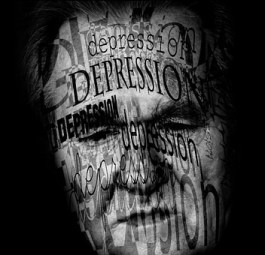
In a recent discussion sparked by a rant in a subreddit of more than 40,000 anonymous former Christians, many shared stories about how they were forced to suffer as their evangelical churches and family members urged them to pray away conditions such as bipolar disorder, anxiety and ADD before they were finally able to get help. Some, like one critic identified as just reib0t in the discussion, never got the help they needed until they were adults.
“I am 30 and was recently diagnosed with schizoaffective disorder,” the former Christian began.
The National Alliance on Mental Illness describes schizoaffective disorder as a chronic mental health condition characterized primarily by symptoms of schizophrenia, such as hallucinations or delusions, and symptoms of a mood disorder, such as mania and depression. It is often treated with a combination of medications and psychotherapy.
“As a TEENAGER I said to the Christian I looked up to, ‘Hey, I hear voices and see shadow people everywhere, also I want to kill myself.’ And I was told it was just ‘spiritual warfare’ and Satan fighting for my soul. I was told to NOT seek therapy because therapists work for the devil to drive people away from the Lord,” the ex-Christian wrote.
“I believed it easily because of the nature of my illness. He downplayed and contorted my illness so badly that even after I stopped believing in God, it took me years to get into therapy and get treatment. My life spiraled into drug abuse to cope, lost job after lost job, and my 20s wasted in pain,” the person wrote.
The individual explained that since they decided to get professional help, their life has changed for the better.
“I feel a lot better on medication, have better understanding, and am looking forward to my 30s being a lot better in general, but… I think back to my teenage years and wonder what my life could have been if I wasn’t Christian and got on the right meds much sooner. F**k the evangelical Christian view on mental health,” reib0t said.
About one in four Americans are estimated to suffer from some kind of mental illness in any given year, NAMI says, and many, according to LifeWay Research, turn to the church for help.
A 2014 study by the Nashville-based research organization, which was co-sponsored by the conservative organization Focus on the Family and the family of a man who endured schizophrenia, pointed to the lack of awareness and help available to Christians who turn to the church for help with mental illness.
The study found some pastors were reluctant to help those who suffer from acute mental illness because it takes too much time and that most Protestant senior pastors rarely spoke to their congregation about mental illness.
Asked to describe current church culture on mental illness, Tim Sanford, clinical director at Focus on the Family, said there has been some progress made in recent years but many churches continue to blame mental issues on sin.
“Fortunately, there has been positive movement in recent years as the church is beginning to respond to mental health issues and recognize their legitimacy. While many churches acknowledge mental illness as legitimate and are actively helping their parishioners with such issues, sadly, the belief (and subsequent responses) that anxiety or depression is sin or is a ‘lack of faith’ on the individual’s part is still too common in the body of Christ,” Sanford told The Christian Post.
“Blind adherence to a flawed ethic on mental illness can lead to unnecessary guilt, debilitating shame and fear. This, in turn, limits access to help and freedom — the kind of freedom and compassion Christ modeled and died for (John 10:10). Focus on The Family encourages believers to take a measured, integrated approach to the subject of mental health; hold to what is biblically true and accurate and also hold to what is scientifically true and research proven.”
One former Christian in the subreddit group identified as CastIronMystic, called out Focus on the Family, however, for what they described as an insensitive encounter when they once tried accessing a Christian therapist.
“I was told that I was sinning by having anxiety and intrusive thoughts. This caused me anxiety about anxiety and a spiral of feeling like I wasn’t a true Christian because a true Christian wouldn’t worry. Then there was the time I called Focus on the Family because they said they had a hotline for mental health. I got to their hotline and was matched with a cold rude and condescending mental health worker who tried to charge me $60 to match me with a Christian therapist in my area. Their hotline was a referral program that charged its patients a finder’s fee,” the individual wrote.
Sanford apologized for the encounter and debunked the notion that “true Christians” don’t worry.
“I’m very sorry this person was treated in such an uncaring manner and their relationship with Jesus was put into question because of anxiety. The statement ‘a true Christian wouldn’t worry’ is simply not true. I can only imagine the added stress and pain that statement caused this individual,” Sanford said.
He pointed out that Focus on the Family does not provide fee-based tele-mental health services nor does the organization function as a hotline service.
“We have a highly experienced and caring staff of 15 licensed and/or pastoral counselors who return calls to people requesting a consult. We are not a hotline service nor do we provide tele-mental health counseling services for a fee; rather we provide a free, one-time consultation for the caller. Our primary task during this brief consult is to assess how we can best assist the caller,” he explained.
“We will provide answers to questions as we are able, direct them toward resources that may be helpful (be it online or printed resources), make suggestions of professional treatment facilities to consider (if that is what is requested) and provide referrals to licensed counselors in the caller’s area for ongoing therapy as appropriate,” he noted.
As Christians with mental health illness struggle to find help from churches, research also suggests that the need for mental help is not just among the laity. Many pastors struggling with reconciling their mental illness with their faith have turned to suicidebecause they feel they have nowhere else to turn.
Some pastors, however, are choosing to fight back and turning to places like the Shepherd’s Canyon Retreat Ministry in Phoenix, Arizona, for help. The organization offers weeklong counseling retreats for men and women in ministry who are in the midst of various stages of burnout, stress, depression and conflicts of all kinds.
In the last 10 years, Pastor Phil Lee, a Lutheran pastor since 1981, and a licensed marriage and family therapist since 1999, who serves as the organization’s counseling care director, says he has seen 400 to 500 at-risk leaders.
He explained that rather than ignoring the spiritual nature of Christian leaders to address their mental health issues, they take an integrated approach to care.
“We are very careful not to separate the emotional and spiritual; they are interwoven. They are integrated. So our approach to mental health issues, whatever they may be, is that they are part of the overall human condition. Physical, emotional, spiritual — that is all interwoven,” Lee told CP.
“We do not take the simplistic approach, that just pray about it and it will be alright or just pray about it and it will go away. Mental illness is most always more complex than that. Folks on the more conservative end of the spectrum within Christianity often take a pretty simplistic approach — just give it to God. Just pray about it,” he said.
“It really does require different interventions along with Scripture and prayer. Many mental illnesses, for example depression, especially if it’s clinical depression, bipolar, those kinds of things, they really call for therapeutic interventions like talk therapy, counseling, sometimes medication, and other mental illnesses,” he continued. “More complex mental illness like personality disorders, those are things we usually don’t work with because they are more complex than we are prepared to deal with.”
He noted that based on the reporting collected by his organization, the need for the services they provide is “huge” in the Christian community.
Sanford explained that churches can help make churches safer for Christians who struggle with mental health issues by acknowledging that they exist, be knowledgeable about them, establish what level of mental health care ministerial staff can provide and have a trusted network of mental health professionals to which they can refer them.’ https://www.christianpost.com/news/as-churches-struggle-to-help-christians-with-mental-illness-many-flee.html?utm_source=The+Christian+Post+List&utm_campaign=f57bbeb629-EMAIL_CAMPAIGN_2019_02_25_05_59&utm_medium=email&utm_term=0_dce2601630-f57bbeb629-2218869
In the early 70’s I was asked to conduct the funeral for a University of Iowa medical student who had committed suicide. The church was packed with students from the University to pay their respect and naturally emotions of grief ran high. I was a young preacher still in my twenties and married with two children. I don’t remember what text I preached but I still remember the scene as though it was yesterday.
This historical episode in my life comes flooding back each time I read or hear of a suicide. Statistics show ‘The number of suicides in the United States increased 24 percent from 1999 to 2014, gaining momentum after 2006 when the increase each year jumped between 1 and 2 percent, according to the Centers for Disease Control. The biggest jump was among adolescent girls and men aged 45 to 64.’[1] According to the same article ‘…a clinical psychologist who consults for the Southern Baptist Convention (SBC), said he believes the rate of pastor suicides has increased during his 30 years of practice. And he expects the number will continue to rise.’
The prince of preachers suffered greatly with gout and depression was something he definitely was acquainted with throughout his life and ministry. He wrote that “One Sabbath morning, I preached from the text, ‘My God, My God, why has Thou forsaken Me?’ and though I did not say so, yet I preached my own experience. I heard my own chains clank while I tried to preach to my fellow-prisoners in the dark; but I could not tell why I was brought into such an awful horror of darkness, for which I condemned myself. On the following Monday evening, a man came to see me who bore all the marks of despair upon his countenance. His hair seemed to stand up right, and his eyes were ready to start from their sockets. He said to me, after a little parleying, ‘I never before, in my life, heard any man speak who seemed to know my heart. Mine is a terrible case; but on Sunday morning you painted me to the life, and preached as if you had been inside my soul.’ By God’s grace I saved that man from suicide, and led him into gospel light and liberty; but I know I could not have done it if I had not myself been confined in the dungeon in which he lay. I tell you the story, brethren, because you sometimes may not understand your own experience, and the perfect people may condemn you for having it; but what know they of God’s servants? You and I have to suffer much for the sake of the people of our charge … You may be in Egyptian darkness, and you may wonder why such a horror chills your marrow; but you may be altogether in the pursuit of your calling, and be led of the Spirit to a position of sympathy with desponding minds” (Spurgeon, An All Round Ministry, pp. 221-222).’
What does the Word of God have to say concerning the murder of oneself? As we take a look at the Bible we notice most are found in the Old Testament. These may be categorized as (1) those who did commit suicide by their own hand or with the help of another, (2) those who wanted God to take their life but did not and those who contemplated suicide by their own hands but did not, (3) and those who attempted to take their life but didn’t accomplish the task.
THOSE WHO DID COMMIT SUICIDE
Saul and his armourbearer – 1Samuel 31:3 And the battle went sore against Saul, and the archers hit him; and he was sore wounded of the archers. 4 Then said Saul unto his armourbearer, Draw thy sword, and thrust me through therewith; lest these uncircumcised come and thrust me through, and abuse me. But his armourbearer would not; for he was sore afraid. Therefore Saul took a sword, and fell upon it. 5 And when his armourbearer saw that Saul was dead, he fell likewise upon his sword, and died with him.
It is plain that Saul committed suicide due to his injuries from battle and Jewish pride but his disobedience in consulting with a witch among other things precluded his suicide. Mental illness, no, disobedience and sin were the force behind Saul’s suicide.
Samson – Judges 16:30 And Samson said, Let me die with the Philistines. And he bowed himself with all his might; and the house fell upon the lords, and upon all the people that were therein. So the dead which he slew at his death were more than they which he slew in his life.
John Wesley commenting on Samson’s death said ‘Let me die-That is, I am content to die, so I can but contribute to the vindication of God’s glory, and the deliverance of God’s people. This is no encouragement to those who wickedly murder themselves: for Samson did not desire, or procure his own death voluntarily, but by mere necessity; he was by his office obliged to seek the destruction of these enemies and blasphemers of God, and oppressors of his people; which in these circumstances he could not effect without his own death.’
Abimelech – Judges 9:53 And a certain woman cast a piece of a millstone upon Abimelech’s head, and all to brake his skull. 54 Then he called hastily unto the young man his armourbearer, and said unto him, Draw thy sword, and slay me, that men say not of me, A woman slew him. And his young man thrust him through, and he died. 55 And when the men of Israel saw that Abimelech was dead, they departed every man unto his place.
Matthew Henry writes that ‘His foolish project to avoid this disgrace; nothing could be more ridiculous; his own servant must run him through, not to rid him the sooner out of his pain, but that men say not, A woman slew him. Could he think that this would conceal what the woman had done, and not rather proclaim it the more? Nay, it added to the infamy of his death, for hereby he became a self-murderer.’
Ahithophel – 2Samuel 17:23 And when Ahithophel saw that his counsel was not followed, he saddled his ass, and arose, and gat him home to his house, to his city, and put his household in order, and hanged himself, and died, and was buried in the sepulchre of his father.
His name means ‘son of a fool or folly’ and so he lived or rather died showing how correct his parents were in their choice of names. When you read the passage describing his actions prior to his suicide you see how well thought out it all was. He put his house in order before murdering himself! Mental illness, nay, pride was at the heart of the matter.
Zimri – 1Kings 16:18 And it came to pass, when Zimri saw that the city was taken, that he went into the palace of the king’s house, and burnt the king’s house over him with fire, and died, 19 For his sins which he sinned in doing evil in the sight of the LORD, in walking in the way of Jeroboam, and in his sin which he did, to make Israel to sin.
Zimri committed suicide because of fear, pride and spite. Fear of falling into the hands of the enemy. Pride because he could not face the truth of losing the battle which in turn meant he lost the palace. Spite is seen in that it is as if Zimri is saying ‘If I cannot enjoy the luxury of this palace neither can you’.
Judas – Matthew 27:5 And he cast down the pieces of silver in the temple, and departed, and went and hanged himself.
Acts 1:18 Now this man purchased a field with the reward of iniquity; and falling headlong, he burst asunder in the midst, and all his bowels gushed out.
Judas is probably one of the best-known people in the Bible who committed suicide. Judas was a disciple of the Lord’s and he was a traitor to that Lord. Yes, Judas acknowledged he had sinned but he acknowledged it not to God. The Lord said of this disciple that “it had been good for that man if he had not been born.”
Those who wanted God to take their life but He did not and those who contemplated suicide by their own hands but did not.
Elijah – 1Kings 19:4 But he himself went a day’s journey into the wilderness, and came and sat down under a juniper tree: and he requested for himself that he might die; and said, It is enough; now, O LORD, take away my life; for I am not better than my fathers.
What Ahab and the prophets of Baal could not do, a woman did. After the experience on Mt. Carmel Elijah was physically, spiritually and emotionally exhausted. He had fought a battle and won but at a cost. Ahab, instead of getting right with the God of Israel went home and told Jezebel what had occurred. As ungodly as Ahab was Jezebel was even more so and Elijah knew that what she promised to do she would make sure was done! Therefore, Elijah ran and requested the Lord take him home. What he could or would not do with his own hands he requested God to do. However, God stepped in and Elijah went on living with God leading him in the choice of his replacement. Spurgeon’s Devotional Commentary states ‘His intense excitement had been followed by languor, his exhilaration by depression: man is but dust. He prayed to die, and yet the Lord did not intend that he should ever die. Truly, we often know not what we ask.’
Jonah – Jonah 1:11 Then said they unto him, What shall we do unto thee, that the sea may be calm unto us? for the sea wrought, and was tempestuous. 12 And he said unto them, Take me up, and cast me forth into the sea; so shall the sea be calm unto you: for I know that for my sake this great tempest is upon you. 14 Wherefore they cried unto the LORD, and said, We beseech thee, O LORD, we beseech thee, let us not perish for this man’s life, and lay not upon us innocent blood: for thou, O LORD, hast done as it pleased thee. 15 So they took up Jonah, and cast him forth into the sea: and the sea ceased from her raging.
Note, Jonah, knowing all this came upon the ship because of his disobedience to God and in spite of that he doesn’t throw himself into the sea, suicide, but tells the mariners to cast him into the sea. Jonah will not take his own life but he will allow others to be complicit in his death. Jonah is saying, I am guilty and, in my disobedience, I will bring guilt upon others as well. It is never good to hang around with disobedient Christians!
Job – Job 7:13 When I say, My bed shall comfort me, my couch shall ease my complaint; 14 Then thou scarest me with dreams, and terrifiest me through visions: 15 So that my soul chooseth strangling, and death rather than my life. 16 I loathe it; I would not live alway: let me alone; for my days are vanity.
Most know the story of Job and how he suffered because of Satan. Sleep was not an escape for he had terrible dreams while in his bed. Physical and mental anguish brought him into deep depression where he wished for death rather than life. Nevertheless, in his despair and depression Job never went so far as to seek to end his life by his own hands or by those of his ‘friends’.
Those who attempted to take their life but didn’t accomplish the task.
Jailer – Acts 16:27 And the keeper of the prison awaking out of his sleep, and seeing the prison doors open, he drew out his sword, and would have killed himself, supposing that the prisoners had been fled.
Suicide would have cast this jailer from this life into eternity without Christ. Without Christ means an eternity ‘Where their worm dieth not, and the fire is not quenched’. Death whether it comes by our own hands or via what is called a natural death the reality is that of which Job said ‘As the cloud is consumed and vanisheth away: so he that goeth down to the grave shall come up no more. He shall return no more to his house, neither shall his place know him any more’ Job 7:9,10.
Albert Barnes in his New Testament Commentary says ‘It should be added, that it was common, and approved among the Greeks and Romans, for a man to commit suicide when he was encompassed with dangers from which he could not escape. Thus Cato was guilty of self-murder in Utica; and thus, at this very place at Philippi–Brutus and Cassius, and many of their friends, fell on their own swords, and ended their lives by suicide. The custom was thus sanctioned by the authority and example of the great; and we are not to wonder that the jailer, in a moment of alarm, should also attempt to destroy his own life. It is not one of the least benefits of Christianity, that it has proclaimed the evil of self-murder, and that it has done so much to drive it from the world.’
John Wesley notes ‘Although the Christian faith opens the prospect into another life, yet it absolutely forbids and effectually prevents a man’s discharging himself from this.’
So, what is the conclusion to the matter of suicide from Scripture? Paul in his chapter on the resurrection in 1Corinthians 15:26 says The last enemy that shall be destroyed is death. So, death is an enemy and not a friend. Death by suicide may release one from whatever they are seeking to avoid in this life but eternity and the God of eternity reside on the other side. Isaiah 57:15 For thus saith the high and lofty One that inhabiteth eternity, whose name is Holy; I dwell in the high and holy place, with him also that is of a contrite and humble spirit, to revive the spirit of the humble, and to revive the heart of the contrite ones.
To the unsaved, unregenerate Spurgeon wrote ‘If you knew the misery of the saint when his Lord deserts him but for a small moment, it would be enough to amaze you. Then what must it be to endure it throughout eternity? Sinner, thou art hasting to hell, mind what thou art at! Do not damn thyself, there are cheaper ways of playing fool than that. Go and array thyself in motley, and become the aping fool, at whom men laugh, but do not make laughter for fiends for ever. Carry coals’ on thy head, or dash thine head against the wall, to prove that thou art mad, but do not “kick against the pricks;” do not commit suicide upon thine own soul for the mere sake of indulging thy thoughtlessness. Be wise, lest being often reproved, having hardened thy neck, thou shouldest be suddenly destroyed, and that without remedy.’
The question is often asked ‘Can a Christian commit suicide?’ Perhaps we should ask ‘Will a true Christian commit suicide?’ I am not sure I can answer that question but let us consider a couple of things from Scripture.
When a sinner has repentance toward God, and faith toward our Lord Jesus Christ they are born again and receive everlasting life. John 3:8 The wind bloweth where it listeth, and thou hearest the sound thereof, but canst not tell whence it cometh, and whither it goeth: so is every one that is born of the Spirit. 14 And as Moses lifted up the serpent in the wilderness, even so must the Son of man be lifted up: 15 That whosoever believeth in him should not perish, but have eternal life. 16 For God so loved the world, that he gave his only begotten Son, that whosoever believeth in him should not perish, but have everlasting life.18 He that believeth on him is not condemned: but he that believeth not is condemned already, because he hath not believed in the name of the only begotten Son of God.
There needs to be a spiritual self-examination of ourselves. 2Corinthians 13:5 Examine yourselves, whether ye be in the faith; prove your own selves. Know ye not your own selves, how that Jesus Christ is in you, except ye be reprobates?
A born-again believer has God the Holy Spirit in them. John 14:17 Even the Spirit of truth; whom the world cannot receive, because it seeth him not, neither knoweth him: but ye know him; for he dwelleth with you, and shall be in you. Ephesians 4:30 And grieve not the holy Spirit of God, whereby ye are sealed unto the day of redemption. Would suicide grieve God the Holy Spirit?
A born-again child of God is God’s possession. 1Corinthians 6:19 What? know ye not that your body is the temple of the Holy Ghost which is in you, which ye have of God, and ye are not your own?
A born-again child of God is to be dedicated totally to God. Romans 12:1 I beseech you therefore, brethren, by the mercies of God, that ye present your bodies a living sacrifice, holy, acceptable unto God, which is your reasonable service. 2 And be not conformed to this world: but be ye transformed by the renewing of your mind, that ye may prove what is that good, and acceptable, and perfect, will of God. Self-destruction is NOT in the perfect will of God!
A child of God should be very careful in their thinking and in doing so as to be an example to others. Philippians 4:8 Finally, brethren, whatsoever things are true, whatsoever things are honest, whatsoever things are just, whatsoever things are pure, whatsoever things are lovely, whatsoever things are of good report; if there be any virtue, and if there be any praise, think on these things. 9 Those things, which ye have both learned, and received, and heard, and seen in me, do: and the God of peace shall be with you.
There are more Scriptures one could look at but in the end, suicide, whether by a professing or non-professing Christian, is in the hands of the individual but the high and lofty One that inhabiteth eternity is on the other side either as Saviour or judge.
[1] https://www.thegospelcoalition.org/article/why-pastors-are-committing-suicide/


 whatyareckon