‘Given the challenges facing Big Science and Big Media these days (21 Jan 2023), it’s hard to know if a paper is a product of a chatbot, a paper mill, or a spoofer. This one from University College London seems too goofy to be genuine.
Split-second of evolutionary cellular change could have led to mammals (University College London, 23 Jan 2023).
A newly-published hypothesis, led by a UCL researcher, suggests a momentary leap in a single species on a single day millions of years ago might ultimately have led to the arrival of mammals – and therefore humans.
We wouldn’t be surprised if John Martin and Paolo D’Avino are planting a hoax to see if Darwinians will take them seriously. If so, they had to get cooperation from the press office, because this could reflect badly on this once proud and honorable college founded in 1826 to spread public education to the common man. If this is “education” now, the common man and woman needs to be home schooled.
Published in the Journal of Cell Science, Professor John Martin (UCL Division of Medicine) thinks a single genetic molecular event (inheritable epigenetic change) in an egg-laying animal may have resulted in the first formation of blood platelets, approximately 220 million years ago.
In mammals and humans, platelets are responsible for blood clotting and wound healing, so play a significant role in our defence response. Unlike our other cells, they don’t have nuclei – so are unique to mammals, since other classes of animal such as reptiles and birds have blood clotting cells with nuclei.
It gets goofier. Humans are related to the duck-billed platypus?
The researchers suggest that millions of years ago a mammalian ancestor – possibly an animal related to the duck-billed platypus – underwent the very first formation of platelets, thanks to a sudden genetic change in the nucleus of its blood clotting cells that meant normal cell division did not take place causing the cells to increase in size.
The story could pass muster in the Darwin Party because it includes all the usual requirements: storytelling form, high perhapsimaybecouldness index, completely materialistic, driven by chance, and contributing to human evolution.
The paper is open access if anybody wants to check it out: Martin and D’Avino, “A theory of rapid evolutionary change explaining the de novo appearance of megakaryocytes and platelets in mammals,” Journal of Cell Science (135:24), 22 Dec 2022.
It’s not April Fool’s Day yet, but we’re not buying it. This must be a hoax. Can some of our readers browse the paper and see if there is any serious basis for the claim? Does it show signs of a parody? How can anyone believe that instant platelets became inherited by Mrs Platypus, she laid an egg and humans hatched out? (roughly speaking).
One odd thing is that a Google search for this hypothesis is not getting much traction. Perhaps the Darwin Party is trying to see if creationists will fall for their latest scam. Sorry. We know Darwinists are immoral storytellers, but this is over the top.’https://crev.info/2023/01/instant-mammals-lol/
Hebrews 13:6 So we may boldly say: ‘The LORD is my helper; I will not fear. What can man do to me?
‘“Survival of the fittest” is an essential principle of evolution. This principle has not only been applied to animals, but also to human beings, as a social theory.
Scientists, however, are learning that cooperation among animals is more often the rule. Researchers studied seven pairs of unrelated capuchin monkeys in the lab to see if they would cooperate. The monkey pairs were then placed in an enclosure, one on each side of a mesh screen. Two clear bowls of apple slices were placed on trays designed to be accessible to the monkeys when they pulled on a bar.
However, the acquired food would be given only to one of the monkeys. When the bar was set so that both monkeys had to pull on it to get the food, the monkey that received the food shared with his helper. When the bar was set so that one monkey could access the apple slices, he generally didn’t share. Clearly, the monkey who came into control of the food with help, felt that it was his duty to reward his helper. Instead of talking about “survival of the fittest,” one researcher spoke about the “deep evolutionary roots of cooperation.” Unfortunately for evolutionary scientists, real science very often gives good evidence that contradicts the theory of evolution, but we seldom hear of this.
‘In 1879, some twenty years after the publication of his famous Origin of Species, Charles Darwin wrote a letter to botanist Dr Joseph Hooker. One sentence in particular underscored a vexing problem for evolutionary theory: “The rapid development as far as we can judge of all the higher plants within recent geological times is an abominable mystery.”1 By ‘higher plants’ Darwin had in mind the plants he viewed as being the most ‘highly evolved’, i.e. the Angiosperms—plants with flowers (with seeds produced inside the female reproductive organ). As BBC Science put it, “The famous naturalist was haunted by the question of how the first flowering plants evolved.”2
Although many evolutionary scientists since then have tried to address this issue that “haunted” Darwin, the problem remains. “One hundred and forty years later, the mystery’s still unsolved,” acknowledged University of London evolutionary biologist, Professor Richard Buggs. “Of course, we’ve made lots of progress in our understanding of evolution and in our knowledge of the fossil record, but this mystery is still there.”
So, flowers are still an evolutionary mystery, in spite of the vastly increased knowledge of the fossil record.
Professor Buggs says of the fossil record leap from gymnosperms (e.g. firs, spruce, pine trees): “Why can’t we see intermediate forms between the gymnosperms—things like conifers—and the flowering plants?”
Evolutionarily ‘out-of-place’
Buggs refers to “our knowledge of the fossil record” but this has to be selective knowledge. Evolutionists have to ignore or try to explain away various ‘out-of-place’ angiosperm fossils from beneath their supposed first appearance in Cretaceous rocks. For example, fossil “pollen of the Compositae” (the daisy family), which is found all the way down in the Precambrian, presumed by evolutionists to encompass the time that life first evolved.,3,4 This would mean flowering plants preceded the allegedly ‘more primitive’ plants, such as algae, mosses, ferns, and pine trees. Little wonder evolutionary theorists are ‘allergic’ to Precambrian pollen!,5,6
Flowers from the beginning
The Bible actually places the origin of all plants—algae, mosses, ferns, pine trees, and the flowering plants—on Day 3 of Creation Week; not billions of years ago, but only about 6,000. And from the Bible we can conclude the ‘fossil record’ does not display the order of evolution over long time periods, but rather the order of burial during and since the global Flood of Noah’s day, about 4,500 years ago.
So, for those who despite the evidence and the Bible’s eyewitness account want to cling doggedly to evolutionary ideas, Darwin’s “abominable mystery” remains. For Bible-believing Christians, however, there is no mystery.’https://creation.com/flowers-still-darwins-abominable-mystery
References and notes
Cambridge University, Darwin Correspondence Project: Letter to J.D. Hooker 22 Jul 1879, darwinproject.ac.uk. Return to text.
Briggs, H., New light shed on Charles Darwin’s ‘abominable mystery’, bbc.com, 23 Jan 2021. (Unless otherwise indicated, quotes and other information in our article come from this source.)
Stainforth, R.M. Occurrence of pollen and spores in the Roraima Formation of Venezuela and British Guiana, Nature210(5033):292–294, 1966.
Bailey, P.B.H., Possible microfossils found in the Roraima Formation in British Guiana, Nature202(4930):384, 1964.
Genesis 2:1 “Thus the heavens and the earth were finished, and all the host of them.”
‘An article in the New Scientist magazine suggests that the Reformation was a spur to scientific development. In their minds, Luther was a rebel, and it was this attitude of rebellion that led to the free-thinking required for modern science to develop. The article actually favorably compares the courage of Luther’s “Here I Stand” speech with Galileo’s easy capitulation on the subject of the Earth orbiting the Sun.
Many of today’s scientists have little truck with belief in God. Even those who do believe do not ascribe importance to God’s work, still believing that evolution has everything to get it started.
Scientific principles should, however, be repeatable, under the same conditions. There is a uniformity and predictability to scientific laws. Yet, evolution suggests that progress has proceeded by random changes. In practice, these sort of random changes do not happen.
Creationists expect scientific laws to stand firm. That is because we live in a universe created by God. It is this knowledge which has led thinkers down the ages to recognize scientific laws. C.S. Lewis says:
Men became scientific because they expected Law in Nature, and they expected Law in Nature because they believed in a Legislator. In most modern scientists this belief has died: it will be interesting to see how long their confidence in uniformity survives it. Two significant developments have already appeared – the hypothesis of a lawless sub-nature, and the surrender of the claim that science is true. We may be living nearer than we suppose to the end of the Scientific Age.’https://creationmoments.com/sermons/the-science-of-the-lawgiver-2/?mc_cid=247148b596&mc_eid=00c1dcff3c
Genesis 1:24 “And God said, Let the earth bring forth the living creature after his kind, cattle, and creeping thing, and beast of the earth after his kind: and it was so.”
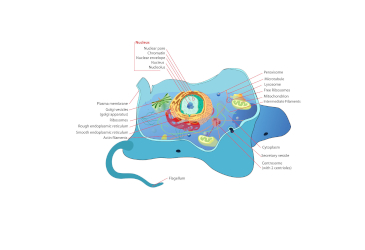
‘According to the Encyclopaedia Britannica, animals evolved from unicellular eukaryotes. Eukaryotes are cells that contain a clearly defined nucleus. This membrane enables the two stages (coding and decoding) of protein synthesis to be separated. According to the encyclopaedia, this has enabled different types of cell to evolve to do different jobs. However, no mechanism seems to be available whereby the extra information needed for this variety of cells would be created. Plants and fungi are also presumed to have evolved from such eukaryotes, but they both have semi-rigid cell walls. Animal cells do not, and it is this property that evolutionists suppose has led to the wide variety of movements and other abilities peculiar to animals.
At every stage in a supposed evolutionary process there needs to be a spontaneous production of new genetic information. Yet, the only mechanisms seen are the coding and decoding of existing information. Information is copied from DNA to RNA, then transferred in order to construct proteins.
This is why the biblical account of where animals came from is so much more scientific. The Bible refers to animals reproducing after their kind. The biblical kinds of animals comprise those pools of genetic information, outside of which animals do not breed. So all the information needed for every variety of cell and organism was found in the DNA of those kinds as originally created. Information, genetic or otherwise, is not produced by random accidents – it is planned and designed.’https://creationmoments.com/sermons/origin-of-animals/?mc_cid=f4a834dfec&mc_eid=00c1dcff3c
Genesis 1:29 “And God said, Behold, I have given you every … tree, in the which is the fruit of a tree yielding seed; to you it shall be for meat.”
‘Presumably, before the fall into sin, we didn’t have any bad cholesterol, or at least it didn’t do any damage in our bloodstream. The so-called “bad cholesterol” is low-density-lipoprotein. It’s called bad because it tends to cause our arteries to clog unless countered by the so-called “good cholesterol” or high-density-lipoprotein.
Based on earlier research, scientists wanted to test the idea that substances in orange juice could improve levels of good cholesterol. Volunteers had their cholesterol levels checked on a regular basis during the test period. After six weeks of a low cholesterol diet, they were to drink one glass of orange juice every day for four weeks. The result was a 5 percent increase in the good cholesterol. Then they drank two glasses of orange juice per day for four weeks. The result was another 7 percent increase in good cholesterol. Then they were directed to drink three glasses per day. The result was a 27 percent overall improvement. Surprisingly, researchers found that five weeks after they stopped the three glasses-a-day portion of the experiment, their good cholesterol remained high.
Psalm 40:3 “And he hath put a new song in my mouth, even praise unto our God: many shall see it, and fear, and shall trust in the LORD.”
‘Evolutionists often claim that language and music evolved independently of each other. However, new research along several lines is showing that there is a close connection between music and language.
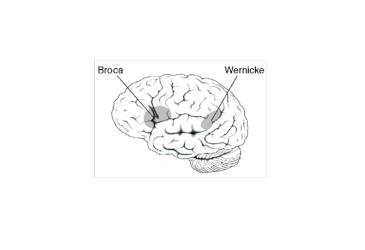
Researchers have been studying the effect of music on verbal comprehension. Electrical activity within the brain was tracked, using electrodes attached to the scalps of volunteers. They found that those volunteers who had just heard the trilling of flutes, for example, identified the word “bird” a split second faster than those who had not heard the music. This effect is called priming. When volunteers heard a church anthem, they more quickly identified the word “devotion” than those who did not. The study showed that these effects were consistent, whether the words had concrete meanings, were cultural references, or were abstract concepts. Other research has shown that when a region of the brain called Broca’s area is damaged, both recognition of harmonic chords as well as language are impaired, also suggesting a connection between language and music.
Both music and language are gifts of God. As the Psalmist noted, the songs he sang were placed into his mouth by God. Genesis tells us that Adam and Eve could talk the day they were created. While music isn’t mentioned, we see that within a couple of generations, they were making musical instruments and must therefore have played music.’https://creationmoments.com/sermons/music-and-language-are-linked-3/?mc_cid=6889ab039f&mc_eid=00c1dcff3c
“Mathematician, Physicist, Astronomer, Author, and most importantly a man of God. Isaac Newton used science and fact to understand the natural laws created by God that govern our world.”







 whatyareckon