
‘Yet another Australian activist judge, usurping the role of parliament in a democratic society, has given Lawfare’s economic saboteurs a new lease of life. If you thought that environmentalists’ abuse of the legal system in their mission to destroy fossil fuels, whatever the economic costs, was already excessive, you ain’t seen nothin’ yet. Federal Justice Mordecai Bromberg’s incredible 27 May determination that the Morrison government has a duty of care to protect Australian children from climate change devastation and death, requires that duty to be met before approving any further fossil fuel developments that add to CO2 emissions. It ushers in an unlimited round of legal battles aimed at destroying Australia’s biggest export earner (fossil fuels – coal, oil, LNG – together exceed iron ore) that are a key element in our post-Covid economic recovery. From now on, every governmental approval can be actionable under the common law for negligence on the basis that the ‘catastrophic climate change’ interests of children (unspecified as to age!) ‘have not been adequately taken into account’.’https://spectator.com.au/2021/06/business-robbery-etc-70/
electricity
All posts tagged electricity
Here in Australia ‘Now that it’s high summer, you might see a lizard, sunning itself on a rock. Lizards don’t just get their energy from food, but also from the sun. Humans are warm-blooded creatures who generally get their energy from food, not solar-power. However, there are some cold-blooded creatures amongst us.
In the New South Wales parliament, the summer started with Environment Minister Matt Keane who, with little public warning and possibility of public debate, passing legislation for net zero emissions in NSW. This committed public funds—our money—to benefit green spiv renewable funds.
Bankers, lobbyists and Liberal moderate politicians have realised that the public will not only accept this, but actually thank them for it. Thank them for making power expensive and making them richer.
In a recent public statement, Keane was been positively evangelical about the need for the Liberal party to support renewable energy. But there were some very strange things that went along with this. He did not seem across some basic facts about renewables.
Does Keane realise that worldwide over 2,000 HELE coal powerplants are operated at present, or are in the development pipeline worldwide, and mostly in our geographic region? Or to translate, does he realise that Indo-Pacific nations, such as India and China, are investing in this cheap power generation, much of which is fuelled by Australian coal, to electrify a manufacturing powerhouse boom? Whilst at the very same time making any of our ‘clean’ energy commitments meaningless? Oddly, he seems not to have considered this in calculations.
Why is Minister Keane in public critical of energy entrepreneur Trevor St Baker as someone benefiting from these changes? St Baker bought one of NSW’s coal-fired power-stations for a mere $1 million now valued at over $700m – but because the state Liberal government was selling it. This is actually a story about the impropriety of actions of those in state government, in charge of our energy policy. It appears the NSW Liberal government classified the Vales Point power station as ‘worn out’ so it could be replaced, when it was worth alot more than that. Why would they do this? About $700m of public money thrown away. It appears they want to make us pay for a hugely more expensive and inefficient solar energy plants and their power — while ordinary electors have no choice but to pay for it.
Here we reach the intersection of incompetence and impropriety.
Many members of the political and media class of New South Wales are also aware of speculation surrounding factional ideological and personal alliances, astroturfing, and a revolving door between parliaments and plush corporate suites of high paid, high powered consultancy and lobbying roles. Mark Latham has alleged on Twitter a NSW Liberal MP told him that Kean’s net zero legislation “is really about setting up the finances of the Moderate Faction, on a permanent basis”. These cold-blooded animals are indeed solar-powered.
The most serpentine are the green spiv renewables funds. They are profiting by moving us to expensive, unreliable power. Here is their simple 3-step formula.
- Replace-plants. Our coal plants are being torn down so that we have to build new power plants. The more money it costs us to build them, the more the GSRFs get as their cut (as their fees are a proportion of the funds they arranged). For the GRSFs, the more expensive these plants, the better.
- Push-up prices. These expensive solar-power plants also make more expensive and unreliable electricity, and Aussies have no choice but to pay. For the GRSFs the margin gets juicer, on this higher amounts as electricity becomes more expensive.
- Privatise -plants. Next, governments tend to sell the asset to private investors. Investment banks love energy investments because it is very low risk. It is not hard to know that people will buy electricity. Often, these deals are protected even further from risk by government-guarantees. So the funds they arrange to buy these investments are comparatively cheap and then they get access to those juicy margins these new ritzy and expensive plants they have funded us to build.
Replace plants. Push-up prices. Privatise production. That’s the GSRF formula.
For us, it means extraordinarily expensive—and unreliable—electricity. For them, the merchant bankers and their allies, it means easy and growing money whilst doing very little. They are simply taking from us. It’s not unlike the energy a lizard gets from sitting on a rock.
It is cold-blooded. They are being predatory to our polity.
There are clear alternatives to solar-power. HELE Coal-fire is very popular elsewhere and makes a lot of sense with all the coal we export. Highly-efficient nuclear power, is also an obvious option. But these are too efficient and cheap to benefit these serpentine predators.
Now, there’s another feature of serpents. As we are told in the Bible, they tend to twist words–they make bad seem good, and good seem bad. This move to change our electricity production is moving our politics into dangerous territory, where a woke-elite alliance obscures poor policy. The financial-elite profit, while the woke-brigade power their political arguments into the mainstream. The woke-brigade even shaming and standing-over normal people who question it and the financial-elite who profit from it. While the financial-elite are profiteering from us, we are supposed to say ‘thank you’. The woke-elite alliance is doing bad and calling it good.
Expect to see plenty even more ritzy Range Rovers cruising around Sydney with ‘Stop Adani’ bumper-stickers.’https://www.spectator.com.au/2021/01/todays-cold-blooded-political-animals-are-solar-powered/
Politicians have either been in the sun too long or are just lying charlatans out to fleece the citizens. Here in New South Wales the Liberal/National government has gone stark raving mad in the renewables. Hopefully, someone with sense will be elected before it is too late!
‘The Net Zero Plan Stage 1: 2020-2030 is the foundation for NSW’s action on climate change and goal to reach net zero emissions by 2050. It outlines the NSW Government’s plan to grow the economy, create jobs and reduce emissions over the next decade.
The plan aims to enhance the prosperity and quality of life of the people of NSW, while helping the state to deliver a 35% cut in emissions by 2030 compared to 2005 levels. The plan will support a range of initiatives targeting electricity and energy efficiency, electric vehicles, hydrogen, primary industries, coal innovation, organic waste and carbon financing.
Under the plan, businesses will be supported to modernise their plant and increase productivity, while farmers will have access to new markets and technologies. The plan will also help to drive down the cost of living and provide consumers with more information to help them make more environmentally and financially sustainable choices.
The implementation of the Net Zero Plan, together with the NSW Electricity Strategy, will result in more than $11.6 billion of new investment for NSW, including $7 billion in regional NSW. This will support the creation of almost 2400 new jobs, including 1700 jobs located in the regions.’https://www.environment.nsw.gov.au/topics/climate-change/net-zero-plan
This government has swallowed the climate scam poison!
The supposedly conservative Coalition Federal government of Australia is selling its citizens into financial poverty through its belief that it can change the climate! Billions of tax dollars thrown down the renewable hole while electricity prices go through the roof and the grid ruined. It wasn’t that long ago that the present PM took a lump of coal into Parliament to prove some point but has not since pushed for the building of even one new coal power station. Rather than waking up to the climate scam lie the make believe conservatives take the nation with them to ruin by taking a ‘…strong domestic and international action to reduce emissions and build resilience to the impacts of climate change. Our Foreign Policy White Paper recognises the challenges that climate change will increasingly present in the coming years, and the economic opportunities in the transition to a low emissions global economy. Given the growing challenges to sustainable development presented by climate change, the White Paper also highlighted that responding to climate change will continue to be a priority for Australia’s development assistance.
An effective response to climate change requires collective action by all countries and sectors. Recognising this, Australia contributes to action under multilateral platforms including the United Nations Framework Convention on Climate Change (UNFCCC), the Montreal Protocol, the International Civil Aviation Organization and the International Maritime Organization.
As chair of the “Umbrella Group” of countries, Australia played a constructive role in negotiations under the UNFCCC to reach the historic Paris Agreement in 2015, and the package of rules for its implementation at Katowice, Poland in 2018. Under the Paris Agreement, Australia has committed to reduce emissions by 26-28 per cent below 2005 levels by 2030. This builds on our target under the Kyoto Protocol to reduce emissions by five per cent below 2000 levels by 2020. Independent economic modelling for Australia’s 2030 target, led by Professor Warwick McKibbin.
Australia’s targets will be met through a comprehensive policy suite to reduce emissions, encourage technological innovation and expand our clean energy sector. Australia will complete a Long Term Greenhouse Gas Emissions Reduction Strategy in 2020. More information about Australia’s domestic mitigation efforts can be found at the Department of the Environment and Energy. Information about Australia’s adaptation efforts can be found at the website of the Department of Agriculture, Water and the Environment.
As well as taking action at home, Australia is supporting other countries to reduce their emissions, build resilience and adapt to the impacts of climate change. The Government will achieve its 2015 commitment of providing at least $1 billion in climate development assistance for developing countries from 2015–2020 from the Australian aid program, including$300 million over four years for climate change and disaster resilience in the Pacific. In August 2019, Prime Minister Morrison announced a further $500 million over five years from 2020 to help Pacific nations invest in renewable energy and climate and disaster resilience. Australia’s support for climate action through our development program over 2020-25 will be guided by our Climate Change Action Strategy, released in November 2019.
Australia is leading global partnerships to protect rainforests such as the Asia-Pacific Rainforest Partnership and marine ecosystems, including the International Coral Reef Initiative and the International Partnership for Blue Carbon. We are also building capacity in measurement, reporting and verification of greenhouse gas mitigation, and support for the development of blue carbon inventories.
Australia’s world-leading climate research capabilities continue to make globally recognised contributions to climate science, helping the world to understand the way the climate is changing and the impacts we need to manage.’https://www.dfat.gov.au/international-relations/themes/climate-change/Pages/climate-change
The Australian Federal Government along with every state is driving the cost of electricity beyond what the average person can afford. What is the Government’s answer to the high cost of electricity? Take note this is from an Australian Federal Government web site!
‘Cooling choices
- ceiling, pedestal and personal fans (low to medium cost)
- electric reverse-cycle air conditioners (medium to high cost)
- electric evaporative cooling (medium to high cost)
- intake of cool night air (free)
- purging of hot air (free)’https://www.energy.gov.au/households/heating-and-cooling
So, to save money on electricity the cheapest way is NOT to USE IT!! Now, I am old enough to remember what it was like living in Iowa in the middle of summer in the early 50’s without air-conditioning. That’s EXACTLY what these climate scam politicians want us to live like in 2020! I would say we can let them know what we think at the ballot box but I think the recent Presidential election in the USA gives an idea of where that would go.
Now, take time to read the following.
So-called smart meters are a very dumb response to intermittent wind and solar, even dumber energy sources. Wherever governments attempt to run on sunshine and breezes, the push to control and micromanage household power use, quickly follows.
Over the last few Australian summers, we’ve been treated to power rationing on a grand scale – which the Market Operator euphemistically tags “demand management”.
‘Demand management’ is not about supplying power consumers with what they need, it simply means shutting off power to industry, businesses and households – and even forcing hospitals to switch their lights and air conditioners off – among other indignities, whenever the sun sets and/or calm weather sets in. That’s what our ‘inevitable transition’ looks like at the macro level.
At the micro level, there’s the push to have smart meters installed in every home or business premise, in order that the grid manager can literally hold consumers to ransom, whenever renewable energy output collapses.
Now that the choice is between paying through the nose or freezing or boiling in the dark, a few are starting to wake-up to what’s really going on behind the meter.
The Critics Of ‘Smart Meters’ Were Right All Along
The Daily Telegraph
Ross Clarke
19 September 2020
Once electricity companies have established the principle that they can cut off consumers in order to cope with shortages of supply, they are bound to come back asking for more.
Imagine that you do as the Government wants you to do and buy an electric car. Then you replace your dirty old gas boiler with an electric heat pump and install a smart meter. You think you have done your bit to help the environment.
So what is your reward? To have your electricity company use your smart meter to turn off your power because there is not enough juice in the grid. Suddenly, you find yourself sitting in a cold home and your plans to drive to Birmingham tomorrow are scuppered because your car won’t be fully-charged.
Smart meters have been sold to us as part of a green future where we can manage our homes via mobile phone, switching appliances on and off remotely so as to cut our bills. But it is the cynics, so often denounced in the past few years as paranoid and backward-thinking, who have worked out the real reason why electricity companies are so keen to install them in our homes: they want to ration our electricity.
It isn’t just us who will enjoy the convenience of being able to access our appliances remotely. Scottish and Southern Electricity Networks has proposed a system in which it will be able to turn off certain devices in our homes, such as electric vehicle chargers and heat pumps, when the supply of electricity is too small to meet demand.
For the moment, the company says it will only do so with consumers’ permission and that it will only be for two hours at a time. But I don’t expect that promise to last. Once electricity companies have established the principle that they can cut off consumers in order to cope with shortages of supply, they are bound to come back asking for more. And at the current rate, they will have to do this, because we simply don’t have enough storage in the electricity grid to cope with the switch to renewable energy.
Here’s the problem. Yesterday afternoon, Britain was using 34 GW worth of power. It was a sunny and windy day across much of England – ideal conditions for renewable energy. Wind was producing 5.3 GW and solar 7.6 GW, with most of the rest being produced by gas (12.1 GW) and nuclear (4.7 GW). We were also importing 1 GW from the Netherlands.
But what happens when the wind stops blowing and the sun stops shining, as it all-too-frequently does in cold, anticyclonic conditions in midwinter, when demand for power is at its greatest? Moreover, what happens when electricity demand has been boosted by the switch to electric central heating and electric vehicles?
It ought to be obvious that if we are going to rely on intermittent sources of energy we are going to need massive investment in energy storage. Quietly over the past few years, large battery installations, housed in rows of shipping containers, have indeed popped up across Britain. At present, however, there are only enough of them to meet 1 GW worth of demand – and even then only for an hour or two. The Government is desperately trying to encourage more batteries by speeding them through the planning system. Even chuck in proposed capacity, however, and it would only supply another 4 GW of electricity for an hour or so.
But don’t expect even these batteries to get built. The Government is trying to solve the problem of a lack of energy storage through what is calls “capacity auctions”. The bids for batteries, however, are losing out to something called Demand Side Response. If you haven’t heard that jargon before, it means exactly what Scottish and Southern Electricity Networks is proposing to do: persuading people to turn off appliances when electricity demand is too high.
In other words, the electricity industry has worked out that it is going to be cheaper not to bother building batteries but instead to cut us off when the sun isn’t shining and wind isn’t blowing. As far as the Government’s capacity market is concerned, a kilowatt-hour of energy saved is the equivalent of a kilowatt-hour stored.
For the consumer, however, there is every difference. Cutting off our electricity threatens seriously to interfere with our lives – especially if we are going to have to rely on electric cars and heating systems in future. It doesn’t matter too much if our heating goes off for a few minutes, but if electricity companies try to plug the enormous gap between supply and demand on a still winter’s night entirely by cutting off our electricity supply to demand, we are going to find ourselves sitting in the dark rather a lot.
Unless the Government acts quickly on this problem and invests in a proper energy storage infrastructure – either that or finds another way to back up supply from intermittent wind and solar – we are going to be back in 1973 and the three-day week, when homes had to take it in turns to go without electricity. Then, it was the miners’ unions who were to blame; now it is a failure to plan properly for a green future.’https://stopthesethings.com/2020/11/04/held-to-ransom-smart-meters-shut-off-power-whenever-renewable-energy-output-collapses/
This green energy deal is simply the pagan Gaia religion. Guess who they want to win?

However, ‘In a refreshingly honest article in the Boston Review, David McDermott Hughes confirms something that we energy evangelists have been saying for some time: Environmentalists do not simply want people to transition to “green energy,” they want humanity put on energy rationing, for the good of the planet. Now, apparently, they’ve also decided that we need to add intermittent fasting to our energy diet because, gosh darnit, electricity in developed countries like the United States is just too darn reliable for our own good! It needs to go out once in a while, or, well, the planet is doomed.

According to Hughes, “For those seriously concerned about climate change, the inverse—the demand for electrical continuity—may be the real problem.” Yes, you read that right, the desire to have electricity available 24/7 is the cause of our global climate catastrophe, and we need to learn to live with intermittent energy like the happy campers of Zimbabwe and Puerto Rico which “provide models for what we might call pause-full electricity.”
And who is first on the new electricity diet? Why, you are, you single-family home-dwelling environmental heretic. Hughes explains that “…each household demanding continuous electricity marginally exacerbates the climate crisis. Perhaps, then, it is critical that we not store energy for these houses. At least, we should not do so in a way that hobbles the transition away from fossil fuels. We ought to consider waiting a few years for storage—enduring much more than six hours of downtime every year—for the sake of transitioning more rapidly away from fossil fuels.”
Surely you can handle a “few years” of intermittent blackouts and brownouts, right, suburbanites?
This energy-rationing agenda has been hidden, heretofore, by a huge raft of bogus promises that would make the switch to renewables easy. Batteries, we were told, will adapt so fast that we can go ahead and just build out wind and solar power, while letting conventional power plants wither and die, and everybody will have their cake and eat it too! Unfortunately, the reality of battery storage limitations is just too obvious to people who see, day in and day out, the reality of batteries: they aren’t getting that much stronger over time. As Mark Mills, of the Manhattan Institute points out (and do read the whole thing!):
About 60 pounds of batteries are needed to store the energy equivalent of one pound of hydrocarbons.
At least 100 pounds of materials are mined, moved and processed for every pound of battery fabricated.
Storing the energy equivalent of one barrel of oil, which weighs 300 pounds, requires 20,000 pounds of Tesla batteries ($200,000 worth).
Carrying the energy equivalent of the aviation fuel used by an aircraft flying to Asia would require $60 million worth of Tesla-type batteries weighing five times more than that aircraft.
And even Hughes now admits that, well, making batteries is environmentally destructive, and environmentalists don’t want you doing that, even if you can. After all, batteries are just not woke:
Lithium-ion batteries are moving into position to overcome that constraint, but they create problems of their own. Like most form of mining, lithium extraction produces toxins—imposed, on this case, on indigenous down-winders in Chile. Also like mining, the lithium trade concentrates power and wealth in the hands of few, corporations. Sometimes called “bottlenecking,” this process converts a resource too plentiful for profit—like sunlight—into a scarce and lucrative commodity. Not even environmental savior Elon Musk is safe from abuse, because, it seems, Tesla “seems on track to gain a controlling share of any smart grid connected to electric vehicles; its Powerwall battery is out-competing less toxic technologies, and it could eventually dovetail with software known as “demand response.”
Oh My God. You mean, Elon Musk is a – gasp – businessman? Perish forbid!
The moral of this story is, when the “green” energy, “green economy,” “green new deal” types tell you that all they really want is for you to have “greener” energy, what they mean is that they want you to have less. Less quantity, less reliability, less affordability, and less consumer flexibility. And you can take that to the ballot box.’https://papundits.wordpress.com/2020/11/02/reliable-electricity-bah-humbug/
Why doesn’t this surprise me? From the UK we read that;
‘Doctors will have power to section people indefinitely
The Coronavirus Bill (which is being passed into law this week at breakneck speed) will, among other things, (1) authorise a forcible detention of people on mental health grounds (‘sectioning’) on the opinion of any one doctor (rather than two, as previously required) and (2) abolish the six-month time limit on ‘sectioning’. Any one doctor will have the power to lock you up in a lunatic asylum indefinitely – all in the interests of your own and others’ safety.
It is well-known, and self-evident, that forcible psychiatric detention is an area which is open to abuse in the absence of effective safeguards. In the Soviet Union, it was used simply as a tool to suppress political dissent. This may be an extreme example, but where is the guarantee that one rogue doctor or another will not, once in a while, abuse his newly found unlimited power? For very good reasons, we have had safeguards against that in our law. Now they are being urgently abolished – supposedly as an obstacle to our survival of the epidemic. How exactly are they such an obstacle?
It should be stressed that this has nothing to do with increasing doctors’ capacity to deal with coronavirus patients. A psychiatrist is not much help in treating a respiratory disease. In fact, he would be as useful as a gynaecologist. Just like gynaecologists can safely continue to supervise (and hopefully, sometimes refuse to authorise) abortions, there is no reason why psychiatrists cannot carry on doing their usual job – which includes, most importantly, protecting people from arbitrary detention on unsound psychiatric grounds. Those duties are expendable luxuries, but are vital safeguards of liberty.
Powers to issue warrants for surveillance
Another frightening power-grab in the Coronavirus Bill is the expansion of the power to appoint temporary judicial commissioners, with the powers to issue warrants for surveillance, under the Investigatory Powers Act 2016. The threat to civil liberty is obvious; and this has nothing to do with coronavirus.
Given those examples, one inevitably looks more sceptically at the idea that the government knows best about its other measures which ostensibly have something to do with coronavirus. Things like prolonging local councillors’ term in office for a whole year without a democratic mandate; police power to detain anyone for up to 48 hours on suspicion of a threat to public health; Ministers’ authority to ban mass gatherings; or court trials by skype. Are all those things really necessary? Or have some civil servants simply been waiting (heaven knows for how long) for a convenient moment to introduce them without provoking mass protests on the streets?
For example, skype trials in court sound sensible at the time of an epidemic, but the very first reported trial is a rather frightening one. That is a Court of Protection trial last week to decide the fate of an anonymous man in his ‘70s, whose GP wants to switch off his life support to let him die ‘in dignity’, and whose family objects. Remember all the debates and protests over the cases of Charlie Gard and Alfie Evans in this country, and Vincent Lambert in France? Under the new regime, decisions on life and death cases of this kind are being made on a skype call. No proper trial, no ‘army’ of protesters, no real media coverage. It was only reported as a technological curiosity – the first major trial taking place by skype.
The price of liberty is eternal vigilance
These and other measures are meant to be introduced only on a temporary basis. There is a subset clause in the Bill, whereby these new laws will automatically lose force after two years unless Parliament votes to extend them beyond that period. Amendments are being debated to shorten that period. However, this does not answer the concern that some of the most drastic innovations in the Act are clearly not necessary to contain coronavirus at all. If in those two years, someone is wrongly ‘sectioned’ in a lunatic asylum, it is small comfort to them that this practice will cease in 2022. Further, as a general rule of constitutional history, temporary limitations on liberty tend to become permanent whenever they are convenient for the state. We still live today with all sorts of draconian laws introduced as a matter of emergency after 11 September 2001. Come 2022, the Coronavirus Bill powers may also be extended on whatever pretext. Indeed, section 90 of the Bill even permits the extension of those powers without a vote in Parliament.
The price of liberty is eternal vigilance. Many dictatorships originate in people’s panicked enthusiasm for drastic measures to deal with a genuine crisis. Putin’s regime in Russia, for example, took hold because people trusted their democratically elected president to do whatever it takes to defeat the threat of terrorism. Eventually, when Putin responded to another terrorist attack by replacing regional elections with appointed governors, that trust was largely lost – but it was too late. It is no surprise that when we see fairly similar moves attempted in this country, our trust in the government hangs in the balance.
At least in terms of public trust, the next few days will be crucial for the government’s efforts to control the epidemic. If the government is serious about it, its legislation must be cleansed of all disingenuous attempts to take advantage. And if they are not serious about it, nobody else will be.’ https://christianconcern.com/comment/coronavirus-exploited-by-enemies-of-democracy/?utm_source=Christian+Concern&utm_campaign=a5725850b3-WN-20200228_COPY_01&utm_medium=email&utm_term=0_9e164371ca-a5725850b3-127681039
In the Australian state of New South Wales ‘protesters who intimidate, harass or film people within 150 metres of clinics or hospitals that provide terminations will face punishments including jail time.’ https://www.abc.net.au/news/2018-06-08/abortion-clinic-safe-access-laws-pass/9846964
Yet in Queensland a climate scammer otherwise known as a climate change protester ‘… declared himself the “minister for barbecues” in the middle of a busy Brisbane street is arguing he was not “disorderly”, but exercising his 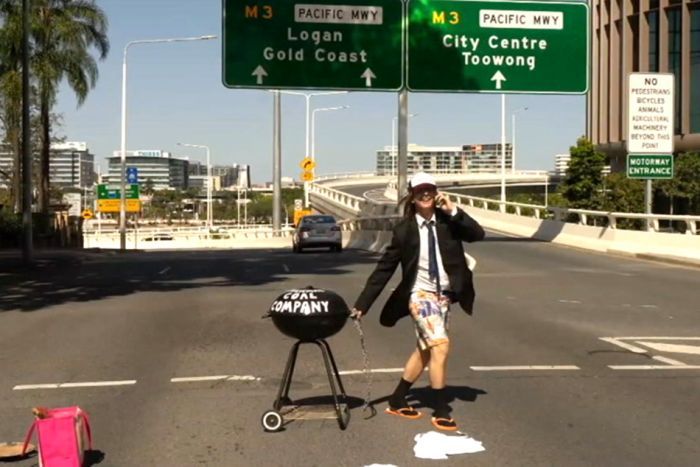 right to peaceful assembly under Queensland’s new Human Rights Act.’
‘Magistrate Suzette Coates adjourned the case for several weeks to give the prosecution time to make a written submission.
“This is quite a significant issue,” she told the court.
“The court’s been well expecting an argument such as this … so I need to properly consider it.
“It’s not something that should be considered lightly.”
The maximum penalty for a public nuisance conviction is six months’ jail.’ https://www.abc.net.au/news/2020-03-06/climate-protester-argues-protest-legal-qld-human-rights-act/12029148
NOTE, the Magistrate said this nonsense was a ‘significant issue’ and that she needed ‘to properly consider it’ and that it was not an issue ‘that should be considered lightly’!
What a dismal situation in which we find ourselves. In NSW those who believe the life of the unborn are important are NOT allowed to protest the murder of the unborn but a man who believes the world is in a crisis due to coal and shuts down the traffic of an entire street in protest has a magistrate who sees his protest as a SIGNIFICANT ISSUE! It is too often these same people have a hard time in believing the Book of Genesis is real history!
Who would have ever thought a year ago that toilet paper would be the subject of conversation where ever a group of people were gathered? Well, it is a reality today. This is an email that was sent out by the CEO of a large grocery outlet here in Australia.
‘I’d like to update you on the shortages we’re seeing in toilet paper and other essential items.
 As you may have read, or seen for yourself, these are unusual and challenging times. We know it can be frustrating when we don’t have the products you need, or when delivery or Pick up windows are filled more than usual.
We’re working very closely with our suppliers to get products onto shelves as quickly as we can. The makers of Kleenex, Sorbent, Quilton and Woolworths own range of toilet paper have all increased their production to meet this very unusual demand.
For example, the makers of Kleenex are now manufacturing 24 hours, 7 days a week at their Millicent, SA factory, as are Sorbent in their NSW and Victorian facilities. And the makers of Quilton have tripled their normal production across their factories in Queensland, NSW and WA.
It’s worth noting that the vast majority of products aren’t affected and most stores aren’t seeing significant shortages. But to make sure everyone has access to essential items, we’ve introduced some common-sense limits to a few products. We’ve limited toilet paper to 4 packs per transaction and large packs of rice (2kg and over) to 1 per transaction. Where available, hand sanitiser is now at the Customer Service Desk and limited to 2 per transaction.
We’re constantly monitoring the situation and will do our best to keep all products freely available to everyone. However, if we see new shortages, we may introduce other limits. We’ll only do this if we think it’s absolutely necessary and to help make sure all customers can access the products they need. We’ll keep you updated in our stores and on our website as things change.
Our team members are doing the very best they can, so please support them, and each other.
Thank you for your patience and understanding as we work through this together.
CEO Woolworths Group’
All of this seems laughable but the reality is that it doesn’t take much to upset the economy and daily living. Now, the day is coming when The merchants of these things, which were made rich by her, shall stand afar off for the fear of her torment, weeping and wailing, 16 And saying, Alas, alas, that great city, that was clothed in fine linen, and purple, and scarlet, and decked with gold, and precious stones, and pearls! 17 For in one hour so great riches is come to nought. And every shipmaster, and all the company in ships, and sailors, and as many as trade by sea, stood afar off, 18 And cried when they saw the smoke of her burning, saying, What city is like unto this great city! Revelation 18:15-18.
The old Labor Party had its faults as do all political party’s. However, ‘In 1970 Gough Whitlam welcomed the federal government’s announcement that it would finance the building of the Gladstone Power Station.
Whitlam said “power was the determining factor in the development of natural resources in the area and the attraction of greater human resources to the area”.
Since that time the Labor Party has given up trying to attract working-class jobs to develop an area. This week Anthony Albanese has compared new, job-creating, coal-fired power stations to unicorns. Without new coal-fired power stations, thousands of manufacturing jobs across Australia will be lost.
There are 3000 people employed in alumina and aluminium production in central Queensland thanks to that Gladstone Power Station built by the federal government 50 years ago.
That was a time when we developed our resources not just to export overseas but to create jobs here too.
Without further investment, however, we will lose this industry and thousands of jobs. Other countries will instead take these jobs because, in the words of the Opposition Leader, they’re building lots of unicorns.
According to the environmental activists at Global Coal Plant Tracker, China is building 105 more unicorns (coal-fired power plants), India 31 more, Indonesia 24 more and Japan 14 more. Around the world 223 coal-fired power stations are being built, including seven in Europe, and there are 343 coal-fired power plants in the “pre-construction” planning stage. Coal-fired power is imaginary only in Albanese’s mind.
If other countries build coal-fired power stations (often fuelled with our coal), and we do not, they will take our jobs. We will not just be shipping the coal overseas, our jobs will be shipped over there too.
That will also happen if we succumb to the glib talk that we should adopt a target of achieving net-zero emissions by 2050. How will this work? We are due to receive our last diesel submarine in 35 years, but apparently we can hit net-zero emissions in 30 years.
The net-zero advocates will respond that we can “offset” the diesel-powered subs with investments that help cut emissions in other countries.
But we are being told that we need all countries to hit net zero by 2050 to save the planet. Who are we going to buy carbon emissions from if all other countries have stopped emitting too? We can’t buy carbon credits from Mars.
What the advocates are really suggesting is that we can have our cake and eat it too. That we can still drive our cars, heat our homes and even fly around the world on holidays, providing we tick a box that says “green offset credits” for the low, low, low price of $2 a trip.
If only it were that simple.
The 223 coal-fired power stations that are being built around the world have economic lives that will last until 2070.
Other countries will not handicap their economies by shutting them down early. They will keep producing our wind turbines and solar panels using coal-fired power. And, they will make a lot of money out of this.
But renewable energy will not protect our manufacturing jobs and industries.
Electricity prices are cheaper in other countries that use our coal. The proposed policy of exporting our coal while denying ourselves the use of it hurts our manufacturing industry at both ends. Not only does it make the costs of making things here more expensive, it gives our competitors a leg up.
The proposed Collinsville power station is backed by an indigenous-led company, Shine Energy. This company is run by proud members of the Birri nation. They want to build a coal-fired power station on their land so they can enjoy good-paying jobs on their own country.
The Birri people have experience working on power projects. They worked on the Collinsville solar farm. They managed to get jobs out of that project, but they were temporary.
Once the panels were installed all the jobs disappeared, and that doesn’t help the Birri achieve their long-term economic goals.
Renewable energy investments are often just sugar hits for country towns. In contrast, a coal-fired power station promises to deliver 500 long-term, well-paid jobs for north Queensland. That’s heaps more than the Birri can hope to fill and the project will be a boon for all north Queenslanders, not just indigenous Australians. A new coal-fired power station in north Queensland would return us to Whitlam’s wise words of developing our natural resources to attract human resources to an area.’ http://www.mattcanavan.com.au/coal_fired_power_stations_create_jobs_and_give_a_free_kick_to_rivals_the_australian?utm_campaign=e_central_bulletin_28_2_20&utm_medium=email&utm_source=mattjcan


 whatyareckon