Australian politicians are the pushers of this nation destroying energy crisis. This rally will bring a host of people from all walks of life.

Australian politicians are the pushers of this nation destroying energy crisis. This rally will bring a host of people from all walks of life.
‘Switzerland could limit the use of electric vehicles (EVs) in cases of electricity supply shortages this winter under a new four-step plan to prevent power cuts and blackouts.
To ensure energy security this winter, Switzerland could become the first country to limit the driving and use of EVs, German daily Der Spiegel reports, citing multiple media reports on the Swiss four-stage action plan to avoid blackouts.
Driving EVs could be banned in Switzerland unless in cases of “absolutely necessary journeys” in stage three of the power conservation plans. The country also plans a stricter speed limit on highways in the recently proposed action plan, which has yet to be adopted.
Switzerland typically imports electricity from France and Germany to meet all its power demand, but this year supply from its neighbors is constrained.
In France, the nuclear fleet availability is much lower than usual, which has led to the country becoming a net importer of electricity after decades of being a net exporter. The French electricity grid is at higher risk of strained power supplies in January 2023 than previously estimated due to lower nuclear power generation.
The country could face the risk of power cuts this winter when electricity supply may not be enough to meet demand, Xavier Piechaczyk, the head of grid operator RTE, said earlier this week.
In Germany, the situation is similar, as utilities are having to make do with no Russian pipeline gas supply.
Switzerland’s power supply remains uncertain for the winter and troubles with enough electricity capacity cannot be ruled out, the Swiss Federal Electricity Commission, Elcom, said as early as in June. Due to the expected lower availability of French nuclear power generation and of France’s power exports to Switzerland, the Swiss imports of power generated in France is likely to be much lower this winter compared to previous winter seasons, Elcom said.
Therefore, Switzerland may need to cover its electricity import needs of around 4 gigawatt hours (GWh) from imports from its other neighbors Germany, Austria, and Italy.
However, the power export availability of those countries would heavily depend on the available fossil fuels, mostly natural gas, according to Elcom.’https://richardsonpost.com/tsvetana-paraskova/29566/switzerland-considers-electric-vehicle-ban/
This climate scam is robbing the poor to make a few very, very rich. Nevertheless, this nonsense is here to stay at least for awhile. It seems the West has swallowed the lie and there is no turning back at least for now.
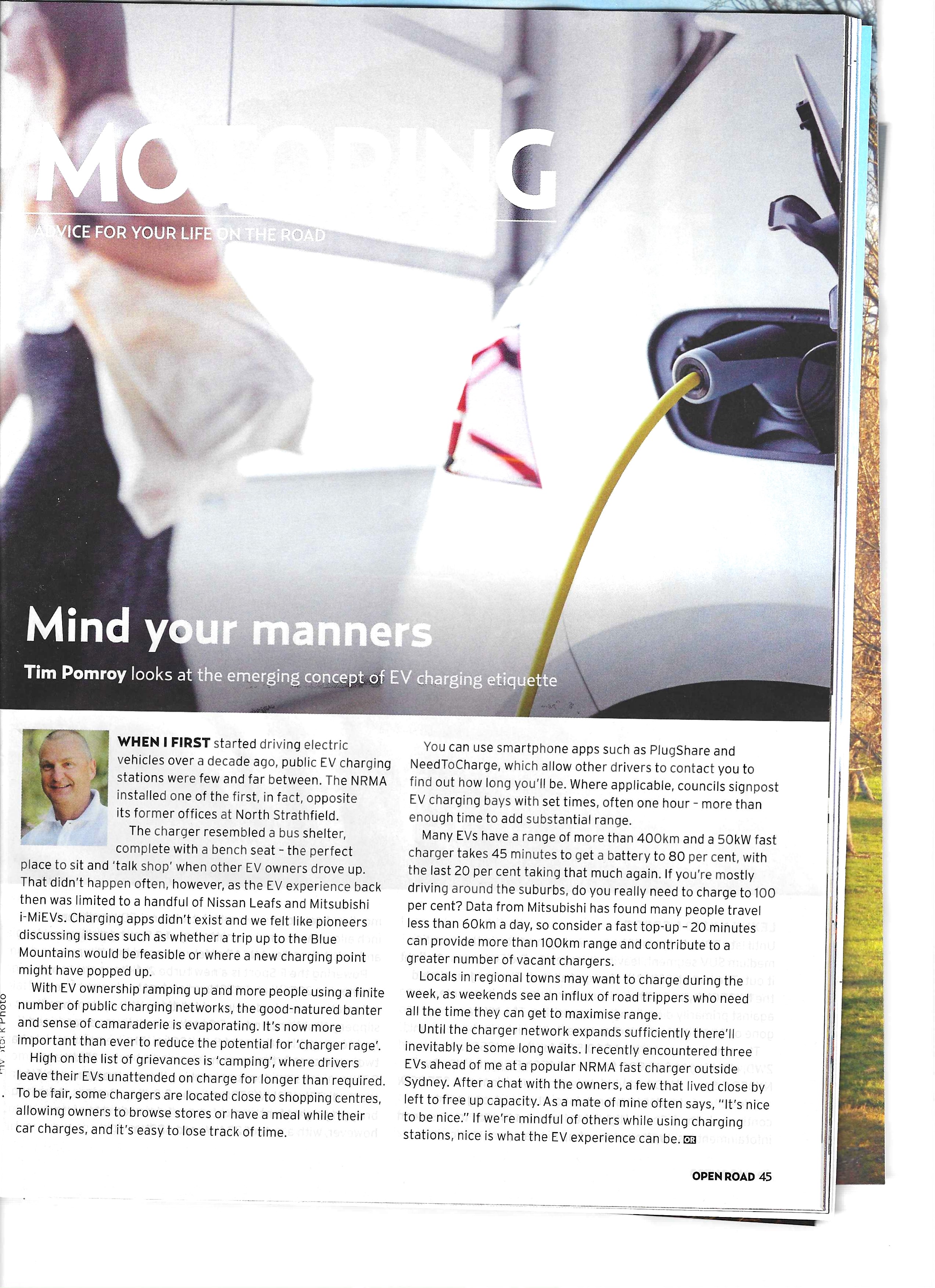
Anyway, I read this article in a magazine and thought I would share it with you. Read the article and let me know what you think. Oh, by the way right after the Noahic flood the Creator said in Genesis 8:22 While the earth remaineth, seedtime and harvest, and cold and heat, and summer and winter, and day and night shall not cease.
They would all be fired if working for a profit seeking company.
‘After a decade of denial and delay, Australia deserves a better future – one with cheaper power, more jobs, and less emissions,’ said Energy Minister Chris Bowen, in his last media release prior to gaining government.
Mr Bowen advocated replacing coal generators with wind and solar, with their shares of electricity supply to increase from 30 per cent to 82 per cent by 2030. To facilitate this, he proposed spending $80 billion on transmission, thereby quadrupling its present costs.
He also ridiculed a Morrison government that ‘does not believe renewables are the cheapest form of energy, or that the world’s climate emergency is Australia’s jobs opportunity’.
Following the May election – the ALP, along with Greens and Teals – received all their Christmas presents at once with an energy supply shortage where a third of the coal generators were out of action, bringing an eight-fold increase in wholesale prices.
After two weeks in office, the new government is now silent on its ludicrous claim that its replacement of coal with high-cost wind/solar generation will save households $275 a year.
The June 8 meeting of energy ministers endorsed the transmission part of the ALP plan only to see this undermined the very next day with the announcement of delays in a crucial element – the conversion of the Snowy Hydro system into a renewables-supportive pumped hydro facility.
Panicked by the tenfold increase in electricity prices, the energy ministers announced measures to patch up the wounds in the market caused by the very political controls they were amplifying. These included giving regulators powers to trade gas, with no consideration of the effects of this on other suppliers’ actions.
Energy ministers also announced replacing the existing ‘energy only’ market with a UK-style ‘capacity market’. Such a system ostensibly offers more funding to controllable supplies like those from coal, gas, and hydro. But it is less effective and more expensive than having decisions on supply reliability made by retailers who need to balance contracts between many different sources. Western Australia operates with a ‘capacity market’ and it has added costs without improving availability.
The recent bankruptcy of half of the UK’s energy retailers demonstrates that a capacity market does not give greater security.
Fundamental harm has been done to the energy system as a result of politicians meddling in commercial matters. The creation of the National Electricity Market and privatisations two decades ago has brought to Australia the world’s most efficient, lowest-cost electricity supply.
There are two reasons why it has since gone pear-shaped.
First, governments have subsidised wind and solar, making coal and gas generators unprofitable and forcing their closure. Governments made it clear that coal generators, which supply 60-70 per cent of our electricity, have a very limited social license to operate. They inhibited access to new coal supplies, accepted activists’ attacks on coal, and closed their eyes to policies of banks that refused loans and of insurance companies that refused cover.
Secondly, governments have foreclosed exploration and development of abundantly available gas in South Australia, Victoria, and New South Wales. Astonishingly, in face of consequent shortages, the Victorian energy minister, Lily D’Ambrosio, advocated diverting Queensland gas to Victoria. In response to criticism of this policy, Premier Daniel Andrews suggested it was only possible for Victoria to supply gas if we ‘frack up the joint’ which he claims (contrary to all the evidence) will harm our prime agricultural land. The state Liberal Party shares the same policy to the great detriment of the people the politicians supposedly represent.
The industry has been treated as the playground of politicians. They have compounded their own errors in subsidising renewables that undermine the whole system by funding the will-o’-the-wisp (which is hydrogen power) and by appointing activists to bloated regulatory agencies and to their own departments.
Creating the damage is easier than repairing it.
The subsidies to wind and solar will continue to poison efficient supply for many years to come. But as a start, governments must abandon all subsidies, free up regulatory restraints, and disengage from controls over retailers and generators. Efficient electricity supply, like that of groceries, telephony, and cars, requires market – not government – control. As has been demonstrated, the latter brings especially perverse outcomes when it seeks to specify particular technologies.
Rectifying the damage also requires restoring the social licence to build new coal power stations and nuclear power. This involves correcting an environment whereby financiers have joined regulators and activists in preventing new investment.
Government leadership is required to undo this damage, including by upholding laws that prevent trespass, abandoning requirements on firms to conform to concocted environmental pressures, and making all businesses aware that discrimination against energy suppliers is alien to government policy.
This will not be easy.
Ministerial statements demonstrate an ignorance in blaming the cause of the current crisis on gas and coal. Both Labor and Coalition politicians have, for the most part, listened to activists and subsidy-seekers and drunk the kool-ade that wind/solar is not only necessary to save humanity but is also cheaper. It seems the situation will need to deteriorate even further before there is a realistic chance of policy reversals.’https://www.spectator.com.au/2022/06/politicians-have-sabotaged-the-energy-market/
The climate scammers are trying to save the earth but while they are doing that the products produced to save the earth are going to do more harm than good. https://twitter.com/StopTheseThings/status/1492385601924042760?s=20&t=vg3mq4uBASZa4waRcxhQAQ
How can you tell if a politician is lying? If they have their mouth open. Well, here’s a BIG ONE!
‘In the make-believe world of politics, in which all utilities can be maximized simultaneously, and yes we’re going to keep saying it until everyone goes yeah yeah we get it, you can price fossil fuels out of reach without it hurting anyone. Thus from Australia, and more particularly The Australian, we read that the opposition Labor Party leader finally coughed up a climate plan that “will help to create jobs, cut power bills and reduce emissions.” Specifically “The Opposition Leader has pledged to reduce greenhouse gas emissions by 43 per cent by 2030 if Labor wins the next election” and yet “Electricity prices will fall from the current level by $275 for households by 2025 at the end of our first term if we are successful”. There’s that all-important “if” again.
There is a rule, long familiar to us yet we cannot now lay our hands on the original version, that if enough people of intelligence and good will have looked for something long enough in a great many places and have not found it, the chances are good that it’s not there. Which brings us to the magic plans to make gasoline, natural gas and coal unaffordable without increasing the cost of living, thus saving us all from the climate crisis without any pain.
We do not wish to mock Anthony Albanese any more mercilessly than he deserves, since the Australian Labour leader is just the latest in a long parade of people across the political spectrum who have made vague promises of great things to come, spent a suspiciously long time getting the details together, then come up with something clearly impossible. On the other hand, he deserves as merciless a mocking as the others, and a bit more, because of the question: If they couldn’t, why can you?
Now they may object that they can. As we pointed out last week, when Canada’s federal environment commissioner gave the incumbent Liberals the knuckle-bone shampoo over their consistent failure to accomplish anything meaningful on climate and their fixation on sending words to do the work of deeds, they responded by saying yes, thank you, we are great. But here’s the mystery.
If they are, if their plan really is working, why didn’t the Australian Labour Party copy it? Why is everyone reinventing the wheel? You may recall that Naomi Oreskes raised eyebrows by saying, from the heart of the alarmist camp, that if the science is settled we should stop studying it and do what we know we should. And that we said she had a point.
If the science isn’t settled, stop saying it is. If the policy isn’t obvious, stop saying it is. And if it is settled on the one hand, and obvious on the other, stop prattling, delaying and promising and get to it.
Of course Albanese can’t do it unless and until his party wins power. Fair enough. But if you look at the climate policies of every nation from Britain to Germany to China to Japan to Ghana to Brazil to Saudi Arabia to Malaysia, and go around the globe again adding France and Thailand and Tunisia and Iceland and Eswatini, only two things can happen.
One is that you discover that a fair number of them found a plan that delivers painless gain so you should just copy it. And the other is that nobody did and there isn’t one.’https://climatediscussionnexus.com/2021/12/08/magic-from-down-under/
‘TOYOTA CHIEF : ELECTRIC CARS OVER-HYPED, COULD COST HUNDREDS OF BILLIONS AND MAKE CARS UNAFFORDABLE FOR AVERAGE PEOPLE But that is what the ‘Great Reset’ is all about – a future where private cars are only for the elites. And since cars are the one greatest symbols of freedom, under the Great Reset, we can’t let average people have them. https://www.wsj.com/…/toyotas-chief-says-electric…TOKYO— Toyota Motor Corp.’s leader criticized what he described as excessive hype over electric vehicles, saying advocates failed to consider the carbon emitted by generating electricity and the costs of an EV transition. Toyota President Akio Toyoda said Japan would run out of electricity in the summer if all cars were running on electric power. The infrastructure needed to support a fleet consisting entirely of EVs would cost Japan between ¥14 trillion and ¥37 trillion, the equivalent of $135 billion to $358 billion, he said. “When politicians are out there saying, ‘Let’s get rid of all cars using gasoline,’ do they understand this?” Mr. Toyoda said Thursday at a year-end news conference in his capacity as chairman of the Japan Automobile Manufacturers Association. He said if Japan is too hasty in banning gasoline-powered cars, “the current business model of the car industry is going to collapse,” causing the loss of millions of jobs.’https://www.facebook.com/CraigKellyMP
A member of the Conservative Party ‘Rishi Sunak is considering plans to charge motorists for every mile they drive on Britain’s roads to fill a £40billion tax hole left by a push to electric cars, according to reports.
The Chancellor is reportedly ‘very interested’ in the idea of a national road pricing scheme – which would steer motorists into a new ‘pay-as-you-drive’ type system.
Road pricing in England is limited to schemes such as the M6 Toll in the Midlands, the Dartford crossing on the M25, London’s Congestion Zone and a handful of small tunnels and bridges.
But a national scheme is now being considered amid fears a switch to electric vehicles will leave a massive tax shortfall from the loss of key revenue raisers such as Fuel Duty and Vehicle Excise Duty, according to the Times. […]
It comes amid reports Boris Johnson wants to accelerate his green plans – including bringing forward a ban on the sale of petrol and diesel cars to 2030.’https://www.thegwpf.com/uk-plans-to-charge-motorists-for-every-mile-they-drive-to-fill-40billion-tax-hole-left-by-the-switch-to-electric-cars/
Well, the radical ANTI-GOD ‘save the earth’ crowd are determined to do away with the

NO PETROL FOR YOU! NEXT!!!
petrol and diesel vehicles at any cost. If they get their way you will be plugging in your vehicle sooner than you might think or want!
‘Transport Minister Barnaby Joyce has quashed the prospect of Australia replicating overseas bans on the sale of new petrol and diesel cars, as the Turnbull government splits on whether to encourage the electric vehicle industry.
Environment and Energy Minister Josh Frydenberg this week strongly backed the prospects of electric vehicles in Australia against opposition from conservative backbenchers. He told Sky News on Tuesday that critics who ridiculed the technology would “probably be the ones buying them in a decade’s time”.
In an opinion piece for Fairfax Media this month, Mr Frydenberg said Australia should prepare for the electric car revolution that has already swept Europe and will soon hit China. He said France and Britain would end the sale of new diesel and petrol cars by 2040, and Norway and the Netherlands aimed to do so by 2025.
Asked whether Australia would follow suit, a spokeswoman for Infrastructure and Transport Minister Barnaby Joyce on Wednesday said his government had “no plan to ban the sale of new petrol and diesel cars … Australia’s transport policies are modelled on Australia’s needs.” His office declined to elaborate.
Two Liberal backbenchers – Craig Kelly and Tim Wilson – have signalled they will oppose any government subsidies to the electric car industry.
This is despite the International Energy Agency’s 2017 outlook for electric vehicles stating that financial incentives were “essential for reducing the purchase cost and total cost of ownership gap between electric and conventional cars”.
The report said such incentives would encourage sales, leading to a rise in production and technology development that would help lower the cost of electric car components.’ http://www.theland.com.au/story/5185912/joyce-rejects-banning-sale-of-petrol-cars/?src=rss
If electric vehicles are such a good thing why do the manufacturers need tax dollars to

THE FUTURE?!
develop and produce them? Is this campaign really about keeping the air clean or do they just simply hate God!? Genesis 8:22 While the earth remaineth, seedtime and harvest, and cold and heat, and summer and winter, and day and night shall not cease.
 | Elise on NY Times Warns Companies From… |
 | Martin on School Boards, Hot Mics &… |
 | pacanter7 on Creation News and Views Januar… |
 | Scriptural Vision on Climate Change & Community… |
 | crisscross767 on Prophetic Signs in the He… |
 whatyareckon