‘German Chancellor Angela Merkel’s husband has slammed millions of citizens as ‘lazy’ and ‘indolent’ for not yet taking a coronavirus vaccine.
Professor Joachim Sauer criticised those Germans that remain unvaccinated as ‘not open to the successes achieved by science’, comparing the ‘irrationality’ to Creationism in the United States of America.
Chancellor Merkel has expressed concerns that coronavirus restrictions in Germany may not stop a fourth wave currently believed to be present in the country.
Germany’s health minister has said the rapid rise in coronavirus cases means it is likely that everyone in the country who is not vaccinated will have caught Covid-19 by the end of the winter, and some of those will die.
Official figures showed more than 30,000 newly confirmed cases in Germany over the past 24 hours, an increase of about 50% compared to a week ago.
“It is really, absolutely, time to take action,” German Chancellor Angela Merkel said on Thursday.
Genesis 1:27 “So God created man in his [own] image, in the image of God created he him; male and female created he them.”
‘While the Bible teaches us that sex is a wonderful gift of God, evolutionists believe that sexual reproduction should not have evolved. According to evolutionists, if sexual reproduction were to develop, evolution is supposed to get rid of it.
To make matters worse, immobile plants use sexual reproduction. This creates a problem in transferring the male genes to the female for fertilization. Just to confound things even more, God uses insects and even mammals to transfer the pollen. Since evolutionists believe that plants were around for many millions of years before animals, evolutionists have yet another problem.
The European family of the Arum lilies attracts beetles and flies. When one of the insects lands on a flower, he finds a slick, oil-coated surface and ends up sliding down into a chamber filled with small hairs. Imprisoned, he finds a sweet sap that makes good eating. While he is gorging himself on the sap and getting sticky in the process, the male part of the flower showers him with pollen. The next day, the sticky, pollen-coated insect finds that the doors to his prison are open. So he flies off to another flower to unwittingly deliver his load of pollen!
‘The existence of humans suggests that, at some point, there must have been a first human. Neither evolutionists nor creationists deny this. However, creationists believe that Adam (Genesis 1–2) was the first human. But whether the first human was Adam or some unnamed, recently-evolved person, where did that person learn to speak?
Evidence suggests that humans do not learn to speak unless they are taught by someone who already knows how to speak. Additionally, the archaeological record indicates that fully-developed languages have been in existence as long as humans have been (Elgin 1973, 44). For these reasons, Curtis, in a 1990 article, argues that a personal creator was responsible for the existence of the first human.
Linguistic Evidence
Linguistic research suggests that languages have not evolved from a prehistoric development period (Eglin 1973, 44). Rather, languages have always existed with the same communication potential as they currently possess. In fact, it is possible that they even held greater communication potential in the past.
An example of an inscribed clay tablet
Archaeological Evidence
The archaeological finds from the past 100 years of excavations have demonstrated that written language appears well developed in the earliest records of civilization. For example, the Ebla tablets date to about 2000 BC. These tablets contain writing in a fully-developed, phonetic language.
How Do People Learn How to Speak?
Some Darwinian anthropologists have suggested that if, in the process of evolution, there was a transition from animal to man, this transition would have included the acquisition of language. However, one of these anthropologists, Humbolt, realized that man cannot speak without already being human. For him, this created an unsolvable problem regarding the origin of speech (Lyell 1873).
Another problem with determining the origin of speech from an evolutionary perspective is that in so-called primitive cultures, the languages tend to be more complex than in more advanced cultures. Furthermore, animals with the physical capability to use logical speech do not do so. Studies have shown that animals that respond to commands do so based on vocal tones rather than the spoken words. Thus, all attempts to solve the evolutionary origin of language have failed.
Every child that learns how to speak learns from someone who already knows how to speak. There do not seem to be any exceptions to this rule. Feral children who grow up without contact with spoken language did not learn to speak until they came into contact with speaking individuals. Once they had heard speech, they were able to learn how to speak (Tomb 1925).
What Does this All Mean?
Since multiple languages appear to have existed in fully developed forms in the earliest known civilizations, it appears that the languages do not have one common root. Rather, each language appeared independently of the others.
This evidence aligns well with the biblical account. From the creation of Adam until the Tower of Babel, there was only one language on earth (Genesis 11:1). Curtis suggests that God taught the first man, Adam, to speak. It is clear that Adam spoke a well-developed language because he was able to name the animals (Genesis 2:19). From that point on, each generation learned to speak from the previous one.
Later, when God confused the languages at the Tower of Babel (Genesis 11:7), He miraculously created a number of additional unrelated, fully-formed languages. The pattern of language learning continued. Each person learned to speak from the previous generation.
Conclusion
The scientific evidence obtained through linguistic and archaeological studies suggest that the first human who learned how to speak must have learned from someone who already possessed the capability of speech. This first person must have learned from someone of a higher order than humans. This correlates well with the biblical account of God’s creation of Adam. Adam must have received the ability and knowledge to speak from God himself. The study of language demonstrates that there must be a creator God. No human can speak a language unless that person has been taught. Furthermore, languages have not arisen from some lesser forms of communication. They appeared early in history, fully developed. The languages present today do not share a common root, suggesting that they appeared as separate, well-developed languages. This accords well with the account of the Tower of Babel.
References
Curtis, William M. 1990. “Human Language Demands a Creator.” The Proceedings of the International Conference on Creationism 2:1, 69–72.
Elgin, Suzette H. 1973. What is Linguistics? Englewood Cliffs: Prentice-Hall Inc.
‘We don’t have to die! It’s the dawning of a New Age, and there is a global plan from the International Congress and others to change the face of humanity, and put a stopper in death, disabilities and disease. There are some who have made a religion out of futuristic ideas that sound outlandish but are becoming reality. World governments are contracting with universities and private organizations for projects in human microchipping, Synthetic DNA, cloning, “smart dust,” cyborgs, “Biosurveillance“ and other innovations are no longer on the drawing boards, they are here.
RFID microchips are being implanted in thousands of elderly Americans living with Alzheimer’s disease who are at risk of wandering off, and also being implanted into many people who are chronically ill so doctors can access their medical information quickly in an emergency.
Amazon gained patent for a program that would track where users go with mobile devices and use such information to predict where they’ll go next in order to best target them with personalized ads and coupons.
We now have “smart dust,” particles that are no larger than grains of rice, that are fitted with computing power, sensing equipment, wireless radios and long battery life. Smart dust will relay mountains of real-time data about people, cities and the natural environment.
Scientists are experimenting with wireless brain implants called the “pacification chip” that can be remotely activated by the government through cell tower bursts or hand-held units by police to help quell rowdy or angry crowds. There are also reports of “money chips” that can be used in stores instead of cash.
India has become the first country to start a Biometric ID Program for every citizen –that’s millions of people getting their retinas, faces and fingers scanned–1 million being processed every 24 hours as we speak.
ELEPHANTS LOSE TUSKS “BY EVOLUTION” claim media reports. During the civil war in Mozambique (1977-1992) ivory poachers killed elephants and sold the tusks to finance their war. During this time the population of elephants declined drastically. The elephant population is now making a comeback, but with a change – more female elephants are lacking tusks. Before the war about 18.5% of females were tuskless, but 33% of females born since the war do not have tusks. A group of scientists led by Shane Campbell-Staton and Robert Pringle of Princeton University studied the elephant population of Gorongosa National Park in Mozambique, using records from an elephant conservation organisation and videos taken in the park from before the war. They found tuskless mother elephants had equal numbers of daughters with and without tusks, and had twice as many daughters as sons. They then analysed genomes of the elephants in the park and found the tuskless females carried mutations in two genes named MEP1a and AMELX. The AMELX gene is on the X chromosome, and mutations of it in humans are known to cause defective tooth growth in females and are lethal to males. This pattern of inheritance, known as X-linked dominant, male-lethal, would explain the skewed sex ratio of the tuskless mother’s offspring and the number of tuskless daughters. Putting these genetic and population studies together, the research team, along with all the reports in the news sources, claim the increase in tuskless females is a case of rapid evolution. The research team entitled their research paper “Ivory poaching and the rapid evolution of tusklessness in African elephants”. They summarised their findings as: “This study provides evidence for rapid, poaching-mediated selection for the loss of a prominent anatomical trait in a keystone species”. References and Links: Science (AAAS) News 21 October 2021, Nature News 21 October 2021, ABC News 22 October 2021, and Science 22 October 2021, doi: 10.1126/science.abe7389.ED. COM. The summary is correct, but the headlines are all wrong. This is a classic case of selection, but nothing has evolved. Poachers selectively killed elephants with tusks which allowed the already existing tuskless elephants with the tuskless gene to survive, and increase in numbers. But that did not make them evolve. This is unnatural selection at work, but it is no different from legitimate farmers using selective breeding to increase the number of animals that have a desirable trait, such as hornlessness, in farm animals. However, in this case, the increased trait is a defect, since tusks help elephants to push over branches and trees and dig holes as they forage for food and minerals, so loss of them is a negative. Overall, this study is a good reminder that the world has changed, but it has not evolved. It has gone from good to bad to worse – the opposite of evolution, but exactly what the Bible tells us.
Isaiah 55:8-9 “‘For My thoughts are not your thoughts, nor are your ways My ways,’ says the Lord. ‘For as the heavens are higher than the earth, so are my ways higher than your ways, and my thoughts than your thoughts.’”
‘Our Creator’s work reflects some of His incredible inventive creativity. In Matthew 6:30 Jesus reminds us how God provides for all the needs of all His creatures. Each creature is perfectly suited for its life, even if that requires special creativity from God.
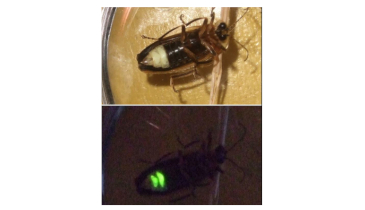
Many of the creatures that live in the deepest and darkest parts of the sea are equipped with lights. One has a very bright headlamp to light its way. Others have lights on their tails, jaws or sides. The light they produce, as the light produced by the firefly, is a cold light. The light is generated when chemicals manufactured by the creatures are mixed together.
Or consider the small bird that has an “engine” powerful enough to allow it to fly for 10,000 or more miles. The construction of the bird’s heart differs from yours and mine in important ways. However, we couldn’t get by with the bird’s heart just as it couldn’t get by with ours.
While it seems strange to think of the penguin as a bird that flies under water, that’s exactly what it does. The penguin can reach speeds of 30 miles per hour underwater, as fast as the fastest marine mammal, the dolphin.
1 John 4:19 “We love Him because He first loved us.”
‘Imagine a huge living creature covering about one square mile and made up of almost a third of a billion cells. Imagine each of those living cells being able to move about independently of the others.
No, it’s not the plot of a new science fiction movie. Some scientists have suggested that ant colonies may be thought of as one large living organism. They suggest this because of the way individual members within ant colonies behave. Ant colonies have many kinds of members, each with its own specific task. The soldier ants in a colony have extra large heads and heavy-duty jaws for fighting. Other ants are concerned only about finding and returning food. Still other workers do nothing but process and store food.
Within the colony another caste of ants does nothing but tend the eggs. Others prepare the food for the larvae and deliver it to other specialized ants who do nothing but feed the next generation.
If this sounds complex, imagine the largest known ant colony. This Japanese ant colony has an estimated 306 million worker ants, and more than a million queens. The colony occupies 45,000 interconnected underground nests that range over about a square mile!