
 |
| OUT OF THIS WORLD! Did you know that the moon is moving away from us? When astronauts went to the moon, they left mirrors on the surface so that laser light could be sent to the moon, bounce off the mirror, and return to the earth. We can measure the time this round trip takes so accurately that the exact distance to the moon can be measured within a fraction of an inch. The moon is moving away from us at about 2 inches/year (called lunar regression). This means the moon is getting farther away each year, and as we go back in time, the moon was closer to the earth. At this measured rate of recession, the moon would have been touching Earth less than 2 billion years ago. It is commonly taught by evolutionists that the moon exists because material spun off of the earth as it was forming about 4.5 billion years ago. Astronomer Edouard Roche long ago calculated that from Earth’s surface to 11,500 miles out, any object would be torn to pieces by Earth’s gravitational forces. Therefore, the belief that the moon came from material originating from the earth has enormous problems because it would have been torn to pieces. Also, if the moon were truly 4.5 billion years old, it would be much farther out in space than the distance we see today. God created the moon on Day 4 less than 10,000 years ago – which means it has only moved a mere ½ mile since creation. The simplest explanation is that the moon is not that old. The moon’s distance from Earth testifies that it is young. “The belief that the moon came from material originating from the earth has enormous problems”https://mailchi.mp/435ebacf7a37/not-of-this-world?e=8233d90bcd |
Astronomy
All posts tagged Astronomy
‘Sometimes when you are standing outside on a dark night, you may see a “shooting star.” But, is it really a star? NO! It is a random space rock speeding through our atmosphere, burning up with tremendous frictional heat, causing light to streak across the sky. If it is a large enough chunk of rock, it will not entirely burn up, but hit the earth and make an impact crater. How many impact craters are here on Earth? It is estimated that there are about 100. How many impact craters are on the moon? There are 5,185 moon craters that are more than 12 miles across, but if you count the craters less than one-half mile in diameter, it brings the total to about one million! Why are there more craters on the moon than on Earth?
Earth has an atmosphere that burns up space rocks; the moon does not. Without our atmosphere, rocks could be routinely plummeting through our homes at night. Fortunately, our atmosphere is almost 50 miles thick, and as space rocks encounter it, friction is produced, and rocks are disintegrated. Did our atmosphere develop by chance over millions of years? If so, we should find billions of meteorites buried within the rock layers of the earth. We do not. Our atmosphere was set up from the beginning to protect life on Earth. It did not happen by accident and chance; our atmosphere was created by God to protect us! So as you “wish upon a falling star,” thank the One who made it all possible.’ From an email sent by http://www.searchforthetruth.net/
Psalm 8:3 When I consider thy heavens, the work of thy fingers, the moon and the stars, which thou hast ordained
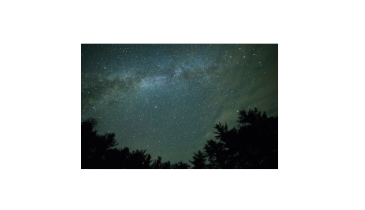
‘If your measuring stick is inaccurate, you could end up with too much wallpaper or too little. If your map tells you that your destination is 200 miles away when it’s really only 50 miles away, you might drive right past it. If your map of the universe is inaccurate and stars are a lot closer than you expect, you will arrive at the wrong age for the universe.
Most science textbooks solemnly teach that the universe is 10 to 20 billion years old. A distant galaxy in the Virgo cluster is one of the primary measuring sticks used by astronomers to figure out the distance of other objects in space. Ultimately these distances are used to compute the age of the universe. Recently, though, astronomers were finally able to see individual stars in this distant cluster.
Using a new, high-resolution camera, astronomers saw stars that are very much like stars in our own Milky Way galaxy. Since they know how bright these stars are, they were able to check their computations on how far away the measuring-stick galaxy is. Instead of the expected 100 million light-years, their new figures told them that the galaxy was only 50 million light-years away. This means that the universe might only be half as old as they thought.
The lesson for us in this is that the millions and billions of years many scientists talk about are mere speculation. Many measuring sticks for the age of the universe are available, and many of them support an age in the biblical range of only thousands of years.’https://creationmoments.com/sermons/scientists-question-age-of-universe-2/?utm_source=rss&utm_medium=rss&utm_campaign=scientists-question-age-of-universe-2&mc_cid=714036f967&mc_eid=00c1dcff3c
Job 9:7-8 “Which commandeth the sun, and it riseth not; and sealeth up the stars. Which alone spreadeth out the heavens, and treadeth upon the waves of the sea. ”
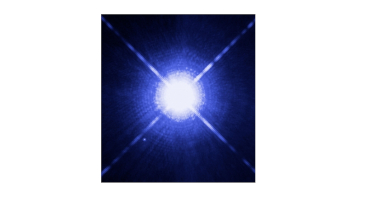
‘Space is full of mysteries. Those who think that the universe is millions or billions of years old have more mysteries to solve than Bible-believing Christians do.
One of these is the mystery of a star named Sirius B. This mystery is so great for evolutionists that it was one of the main topics of discussion at a scientific symposium at Louisiana State University in 1978.
Records of Egyptian astronomers dating back to 2,000 BC describe Sirius B as a red star. The Roman senator Cicero, writing in 50 BC, also said Sirius B was red. And Seneca described Sirius as being redder than Mars. And in 150 AD, Ptolemy, one of the most famous astronomers in history, listed Sirius as one of the six red stars.
There can be no question that Sirius was red. Today, Sirius B is a white dwarf star. That’s a problem because according to modern evolutionary astronomy, it should take at least 100,000 years for a red giant star to collapse into a white dwarf star.
The mystery of how the red giant Sirius became a white dwarf in less than 2,000 years was, and still is, the topic of hot debate. Sirius B calls into question the most basic theories about the supposed evolution of the universe. Obviously, those evolutionary ages are not nearly so well “proven” as evolutionists would like us to believe!’https://creationmoments.com/sermons/the-mystery-of-red-sirius-2/?utm_source=rss&utm_medium=rss&utm_campaign=the-mystery-of-red-sirius-2&mc_cid=4eba88d894&mc_eid=00c1dcff3c
Psalm 8:1
“O LORD our Lord, how excellent is thy name in all the earth! who hast set thy glory above the heavens.”
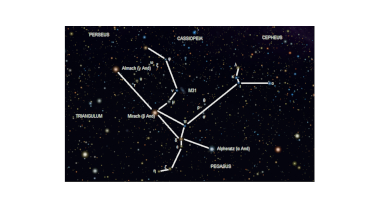
‘There are a number of blurry, indistinct, cloudy-looking objects in the night sky which are not pinpoints of light as the stars are. One hundred ten of these are the so-called Messier objects, which were cataloged by one Charles Messier – a French astronomer who lived from 1730 through 1817. These are a mixture of objects. Some of them we would now call nebulae – quite literally, nebulous clouds of interstellar dust and gas. Examples of these are M8 – the Lagoon Nebula in the constellation of Sagittarius, and M42 – the famous Orion Nebula. Others are star clusters, such as The Pleiades, in Taurus – an object mentioned in the Bible, which is cataloged as M45. Still others are actually other galaxies, such as M104, the Sombrero Galaxy, or M31 – the Andromeda Galaxy.
Why did Messier catalog such a wide variety of different objects without commenting on their differentiation? The answer is that he wasn’t actually interested in those objects. He cataloged them, rather, as a police officer catalogs data from a possible suspect in order to eliminate them from the inquiry. Messier was interested in comets – which also, from a distance, look like blurry objects. The difference is that comets, being Solar System objects, move from night to night, whereas his cataloged objects appear fixed relative to the stars.
The Hebrew word for star includes what we call stars today and other objects, such as Messier’s objects. All were made by God and declare His glory.’https://creationmoments.com/sermons/not-comets/?mc_cid=2e23f5c024&mc_eid=00c1dcff3c


