
America
The leftist loony anti-almost anything sane crowd has jumped on the death of George Floyd with vengeance. So, ‘After the ugly case in Georgia already had the Leftmedia cued up, we didn’t need a crystal ball to see this coming. In the wake of George Floyd’s deeply disturbing death at the hands of four Minneapolis cops Monday night, South Minneapolis has been consumed by violence to the point that parts of it now look like a war zone.
The death toll is, thankfully, just one, but the scene is still reminiscent of the urban riots of the mid- and late ‘60s — so much so that Mayor Jacob Frey has requested help from the National Guard.
One wonders whether the riots, the vandalism, and the widespread looting would’ve met with Dr. Martin Luther King’s approval. Or George Floyd’s approval, for that matter. Our guess is no. What measure of “social justice,” after all, is extracted by the pillaging of a Target or the firebombing of an AutoZone?
Yesterday, we called for restraint and due process but, admittedly, that’s an easy call to make from afar. The officers’ bodycam footage has yet to be released, but the video evidence we’ve seen so far of Floyd’s death is utterly damning — so much so that even those strongly inclined to defend controversial police actions are loath to do so here. James Gagliano, a law-enforcement analyst and former FBI employee, summed it up in yesterday’s Washington Examiner: “Floyd had a right to breathe. He also had a right to exist. And yes, his life mattered. The officer at the center of this case failed to protect those rights.”
Of course, a bad police tactic does not constitute “racism” or justify a lawless response. Two wrongs, and all that. Nor does it condone the race-baiting rhetoric of Mayor Frey, who weighed in with a series of obviosities right out of the Black Lives Matter playbook. Or by the likes of Ilhan Omar, the Minnesota representative who schizophrenically tweeted, “Our anger is just. Our anger is warranted,” before following it up with, “We should and must protest peacefully.” Or by tired old agitators like the Reverend Jesse Jackson, who dubbed Floyd’s death “a lynching in broad daylight.”
It’s worth noting that President Donald Trump wasn’t waiting around for Jackson to stoke the flames of race hatred: “At my request,” the president tweeted yesterday, “the FBI and the Department of Justice are already well into an investigation as to the very sad and tragic death in Minnesota of George Floyd.”
Justice, whether Jesse Jackson likes it or not, is being done.
As for whether the death of George Floyd was racially motivated, how can Jackson know for sure? How can he or anyone else know, definitively, what was in the heart of the officer whose knee took the life out of Floyd, or in the hearts of his three fellow officers who inexplicably stood by during those heated moments? We do know what the Minneapolis Police statement said: The suspect appeared intoxicated and resisted arrest. And we do know that Floyd was “a six-and-a-half-foot-tall giant of a man,” according to those who knew him.
Of course, neither Floyd’s size nor his possible intoxication justify the officers’ actions. He was handcuffed, he was subdued, there were plenty of officers present, and he was shown in new video to be cooperating with officers — no longer a threat to anyone. Qualified law-enforcement analysts agree that there was no reason for the officer to have kept his knee on Floyd’s neck when he was gasping and couldn’t breathe. No reason, no excuse.
Sometimes, though, despite what those in the race industry want us all to believe, indefensible police work is simply that. Indefensible. That does not make it indicative of systematic oppression.
I don’t know about you but I also receive emails from those on the loony left just to keep abreast of what loony things they are up to. One such email I receive is from THE CONVERSATION. The Conversation claims ‘Academic rigour, journalistic flair’! Not sure about that BUT one thing I am sure of is that it is a way Left of centre piece of journalism. I have NEVER read a piece yet, that is close to being anything close to conservative.
Each email has several choices for one to read and today I chose this one on Sleepy Joe Biden. I will not bore you with the whole article but it is bragging about Sleepy Joe Biden and that ‘At age 77, in his twilight years, the third time was the charm for Joe Biden.
He prevailed over a field of 24 Democrats from across the political spectrum and has emerged as his party’s nominee for president in a manner unthinkable in January: a united party, from left to right, across race and creed, age and ideology. He is the victor despite mediocre fundraising, no digital media traction, no base of wild enthusiasts. Voters had to consider his appeals before coming to understand and then accept that it was indeed Joe Biden, who failed in his bids for the White House in 1988 and 2008, who was the strongest Democrat to go up against Donald Trump and take him out.’
Yep ‘This has been Biden’s whole life – connecting with the gut of middle America. His 2020 message is the same as he ran on in 1988. And the task is the same as when he was on the ticket with Obama in 2008: to ensure America recovers from the worst economic crisis since the Great Depression.
Biden was responsible for ensuring the delivery of the American Recovery Act – the first piece of major legislation enacted after Obama and Biden took office. Ultimately, it spurred a decade of economic growth and full employment. So Biden has been there and will work to do it again.’ https://theconversation.com/third-times-the-charm-for-joe-biden-now-he-has-an-election-to-win-and-a-country-to-save-138616?utm_medium=email&utm_campaign=Latest%20from%20The%20Conversation%20for%20May%2026%202020%20-%201631715675&utm_content=Latest%20from%20The%20Conversation%20for%20May%2026%202020%20-%201631715675+CID_626371d5e83fe44c03ca31a988c036c4&utm_source=campaign_monitor&utm_term=Third%20times%20the%20charm%20for%20Joe%20Biden%20now%20he%20has%20an%20election%20to%20win%20and%20a%20country%20to%20save
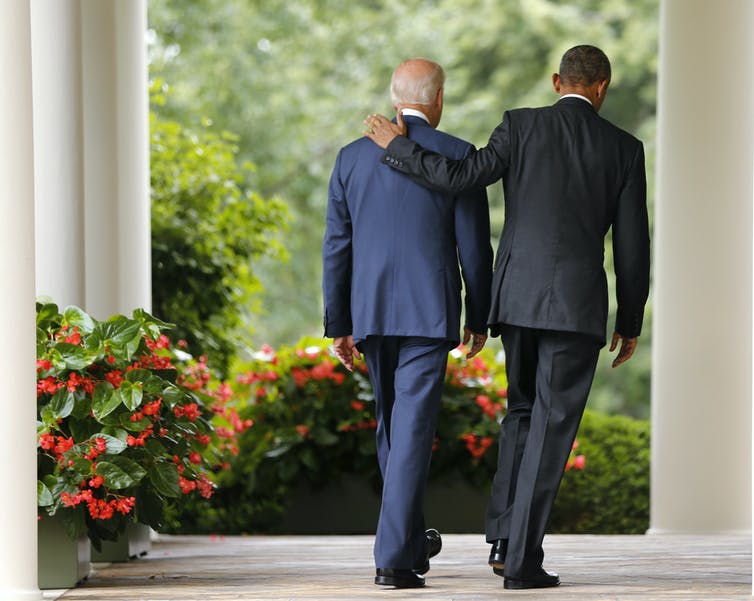
NOW, there are MANY reasons why one should not vote for sleepy Joe Biden but one picture speaks a thousand words.
Is President Trump correct when he said ‘The W.H.O. really blew it. For some reason, funded largely by the United States, yet very China centric. We will be giving that a good look. Fortunately I rejected their advice on keeping our borders open to China early on. Why did they give us such a faulty recommendation?’
Well, yes, he was even though ‘The WHO at first glance seems an innocent bystander to Chinese obstruction until one considers the story of SARS in Taiwan. Taiwanese health officials attempting to inform the WHO of their cluster of cases were rebuffed and asked to report their findings to the central government in China instead.
You see, the allegedly apolitical, humanitarian, and guided-by-science WHO doesn’t think Taiwan exists because China doesn’t recognize Taiwan’s independence. The WHO even refused to publicly report Taiwan’s cases of SARS until public pressure prompted numbers to be published under the label of “Taiwan, province of China.”
Clearly these matters are worthy of debate, but why would the WHO put its thumb on the scale? The answer, increasingly obviously, is that the WHO is a political organization that attempts to give its political preferences the veneer of objectivity using the label of science.
WHO Also Failed in the 2013 Ebola Outbreak
The Ebola outbreak of 2013 provides yet another window into the WHO’s lethal failings. One of the important controversies at the time related to how the virus spread. An excellent 2015 New Atlantis article dissects the controversy of transmissibility, and concludes the available evidence at the time could not rule out through-the-air transmission.
Of particular concern was evidence from the field about health-care worker infections. Health care workers who did not wear maximal Personal Protective Equipment (PPE) in the form of respirators to filter out airborne transmission were infected with Ebola at a high rate.
Rather than err on the side of safety, the WHO ignored this evidence. Local health officials and administrators followed their lead for a similar approach in their hospitals. First responders paid the price. The SARS outbreak in Canada was notable for the number of health workers who were infected and succumbed to the disease, in part, because the initial responders to the crisis relied on PPE guidance that wasn’t adequate.
The CDC Is In on This Action
To be fair, what’s on display here is a broader institutional malady. The U.S. version of the WHO, the Centers for Disease Control and Prevention, took a similar stance with another controversial topic—quarantines for health-care workers returning from treating patients with Ebola. Four states—New York, New Jersey, Florida, and Illinois—instituted policies to quarantine anyone who had contact with someone infected with the Ebola virus while in west Africa, including medical personnel who cared for patients.
No less than the Obama administration, backed by the CDC, attempted to quash these policies, arguing this would serve as a disincentive for U.S. health workers to travel to Africa to combat the disease at a time this help was sorely needed.
The argument made by many, including the now famous Dr. Anthony Fauci, was that Ebola could only be transmitted by those who were symptomatic, so it was anti-science to consider mandatory quarantines. Of course, crossing the threshold from asymptomatic and not infectious to symptomatic and infectious isn’t a sudden process, and as the history of science repeatedly shows, theories have a way of evolving with time.
The head of the CDC at the time, Tom Frieden, had initially recommended that health-care professionals not use respirators when taking care of patients with Ebola. It took two health-care workers in Dallas contracting Ebola from a patient for the CDC to change its recommendations in October 2014.
An important recurring theme with viruses may be to follow what people do rather than what they say. This is Tom visiting a Doctors Without Borders Ebola treatment center in August 2014, at a time the CDC was saying a surgical mask was adequate to care for these patients.
More Concerned about Population Control than Illness
The charitable take is that institutions like the WHO and CDC are simply coming down on the wrong side of contentious scientific debates. But there is a persistent directionality to these mistakes that betrays a current of ideology. A review of the timeline of announcements by the WHO after the COVID outbreak shows an organization more concerned with avoiding panic and stigma than the virus.’ The whole article is at https://thefederalist.com/2020/04/09/why-the-who-is-a-danger-to-public-health/
Luke 10:30 And Jesus answering said, A certain man went down from Jerusalem to Jericho, and fell among thieves, which stripped him of his raiment, and wounded him, and departed, leaving him half dead. 31 And by chance there came down a certain priest that way: and when he saw him, he passed by on the other side. 32 And likewise a Levite, when he was at the place, came and looked on him, and passed by on the other side. 33 But a certain Samaritan, as he journeyed, came where he was: and when he saw him, he had compassion on him, 34 And went to him, and bound up his wounds, pouring in oil and wine, and set him on his own beast, and brought him to an inn, and took care of him. 35 And on the morrow when he departed, he took out two pence, and gave them to the host, and said unto him, Take care of him; and whatsoever thou spendest more, when I come again, I will repay thee. 36 Which now of these three, thinkest thou, was neighbour unto him that fell among the thieves?
Well, in the Big Apple ‘Samaritan’s Purse, are stepping up on a large scale. This Christian nonprofit has built a field hospital in the epicenter of America’s COVID-19 outbreak. While others are fleeing the New York Metro area because it is a coronavirus hot spot, Samaritan’s Purse is running toward the need. The organization sent a rapid response team of chaplains to serve the city and even built a 68-bed field hospital near the Mt. Sinai hospital to help with overflow of patients.
Samaritan’s Purse has no ulterior motive. Rather, the ministry aims to serve those who are vulnerable, and ultimately, as a Christian organization, to serve God.
It’s a good thing they are not looking for the praise of men, because that is in short supply. Indeed, Samaritan’s Purse has found itself in the middle of a storm of controversy because of a tweet from its president, Franklin Graham.
The tweet links to the Samaritan’s Purse website where they ask for volunteers to help serve the vulnerable and who agree with the mission statement of the organization. One of the 11 points in the mission statement is at the root of this controversy:
We believe God’s plan for human sexuality is to be expressed only within the context of marriage, that God created man and woman as unique biological persons made to complete each other. God instituted monogamous marriage between male and female as the foundation of the family and the basic structure of human society. For this reason, we believe that marriage is exclusively the union of one genetic male and one genetic female.
This statement is nothing radical; it just espouses what the Bible teaches and what Christians have always believed about marriage and sexuality.
For this, New York City Mayor Bill de Blasio attacked Samaritan’s Purse as “biased” and accused the charity of discrimination. But Samaritan’s Purse has never discriminated against its patients. It has always served everyone who needs care. But it does ask that those who represent the organization agree with the organization’s beliefs. That shouldn’t be too much to ask.
But the ideological opponents of Samaritan’s Purse are using this as an opportunity to score partisan points.
Mayor de Blasio expressed outrage at Samaritan’s Purse and promised action: “I said immediately to my team that we had to find out exactly what was happening…Was there going to be an approach that was truly consistent with the values [of] New York City.”
New York State Senator Brad Hoylman piled on by suggesting that Graham has something to learn from the coronavirus: “COVID-19 doesn’t discriminate, and neither should Franklin Graham.”
Ross Murray, the Senior Director of the GLAAD Media Institute went even further and claimed that “Graham is capitalizing upon a crisis to inflict more pain and suffering on an already marginalized population.”
Each of these statements overlook a simple fact: Samaritan’s Purse gladly serves everyone. As Kaitlyn Lahm, a spokesperson for Samaritan’s Purse explained: “Our doors at the Emergency Field Hospital in the East Meadow are going to be open to all New Yorkers who need our help. We are here to save life, which is precious in God’s sight — and we do it all in Jesus’ Name.”
Facing a health crisis, New York officials allowed Samaritan’s Purse to stay. But de Blasio promised “to send people over from [his] office to monitor” Samaritan’s Purse’s field hospital. Hoylman stuck a similar note, claiming “homophobic pastor Franklin Graham and his field hospital operation in Central Park must guarantee all LGBTQ patients with COVID-19 are treated with dignity and respect. We’ll be watching.”
The message was clear, the insinuation ugly: While we need you now, Christian beliefs are intolerable, and we have our eye on you.’ https://mychristiandaily.com/why-is-new-york-targeting-samaritans-purse-for-serving-them/
I have dealt with the murder (abortion) of the unborn many times on this blog so you know where I am on the issue. Is it not not sad that here in Australia the murder of the unborn is an everyday occurrence raising hardly if any opposition?! However, in the USA it is different! There more people are speaking out and with President Trump being the most pro-life President the USA has ever had the misnomer known as Planned Parenthood has been closing many of their murder factories.
Here is a video of David Benham being arrest for protesting outside a murder factory.
‘Conservative, pro-life activist David Benham was arrested outside an abortion clinic over the weekend for allegedly violating state and federal coronavirus guidelines.
Prior to his arrest, Benham, who gained notoriety when he and his brother were slated to host an HGTV show that was ultimately cancelled due to their Christian faith, was praying and offering sidewalk counseling outside a North Carolina facility, according to the Daily Caller.
North Carolina Gov. Roy Cooper (D) issued a stay-at-home order on March 27 until April 29, barring gatherings of more than 10 people and ordering state residents to stay at home except for essential businesses or outings, like to get groceries, seek medical care, or exercise.
Benham claimed he and four others were at the clinic representing his Cities4Life nonprofit. He also had with him a mobile ultrasound unit attended by two people.
“The Charlotte-Mecklenburg Police Department said there was a cluster, that there were 50 protesters,” he recalled. “And of course, none of that is true.”
In a video he posted online, Benham told police officers he and his fellow volunteers “are within our rights to be here,” noting there were more than 10 people working inside the clinic at the time they were arrested.
“We are practicing social distancing, we have cleaned our hands,” he told the cop. “We are offering help to these mothers, and if you’re saying we don’t have the right to be here, then go into the abortion clinic and make the arrests there.”
The police officer told Benham he doesn’t “have the authority” to go into the abortion clinic. In response, the pro-life activist asked him why, then, he has the authority to “bully” peaceful demonstrators.
As he was being handcuffed, Benham said: “You know I am well within my constitutional authority to be here. You know that we’re doing the right thing.”
Ultimately, Benham was booked and released later Saturday.
In a tweet posted Monday, Benham called out the Charlotte-Mecklenburg Police Department, claiming all eight arrests officers have made were of pro-life demonstrators.’ https://www.faithwire.com/2020/04/07/christian-activist-david-benham-arrested-outside-abortion-clinic-for-violating-coronavirus-orders/?utm_source=FWNL

Photo by Google
Believe it or not ‘The Arlington County Police Department’s Homicide/Robbery Unit is investigating a shooting that took place in the Green Valley neighborhood on the morning of March 29, 2020.
At approximately 4:53 a.m., police were dispatched to the report of trouble unknown in the 2400 block of Shirlington Road. The preliminary investigation indicates that three subjects forced entry into a business and began stealing cash and merchandise. An employee inside a secure back room heard the break in, retrieved a firearm, opened the door to the sales floor and discharged the weapon, striking one juvenile subject. The employee retreated to the back room but reentered the sales floor and discharged his weapon again as the subjects were attempting to flee the business.
Arriving officers located the injured juvenile subject outside the business. He was transported by medics to an area hospital with injuries that are considered serious but non-life threatening. The other two subjects fled the scene on foot prior to police arrival.
Following consultation with the Commonwealth’s Attorney’s Office, the employee, Hamzeh Abushariah, 33, of Washington D.C. was charged with Malicious Wounding, Reckless Handling of a Firearm and Violation of a Protective Order. He is being held without bond.
Additional charges related to the breaking and entering are anticipated at a later date.
This incident remains an active criminal investigation. Anyone with information related to this investigation is asked to contact Detective Henretty of the Arlington County Police Department’s Homicide/Robbery Unit at 703-228-4237 or Mhenretty@ arlingtonva.us. Information may also be provided anonymously through the Arlington County Crime Solvers hotline at 1-866-411-TIPS (8477).’ https://www.arlnow.com/2020/03/29/police-store-employee-charged-after-shooting-would-be-thief/
‘A couple of defense attorneys weighed in on Twitter:
 Alden Yako, Esq.@YakoLaw
Self-defense, not a criminal. One officer said he should’ve ran out the back door. Held without bond. Another prosecutorial beauty. #stores #smokeshop #employee #Arlington #Virginia #prosecutors #SelfDefense #LawEnforcement #Lawyerhttps://wjla.com/news/local/arlington-employee-charged-shooting-robbers-owner-speaks-out …
Arlington employee charged for shooting robbers in middle of the night, owner speaks out
The owner of a South Arlington smoke shop is outraged after his employee was charged with multiple crimes for shooting a suspect who had allegedly broken into the business. That owner says the…

 Robert Barnes@Barnes_Law
Asserting self-defense now a crime? https://www.whsv.com/content/news/Virginia-police-Man-charged-with-shooting-break-in-suspect-569227261.html …
Virginia police: Man charged with shooting break-in suspect
Police in Virginia say they charged a man with shooting and wounding a juvenile suspect accused of breaking into a business to steal cash and merchandise.

I had never heard of KrisAnne Hall before but a little search showed a lot of information on her which includes her own web site (https://krisannehall.com/index.php) and YouTube channell. This is her autobiography as given there.
‘KrisAnne Hall is an attorney and former prosecutor, fired after teaching the Constitution to TEA Party groups – she would not sacrifice liberty for a paycheck. She is a disabled veteran of the US Army, a Russian linguist, a mother, a pastor’s wife and a patriot. She now travels the country and teaches the Constitution and the history that gave us our founding documents. KrisAnne Hall does not just teach the Constitution, she lays the foundations that show how reliable and relevant our founding documents are today.’
Here is the entire article. 
‘Coronavirus Or No Coronavirus, Feds Cannot Shut Down Churches
‘A bloody path was trod to bring religious freedom to modern America. Christian martyrs and patriots secured our God-given right to freedom of religion with their suffering and even with their lives.
Religious freedom in America is not simply a fundamental right, but a foundational one. The settlements of the first American colonies were established in the flight from oppressive religious persecution and the struggle continued even on these shores. From the beating of Obadiah Holmes, the lynching of Quakers and the imprisonment of 50 Baptist preachers who were defended by a fiery attorney named Patrick Henry, religious liberty has been something American Christians have always been willing to stand for or even to die for.
This history and more gave us our First Amendment to the Constitution and its underlying principle of religious conscience, which has been part of the bedrock of our republic for more than two centuries.
The “Father of the Constitution” and fourth President James Madison wrote in 1792, “Conscience is the most sacred of all property … the exercise of that, being a natural and unalienable right. To guard a man’s house as his castle, to pay public and enforce private debts with the most exact faith, can give no title to invade a man’s conscience which is more sacred than his castle.”
Indeed prohibitions upon the government’s authority to infringe, limit or dictate the operation of the church had been codified in western law long before the settlement of American colonies.
Many American Christians have heard of Thomas Jefferson’s famous letter to the Danbury Baptists ensuring them that America would never return to a time where the government sought to dictate the operations of the church. But long before 1802, Jefferson’s “wall of separation of church and state” that kept government outside the sacred walls of the church was one alluded to by King Henry I in the 1100 Charter of Liberties.
Henry declared the body of the church to be free from government intrusions. Two centuries later, one of the tipping points in the fight that brought us Magna Carta was the crown’s attempt to interfere in the free operation of the church. This charter history of our founding documents continued its development through the Grand Remonstrance of 1641 and the English Bill of Rights of 1689 under which our founders arrived in this New World.
Each of these installments, which would later culminate in our founding documents; all happened amid the fight for religious liberty.
However, even with the clear language of our First Amendment and the history that should inform our actions, the struggle to maintain this essential right from the control of government continues to this day. Modern lawmakers like to carve out excuses and causes for government intrusions into our inherent rights when some imagined need arises.
William Pitt, The Younger, warned in 1783, “Necessity is the plea for every infringement of human freedom. It is the argument of tyrants. It is the creed of slaves.”
Necessity seems to always be the most powerful tool to persuade the masses into accepting these infringements. Today, because of the coronavirus scare, religious liberty is facing a huge “necessity plea” in the form of limits upon assembly. At least one church has been descended upon by police and threatened with the National Guard for having more than 250 people attend.
According to the courts, a law that infringes upon a fundamental right like freedom of religion must overcome certain challenges: The law must not be arbitrary, oppressive, or unreasonable. The law must be equally applied to secular businesses and it must satisfy a qualification of being the least restrictive means necessary to accomplish a compelling governmental interest.
The restrictions imposed by governors and municipalities upon the number of people who can assemble in a private church gathering appears to fail these tests.
First, these numerical restrictions are completely arbitrary in nature. There has been no tested nor proven scientific or medical data to show us what “number” of people that congregate together are a danger to society. The number has varied from place to place and moment by moment. Somewhere it’s 50, other places its 10 and there are still other variations.
When politicians assign an “acceptable” number of people allowed in a private church, they are reducing our right to freedom of religion to a first come, first served privilege. Our first foundational document reads: “We hold these truths to be self-evident, that all men are created equal, that they are endowed by their Creator with certain unalienable Rights.” The government deciding who can attend a service by way of a numerical limit does not demonstrate an equality of rights and ought to be seen as a per se violation of the principle of separation of church and state.
Secondly, these laws are not being applied equally upon secular businesses and other institutions. When arbitrary number limits are applied to a church and not to a library, post office, grocery store or hotel gym, there is not equal application.
These laws try to justify unequal application based upon the definition of essential services. By what authority does the government declare the church nonessential? The Church is a place where people turn for help and for comfort in a climate of fear and uncertainty. In a time of crisis, people are fearful and in need of comfort and community, more than ever before. Even people who do not attend church regularly, or perhaps never go to church, need to know that there is somewhere for them to go when they need help.
Throughout history, the church has been viewed as an essential part of society, a refuge in time of trouble or need, a place of peace and a sanctuary for the weary, even a place of healing and provision. More salient for believers is that the Bible pointedly addresses the issue of assembling during troubled times: “not neglecting to meet together, as is the habit of some, but encouraging one another, and all the more as you see the Day drawing near.” (Heb. 10:25) Many in the church take this as a solemn command.
To deny a Christian his obligation to gather with his local body is to put him at odds with a fundamental tenet of the faith. For a believer in Christ there are few things as essential as the gathering of the body of Christ in the study of God’s Word and worship of His Glory. As a matter of fact, the Bible teaches that since we are eternal beings in this temporary world, God’s word is more essential than food: “But he answered, ‘It is written, “Man shall not live by bread alone, but by every word that comes from the mouth of God.”‘” (Mt. 4:4, ESV)
When those in government can assign a label of nonessential to the practice of religion, then government is taking a very serious and dangerous role of defining religion, which is expressly forbidden in our Bill of Rights and in a majority of our state constitutions.
Finally, these restrictions are not reasonable and not the least restrictive means necessary. The case law used to define reasonableness in these laws are easily distinguishable. In Moore v. Draper, the court held that Moore could be quarantined and prevented from attending church because he had Tuberculosis. The court also said that once he was healthy he could no longer be reasonably or legally quarantined and prevented from attending church.
The current laws restricting the number of attendees of a church are not restrictions on one unhealthy individual. They are restrictions upon a group of healthy people, which the court said would be unreasonable.
Additionally, the court did not order the entire church to be shut down to keep Moore healthy, which is exactly what these laws are trying to suggest is a reasonable and constitutional solution.
Limiting an entire congregation of people for the safety of those who may be at risk of infection does not meet the standard of Moore, nor can it be seen as the least restrictive means necessary. The case of Varholy v. Sweat can be distinguishable for the same reasons as Moore.
Finally, in Employment Division vs. Smith, the court held that the outlawed use of peyote is not an unreasonable interference upon freedom of religion as it was a “neutral, generally applicable law.” Because the current restrictions upon church assemblies are not generally applicable to every place where people will congregate, this case is not controlling.
Although it is argued the “protection of the public health is one of the prime duties resting upon the State” we cannot escape the reality that the first prime duty of every state is codified in the Declaration of Independence: “… that among these are Life, Liberty and the pursuit of Happiness. — That to secure these rights, Governments are instituted among Men, deriving their just powers from the consent of the governed.”
There is nothing in the law or precedent to establish a blanket and arbitrary assertion of “state of emergency” as an unquestionable authority.
There is also nothing in the law or precedent to support a restriction on the number of people who can assemble in a church, for health reasons or otherwise, as a criterion for denying the essential right of freedom of religion.
There is, however, everything in history and experience that says such actions by government are unreasonable and oppressive restrictions upon the essential and inherent right of freedom of religion.
Rev. Jonathan Witherspoon, founder of Princeton University gave this warning: “There is not a single instance in history in which civil liberty was lost, and religious liberty preserved entire.”
Indeed, when Peter and the apostles were told by law not to gather, preach or lay hands on the sick for God to grant them healing on threat of prison, they chose to continue to practice their faith. After they escaped from prison and were told by God to go back and assemble with the people and preach and heal, they did exactly that.
And when they were questioned by the government as to why they continued to break this law, the apostles did not hesitate or make excuse, they simply said, “We must obey God rather than men.” (Acts 5:29)
True to the history that makes America great, our pastors and church members should not so easily surrender a fundamental rights so faithfully contended for by those who have gone before.
Who will stand and not let the landmarks be moved?’ https://www.westernjournal.com/krisanne-hall-coronavirus-no-coronavirus-feds-cannot-shut-churches/
When will the Western Communist Islamic loving Leftists wake up?!
- ‘In an article in Xinhua, one of the Chinese Communist Party’s mouthpieces, Beijing threatened to halt pharmaceutical exports, after which America would be “plunged into the mighty sea of coronavirus… — Yanzhong Huang, senior fellow for global health, Council on Foreign Relations, Twitter, March 4, 2020.
- China’s leaders are probably hoping that you cannot challenge a powerhouse that is selling you most of your vital medications.
- “Hidden behind declarations of solidarity, China plans to buy out our troubled companies and infrastructure” — Bild, March 19, 2020.
- Italy, a country hit hard by China’s coronavirus pandemic, is now at the center of a strategic Chinese propaganda campaign. Beijing has sent doctors and supplies to Italy and is doing the same all over Europe. In Italy you can see posters saying, “Go, China!” China is trying to buy our silence and complicity. Sadly, that is already taking place.
- China is not helping at this point out of “solidarity”. The Chinese regime is now seeking to portray itself as the world’s savior. Beijing, at the beginning of the pandemic, did not care about the lives of even its own people: it was busy censoring the news.
- “The West is so tolerant, passive, accommodating and naive towards Beijing. Westerners… are seduced like an old man in front of a young girl…. Europe shows all its weakness. It does not realize that the Chinese offensive threatens its freedom and values”. — Liao Yiwu, Chinese writer exiled in Berlin, Le Point International, April 6, 2019.’ https://www.gatestoneinstitute.org/15804/china-duplicity
This coronavirus is is today’s Communist way of war. Here in Australia the Federal Government will be strapped with financial debt for years to come and if the Climate scamming Left gain power it can only get worse. We MUST wake up to this enemy that seems to have the Left in the palm of their hands.
With all the bad news on Covid-19 and what it has done to lives and livelihoods here is a wonderful story. The writer says ‘I worry that we live in a culture today where growing numbers of people look outside themselves for success. And when they fail, it’s always someone else’s fault. But the government, your parents, your education, and your job aren’t the key to your success – you are. Whenever I feel my dreams losing steam, I always think of Booker T. Washington. Born a slave in 1858, his childhood years were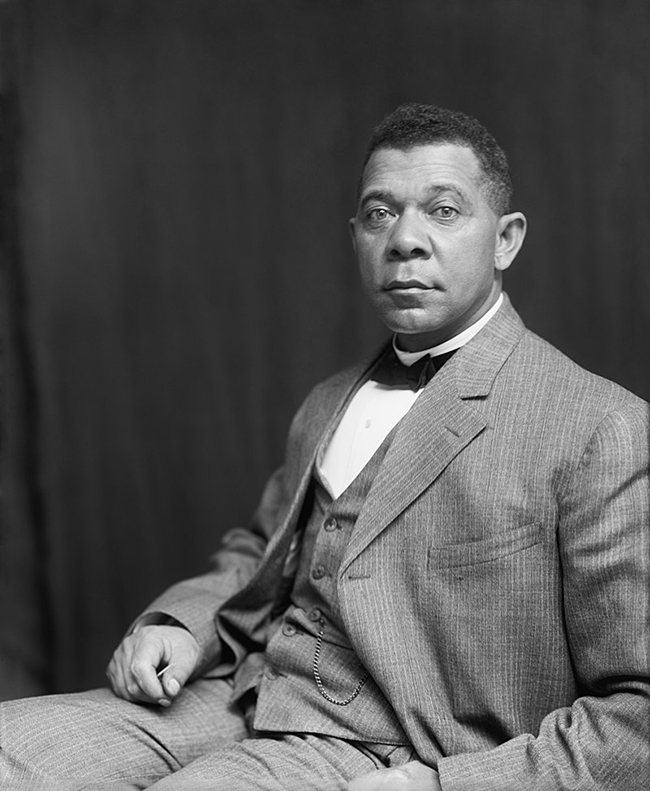 anything but pleasant. The family’s farm cabin had no glass windows, and any opening to let in light also let in the freezing wind in the winter. The floor of the cabin was dirt.
The life of slave was back-breaking work that started before the sun came up and continued long after it went down again. His childhood was also lived out during the Civil War, which created turmoil, fear, and uncertainty in the lives of Southern slaves and added additional pressure to an already hopeless state of affairs.
But in spite of that desperate situation, young Booker dreamed of an education. His goal was learning—real learning. Not just the ability to read a newspaper or dime-store novel, but a desire to learn science, mathematics, history, and more. Years later, working deep in a coal mine, he overheard some of the miners talking about a school five hundred miles away called the Hampton Institute. He immediately decided that one day he would attend the school, in spite of the distance.
His dream simply would not die. As a result, he not only attended the school, but was later asked to lead a new program in Alabama called the Tuskegee Institute. He eventually built Tuskegee into a major college campus with more than fifteen hundred students and a faculty of two hundred professors.
There was not one single thing in Booker T. Washington’s life that helped him except the power of a dream. Starting out he had no money, no education, no training, no influence, and no future. He was just another slave among thousands, with no potential other than living out his life working in obscurity on a forgotten Southern farm.
But the power of his dream opened doors, filled him with motivation, and revealed his true promise. Millions of Americans have been directly touched or indirectly inspired by his story, and this nation is a better place because he never gave up on his dream.
If you feel that your situation is hopeless, just remember Booker T. Washington and start dreaming again.
Your future is up to you. Get on with it.’ https://mychristiandaily.com/stop-blaming-everyone-else-your-future-is-in-your-hands/


