
Source: Iran: Islamic regime eyes Venezuela as sanctuary for fallen leaders
Archives
All posts by whatyareckon
White House cesspool!
Source: Biden’s Nuke Drag Queen Steals Another Suitcase, Media Blames Republicans
Who would one trust in this present administration?
Source: Top Biden National Security Official Served on Board of Pro-Terror Group
U.S.-funded Abbas: ‘I do not endorse armed resistance at the moment, but I may change my mind later’
Follow the MONEY!
Source: U.S.-funded Abbas: ‘I do not endorse armed resistance at the moment, but I may change my mind later’
‘Recently, I sat down to interview an Aboriginal Elder from South Australia for the ExCandidates podcast, of which I am a host. Her name is Kerry White, a former nurse and diabetes educator from the Narungga people. The aim of the interview was to determine her views regarding the Indigenous Voice to Parliament.
It was a fascinating interview because it completely deconstructed many fundamental aspects of the current ‘narrative’ surrounding the Aboriginal people.
I say ‘Aboriginal’ because even during the pre-interview phone call I had with Kerry, I made the mistake of using the term ‘Indigenous’.
With no hint of hesitation, Kerry quickly corrected my error and informed me that Aboriginal people prefer to be called Aborigines.
I asked her to expand on this during the interview.
Kerry explained that Indigenous were ‘…anyone native to Australia. Including flora and fauna. If you’re born in Australia, you’re Indigenous.’
‘The other term that they use for us is First Nations,’ Kerry went on to say. ‘First Nations – that’s Canadian. We are not Canadian. We are Aboriginal. We are from Australia and the Torres Strait.’
Why did we move away from the term Aborigines in the first place? Was it a fear of political correctness? Obviously, we were not listening to Elders such as Kerry White. Instead, we have chosen to listen to Woke activists, university lecturers, and inner city elites.
Kerry then went on to explain the divide between Aboriginal ‘mobs’ in rural/remote areas, compared to mobs in city areas.
‘When it comes to Aboriginal people, we have two separate lots,’ she began, educating us again. ‘We have a lot of Aboriginal mobs. Not tribes, not clans. Mobs. That’s an Aboriginal term. [The mobs] are divided into two. And that is rural and remote, and that is separate from the city-ites.’
Could this explain the clear difference in message between Senators Jacinta Nampijinpa Price and Lidia Thorpe, who grew up in Alice Springs and Melbourne respectively?
How will an Indigenous Voice to Parliament adequately represent the concerns of this divide?
Kerry went on to teach us another Aboriginal term – ‘tick-a-boxers’. These represented the people who claimed to be Aboriginal when it is clear they are not. Recent census data points to this.
Since the 1971 census, the number of people identifying as Aboriginal or Torres Strait Islander has risen from 116,000 to over 800,000 – a 590 per cent increase. Even from 2016 to 2021, the national population increased by 8 per cent, but the Indigenous population increased by 23 per cent.
‘There should be some form of identification. Proof that these people claiming to be Aboriginal are actually Aboriginal,’ Kerry began, before recalling how almost twenty years ago, the government scrapped the need for someone to obtain proof that they were Aboriginal.
‘So, if you want to be Aboriginal, all you had to do is tick the box.’
Kerry pointed out that the word Indigenous is included in the official wording of the proposal – the ‘Indigenous Voice to Parliament’. Therefore, one wonders, would simply ‘ticking a box’ to indicate you were Indigenous suffice to be recognised by the new body? What can of worms would that unleash?
It must be frustrating for an Elder like Kerry. How many times have true Aboriginal Elders been asked to comment or contribute to the debate on The Voice? According to Kerry, it is yet to happen for anyone in her community.
For Kerry, her feelings on the Voice to Parliament are clear.
‘It’s a no from me. I say no to The Voice. I don’t want it,’ she replied pointedly.
‘We, the Aboriginal people from rural and remote Australia do not want it.
‘A bit over two hundred years ago, they rounded Aboriginal people up and locked them on missions. So Aboriginal people were segregated from White society. Then we come forward to now – “The Voice” – and they’re segregating us again. They’re taking us back two hundred years.
‘You’re dividing the country again, it’s back to segregation. And frankly, it’s racist towards our White brothers and sisters that live in this land with us.’
Furthermore, Kerry makes the argument that Aborigines are already over-represented in Parliament, thus nullifying the need for a new body such as the Voice.
‘We have eleven Aboriginal members in Parliament, in the Upper and Lower house.’ Kerry begins. ‘That equates to 4.9 per cent representation, Aboriginal representation in Parliament. For 3.2 per cent of the population. With that, we actually have over-representation in Parliament. So why would we need a Voice? Unless they’re saying that our Parliamentary members are not doing their job.’
Does Kerry reflect the thoughts and feelings of all Aboriginal people? Should her statements and explanations concerning Aboriginal people be taken as gospel? Of course not. But that is the point. Can a ‘Voice’ to Parliament represent all the varying ‘voices’ of Aboriginal Australia?
More importantly, is the debate on the Voice taking the focus off the true needs of Aboriginal people? As a nurse, Kerry is well-versed in the issues facing Aboriginal people, especially in remote communities.
‘With Aboriginal people, it’s mostly linked to diabetes. We have a high rate of diabetes amongst Aboriginal people.’ Kerry explains.
‘Heart problems. That began to rise about fifteen years ago. They don’t have access to medical care out there. They don’t have health centres and doctors and all that. They don’t have it. They’ve got to travel sometimes 3-4 hours to get to a doctor, or medical treatment if something should happen out there.’
Kerry White joins Senator Jacinta Nampijinpa Price, along with Senator Pauline Hanson of One Nation, in speaking out against the Voice to Parliament. Their message also stresses the need to unify the Nation, not to divide it along the lines of race. You would think that a study of history would compel anyone to agree.
We already have Parliaments at local, state, and federal levels that attempt to address all the ‘voices’ of society.
According to Kerry White, Senator Price, and surely many other Aboriginal people, this is the way it should remain.
For me, the lesson was that it is always best to go straight to the source, and avoid the mainstream ‘narrative’.’https://spectator.com.au/2022/12/what-i-learnt-from-an-aboriginal-elder/
As someone born in the 1940’s I truly believe what is being done to our young people today should be against the law and those pushing this agenda should be jailed.

 By Kevin Mooney ~
While they were in the majority, Pennsylvania House Republicans spent their political capital to advance American energy independence, free speech rights, and scientific integrity.
Unlike too many their counterparts in Washington D.C., they were not cowed by hostile press coverage or well-funded pressure groups that have a stake in undermining sound science. Most recently, for instance, the House Environmental Resources and Energy Committee held a hearing this fall exploring the benefits of fossil fuels and pitfalls of “emergency declarations” advanced in the name of climate change.
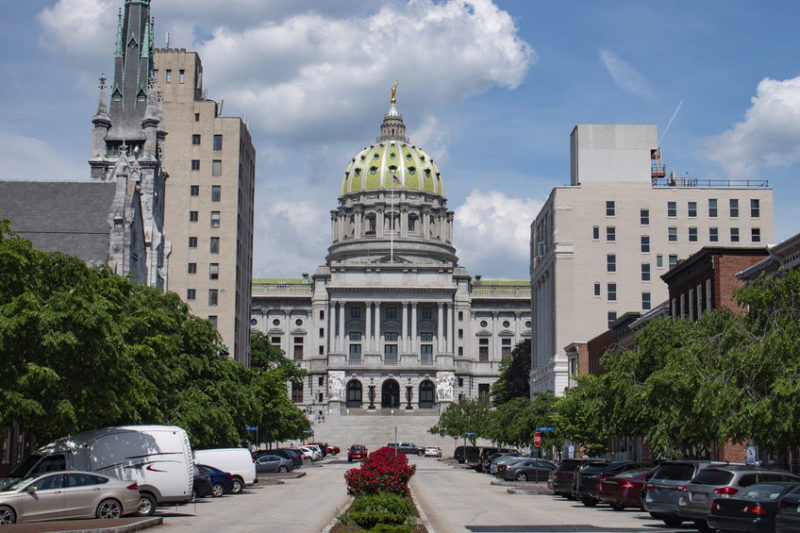 Since Gov. Tom Wolf, the state’s outgoing Democratic governor, first announced back in October 2019 that he was taking executive action to combat climate change, Republican leaders have held a series of hearings calling attention to scientific data that debunks climate alarmism. They have also worked in partnership with Pennsylvania Democrats representing the energy sector to prevent Wolf from circumventing…
View original post 1,100 more words
 By Clay Waters ~
When The New York Times respectfully touts a man’s faith, he must be a leftist. Strange respect for religion reigned over the front page of Thursday’s paper for Sen. Raphael Warnock, the reverend who recently won reelection in Georgia runoff. The complimentary headline was “Warnock’s Rise Fueled by Pain, Faith and Flair.”
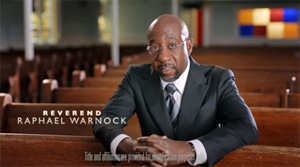 The Times has found its latest left-wing “rising star,” as revealed in the fawning profile by Katie Glueck, “Raphael Warnock Is a Pastor and Politician Who Sees Voting as Prayer — Raphael Warnock, a son of Savannah public housing who rose to become Georgia’s first Black senator, secured a full six-year term and a spot among Democrats’ rising stars.”
Religion is fine and good if it can be compared to progressive political action and Democrat election victories:
He likened voting to a “prayer for the world we desire,” and called democracy the…
View original post 463 more words


