Psalm 104:16-17 “The trees of the Lord are full of sap; the cedars of Lebanon, which he hath planted; Where the birds make their nests: as for the stork, the fir trees are her house.”
‘There are many incredible designs around us that are unlikely to exist if everything is the result of mindless chance. Many birds eat insects through the summer. While such high protein diets like this are good in mating and reproductive season, they do not prepare the birds to survive the cold weather of winter.
What they need to do is build a layer of fat both for calorie storage as well as insulation. So, as winter nears, the berries that have been growing and ripening all summer on various shrubs become more numerous. The high sugar content of the berries’ juice helps the birds to quickly build up fat. The freeze on cold fall mornings even helps to increase the sugar concentration in the berries. Even more amazing is that the various types of berries eaten by the birds ripen in a staggered fashion so that berry season is long and the supplies are always available. For example, as the elderberry supply is just about consumed, highbush cranberries are in production. Often, the summer’s hatchlings’ plumage doesn’t reach full color until they eat the various pigments in the berries, and those pigments are incorporated into the new feathers. In exchange, the birds spread the seeds in the berries.
‘Evolutionary scientists recently claimed to have discovered bacteria that are 101.5 million years old. In 2010 researchers collected deep-sea sediment cores in the South Pacific as part of the Integrated Ocean Drilling Program, with the goal of examining seafloor life and habitability in one of the lowest-productive ocean areas. Sediment samples used in the analysis were taken from depths of up to 75 meters below the seafloor at several sites in water between 3,700 and 5,700 meters (12,100 to 18,700 feet) deep.1
Publishing in Nature Communications, Yuki Morono of the Kochi Institute for Core Sample Research, Japan Agency for Marine-Earth Science and Technology, and his colleagues added a special blend of nutrients to nearly 7,000 individual bacteria collected from the sediments. This food source contained a unique mix of carbon and nitrogen isotopes that allowed scientists to see if the bacteria were actively feeding.1 Co-author Steven D’Hondt, a University of Rhode Island oceanographer, said of the bacteria, “We didn’t know whether we had fully functioning cells or zombies capable of doing very few things.”2
Within 68 days, the distinctive tracer isotopes began showing up in the bacteria cultures, indicating the bacteria were feeding on the nutrients. The bacteria also reproduced, “increasing total numbers by four orders of magnitude” during the study.1
The scientists found this truly amazing since the bacteria had been taken from mud trapped between layers of impermeable porcellanite, a microcrystalline variety of quartz that no microbe could penetrate.1,2 This led the study’s authors to suggest the microbes could be as old as the sediments they were found in, essentially having been trapped in a time capsule. Colin Barras of NewScientist observed:
Many biologists are unsettled by the idea that individual bacterial cells could survive for 100 million years. There have been a handful of claims for even older microbes on Earth. One team claimed in 2000 to have resurrected microbes trapped inside 250-million-year-old salt crystals, but some researchers suspect that the microbes were seen as a result of sample contamination, which is unlikely to be the case in the new study.2
Claiming that bacteria can survive trapped in sediment for over 100 million years seems like science fiction. And yet, scientists have found cells, proteins, and flexible blood vessels in dinosaurs and other animals dated by secular scientists at 66 to over 500 million years.3 These discoveries question the great ages assigned to these creatures and instead suggest these fossils are just thousands of years old.
In light of these other fossil discoveries, there appear to be two possible solutions for these deep-sea bacteria: 1) the bacteria were not trapped for 101.5 million years, suggesting that there were fractures or conduits in the porcellanite that allowed bacteria to migrate in at a more recent date; or 2) these sediments and the bacteria found in them are not really millions of years old.
Either one of these scenarios better explains the presence of living bacteria in deep-ocean sediments compared to the tale spun by secular scientists. However, the earlier discoveries of so many original proteins and cells found in so-called ancient rocks makes solution number two the most likely one.
These bacteria, if indeed trapped in sediment at the time of deposition, are only thousands of years old. The ocean sediments, and possibly the bacteria too, were deposited during the global Flood described in Genesis. Claiming these bacteria are over 100 million years old is not based on empirical science but on a secular, deep-time worldview.
Genesis 7:11 “In the six hundredth year of Noah’s life, in the second month, the seventeenth day of the month, the same day were all the fountains of the great deep broken up, and the windows of heaven were opened..”
‘One of the biggest headlines in planetary exploration in recent years was the confirmation that at one time Mars had water. Further exploration and study reveals evidence that there was once quite a lot of moving water on the surface of Mars.
With two rovers having sent back pictures and information from the surface, plus an orbiter exploring the surface, evidence of water action began to mount. At first, small features that looked like they were formed by moving water were discovered. Soon, it looked like that there was widespread water action in the southern hemisphere. Besides erosion, there is widespread evidence of the type of rocks that form underwater. Now, similar evidence suggests widespread water action in the northern lowlands as well. One of the most dramatic features could be the Mars version of the Grand Canyon. Called Valles Marineris, it is 2,000 miles long, 400 miles wide and five miles deep. It is so big, it can be seen from Earth with a good telescope. It would take catastrophic amounts of water to form such a canyon.
While the Bible doesn’t say anything about the flood that would suggest Mars was involved, some creation geologists say that it may have been. One thing is certain. This water action did not take place billions of years ago as those who believe in evolution say.’https://creationmoments.com/sermons/did-noahs-flood-affect-mars-too-2/
This is an email received from Search for the Truth. It is a simple message but for some impossible for it tells us that a house requires a builder.
‘It takes a mind to build a house. A home electrical system requires the skilled labor of an electrician who has spent many years learning his trade. The plumbing requires the work of a plumber who has worked for years as an apprentice. The structure of the house requires the skilled labor of a team of carpenters. The heating system, insulation, drywall, roofing, siding, finishing, carpeting, and landscaping all require planning, skill, and intelligence before finished home results.
Each part of the human body has corresponding components. Our nervous system is far more complex than the electrical system of a house. Our blood vessels, heart, and lungs are infinitely more complex than any home heating and ventilation system. Our digestive tract is more intricately designed than any plumbing system. Our body fat insulates far more efficiently than any home insulation. Our skin is far more durable and complex than drywall, siding, paint, or carpeting.
It takes a mind to conceive, design, and build a house. How can we believe that it did not take a far superior creative intelligence to conceive and create the human body?‘http://www.searchforthetruth.net/
Many self proclaimed intellectuals of today openly doubt and disagree with the Book of Genesis but that’s alright as God disagrees with them.
Jeremiah 30:2 “Thus speaketh the LORD God of Israel, saying, Write thee all the words that I have spoken unto thee in a book.”
‘One of the most important books that I was given in my teenage years was Henry Morris’s commentary, The Genesis Record. At the time, the book was fairly new – perhaps just three years since its publication in 1976. It seemed important to me to have a commentary on Genesis, so my sister bought it for my 18th birthday.
What was special about the book, and still is, is that it covered the whole of the book of Genesis and did not stop at chapter 11, as many creationist books on Genesis do – my own included. Morris said in his introduction, “It is so important for people to sense that the Genesis narrative is real and historical.” People instinctively know that Genesis 12 onward – referring to Abraham, Isaac, Jacob and Joseph – is relating historical narrative. In my opinion, it is no accident that God inspired the account of Creation and the Flood in the same book as the histories of those patriarchs in order to emphasize that the first 11 chapters also are narrative history.
The theory of evolution has been taught for so long that many people accept it as fact just as climate change is now being accepted. Now, creation according to Scripture is just ‘religion’ to many BUT evolution is accepted as a fact without question. Now, why is it like this? One reason is, they do not want to recognize that there is a Creator God to whom they just might be accountable to. It’s like what the Paul said in Romans 1:20-23 For the invisible things of him from the creation of the world are clearly seen, being understood by the things that are made, even his eternal power and Godhead; so that they are without excuse: 21 Because that, when they knew God, they glorified him not as God, neither were thankful; but became vain in their imaginations, and their foolish heart was darkened. 22 Professing themselves to be wise, they became fools, 23 And changed the glory of the uncorruptible God into an image made like to corruptible man, and to birds, and fourfooted beasts, and creeping things.
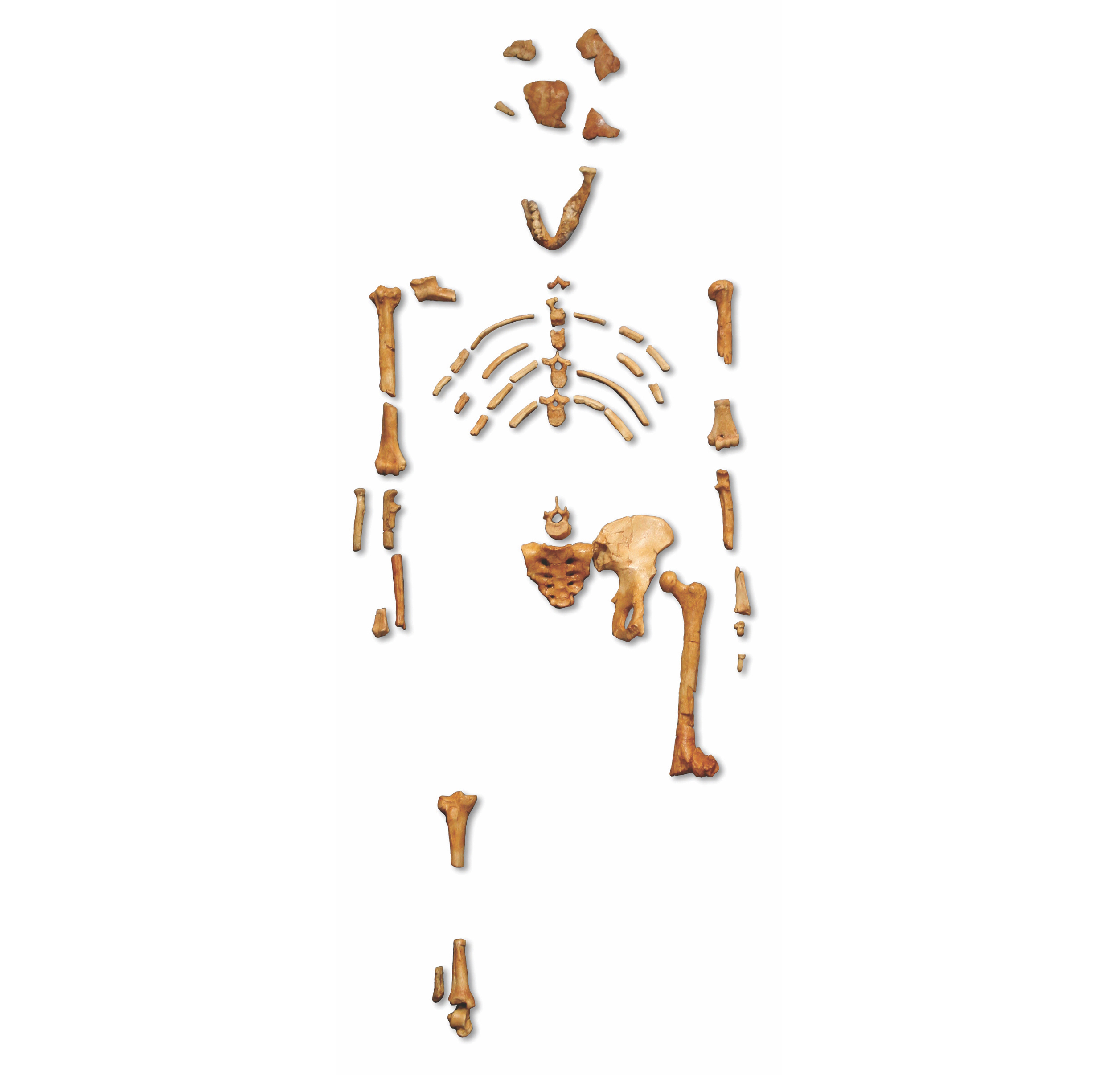
The theory of evolution is almost if not entirely accepted today by all public schools and schools of ‘supposedly’ higher education as a FACT. However, is evolution correct? ‘One needs to be very careful about accepting the conclusions of paleontologists who claim to have found fossil links between man and apelike creatures. In the past, bones from pigs, monkeys, alligators, horses, and even an elephant have been reconstructed into purported missing links between humans and some imaginary apelike creatures. In 1979 a piece of bone discovered in Northern Africa was said to be the clavicle of an apelike creature that was evolving into a man. Its discoverer said the bone indicated the creature had possibly walked upright, like modern humans. It was later shown that the fossil was the rib bone from a Pacific white-sided dolphin!
This repeated misinterpretation of fossils by paleontologists is a result of the assumption that evolution is a fact–therefore some apelike creature must have turned into a man. The possibility of creation is never considered. Therefore, almost any bonethat is even slightly outside of the norm is assumed to be proofof this transformation. Since instant fame awaits the discovery of each subsequent find, the objectivity of the researcher is very suspect.
Jesus stated that man and woman were created as uniquely different “from the beginning.” This couldn’t be more clearly stated, and the fossil evidence supports this factual statement.’http://www.searchforthetruth.net/
Nonconformist Matthew Henry states ‘This psalm is a solemn meditation on, and admiration of, the glory and greatness of God, of which we are all concerned to think highly and honourably. It begins and ends with the same acknowledgment of the transcendent excellency of God’s name.’
Psalm 8:1-9 O LORD our Lord, how excellent is thy name in all the earth! who hast set thy glory above the heavens. 2 Out of the mouth of babes and sucklings hast thou ordained strength because of thine enemies, that thou mightest still the enemy and the avenger. 3 ¶ When I consider thy heavens, the work of thy fingers, the moon and the stars, which thou hast ordained; 4 What is man, that thou art mindful of him? and the son of man, that thou visitest him? 5 For thou hast made him a little lower than the angels, and hast crowned him with glory and honour. 6 Thou madest him to have dominion over the works of thy hands; thou hast put all things under his feet: 7 All sheep and oxen, yea, and the beasts of the field; 8 The fowl of the air, and the fish of the sea, and whatsoever passeth through the paths of the seas. 9 O LORD our Lord, how excellent is thy name in all the earth!
Isaiah 40:8 “The grass withereth, the flower fadeth: but the word of our God shall stand for ever.”
‘The venus flytrap senses a fly and, in less than a second, its trap springs shut. It will eat today. A new area of science is plant behavior. Plant behaviorists point out that plants, like the venus flytrap that interact with animals, have to move on an animal scale. We have traditionally thought of plants as inactive living things that just sit there. But as we learn more about them, we are beginning to discover that plants are much more active than we ever thought.
Other plants move as well, often when they interact with animals. But sometimes not. When a white mulberry tree opens its blooms, they open at half the speed of sound. But there’s more than this to plant behavior. Scientists have learned that plants have memory, despite the lack of a nervous system or brain. Yet, when a leaf has mobilized its defenses against a predator in the past, it will do so more quickly the next time the threat returns. Previously we have talked about how plants communicate by emitting scents. When a leaf is attacked, a scent is emitted, warning surrounding leaves and plants. Scientists now call this “plant gossiping.”
Genesis 1:21a “And God created great whales, and every living creature that moveth, which the waters brought forth abundantly…”
‘Ask any scientist and he’ll tell you that blades designed to operate in fluids, like air or water, are best designed to have smooth edges. It only makes sense that a smooth leading edge is more efficient.
That’s why, when a biologist noticed bumps on the front edge of a model of a humpback whale fin, he knew it had to be wrong. With some study, he discovered that the model was indeed accurate. The bumps are called tubercles. Testing has shown that the bumps result in an almost ten percent increase in the lift of a fin or blade. It decreases the drag of a blade or fin by one-third. In fact, one scientist concluded that the design is much better than “what [our] systems can accomplish.” Inspired, scientists investigated whether similar tubercles could increase the efficiency of manmade blades such as those used on wind turbines. You may also find tubercles on helicopter blades and fan blades, as well.




 whatyareckon