Biology
“O taste and see that the LORD is good: blessed is the man that trusteth in him.” (Psalm 34:8)
‘Frequently, Scripture uses our five physical senses in a figurative way to help us comprehend our interaction with the heavenly realm of God’s presence and power.
We can “see,” for example, with spiritual eyes. Paul prayed thus for the believer: “The eyes of your understanding being enlightened; that ye may know what is the hope of his calling, and what the riches of the glory of his inheritance in the saints” (Ephesians 1:18).
Similarly, we are privileged to hear the voice of the Lord with spiritual ears. “My sheep hear my voice, and I know them, and they follow me” (John 10:27). “A stranger will they not follow,…for they know not the voice of strangers” (John 10:5).
The sense of touch is the sense of feeling, and God can both touch and be touched. We read, for example, of “a band of men, whose hearts God had touched” (1 Samuel 10:26). Of Jesus Christ, it is said that He is not a remote deity “which cannot be touched with the feeling of our infirmities” (Hebrews 4:15). Even people who never knew Him can perhaps “feel after him, and find him” (Acts 17:27) if they truly desire His great salvation.
We can even become “unto God a sweet savour of Christ” (2 Corinthians 2:15). To the world, the faithful Christian life and testimony can either be “the savour of death unto death” to those who refuse it, or “the savour of life unto life” (2 Corinthians 2:16).
Finally, we are exhorted actually to taste the Lord and see that He is good! His Word will be, according to our needs, either “sincere milk” (1 Peter 2:2), “strong meat” (Hebrews 5:14), or “sweeter also than honey and the honeycomb” (Psalm 19:10).’https://www.icr.org/article/12907/?utm_source=phplist9514&utm_medium=email&utm_content=HTML&utm_campaign=August+18+-+The+Spiritual+Senses
“Nay but, O man, who art thou that repliest against God? Shall the thing formed say to him that formed it, Why hast thou made me thus?” (Romans 9:20)
‘Whenever one begins a question with “why,” he should realize that the answer must necessarily be theological, not scientific. Science can deal with the questions of “what” and “how,” sometimes even with “where” and “when,” but never with “why”! The “why” questions have to do with motives and purposes, even when dealing with natural phenomena. (“Why does the earth rotate on its axis?” “Why do we have mosquitoes?”) Even though we can partially explain such things by secondary causes, we finally encounter a “first cause,” and then the “why?” can be answered only by God.
The wise thing to do is simply to believe that He has good reasons for everything, whether we can discern them now or not. “Shall not the Judge of all the earth do right?” (Genesis 18:25). God the Creator “worketh all things after the counsel of his own will” (Ephesians 1:11), and it is our high privilege simply to trust Him, not to question Him.
On the other hand, He often asks us: “Why?” “Why are ye fearful, O ye of little faith?” Jesus asked His disciples when they thought they were in great peril (Matthew 8:26). “If I say the truth, why do ye not believe me?” (John 8:46), He would say to those who question His Word.
Then, to those who doubt His deity, the apostle Paul, speaking in His name, asks: “Why should it be thought a thing incredible with you, that God should raise the dead?” (Acts 26:8). As the popular chorus goes: “God specializes in things thought impossible!” Our God is omniscient and knows what’s best; He is omnipotent, so He can do it. He is all-loving and will surely do what’s best for those who trust Him.’https://www.icr.org/article/12903/?utm_source=phplist9510&utm_medium=email&utm_content=HTML&utm_campaign=August+14+-+Questioning+God
The following isn’t exactly surprising when one considers the other moronic things the Left say and want to do!
‘A recent article published by leading bioethics journal “The Hastings Center Report”, has proposed an implant that would automatically trigger a lethal drug at the onset of dementia.
In the report, co-authors Margaret Battin and Brent M. Kious, proposed the introduction of an “advance directive implant” (ADI) in an article titled “Ending One’s Life in Advance”. There is even a precedent for this proposed implant: Norplant, a controversial contraceptive implant that was withdrawn from the UK in 1999. Like Norplant, the ADI would be reversible and programmable, but the drugs it would release would cause death instantaneously. It would likely be implanted at the onset of dementia and programmed to activate according to the patient’s prognosis.
They did however, acknowledge the legal and ethical barriers that such proposals would likely face: “Even if our laws were liberalized dramatically…those laws would remain controversial and would continue to impose great burdens on those left behind—on family members, friends, nurses, and, perhaps most acutely, on physicians called upon to act”.
They therefore suggest that “The development of means to enable persons in the early stages of dementia to choose, while competent, the timing of their own deaths without the subsequent intervention of anyone else would go a long way to ameliorating this situation: they can get the better parts of dementia if they wish but avoid the worse parts they reasonably fear”.’https://www.lifenews.com/2021/08/12/scientists-want-people-fitted-with-euthanasia-chip-that-kills-you-at-first-sign-of-dementia/
What is this I think is a “girl” talking about? This is scary that these “people” have a platform to spread their idiocy!
Deuteronomy 6:5 “And thou shalt love the LORD thy God with all thine heart, and with all thy soul, and with all thy might.”

‘They say that a picture is worth a thousand words. While that is often true, they also say that it takes a highly evolved brain to picture objects and remember them. Science is learning that this bit of evolutionary myth is indeed fiction.
As far as the honeybee is concerned, not all flowers are created equal. Some flowers are a good source of nectar while others are a waste of time. Alfalfa flowers can kill a honeybee because they are designed for pollination by larger insects. When an insect lands, a central petal in the flower releases the stamen and sweeps pollen upward to aid pollination. Honeybees can be tossed off the flower or trapped inside by this action.
Scientists always thought that honeybees solved the problem of finding safe and productive flowers by remembering a list of characteristics. They believed the honeybee was evolutionarily too simple to remember mental pictures of favored flowers. However, recent experiments have convinced scientists that bees actually store a mental picture of productive flowers. In these experiments, bees were rewarded with sugar water for visiting some patterns and not others. Their reactions showed that they remember images, not simply patterns.
What’s more, the experiments showed that bees are quite intelligent and good learners. One scientist noted that these experiments showed that evolution’s assumptions about so-called higher and lower creatures are false. Those who believe in evolution are having to rethink their view of the world. Meanwhile, we can give thanks to God for so generously giving the gift of intelligence to so many of His creatures.’https://creationmoments.com/sermons/a-thousand-words-for-a-bee-2/?mc_cid=4c8cfd1d38&mc_eid=00c1dcff3c
Luke 1:37 “For with God nothing shall be impossible.”

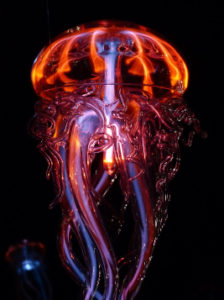
‘At first glance, jellyfish may not look like much of a creation. Many are quite beautiful. However, most jellyfish simply look like blobs of jelly, so fragile that what might be a minor blow to one of us could prove fatal to them.
There are around 500 species of jellyfish. They live everywhere in the oceans – from the surface down to great depths. Some are as small as a BB. The largest jellyfish is the lion’s mane, which can grow to seven feet in diameter and have tentacles 200 feet long.
Despite their apparent simplicity, these insubstantial creatures make their living by capturing and eating fish and crustaceans that could easily tear them apart. To accomplish this seemingly impossible task, the jellyfish trails out its long thread-like tentacles. Each tentacle can have millions of capsules loaded with tiny harpoons. Once touched, the tentacles fire, injecting several deadly toxins. If enough toxin is injected, the victim’s heart stops. If not enough of this poison is injected, another toxin finds its way to the brain where it stops respiration. Yet another toxin bursts red blood cells, disrupting the circulatory system. Thankfully, only a few dozen of the hundreds of species of jellyfish can hurt human beings.
Imagine trying to design a creature that is not much more than a bag of Jell-O that can capture and subdue much larger and more powerful creatures. The jellyfish may look simple. However, its specialized design for a seemingly impossible task makes it an elegant witness to our Creator.’https://creationmoments.com/sermons/catching-bigger-stronger-and-faster-prey-2/?mc_cid=451be53bcd&mc_eid=00c1dcff3c
‘In 2007, America had one pediatric gender clinic; today there are hundreds. Testosterone is readily available to adolescents from places like Planned Parenthood and Kaiser, often on a first visit—without even a therapist’s note.
How did we get to this point? How is it that we are all supposed to pretend that the only way you can know I’m a woman is if I tell you my pronouns? How did we get to an America in which a 13-year-old in the State of Washington can begin “gender affirming” therapy without her parents’ consent? How did we get to an America in which a 15-year-old in Oregon can undergo “top surgery”—elective double mastectomy—without her parents’ permission? And what can we do about it?
To understand how we got to this point, it is useful to begin by considering gender dysphoria—the feeling of severe discomfort in a person’s biological sex. Gender dysphoria is certainly real. It is also exceedingly rare. It afflicts about 0.01 percent of the population, most of whom are male.
For nearly 100 years of diagnostic history, gender dysphoria typically began in early childhood, between the ages of two and four, and usually involved a boy who insisted that he was not a boy but a girl. Children afflicted are insistent, consistent, and persistent in the feeling that they are in the wrong body. It is by all accounts excruciating—I’ve talked to many transgender adults, most of them biological males, who describe the relentless chafe of a body that feels all wrong.
Historically, this has been the classic presentation of gender dysphoria. When these children were left alone—when no one intervened medically or encouraged what we today call “social transition”—over 70 percent of them naturally outgrew their gender dysphoria. Most of those who outgrew it became gay men. Those who did not outgrow it became what used to be known as transsexuals. They did not believe they were women, but they felt most comfortable presenting themselves as females.
Today, however, we don’t leave these children alone. Instead, the moment children seem not to be perfectly feminine or perfectly masculine, we label them as “trans kids.” Teachers encourage them to reintroduce themselves to their classes with new names and new pronouns. We take them to therapists or doctors, nearly all of whom practice so-called affirmative care—meaning they think it is their job to affirm the diagnosis of gender dysphoria and help the children medically transition.
The typical first step in treatment administered to these kids is puberty blockers, which shut down the part of the pituitary gland that directs the release of hormones catalyzing puberty. The most common of these drugs is Lupron, whose original purpose was the chemical castration of sex offenders. To this day, the FDA has never approved this drug for halting healthy puberty.
One has to wonder why a parent or a doctor would take measures to stop a child’s puberty, given that even a child with genuine gender dysphoria would most likely outgrow that condition if left alone. Some argue that it is traumatizing to let children go through the puberty of the sex to which they do not wish to belong. But in many cases, puberty seems to have helped children overcome gender dysphoria. The truth is that there is no satisfying answer, given that scientists have no way of predicting which children will outgrow the dysphoria on their own and which won’t.
Proponents of “affirmative care” also argue that allowing puberty to occur is dangerous, because suicide rates for trans-identified youth and trans adults are very high. Therefore, they say, we need to start treating children with gender dysphoria as soon and as dramatically as possible.
Yet there are no good long-term studies indicating that puberty blockers cure suicidality or even improve mental health. Nor are there studies that show puberty blockers are safe or reversible when used in this manner.
What we do know is that puberty blockers prevent the development of secondary sex characteristics, sexual maturation, and bone density. Indeed, because of the inhibition of bone density and other risks, doctors don’t like to keep children on puberty blockers for more than two years.
We also know that in almost every case when a child’s healthy puberty is medically arrested, placing the child out of step with his or her peers, that child proceeds to cross-sex hormones. And when puberty blockers and cross-sex hormones are administered to a girl, she becomes infertile. She may also have permanent sexual dysfunction given that her sex organs never reach adult maturity.
Given this, the claims made by so many doctors and gender activists today that these medical transition measures for children are safe and reversible—that they are a “pause button,” without serious downsides—are not only dishonest, but destructive. We would not accept this sort of glib salesmanship in any other area of medicine.’ The entire article may be read at https://imprimis.hillsdale.edu/gender-ideology-run-amok/?utm_campaign=imprimis&utm_medium=email&_hsmi=145088617&_hsenc=p2ANqtz-82LxjuQXabEfThs88_P4in1JgaJKTK7mGlLyfuzWBVDVMjbRtFsK1rj0V1FiJBxOdb8mEvh3cARry8p3AAR49b0XQ8Jw&utm_content=145088617&utm_source=hs_email
Genesis 1:21 “And God created great whales, and every living creature that moveth, which the waters brought forth abundantly, after their kind, and every winged fowl after his kind: and God saw that [it was] good.”

‘Do you know how to handle a sailboat? If you had to sail to a destination that was not exactly downwind, would you be able to do it?
Unlike most jellyfish, velella does not merely drift with the wind. Velella has a triangular sail. However, unlike some jellyfish with sails, velella‘s sail doesn’t simply catch the wind and move velella along with it. Velella‘s triangular sail has an S-shaped base so that it can stand up to winds from any direction. The sail is set on top of velella‘s body at an angle to its length. This makes velella a biological oddity – because its body is not symmetrical.
This asymmetry is not without purpose. The unusual body design of this jellyfish allows it to sail as much as 60° off the direction of the wind. This is what sailors call a broad reach. Some velellas have their sails tilted to the right, allowing them to sail up to 60° to the right of downwind. Others have their sails tilted to the left, allowing them to sail up to 60° left of downwind. What’s more, velellas can change their angle of sailing by extending or retracting their tentacles in the water.
When scientists noticed that velella‘s body was asymmetrical, they immediately looked for a purpose behind the design. Even though many scientists will not recognize the Creator, they understand enough to realize that nothing in the creation is without purpose or design. So while many deny the Creator, they still recognize the pattern of His handiwork!‘https://creationmoments.com/sermons/the-jellyfish-with-a-broad-reach-2/?mc_cid=423df30e6b&mc_eid=00c1dcff3c
Acts 20:32 “And now, brethren, I commend you to God, and to the word of his grace, which is able to build you up, and to give you an inheritance among all them which are sanctified.”

‘Biologists have recently discovered a gene that suggests that God may not be above playing a practical joke on those who reject what His Word says.
Those scientists who believe that natural forces made everything, including you and me, think that we have inherited all that we are. However, the Bible says that all living things reproduce “after their kind.” Thousands of years of experience in selective breeding have shown that plants and animals always reproduce after their own kind. Not only is every known example of a mutation harmful, but living things resist attempts to change them too much.
Geneticists have discovered a genetic basis for the Bible’s statement that all creatures reproduce after their own kinds. Keep in mind that “species” and “kinds” are not necessarily the same. Fruit fly studies show that when some species of fruit fly try to mate with other species, the resulting offspring are either sterile females or die before maturity. In one instance, however, some males survive to adulthood. The so-called “rescue” gene that allows this to happen weakens the general health of the males. Carriers of the gene are sterile. This leaves a huge mystery for evolutionists. Think about it. Parents that carry this “rescue” gene don’t benefit from it. Offspring that inherit it can’t pass it on. As one evolutionist said, how could this possibly have evolved?
Living things do reproduce after their kind, just as the Bible says. In this instance, God has found a way to do this that challenges the very basis of evolution.’https://creationmoments.com/sermons/the-impossible-gene-2/?mc_cid=db11b41308&mc_eid=00c1dcff3c