The Marxist, Muslim, Loony, Leftist, Lovies seem to be winning on the campuses of so-called higher learning. ‘Adrianna San Marco is leaving Syracuse University weeks after being fired as a columnist at the student-led newspaper for writing a column questioning “institutional racism.” Facing threats from her peers, she no longer feels safe on New York campus.
In an email sent to the student writer, leaders at the school paper, The Daily Orange, determined her opinion article, which ran on the conservative website LifeZette, included “racial undertones” and the school needed to distanced itself from San Marco because “not all opinions should be amplified through our platform,” The Daily Wire reported.
On Sunday, San Marco said she will not be returning to the private university over concerns for her physical safety.
“For weeks, I have received continuous harassment by my peers,” she wrote in a statement. “The threats made against my life have destroyed my sense of safety on Syracuse University’s campus, and I have done everything in my limited amount of power to combat them. Despite this, I have reached a point in this seemingly impossible battle where I am forced to recognize the very real and present threat to my wellbeing.”
Well, the PC Marxist, Muslim, Loony, Leftist, Lovies cannot allow the truth to be told so the following has been retracted by the authors.
‘We did not find evidence for anti-Black or anti-Hispanic disparity in police use of force across all shootings, and, if anything, found anti-White disparities when controlling for race-specific crime. While racial disparity did vary by type of shooting, no one type of shooting showed significant anti-Black or -Hispanic disparity. The uncertainty around these estimates highlights the need for more data before drawing conclusions about disparities in specific types of shootings.’ https://www.pnas.org/content/116/32/15877
Therefore, truth is NOT truth any longer. Truth is what fits the narrative of the PC Marxist, Muslim, Loony, Leftist, Lovies!
Here in Australia the two major parties (Coalition & Labor) are pretty much alike when it comes to this scam of climate change. Today, in 2020 we have supposedly conservative governments in the Federal and the state of New South Wales. In 2019 the Federal government basically won the election due to the climate change scare of the Labor Party. The PM even took a piece of coal into Parliament to make a positive point for fossil fuels. The voters saw the Labor party’s love with renewables as a disaster for the nation and the Coalition won by a landslide.
When governments get too big for their britches they think they can spend tax dollars anyway they wish. It doesn’t matter what the people who pay for this think, they the government also known as public servants, know best.
Common sense tells us solar only works when the sun shines. Wind turbines only produce when the wind blows. Duh!
If any of my readers live in Australia contact your local state member and Federal member and let them know your thoughts on this renewable obsession. It will not be too many years and the energy grid will not be able to supply the needed energy.
It was interesting to read Jonathon Van Marren when he said ‘I’ve always been skeptical of the “pro-life celebrity.” Not because I don’t think that celebrities who sincerely oppose abortion don’t exist, but because I believe celebrities are both unreliable and often undesirable advocates. An artist or actor may oppose abortion while creating sexually-charged entertainment that contributes to the degradation of our culture, for example. Or, as in the case of pop stars like Selena Gomez (who swapped her purity ring for abortion bling) they discard their previous views due to industry pressures or peers. Pro-life celebrities generally fall into two categories. First, there are those oppose abortion for profoundly personal reasons. Jack Nicholson, for example, discovered later in life that his “mother” was actually his grandmother and that the woman he thought was his sister was his mother, who had been pressured to abort him. As a result, he noted in one interview when asked about abortion, “I’m positively against it. I don’t have the right to any other view.” Similarly, singer Celine Dion was her mother’s fourteenth child, and initially considered an abortion before being talked out of it. Justin Bieber’s mother was also pressured to abort him, and he has stated that he thinks abortion is “like killing a baby.” Martin Sheen’s wife was conceived through rape, a fact which he has referenced with regard to his anti-abortion views. Despite this, Sheen is a dedicated Democrat, and it is important to note that many “pro-life celebrities” still vocally support pro-abortion politicians. Discovering just how close one came to becoming what Christopher Hitchens has referred to as a “forgotten whoosh” often makes it impossible for people to regard abortion as a simple matter of rights or healthcare. A near miss can be morally clarifying. There are also those who are pro-life as part of a larger worldview. Patricia Heaton, who often shares pro-life content on social media, is a Catholic. So is Mel Gibson, who has shared his pro-life views in interviews (and has also contributed financially to pro-life work in the past.) Hollywood’s handful of conservatives are generally pro-life as well, including Jon Voight, Tom Selleck, and Chuck Norris. Conservatives, of course, are becoming even rarer in Hollywood in the wake of the Great Awokening, which is accompanied by purges of those with even liberal sentiments. And then there is Kanye West, a man who defies all categories. On Independence Day, he announced that he is off the Trump Train and running for president of the United States, although thus far no campaign has materialized (he says he will be running for “the Birthday Party,” because “when we win it’s everybody’s birthday.”) Back in 2011, West tweeted that “An abortion can cost a ballin’ n**ga up to 50gs maybe 100. Gold diggin’ b**** be getting pregnant on purpose,” later clarifying that “it ain’t happen to me but I know people.” Then, an interview for his latest album, he criticized the Democrats for “making us abort our children.” Last week he expanded on those views, telling Forbes that “Planned Parenthoods have been placed inside cities by white supremacists to do the Devil’s work,” a reference to the racist and eugenicist history of the American abortion giant. “I am pro-life because I’m following the word of the Bible,” he added. Planned Parenthood’s director of Black Leadership and Engagement responded by stating that the “real threat to Black communities’ safety, health, and lives stems,” among other things, from “the criminalization of reproductive healthcare by anti-abortion opposition.” Kanye recently tweeted and then deleted a screenshot of a Google search for “what does a 6 month fetus look like.” Along with the now deleted image, he wrote, “These souls deserve to live.” It is unquestionably good for the pro-life cause that a man with such an enormous platform is using it to call out the American abortion industry, as West reaches an audience that pro-lifers have often had difficulty reaching. With that said, pro-lifers would do well to be cautious. West is notoriously erratic, and a lot of his ramblings can end up being pretty weird. In a culture obsessed with celebrity, there is a huge temptation to immediately promote and embrace any famous person saying some of the right things. While encouraging and affirming those things is essential, we shouldn’t give these folks the status of moral leadership overnight. West in particular has gone on a roller-coaster with regard to many of his different views, and his reliability, despite hopeful indicators, remains to be seen. We should not make celebrities — even those going after the abortion industry — into our heroes.’ https://www.prophecynewswatch.com/article.cfm?recent_news_id=4163
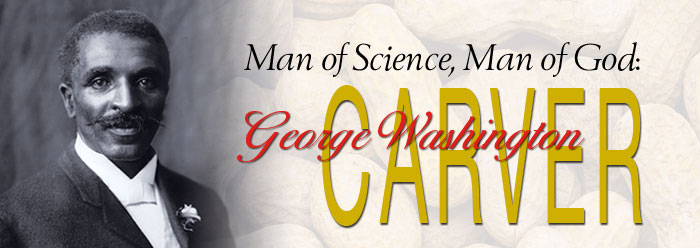
With all this anarchy and hatred that encompasses BLM it is good to review the life of a man of color and true Christian character. That man is George Washington Carver.
‘Who: George Washington Carver What: Father of Modern Agriculture When: 1864 or 1865 – January 5, 1943 Where: Diamond Grove, Missouri
Probably no other scientist has had to face as many social barriers as George Washington Carver, the black American botanist noted for revolutionizing agriculture in the southern United States. He was born towards the end of the Civil War to a slave family on the farm of Moses Carver. As an infant, he and his mother and sister were kidnapped by Kentucky night raiders.
It’s unclear what happened to his mother and sister, but George was rescued and returned to the Carvers, who raised him and his brother James. He grew up in a deeply segregated world, and very few black schools were available in the South. But his desire for learning prompted him to persevere, and he earned his diploma from Minneapolis High School in Minneapolis, Kansas.
Entering college was even more difficult, but he was eventually accepted at Simpson College in Indianola, Iowa, to study art. In 1891, he transferred to Iowa State Agriculture College in Ames (now Iowa State University) to study botany, where he was the first black student and later the first black faculty member. While there, he adopted the middle name “Washington” to distinguish himself from another George Carver. He received his undergraduate degree in 1894 and his masters in 1896, and became a nationally recognized botanist for his work in plant pathology and mycology. After receiving his masters, he joined Booker T. Washington at the Tuskegee Normal and Industrial Institute (later Tuskegee University) in Alabama to teach former slaves how to farm for self-sufficiency.
Carver revolutionized agricultural science with his cultivation of soil-enriching crops, such as peanuts and soybeans, to revive earth that had been depleted of nutrients from cotton farming. He discovered over 100 uses for the sweet potato and 300 uses for the peanut, including beverages, cosmetics, dyes and paints, medicines, and food products. He conducted numerous research projects that also contributed to medicine and other fields, and used his influence to champion the relief of racial tensions.
He was offered many honors and substantial wealth from patents, but Carver chose not to patent his discoveries: “One reason I never patent my products is that if I did it would take so much time, I would get nothing else done. But mainly I don’t want my discoveries to benefit specific favored persons.”1
Frugal in finance and humble in character, Carver was undoubtedly a deeply devoted Christian. He attributed inspiration of his work to God,2 and his studies of nature convinced him of the existence and benevolence of the Creator: “Never since have I been without this consciousness of the Creator speaking to me….The out of doors has been to me more and more a great cathedral in which God could be continuously spoken to and heard from.”3
Carver died January 5, 1943 of complications from injuries he incurred in a bad fall. His life savings of 60,000 dollars was donated to the museum and foundation bearing his name. The epitaph on his grave on the Tuskegee University campus summarizes the life and character of this former slave, man of science, and man of God: “He could have added fortune to fame, but caring for neither, he found happiness and honor in being helpful to the world.”’ https://www.icr.org/article/science-man-god-george-washington-carver
References
Carver Quotes. Posted on the George Washington Carver National Monument website at www.nps.gov/gwca.
Carver is quoted as saying, “I never have to grope for methods. The method is revealed at the moment I am inspired to create something new. Without God to draw aside the curtain I would be helpless.” Federer, W. J. 1994. America’s God and Country Encyclopedia of Quotations. Coppell, TX: FAME Publishing, 96.
Ibid, 97.
* Ms. Dao is Assistant Editor.
Cite this article: Dao, C. 2008. Man of Science, Man of God: George Washington Carver. Act & Facts. 37 (12): 8.
I support free speech; don’t you? I will listen to the crazy ones when they speak about Biden not being in the early stages of dementia. I listen to those who push for defunding the police in spite of it being a fruity idea. But, you know what? These same people do not want to listen to those who do not fit their Marxist, Muslim, Leftist, Loony, Lovie thinking. So, here we are where ‘Marquette University has threatened to reconsider their admission acceptance of a recent high school graduate, citing a pro-Trump video the teen posted to social media.
Samantha Pfefferle, an 18-year-old girl, said in an interview with The College Fix that her admission to the university was no longer a guarantee and she was forced to undergo a series of morality questions in order to prove she still belonged in the school’s Class of 2024.
Pfefferle said she was asked how she would respond if a “Dreamer who lived down the hall” came up to her and said “she didn’t feel safe or comfortable” with the conservative views or her presence on campus.
“[He] had the heart to tell me I wasn’t a student,” Pfefferle said. “This means that my classification is still in limbo and is currently being decided by the administration.”
The video that Pfefferle posted to TikTok features the incoming freshman calling out the Trump haters and showing the world she does not care about what others think of her political beliefs.
She titled the video: “When the libs find their way to your page.”
Pfefferle has a series of captions sprawled in the video, as she dances and sings to 6ix9ine’s GOOBA.
The text sections read: “When people find out I support Trump, they try to hate on me…and change my views.”
People viciously attacked Pfefferle in the comments section of the video that has nearly 600,000 views.
A “Trump 2020: Keep America Great” banner is noticeable in the background as well as a Trump sticker on a car parked in the driveway of her home.
“Someone burn her house down,” wrote a TikTok user.
“I hope you get shot,” wrote one user.
“Congrats on outing yourself as a racist, homophobe, transphobe, and misogynist,” wrote another.
People quickly figured out what school Pfefferle was going to in the fall given the fact that she was wearing a Marquette sweatshirt and the “Marquette University 2024” sign behind her.
The trolls said they would report her actions to Marquette admissions. The recent high school grad welcomed the threats in subsequent videos and liberals made good on their promise as the school attempted to “reeducate” Pfefferle before she even stepped foot on campus.
Conservatives quickly took to Twitter to defend Pfefferle, and strongly encourage Marquette to reconsider their decision to give the incoming freshman an ultimatum.
The Marxist Muslim Leftist Lovies are dominating the news these days or so it seems. Therefore, you probably haven’t heard that the ‘Administrators at Michigan State University have forced Professor Stephen Hsu to resign from the graduate student union after he had the gall to share research that shows that police violence is not particularly related to the race of either the cop or the victim.
This research, which has been completely ignored by the activists in the streets shouting “Black Lives Matter” as loudly as they can, is peer-reviewed and thought to be extremely credible. For the most part, it’s been done by researchers and academics who thought their studies would come to the opposite conclusion. It’s exactly the kind of research that should be informing our current debate about racism and police brutality.
Unfortunately, the story of Hsu’s ousting illustrates exactly why it isn’t.
From the College Fix:
The union has criticized Hsu’s promotion of a study that found there is no racial bias in police shootings.
“We found that the race of the officer doesn’t matter when it comes to predicting whether black or white citizens are shot,” according to the Michigan State-based research Hsu had quoted that drew the ire of many.
Hsu said that the attacks against him are baseless.
“The GEU alleged that I am a racist because I interviewed MSU Psychology professor Joe Cesario, who studies police shootings,” he wrote in an email to The College Fix. “But Cesario’s work (along with similar work by others, such as Roland Fryer at Harvard) is essential to understanding deadly force and how to improve policing.”
It used to be that a university was a place that prized independent, thought-provoking research, championed free speech, and put all of their resources towards following the evidence to its logical conclusions – no matter how controversial those conclusions might be. This is the backbone of intellectual progress, it is the absolute standard by which science is conducted, and it is why we are further ahead as a species than we were in the Middle Ages.
Make no mistake: Going backwards on these central tenets isn’t an annoyance like political correctness or canceling Aunt Jemima – it is a devastating move that could, with no exaggeration whatsoever, plunge us into a new age of scientific darkness.
That’s why a story like this one is so disturbing. This is angering on a personal level, of course, because a good professor lost his standing in the union. But it’s so much more than that. This is a terrifying glimpse at our future – one where we will build policies and solutions based on anecdotal evidence and “lived experience.” In other words, a future based not on science but on identity politics. Ready to have unqualified, uneducated black transgender women take over science and academia and shape our future as our nation?
It could be said ‘God broke the mold when He made John Jasper.
Psalm 139: 1-3 …O LORD, thou hast searched me, and known me. 2 Thou knowest my downsitting and mine uprising, thou understandest my thought afar off. 3 Thou compassest my path and my lying down, and art acquainted with all my ways.
‘JASPER’S mother was near the century line when she died, and he attained unto the extraordinary age of eighty-nine. Truly there must have been rare endurance in the texture of the stock. Jasper’s thoughts did not turn to religion until he was twenty-seven and yet by reason of his longevity he was a preacher for sixty years. During twenty-five years of that time he was a slave, and he had about thirty-five years of personal civil freedom, during which he won the distinctions that will make him a figure slow to pass out of history.
Jasper can have no successor. Freedom did not change him. It came too late for him to be seriously affected by its transforming hand. It never dazzled him by its festive charms nor crooked him with prejudice against the white people. There was far more for him in the traditions, sentiments, and habits of his bondage-days than in the new things which emancipation offered. He never took up with gaudy displays which marked his race in the morning of their freedom. This was especially true as to his ministry. He clung without apology to the old ways. In preaching, he spurned the new pulpit manners, the new style of dress, and all newfangrled tricks, which so fascinated his race. He intoned his sermons,–at least, in their more tender passages–sang the old revival songs of the plantations and factories, and felt it a part of his religion to smash, with giant hand, the innovations which the new order was bringing in. Of all the men whom I have known this weird, indescribable man cared the least for opposition;–unless he believed it touched his personal honour or was likely to injure the cause of religion. Indeed, he liked it. He was a born fighter and a stranger to fear. There was a charm in his resentments: they were of a high order, and inevitably commanded manly sympathy. He instinctively identified himself with the Lord and felt that when he fought he was fighting the Lord’s battles. Satire and sarcasm were like Toledo blades in his hands. He often softened his attacks upon his enemies by such ludicrous hits and provoking jests that you felt that, after all, his hostility lacked the roots of hatred. He was far more prone to despise than to hate his enemies.
There is a curious fact in connection with Jasper’s language Evidently in his early days his speech was atrociously ungrammatical. His dialect, while possessing an element of fascination, was almost unspellable. During his long ministerial life his reading and contact with educated people rooted out many of his linguistic excrescences. There were times when he spoke with approximate accuracy, and even with elegance; and yet he delighted, if indeed he was conscious of it, in returning to his dialect and in pouring it forth unblushingly in its worst shape, and yet always with telling effect. But the wonder of his speaking was his practical independence of language. When he became thoroughly impassioned and his face lit with the orator’s glory, he seemed to mount above the bondage of words: his feet, his eyes, indeed every feature of his outer being became to him a new language. If he used words, you did not notice it. You were simply entranced and borne along on the mountain-tide of his passion. You saw nothing but him. You heard him; you felt him, and the glow of his soul was language enough to bring to you his message. It ought to be added that no man ever used the pause more eloquently or effectively than Jasper, and his smile was logic; it was rhetoric; it was blissful conviction.
Those who thought that Jasper was a mere raver did not know. Logic was his tower of strength. He never heard of a syllogism, but he had a way of marshalling his facts and texts which set forth his view as clear as the beaming sun. The Bible was to him the source of all authority, while his belief in the justice and truth of God was something unworldly. He understood well enough his frailties, his fallibility, and the tendency of the human soul towards unfairness and deceit. I heard him say once with irresistible effect: “Brutherin, Gord never lies; He can’t lie. Men lie. I lie sometimes, I am very sorry to say it. I oughtn’t to lie, and it hurts me when I do. I am tryin’ ter git ober it, and I think I will by Gord’s grace, but de Lord nevur lies.” His tone in saying this was so humble and candid that I am sure the people loved him and believed in him more for what he said. A hypocrite could never have said it. Jasper could never be put into words. As he could speak without words so it is true that words could never contain him,–never tell his matchless story, never make those who did not hear him and see him fully understand the man that he was.
A notable and pathetic episode in Jasper’s history was the fact that during the bitter days of the Confederacy when Richmond was crowded with hospitals,–hospitals themselves crowded with the suffering,–Jasper used to go in and preach to them. It was no idle entertainment provided by a grotesque player. He always had a message for the sorrowful. There is no extended record of his labours in the hospitals, but the simple fact is that he, a negro labourer with rude speech, was welcomed by these sufferers and heard with undying interest; no wonder they liked him. His songs were so mellow, so tender, so reminiscent of the southern plantation and of the homes from which these men came. His sermons had the ring of the old gospel preaching so common in the South. He had caught his manner of preaching from the white preachers and they too had been his only theological teachers. We can easily understand how his genius, seasoned with religious reverence, made him a winsome figure to the men who languished through the weary days on the cots. It cannot be said too often that Jasper was the white man’s preacher. Wherever he went, the Anglo-Saxon waived all racial prejudices and drank the truth in as it poured in crystal streams from his lips.
Quite a pretty story is told of Jasper at the beginnings of his ministry. It seems that he went down into the eastern part of his town one Sunday to preach and some boisterous ruffians interfered, declaring that a negro had no right to go into the pulpit and that they would not allow Jasper to preach. A sailor who chanced to be present and knew Jasper faced these disorderly men and declared to them that Jasper was the smartest man in Virginia and that if he could take him to the country from whence he had come he would be treated with honour and distinction. There was also a small white boy standing by, and touched by the sincerity and power of Jasper, he pluckily jumped into the scene and exclaimed, “Yes, let him go on; what he says is all right. I have read it all in the Bible, and why shouldn’t he speak?” The incipient mob was dispersed, and his audience was fringed with a multitude of white people who were attracted to the scene.
It is not intended by these things said, concerning Jasper’s favour with the white people, to indicate that Jasper, in the least degree, was not with his own, race. Far from that. He loved his own people and was thoroughly identified with them; but he was larger than his race. He loved all men. He had grown up with that pleasing pride that the coloured people who lived in prominent families had about white people. Then, too, he had always been a man who had won favour wherever he went, and the white race had always had a respect and affection for him. Jasper was never ungrateful.
There were sometimes hard passages in the road which Jasper travelled. At the end of the war he was left high and dry, like driftwood on the shore. He had no church; no place to preach; no occupation. His relations with the white race were shattered, and things were grim enough; but ill-fortune could not break him. A large part of Richmond was in ashes, and in some places at least the work of rebuilding commenced at once,–or rather a clearing off of the debris with a view to rebuilding. Jasper walked out and engaged himself to clean bricks. During the Egyptian bondage the Hebrews made bricks and thought they had a hard lot; but Jasper spent the first days of his freedom in the brick business,–a transient expedient for keeping soul and body together until he could get on his feet again. Little thought the eager men who were trying to lay the foundations for their future fortunes that in the tall serious negro who sat whacking hour after hour at the bricks was one of God’s intellectual noblemen. Born in bondage, lowly in his liberty and yet great in the gifts with which God had endowed him, it was Jasper’s nature to be almost as cheerful when squatted on a pile of bricks and tugging at their cleaning as if he had a seat in a palace and was feeding on royal dainties. He carried the contented spirit, and that too while he aspired after the highest. He did not uselessly kick against the inevitable, but he always strove for the best that was in his reach.
One of the most serious jars of Jasper’s life was his conflict with some of his brethren in connection with his notable and regrettable sermon on the motion of the sun. Intelligent people do not need to be told that Jasper knew nothing of natural science, and that his venture into the field of astronomy was a blunder. It was a matter that did not in the least involve his piety or his salvation, nor even his ministerial efficiency. His whole bearing in the matter was so evidently sincere, and his respect for the Bible, as he understood it, was so unmeasured that it set him off rather to an advantage than to a disadvantage. It is told in another place how he was drawn into the preaching of that sermon which gave him an odd, and yet a genuine, celebrity. It was no love for sensation and no attempt to show his learning, but simply an attempt to vindicate the Bible as he understood it. When the sermon was first delivered it created a wide-spread sensation. Some of the coloured ministers of Richmond were shocked out of their equanimity, and they felt that something must be done. It was a case of hysterics. In a fit of freakish courage some of them made an attack on Jasper. A letter was written to a Richmond paper and signed by several prominent negro Baptists, one of them being the pastor of a strong church. In this letter Jasper’s sermons were bitterly denounced, and they were spoken of as “a base fabrication,” out of time and place, and doing more harm than good. It was said further that these sermons had drawn such crowds that it had resulted in the injury of a number of persons, and that a better way for the author of these sermons would be for him to preach Jesus Christ and Him crucified.
Some time after this the Ebenezer Baptist Church called a conference to consider the situation and to see if matters could not be adjusted. Jasper was an ardent believer in the independence of the individual Baptist church, and he was summoned to appear before that conference. He refused to go, saying that he did not recognize the authority of the church to interfere with him. Thereupon they sent a committee to him inviting him to come and make any statement that he wished to make concerning the question at issue.
He went. The point in the published letter concerning Jasper that was most offensive to him was the statement as to “base fabrication.” That hit him between the joints of the harness. His soul was stirred with a furious resentment, and when he got before that council and fell afoul of the three men who had charged him with “a base fabrication” it was a day not to be forgotten. When he had got through it would be hard to say how many baskets would have been required to hold the fragments. The man who had really written the letter suddenly discovered that it had no reference on the earth to Brothel Jasper. It was intended to answer something that had been said in a paper in New York. Attempts were made to refresh his memory. Quite a respectable minister reminded this letter writer that they had talked together concerning this letter, and that the attention of the writer was called to the “base fabrication” part of it, but the memory of the brother could not be revived. No stimulant could reach the case. Other folks might charge Brother Jasper with base fabrication, but not this man. It was a lamentable and discreditable conclusion. He was crippled in both feet and respected by none. This ended the matter. Jasper strode away from the council with the marks of victory about him; and while bad feeling could not die at once, yet the attacks on Jasper went entirely out of fashion. Let it be added that there were multitudes who shared the prejudice against this old warrior, but little cared he. On he went his fine way, growing in nobleness, and loving the God in whom he believed.
Jasper’s pleasures were of the meditative sort. For a long time his church gave him an ample vacation in the summer. He retired to the country and courted its quiet. His only sport was fishing along the streams, and that suited his task. If the fish didn’t bite, his thoughts always did. Like the fish they ran in schools, but unlike the fish they ran in all weathers and in all seasons. But Jasper never achieved marked success in the art of recreation. Go where he might, his fame was there to confront and to entangle him.
Demands for him to preach always came in hot and thick, and there was hardly a Sunday when Jasper was in the country that he was not surrounded by a crowd and preaching with everglowing fervour and delight. Indeed, Jasper was sought after to dedicate churches, deliver lectures and to preach special sermons in every part of Virginia, and often beyond it. It was said that he preached in almost every county and city in Virginia. He was the one ever sought Virginia preacher, and in that respect he stood unmatched by any man of his race.
As a rule, Jasper did not preach very long sermons. His Sunday afternoon sermons very rarely exceeded fifty minutes in length, but on extraordinary occasions he took no note of time. Jasper was not a sermon-maker. He did not write them, and homiletics was a thing of which he had never heard. He was fond of pictorial preaching and often selected historical topics, such as “Joseph and His Brethren” or “Daniel in the Lion’s Den,” or “The Raising of Lazarus.” He had quite a large stock of special sermons,–sermons which had grown by special use, and which embodied the choicest creations of his mind. These he preached over and over again and in his own pulpit, and without apology to anybody. But after all the themes which interested him most profoundly and on which he preached with unsurpassed ardour and rapture were the fundamental doctrines of the Scriptures. The last sermon he ever preached was on Regeneration; and on many phases of the Christian system he preached with consummate ability. He believed fully in the doctrine of future punishment, and his description of the fate of the lost made the unbelieving quake with terror and consternation. His preaching was of that fervid, startling, and threatening sort, well suited to awaken religious anxieties and to bring the people to a public confession. He was his own evangelist,–did chiefly the work of bringing his congregation to repentance, and the growth of his church consisted almost entirely of the fruit of his own ministry. His church on the island began with nine members, and it was reported that there were over 2,000 at the time of his death. He had uncommon caution about receiving people into his church. He was not willing to take people to count, and he preached searchingly to those who were thinking of applying for membership.
Just two little and yet important things call for a place in this chapter. Jasper was an inexorable debt-payer. The only debt that he could tolerate was a church debt, and he could ill tolerate that. The unsettled account of his great new church building grappled him like a nightmare. It was his burden in the day and his torturing dream at night. Even during his dying days the church debt haunted and depressed him, and loud among his parting exhortations was his insistent plea that the church debt should be speedily paid.
In his early life Jasper contracted the use of tobacco,–as, indeed, almost his entire race did, and he was also quite free with the use of alcoholic drinks,–though never, so far as is known, to the extent of intoxication. No question as to his sobriety has ever ridden the air. But these habits lingered with him long after he entered the ministry, and even until he was winning enviable and far-spreading favour as a preacher. So far as known, these facts did not becloud his reputation nor interfere with his work. Of course, he never entered a barroom, and never drank convivially, but he kept liquor in his house, and took it as his choice dictated. But gradually it worked itself into his conscience that these things were not for the best, and without the least ostentation or even publicity he absolutely abandoned the use both of tobacco and alcoholic drinks. He made no parade about it, and took on no fanatical airs. Just as he thought it was wrong to owe money which he could not pay and therefore hated a debt, so he felt that these habits, useless at best, might really be harmful to him and to others, and therefore he gave them up.
His moral and religious ideals were very lofty, and he lived up to them to a degree not true of
MONUMENT OVER JOHN JASPER’S GRAVE
many. Not long after his death a really magnificent monument was erected over his grave. It was quite costly, and the money for it was raised by his church people and other lovers of whom he had legions. While he lived, legislators, judges, governors, and many men of eminent distinction, went to hear him preach. Many of the most distinguished white ministers of the country made it a point to go to his church on Sunday afternoon whenever they were in the city, and he was justly ranked as one of the attractions of Richmond.
Now that he has found his grave not far from the site of his church, and this stately shaft has been placed as a sentinel over his dust, multitudes as they come and go will visit the tomb of the most original, masterful, and powerful negro preacher of the old sort that this country has ever produced.’ https://docsouth.unc.edu/church/hatcher/hatcher.html
One doesn’t have to be a scientist of any kind to know the sun does not produce as much heat in the winter as the summer. Duh! All this solar and wind renewable talk is lies. For instance there is an ad for solar that tells the viewer that the solar panels will be paid for by the savings. Nah, for most average homes this is an out and out lie. Sadly, governments contribute to this lie sometimes by millions of taxpayer dollars https://www.theland.com.au/story/6781773/solar-farm-at-goulburn/?src=rss&utm_email=1ec342a17f.
‘When energy policy sounds like something from Lewis Carroll’s Through the Looking Glass it’s because lunatics have overrun of the asylum.
Sure, those with skin in the game will say and do anything that needs to be said and done to profit from the most obscene subsidy rort in history. But, their licence to operate comes from the great unwashed proletariat, plenty of whom are convinced that we’re well on our way to an all wind and sun powered future. It is, of course, just another example of mass delusion and the madness of crowds.
As the adage goes, people go mad in herds and regain their senses, slowly, and one by one.
Films like Michael Moore’s Planet of the Humans may herald just such a turning point, where logic and reason re-enter the fray to do battle with the unhinged emotions and irrational ideology of those who would readily drive us all back to the Dark Ages.
Norman Rogers delivers a neat little essay on the current state of energy insanity and how we landed where we are.
Green Electricity Delusions American Thinker Norman Rogers 22 May 2020
With global warming the alleged science is so complicated that nobody, including the global warming scientists, can really understand what is going on. Green electricity, mostly solar and wind, is different. It’s relatively clear cut. No supercomputers spewing out terabytes of confusing data are needed.
Green electricity is quite useless. The latest trend in green electricity is wind or solar with battery backup. This green electricity costs about nine times more than the fossil fuel electricity it displaces. The true cost is hidden from the public by hidden subsidies and fake accounting. (My book, Dumb Energy, goes into great analytical detail.)
Green electricity is ineffective for preventing climate change. The climate change alarmists James Hansen and Michael Shellenberger make the case forcefully in this video. Hansen is the most important and most famous scientist warning against climate change. His followers consider him to be the greatest authority on the dangers of climate change. He calls wind and solar energy a “grotesque idea” and a “fantasy.”
It’s true that we won’t run out of wind or sunshine. That doesn’t mean that wind and sunshine are effective tools for making electricity. They aren’t. The exhaustion of fossil fuels has been predicted many times. The current situation is that fossil fuels are in great over supply and the prices have crashed to low levels. Natural gas, currently the most economical fossil fuel for generating electricity, is painfully cheap and is being extensively exported from the United States to other countries.
Natural gas from wells, not served by pipelines to take it to market, is burned or flared to get rid of it. Only the more valuable oil is kept. Thanks to fracking, we have plenty of natural gas for the next 100-years.
Promoters of quack medicine sell various pills guaranteed to improve your memory or your sex life. Green energy is quackery too. It is promoted by green organizations like the Sierra Club. At one time the Sierra Club was a harmless club of backpackers and bird watchers. But it was taken over by ideologues driven by the delusion that modern society is a destructive fraud that must be rescued by the adoption of green principles. These armchair green commandos are math handicapped. They regularly propose policies that make no sense. The green commandos pontificate confidently without real understanding.
Coal is an excellent fuel for generating electricity. Unlike natural gas or oil, coal has limited uses other than generating electricity. The Sierra Club hates coal because it competes successfully against their beloved green wind and solar.
No lie is too outrageous as long as it is useful for discrediting coal. The Sierra Club uses trick photography to make it look like coal plants emit clouds of black smoke. The trick is to photograph clean white clouds of “steam” with the sun behind the plant. That makes the harmless white clouds look black. The exhaust products are composed of water vapor and carbon dioxide with very little pollution. As the exhaust mixes with the cool air, it condenses into a white cloud of clean water droplets commonly called steam.
In modern coal plants, almost all pollution is scrubbed away before the exhaust goes into the smokestack.
Residential rooftop solar energy is an uneconomic method for generating electricity but it sounds convincing to the naïve. Rooftop solar panels lack economy of scale. These small installations generate electricity for about three times more per kilowatt hour than the large-scale utility installations. The homeowner reduces his consumption of grid electricity, reducing his electric bill. Excess solar electricity is sold back to the utility, often at a price far higher than the cost of wholesale electricity.
The beauty of this scheme is that if the rules are sufficiently rigged in favor of the homeowner, it is possible for the homeowner to save money. No one could complain if the homeowner disconnected from the electric utility. But no one is disconnecting unless they live off grid. The utility is expected to maintain a power line to the home and maintain excess generating capacity to take over supplying electricity if it is cloudy or it is nighttime.
The true cost of maintaining this backup service, exclusive of any electricity sales, is around $100 per month, but utilities commonly charge only around $10 or $15 a month for a connection before the first kilowatt hour is sold. Every kilowatt hour of utility electricity displaced by solar costs the utility gross profit. If the utility is forced to buy the homeowner’s electricity at retail rates the utility may end up paying much more than the reasonable wholesale cost of the electricity.
In some places the homeowner is even allowed to bank excess solar electricity and draw it at a later time. The utility doesn’t have a bank where it can store electricity. In short, rooftop solar is a scheme of making everyone else subsidize the homeowner. The homeowner is under the delusion that he has discovered cheaper electricity. It is cheaper only because everyone else bears the cost.
The crippling weakness of wind or solar electricity is their intermittent and erratic nature. A fossil-fuel generating plant can be fired up as needed and throttled up and down as the consumption of electricity changes. Wind or solar generates electricity according to the vagaries of the weather. The grid operators, except in extreme circumstances, are required to accept all the green electricity presented. In order to do this, fossil-fuel plants have to seesaw their output to compensate for the erratic wind or solar.
Wind and solar plants can’t replace fossil-fuel plants for the simple reason that at times the wind and solar plants are not generating electricity. You must have enough fossil fuel along with hydro and nuclear to carry the full load. The consequence is that the system has to continue to maintain and pay for its traditional plants regardless of how much wind and solar is added to the grid. The only economic contribution of wind or solar is to reduce fuel consumption in the fossil-fuel plants during times when wind or solar electricity is being generated.
The proper cost comparison is to compare the cost of green electricity versus the marginal cost (fuel) of operating the fossil-fuel plants. Natural-gas plants have a fuel cost of about $15 per megawatt hour. Wind or solar with battery backup costs about $130 per megawatt hour.
For grid stability reasons new wind and solar plants are being equipped with battery storage, greatly increasing the cost. Without the battery backup wind or solar electricity costs around $75 per megawatt hour. To be clear, the electricity supplied by wind or solar at $75 to $130 per megawatt hour (not counting subsidies) could be generated in existing fossil fuel plants for $15 per megawatt hour.





 whatyareckon