University used to be a place of learning. Today, it is a place of supposed social justice and PC think. The Western Sydney University is such a place that has been affected with this Marxist, Muslim, Leftist, Loony, Lovies philosophy. On their Equity and Diversity page they say ‘There has been enormous national and international coverage of the Black Lives Matter (BLM) campaign in recent weeks. Professor Michelle Trudgett (Pro Vice-Chancellor Aboriginal and Torres Strait Islander Education, Strategy and Consultation), the University’s Library, and the Office of Equity and Diversity have worked together to create opportunities for students and staff to demonstrate their support and better understand the issues driving the BLM movement in Australia. One way to get involved is by signing the Western Sydney University Black Lives Matter Pledge. See the University’s invitation to sign the pledge to stand against racism and show your support for the campaign.
We are also curating a new collection of resources for Western students and staff on critical issues underpinning the Australian BLM campaign, including films, books and academic literature. All pledge signatories will be advised directly when this new resource collection is available and kept up to date on other social justice activities across the University.The BLM began in 2013 in response to the acquittal of a police officer who was charged with the death of 17 year-old Trayvon Martin, an African American man. The movement soon stretched to Australia with several marches held over the last few years – including the recent mass protests across Australia. Parallels between the BLM cases in the United States and Australia are at the heart of the local protests demonstrating against police brutality towards people of colour – namely Indigenous people in the Australian context.
The Australian Law Reform Commissioni recently retraced Australia’s own tragic history in this area. It described a long legacy of disproportionate Indigenous incarceration rates, avoidable Indigenous deaths in custody, and a litany of legal and justice system discriminations against Indigenous Australians, including poor relations with and treatment by Australian police.
In 1991, there was a Royal Commission into Aboriginal Deaths in Custodyii (RCIADIC). The RCIADIC report provided 339 recommendations outlining methods to eradicate Indigenous deaths in custody, lower the incarceration rates, and redress inherent biases in the justice system. Almost 30 years later, as shown by a recent review by Deloitte’s Access Economicsiii, these recommendations are yet to be fully implemented. It is reported that there has now been up to a further 437 Indigenous deaths in custody since the 1991 Royal Commission reportiv .
Western Sydney University supports efforts to advance Indigenous self-determination and recognises the urgent need to do so, as recommended by the RCIADIC. Western Sydney University also extends its support to the BLM campaign. Our sincerest condolences are extended to the families and friends of the many Indigenous people who have died whilst in custody.
We are a University that deeply values and respects the cultural diversity of our students and staff. Through the sharing of culture, stories and knowledge we continue to learn from one another. As an academic community, we also seek to work with Indigenous people and others to act to tackle the persistent tragedy of Indigenous deaths in custody, the scourge of Indigenous incarceration, and the many biases within the justice and legal systems. At Western Sydney University, Indigenous staff, students and elders are valued and respected members of our community. We thank them for their ongoing contributions and request that in these challenging times, and beyond, we come together in solidarity and demonstrate an ongoing commitment to Indigenous Australians and other people of colour who are subjected to racism. It is important to acknowledge that conversations relating to Indigenous deaths in custody can cause serious emotional distress and subsequently impact the health and wellbeing of our Indigenous staff and students. It is therefore requested that we approach the issue with utmost care and consideration. As an institution we actively practice zero tolerance of racism and endeavour to ensure that all staff and students are well informed on human rights including the BLM initiative.’ https://www.westernsydney.edu.au/equity_diversity/equity_and_diversity/western_sydney_university_blm_pledge
The WHO seems to be in bed with the CCP as Jack Houghton writes that ‘The World Health Organisation had a chance to make amends for its role in the deadliest coverup in human history when it sent scientists to China to investigate the origins of the coronavirus outbreak. The UN-funded body failed, yet again. The coverup continues. Those scientists will not walk away with any new, reliable information and whatever conclusions they draw must be scrutinised closely. How can this be stated with certainty? The scientists won’t even enter the secretive laboratory that had been testing coronaviruses on bats in the leadup to the first outbreak. Instead the scientists will adopt the presupposition that the virus jumped naturally from animals to humans in a Chinese wet market or the wild. This theory lacks any credible or direct evidence but it is indeed China’s preferred theory outside of allegations the virus was a planned attack from the US. At least one commonality exists between all theories surrounding the virus and that is the lack of evidence and many circumstantial assumptions needed to justify the narratives. There is as much direct evidence linking the outbreak to a natural animal to human transmission in China as there is linking the pandemic to poor practices at a lab experimenting with deadly viruses. And both those theories have roughly the same amount of evidence as conspiracy theories that China knowingly unleashed the virus on the world to gain power amid the turmoil. This writer is not arguing that any particular theory is more correct than another, only that they are equally plausible but equally lack evidence. The problem is that WHO operatives have taken it upon themselves to dismiss all other theories in favour of a narrative fed to the world by the increasingly belligerent Chinese government. So instead of an independent investigation which takes the inquiry in the direction evidence points it, what we have is a taxpayer-funded exercise designed to selectively build evidence that China was telling the truth all along. Listen carefully to the words the WHO general manager Tedros Adhanom used to describe the investigation. “All preparations have been finalised and WHO experts will be traveling to China this weekend to prepare scientific plans with their Chinese counterparts for identifying the zoonotic source of the disease,” he said this week. “The experts will develop the scope and terms of reference for a WHO-led international mission. “The mission objective is to advance the understanding of animal hosts for COVID-19 and ascertain how the disease jumped between animals and humans.” How the disease jumped between animals and humans? It seems like Dr Adhanom is a psychic and knows the outcomes of the pending investigation. Or he has accepted, yet again, a line from the Chinese government and is dutifully doing its bidding to prove it correct. Let me remind you that the WHO never even visited the wet markets China initially blamed for the outbreak. And no evidence exists to definitively – or even circumstantially – prove that is how the virus began. The investigation was supposed to be a detailed way of discovering the origins of the virus – not a way to bolster the initial coverup. And while the media has mostly been silent on this, many scientists have begun to raise questions. Rutgers University of New Jersey molecular biologist Richard Ebright has stated quite plainly that assuming one narrative without evidence makes the investigation a hoax. “An inquiry that presupposes – without evidence — that the virus entered humans through a natural zoonotic spillover, and that fails to address the alternative possibility that the virus entered humans through a laboratory accident, will have no credibility,” he said. “To have any credibility and any value, an investigation must address the possibility that the virus entered humans through a laboratory accident and must also address the further possibility that the ability of the virus to infect humans was enhanced through laboratory manipulation — ‘gain-of-function research of concern’.” But what can we expect at this juncture from an organisation already caught telling fibs. An investigation by the Associated Press uncovered internal emails from WHO leadership complaining that China was lying about infection figures at a time international borders were still open and no pandemic alarm bell had yet been rung. But at the same time the WHO was publicly praising China for its “transparency”. Fool me once shame on you, fool me twice shame on WHO.’ https://www.skynews.com.au/details/5f0e75f423eec6001a54bd2b?utm_medium=email&utm_campaign=Viewpoint%201507&utm_content=Viewpoint%201507+CID_8b6d107eab9f8a82d89a5f6e76b76a01&utm_source=Daily%20newsletter&utm_term=Deadly%20WHO%20coverup%20continues%20with%20hoax%20inquiry
Here in Australia the two major parties (Coalition & Labor) are pretty much alike when it comes to this scam of climate change. Today, in 2020 we have supposedly conservative governments in the Federal and the state of New South Wales. In 2019 the Federal government basically won the election due to the climate change scare of the Labor Party. The PM even took a piece of coal into Parliament to make a positive point for fossil fuels. The voters saw the Labor party’s love with renewables as a disaster for the nation and the Coalition won by a landslide.
When governments get too big for their britches they think they can spend tax dollars anyway they wish. It doesn’t matter what the people who pay for this think, they the government also known as public servants, know best.
Common sense tells us solar only works when the sun shines. Wind turbines only produce when the wind blows. Duh!
If any of my readers live in Australia contact your local state member and Federal member and let them know your thoughts on this renewable obsession. It will not be too many years and the energy grid will not be able to supply the needed energy.
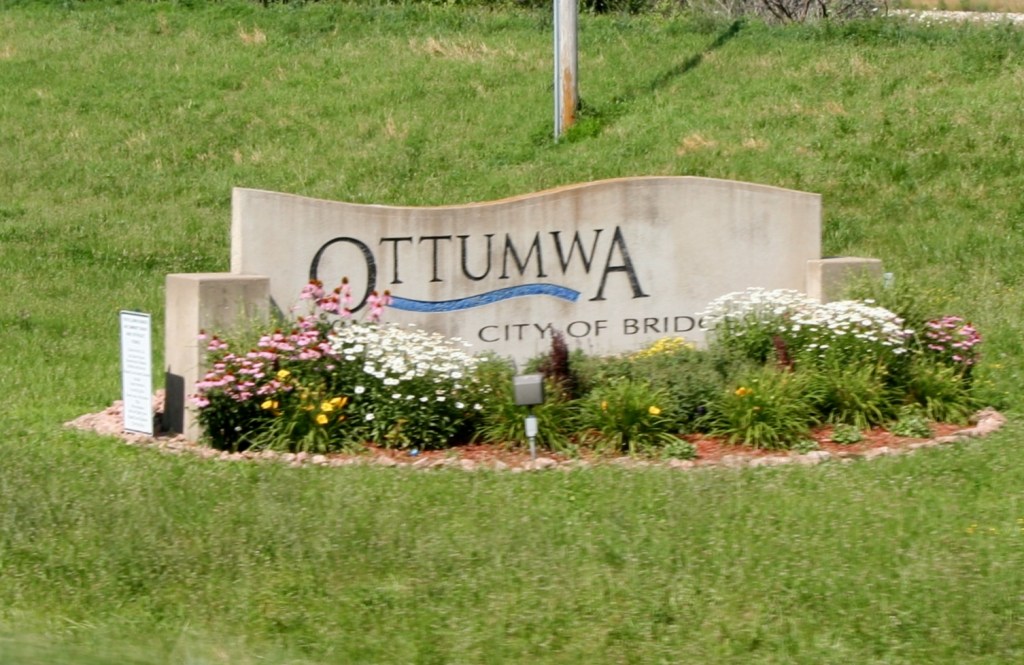
Chief ‘Wapello (1787-1842), for whom the county was named, was a chief of the Foxes, and second in command to Keokuk of the federated tribes of the Sacs and Foxes. He realized the changes that the white man could bring, and tried to lead his people in friendship and peace. Born in Prairie du Chien, Wisconsin in 1787, Wapello was one of many Native Americans who were moved farther, and farther west with the signing of each new treaty. He was at Rock Island, Illinois when Fort Armstrong was built shortly after the War of 1812. In 1829 he moved his village to the Muscatine slough on the west side of the Mississippi River. Following the signing of the treaty after the “Black Hawk War” in 1837, over a million acres of land in eastern Iowa was ceded to the U.S. At this time Wapello and his people traveled westward and settled along the banks of the Des Moines River just south of the present town of Ottumwa. Here he became a fast friend of the Indian Agent, General Joseph M. Street, who had followed a similar geographic pattern to reach Wapello County. The two men worked together to create a peaceful coexistence. General Street suffered ill health from the time he arrived at the Iowa Agency, and died there in 1840. He was buried at the Agency, and land was given by the Indians to the wife of their dear friend, to sustain her and her family. Wapello expressed the desire to be buried near his friend when he too died. In 1842, Wapello died while on a trip along the Skunk River, and he was laid to rest at the side of his loyal white friend, General Joseph M. Street. Today their graves, and those of Mrs. Street, their children and Major John Beach (son-in-law of Street, and Street’s successor as Indian Agent), have been listed on the National Register of Historic Places as the Chief Wapello Memorial Park just east of Agency, Iowa.’ https://www.cityofottumwa.com/files/ottumwas_historic_treasures.pdf
The Democrats today like to think they are the party of the Black man but in 1901 a Southern Democrat newspaper stated ‘”The most damnable outrage which has ever been perpetrated by any citizen of the United States was committed yesterday by the President, when he invited a n—– to dine with him at the White House.
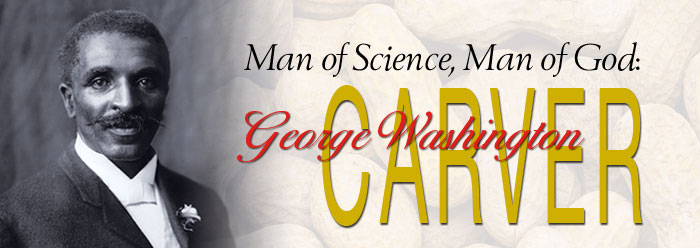
With all this anarchy and hatred that encompasses BLM it is good to review the life of a man of color and true Christian character. That man is George Washington Carver.
‘Who: George Washington Carver What: Father of Modern Agriculture When: 1864 or 1865 – January 5, 1943 Where: Diamond Grove, Missouri
Probably no other scientist has had to face as many social barriers as George Washington Carver, the black American botanist noted for revolutionizing agriculture in the southern United States. He was born towards the end of the Civil War to a slave family on the farm of Moses Carver. As an infant, he and his mother and sister were kidnapped by Kentucky night raiders.
It’s unclear what happened to his mother and sister, but George was rescued and returned to the Carvers, who raised him and his brother James. He grew up in a deeply segregated world, and very few black schools were available in the South. But his desire for learning prompted him to persevere, and he earned his diploma from Minneapolis High School in Minneapolis, Kansas.
Entering college was even more difficult, but he was eventually accepted at Simpson College in Indianola, Iowa, to study art. In 1891, he transferred to Iowa State Agriculture College in Ames (now Iowa State University) to study botany, where he was the first black student and later the first black faculty member. While there, he adopted the middle name “Washington” to distinguish himself from another George Carver. He received his undergraduate degree in 1894 and his masters in 1896, and became a nationally recognized botanist for his work in plant pathology and mycology. After receiving his masters, he joined Booker T. Washington at the Tuskegee Normal and Industrial Institute (later Tuskegee University) in Alabama to teach former slaves how to farm for self-sufficiency.
Carver revolutionized agricultural science with his cultivation of soil-enriching crops, such as peanuts and soybeans, to revive earth that had been depleted of nutrients from cotton farming. He discovered over 100 uses for the sweet potato and 300 uses for the peanut, including beverages, cosmetics, dyes and paints, medicines, and food products. He conducted numerous research projects that also contributed to medicine and other fields, and used his influence to champion the relief of racial tensions.
He was offered many honors and substantial wealth from patents, but Carver chose not to patent his discoveries: “One reason I never patent my products is that if I did it would take so much time, I would get nothing else done. But mainly I don’t want my discoveries to benefit specific favored persons.”1
Frugal in finance and humble in character, Carver was undoubtedly a deeply devoted Christian. He attributed inspiration of his work to God,2 and his studies of nature convinced him of the existence and benevolence of the Creator: “Never since have I been without this consciousness of the Creator speaking to me….The out of doors has been to me more and more a great cathedral in which God could be continuously spoken to and heard from.”3
Carver died January 5, 1943 of complications from injuries he incurred in a bad fall. His life savings of 60,000 dollars was donated to the museum and foundation bearing his name. The epitaph on his grave on the Tuskegee University campus summarizes the life and character of this former slave, man of science, and man of God: “He could have added fortune to fame, but caring for neither, he found happiness and honor in being helpful to the world.”’ https://www.icr.org/article/science-man-god-george-washington-carver
References
Carver Quotes. Posted on the George Washington Carver National Monument website at www.nps.gov/gwca.
Carver is quoted as saying, “I never have to grope for methods. The method is revealed at the moment I am inspired to create something new. Without God to draw aside the curtain I would be helpless.” Federer, W. J. 1994. America’s God and Country Encyclopedia of Quotations. Coppell, TX: FAME Publishing, 96.
Ibid, 97.
* Ms. Dao is Assistant Editor.
Cite this article: Dao, C. 2008. Man of Science, Man of God: George Washington Carver. Act & Facts. 37 (12): 8.
It’s always sad to come to the ending of a good story. But, as with life, there must be an end. So, here we have the last chapter of the God called negro preacher, John Jasper, 1812-1901. It can safely be said ‘There will never be another John Jasper”! To God be the Glory! Great things He hath done!
‘I NEVER heard Jasper preach a sermon on heaven, nor did I ever hear of his doing so. So far as my observation goes, sermons on heaven have failed to edify the thoughtful–sometimes proving distinctly disappointing. It was not to Jasper’s taste to argue on heaven as a doctrine. With him it was as if he were camping outside of a beautiful city, knowing much of its history and inhabitants, and in joyous expectation of soon moving into it. The immediate things of the kingdom chiefly occupied his attention; but when his sermons took him into the neighbourhood of heaven, he took fire at once and the glory of the celestial city lit his face and cheered his soul. This chapter deals only with one of his sermons which, while not on heaven, reveals his heart-belief in it, and its vital effect upon his character.
Imagine a Sunday afternoon at his church–a fair, inspiring day. His house was thronged to overflowing. It was the funeral of two persons– William Ellyson and Mary Barnes. The text is forgotten, but the sermon is vividly recalled.
From the start Jasper showed a burden and a boldness that promised rich things for his people. At the beginning he betrayed some hesitation–unusual for him. “Lemme say,” he said, “a word about dis William Ellersin. I say it de fust an’ git it orf mer min’. William Ellersin was no good man–he didn’t say he wus; he didn’t try to be good, an’ de tell me he die as he live, ‘out Gord an’ ‘out hope in de worl’. It’s a bad tale to tell on ‘im, but he fix de story hissef. As de tree falls dar mus it lay. Ef you wants folks who live wrong to be preached and sung to glory, don’ bring ’em to Jasper. Gord comfut de monur and warn de onruly.
“But, my bruthrin,” he brightened as he spoke, “Mary Barnes wus difrunt. She wer wash’d in de blood of de Lam’ and walk’d in white; her r’ligion was of Gord. Yer could trust Mary anywhar; nuvr cotch ‘er in dem playhouses ner friskin’ in dem dances; she wan’ no street-walk’r trapsin’ roun’ at night. She love de house of de Lord; her feet clung to de straight and narrer path; I know’d her. I seen her at de prarmeetin’–seed her at de supper–seed her at de preachin’, an’ seed her tendin’ de sick an’ helpin’ de mounin’ sinn’rs. Our Sister Mary, good-bye. Yer race is run, but yer crown is shure.”
From this Jasper shot quite apart. He was full of fire, humour gleamed in his eye, and freedom was the bread of his soul. By degrees he approached the realm of death, and he went as an invader. A note of defiant challenge rang in his voice and almost blazed on his lips. He escorted the Christian to the court of death, and demanded of the monster king to exhibit his power to hurt. It was wonderful to see how he pictured the high courage of the child of God, marching up to the very face of the king of terrors and demanding that he come forth and do his worst. Death, on the other hand, was subdued, slow of speech, admitted his defeat, and proclaimed his readiness to serve the children of Immanuel. Then he affected to put his mouth to the grave and cried aloud: “Grave! Grave! Er Grave!” he cried as if addressing a real person, “Whar’s yer vict’ry? I hur you got a mighty banner down dar, an’ you turrurizes ev’rybody wat comes long dis way. Bring out your armies an’ furl fo’th your bann’rs of vict’ry. Show your han’ an’ let ’em see wat you kin do.” Then he made the grave reply: “Ain’t got no vict’ry now; had vict’ry, but King Jesus pars’d through dis country an’ tord my banners down. He says His peopl’ shan’t be troubled no mo’ forev’r; an’ He tell me ter op’n de gates an’ let ‘um pass on dar way to glory.”
“Oh, my Gord,” Jasper exclaimed in thrilling voice, “did yer hur dat? My Master Jesus done jerk’d de sting of death, done broke de scept’r of de king of tur’rs, an’ He dun gone inter de grave an’ rob it uv its victorous banners, an’ fix’d nice an’ smooth for His people ter pass through. Mo’ en dat, He has writ a song, a shoutin’ anthim for us to sing when we go thur, passin’ suns an’ stars, an’ singin’ dat song, ‘Thanks be onter Gord–be onter Gord who give us de vict’ry thru de Lord Jesus Christ.'” Too well I know that I do scant justice to the greatness of Jasper by this outline of his transcendent eloquence. The whole scene, distinct in every detail, was before the audience, and his responsive hearers were stirred into uncontrollable excitement.
“My bruthrin,” Jasper resumed very soberly, “I oft’n ax myself how I’d behave merself ef I was ter git to heav’n. I tell you I would tremble fo’ de consequinces. Eben now when I gits er glimpse–jist a peep into de palis of de King, it farly runs me ravin’ ‘stracted. What will I do ef I gits thar? I ‘spec I’ll make er fool of myself, ’cause I ain’t got de pritty ways an’ nice manners my ole Mars’ Sam Hargrove used to have, but ef I git thar they ain’t goin’ to put me out. Mars’ Sam’ll speak fur me an’ tell ’em to teach me how to do. I sometimes thinks if I’s ‘lowed to go free–I ‘specs to be free dar, I tell you, b’leve I’ll jest do de town–walkin’ an’ runnin’ all roun’ to see de home which Jesus dun built for His people.
“Fust of all, I’d go down an’ see de river of life. I lov’s to go down to de ole muddy Jemes–mighty red an’ muddy, but it goes ‘long so gran’ an’ quiet like ’twas ‘tendin’ to ‘ business–but dat ain’t nothin’ to the river which flows by de throne. I longs fer its chrystal waves, an’ de trees on de banks, an’ de all mann’rs of fruits. Dis old head of mine oft’n gits hot with fever, aches all night an’ rolls on de piller, an’ I has many times desired to cool it in that blessed stream as it kisses de banks of dat upper Canaan. Bl’ssed be de Lord! De thought of seein’ dat river, drinkin’ its water an’ restin’ un’r dose trees–” Then suddenly Jasper began to intone a chorus in a most affecting way, no part of which I can recall except the last line: “Oh, what mus’ it be to be thar?” “Aft’r dat,” Jasper continued with quickened note, I’d turn out an’ view de beauties of de city–de home of my Father. I’d stroll up dem abenuse whar de children of Gord dwell an’ view dar mansions. Father Abraham, I’m sure he got a grate pallis, an’ Moses, what ‘scorted de children of Israel out of bondige thru’ de wilderness an’ to de aidge of de promised lan’, he must be pow’rful set up being sich er man as he is; an’ David, de king dat made pritty songs, I’d like to see ‘is home, an’ Paul, de mighty scholar who got struck down out in de ‘Mascus road, I want to see his mansion, an’ all of ’em. Den I would cut roun’ to de back streets an’ look for de little home whar my Saviour set my mother up to housekeepin’ when she got thar. I ‘spec to know de house by de roses in de yard an’ de vine on de poch.” As Jasper was moving at feeling pace along the path of his thoughts, he stopped and cried: “Look dar; mighty sweet house, ain’t it lovely?” Suddenly he sprang back and began to shout with joyous clapping of hands. “Look dar; see dat on de do; hallelujah, it’s John Jasper. Said He was gwine to prepar a place for me; dar it is. Too good for a po’ sinner like me, but He built it for me, a turn-key job, an’ mine forev’r.” Instantly he was singing his mellow chorus ending as before with: “Oh, what mus’ it be to be thar!”
From that scene, he moved off to see the angelic host. There were the white plains of the heavenly Canaan–a vast army of angels with their bands of music, their different ranks and grades, their worship before the throne and their pealing shouts as they broke around the throne of God. The charm of the scene was irresistible; it lifted everybody to a sight of heaven, and it was all real to Jasper. He seemed entranced. As the picture began to fade up rose his inimitable chorus, closing as always: “Oh, what mus’ it be to be thar!”
Then there was a long wait. But for the subdued and unworldly air of the old preacher–full seventy years old then–the delay would have dissolved the spell. “An’ now, frenz,” he said, still panting and seeking to be calm, “ef yer’ll ‘scuse me, I’ll take er trip to de throne an’ see de King in ‘is roy’l garmints.” It was an event to study him at this point. His earnestness and reverence passed all speech, and grew as he went. The light from the throne dazzled him from afar. There was the great white throne–there, the elders bowing in adoring wonder–there, the archangels waiting in silence for the commands of the King–there the King in His resplendent glory–there in hosts innumerable were the ransomed. In point of vivid description it surpassed all I had heard or read. By this time the old negro orator seemed glorified. Earth could hardly hold him. He sprang about the platform with a boy’s alertness; he was unconsciously waving his handkerchief as if greeting a conqueror; his face was streaming with tears; he was bowing before the Redeemer; he was clapping his hands, laughing, shouting and wiping the blinding tears out of his eyes. It was a moment of transport and unmatched wonder to every one, and I felt as if it could never cease, when suddenly in a new note he broke into his chorus, ending with the soul-melting words: “Oh, what mus’ it be to be thar!”
It was a climax of climaxes. I supposed nothing else could follow. We had been up so often and so high we could not be carried up again. But there stood Jasper, fully seeing the situation.
He had seen it in advance and was ready. “My bruthrin,” said he as if in apology, “I dun fergot somethin’. I got ter tek anuth’r trip. I ain’t visit’d de ransum of de Lord. I can’t slight dem. I knows heap ov ’em, an’ I’m boun’ to see ’em.” In a moment he had us out on the celestial plains with the saints in line. There they were–countless and glorious! We walked the whole line and had a sort of universal handshake in which no note of time was taken. “Here’s Brer Abul, de fust man whar got here; here’s Brer Enoch whar took er stroll and straggled inter glory; here’s ole Ligie, whar had er carriage sent fur ‘im an’ comed a nigher way to de city.” Thus he went on greeting patriarchs, prophets, apostles, martyrs, his brethren and loved ones gone before until suddenly he sprang back and raised a shout that fairly shook the roof. “Here she is; I know’d sh’d git here; why, Mary Barnes, you got home, did yer?” A great handshake he gave her and for a moment it looked as if the newly-glorified Mary Barnes was the centre of Jasper’s thoughts; but, as if by magic, things again changed and he was singing at the top of his voice the chorus which died away amid the shrieks and shouts of his crowd with his plaintive note: “Oh, what mus’ it be to be thar!”
Jasper dropped exhausted into a chair and some chief singer of the old-time sort, in noble scorn of all choirs, struck that wondrous old song, “When Death Shall Shake My Frame,” and in a moment the great building throbbed and trembled with the mighty old melody. It was sung only as Jasper’s race can sing, and especially as only Jasper’s emotional and impassioned church could sing it. This was Jasper’s greatest sermon. In length it was not short of an hour and a half–maybe it was longer than that. He lifted things far above all thought of time, and not one sign of impatience was seen. The above sketch is all unworthy of the man or the sermon. As for the venerable old orator himself he was in his loftiest mood–free in soul, alert as a boy, his imagination rioting, his action far outwent his words, and his pictures of celestial scenes glowed with unworldly lustre. He was in heaven that day, and took us around in his excursion wagon, and turning on the lights showed us the City of the Glorified.
What is reported here very dimly hints at what he made us see. Not a few of Richmond’s most thoughtful people, though some of them laid no claim to piety, were present and not one of them escaped the profound spiritual eloquence of this simple-hearted old soldier of the cross.
Valiant, heroic old man! He stood in his place and was not afraid. He gave his message in no uncertain words–scourged error wherever it exposed its front stood sentinel over the word of God and was never caught sleeping at his post.
When his work ended, he was ready to go up and see his Master face to face.
The stern old orator, brave as a lion, rich in humour, grim, and a dreamer whose dreams were full of heaven, has uttered his last message and gone within the veil to see the wonders of the unseen. If the grapes of Eschol were so luscious to him here, “Oh, what must it be for him to be there.”‘ https://docsouth.unc.edu/church/hatcher/hatcher.html
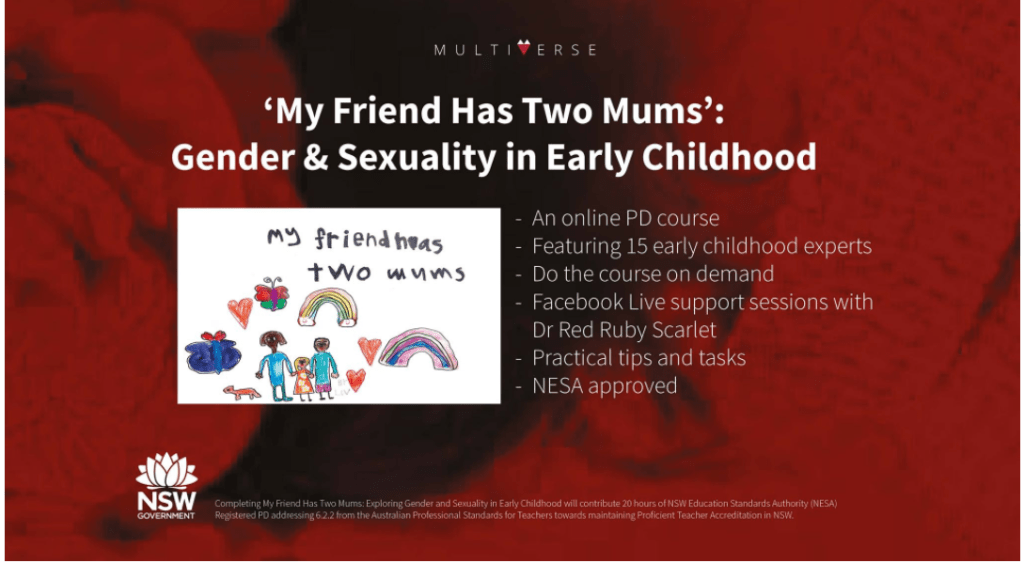
This is a follow up to yesterday’s blog on EARLY CHILD QUEER THINKING. There is a lot that is irritating here, at least to this blogger, and one major irritation is that the New South Wales government is paying for this monster. Like I said yesterday, ever since the Garden of Eden when God had to thrust our great grand parents out of the Garden the world has been in rebellion against God the Creator. The following is an example of how the Marxist, Leftist, Loony, Lovies are seeking out your children to mold them into this new society.
‘As society changes, the issues we face in early childhood change. Things we may have never thought of impacting on our work, now do. Things like sexuality and gender.
Our services are now working with children who identify with a different gender, with same sex parents, with openly gay and lesbian educators. And, importantly how we deal with these issues are part of the National Quality Standard!
But how do we learn about them? We now know a lot more about gender and sexuality than we probably did when you studied at Uni or TAFE. But, till now, there has never been a course where you could learn about things such as:
• how to do inclusion right for children and families of all genders and sexualities • what the I in LGBTI+ actually means • unknowing discrimination of children and families • rainbow families • heterosexual, lesbian, and, gay educators
But now there is.
‘My friend has 2 mums’: exploring gender and sexuality in early education and care, is the course you need to learn all the things you’ve wondered about.’
‘Course Content and Presenters:
The content videos will consist of interviews between Dr Red Ruby Scarlet and those listed below:Module 1. Queer Thinking in Early Childhood – Professor Kerry H Robinson Module 2. The National Quality Framework – Nicholas Stewart Module 3. Putting Inclusive Policies in Place – Anthony Semann Module 4. Using Anti-Bias Approaches – Jill Huntley Module 5. A Transgender Early Childhood Educator – Sharon Priestley Module 6. Heterosexuality as an Identity – Michael McGirr Module 7. Transitioning as Parents – Teighan & Tammie Cosier Module 8. Queer Pedagogies – Stephen Gallen Module 9. Intersex Identities – Dr Agli Zavros-Orr Module 10. Living Non-Binary – Danny Xanadu Module 11. Leadership and Life – Sarah Louise & Ace Dean Module 12. Aboriginal Queerness and Queeness – Nana Miss Koori/Graham Simms Module 13. Rainbow Families – Ashley Scott and Cathy Brown’ https://multiverse.com.au/my-friend-has-two-mums/
Here is something that should cause some REAL concern for those who still have a moral compass. The following are testimonials from past participants of this sexually deviant rebellious anti-God NSW government sponsored course.
‘“My Friend has Two Mums” is the course on gender and sexuality that I didn’t realise I was needing. I signed up on a whim, and it turns out this has been the most significant professional development of my career. The long term structure of this course allowed me to absorb the information, process how I could put this new knowledge into action at my service, and bounce ideas off the supportive Facebook group – all before moving onto the next content piece.
Through this learning our service has been able to build on our sexuality and diversity resources and policy, develop LGBTQIA+ support networks, and look at our paperwork through a queer lens to build on our inclusive practice. I strongly endorse this course for all early childhood professionals, as you will gain so much from the content both individually and for your service.” Tash Croft
Director, Cooks Hill Preschool’ The Cook Hills Preschool’s web site https://cookshillpreschool.com/ was in maintenance mode when I went to it.
This is from a kindergarten teacher!
‘“My friend has two mums” is an absolutely brilliant course for all early childhood educators. For me as an early childhood teacher, I used to struggle with how to tackle gender and sexuality bias among children. For some people, it can be challenging and even hard to bring it up. After taking this course, I started to look into my practice and put my queer lens on, especially in children’s play and how the room is set up. I enjoyed the theoretical part of this course which lays the foundation of the anti-bias practice. I particularly enjoyed the interviews with different guest speakers and listening to their stories, which left me with heaps questions to think about. I am a practitioner of the anti-bias approach and I am just grateful about the existence of this course which gave me some really good perspectives on how to practice the anti-bias approach in a genuine and meaningful way – so much love for this course and everyone who was involved.” Sylvana Li Kindergarten Teacher’
“In signing up for My Friend Has Two Mums, I envisioned getting a range of resources and connections that would expand my knowledge and passion for an area of human development i found intriguing. What I didn’t expect was the multiple other doors, concepts and ways of thinking that I would engage with. I found myself challenging my practice, my thought processes and the learning community around me. I went on a journey into the depths of my personal soul that allowed me to reconnect with who I am and how I connect with others. This is a course that educators must sign up for to expand their knowledge and ways of thinking around inclusion. Those that do join should ultimately be prepared for the life this will take on and the ripples that will form around you in the most magical way.” Alistair Gibbs Director, Lady Gowrie Victoria’ Now, a little web search reveals some interesting background about Mr. Gibbs.
‘Alistair jumped into the Master of Teaching for early childhood which quickly reaffirmed the affinity he felt with the early years.
Alistair said that he could see how the work done in early childhood had the power to set children up for their future: “really getting to the core of their development, their emotions, their abilities, their thirst and drive to better themselves and get to their next stage of development.”
It was in the kindergarten classroom that Alistair started to notice little things that piqued his curiosity.
One day, a corner was turned into the hairdressers with makeup and that type of thing. It was imaginative play, role play, pretend play- all wonderful for a child’s skill development. It was the children’s response that surprised Alistair, when he stepped in to relieve the female educator:
“I mimicked the exact same actions and language she was using within the space- which was, ‘can you make me look pretty’ and the response the children gave me was, ‘No. You’re not allowed to be pretty, you’re handsome. Girls are pretty, boys are handsome.’ I started to really question, where does this from?”
What stemmed from this was a learning course for Alistair himself and for the children he worked with. Both prompted one another with their curiosity and imagination. Alistair said that he aimed to tackle gender stereotypes through his own actions, his language and through the experiences the educators were providing for the kids.
“I then extended that further into different people’s abilities and how we could support and help each other in different ways.”
Alistair said he had the desire to share his findings and the experiences he was going through with others.
“I started to seek out conferences that I could speak at and different ways that I could engage in different learnings and different ways to support other people’s thinking and other people’s practice.”
He was keenly interested in bias in the early years in the most practical sense. He was drawing upon his own experiences and much like the BBC documentary, No More Boys and Girls: Can Our Kids Go Gender Free?, research was backing up his own observations that stereotypes were established at quite an early age.
“When I took on a role that allowed us to engage in these practices through a whole centre approach, it wasn’t necessarily to announce that we were doing gender or anti-bias or anything like that, we simply started asking families- what bias do you face. What do you come up against and people started to put up responses.”
“People started talking about their age or their gender or their sexuality or their parenting skills.”’
‘Alistair is now an Early Learning Manager at Gowrie Victoria, a not-for-profit organisation that specialises in championing good early childhood education through their early learning services as well as professional development and accredited training courses to the early childhood and education sector.’ https://www.playgroupblog.org/alistair-gibbs
I’ll finish these testimonials with this one. ‘Do you want access to some brilliant minds who understand (and live) advocacy around gender and sexuality and their beautiful venn-diagramminess with early childhood practice? Are you looking for a new lens with which to view humanity and our ethical responsibilities to the wonderfully diverse children, families and colleagues within our profession and community?
This course is the full package -
get clear explanations and demystifications of sex, gender, orientation, and the ways we identify ourselves on the spectrum of human sexuality
consider what this beautiful rainbow spectrum means in our practice and what thinking we may need to shift or expand to see from new (child and adult) perspectives
critique the messages that mainstream binaryheterornormativestandards send to children from birth and the exclusion that is all around us (once you see it clearly, you see it everywhere… you know? ‘I see heteronormatively-biased people. All the time. Walking around. They don’t know they’re biased…’)
learn a squillion affirming strategies – from tweaking forms to reflect family reality, to resourcing and supporting play, to advocating with your peers (you won‘t be a lone voice in this…you’ll have Red and a great group of interactive kindred colleagues along with you on your journey).
hear from academics, practitioners, families, lawyers (well, one), artists –pioneers in our diverse landscape whose lived experiences add priceless richness to this important learning.
I didn’t quite expect the impact this course would have on my personal and professional selves! (Intrinsically ‘entwingled‘ as they are 😉).
I have learnt so much, (aka blown my mind) and as well as working away at changing aspects of practice in my current workspace, I am now looking at moving into this area of work in the early childhood and community sector. I have growing engagement with the Queer community, have challenged lil ol‘ me to live my own authentic self, have been on a beautiful advocacy journey with one of my offspring, have met amazing new people and learned first-hand how demystifying and celebrating diverse gender and sexuality is the only route that makes sense.
This course is a springboard for diving into wonderful new waters! Truly transformative!
(Red, thankyou from the bottom, sides and top of my heart for all the you you have put into this ground-breaking course!) Peta Fitzpartick Family Day Care Coordinator , Wesley Mission Queensland” https://multiverse.com.au/my-friend-has-two-mums/
A government that uses tax dollars to pay for this sexual deviant teaching should be charged with child abuse. Society and governments are so rebellious to the things of God that what we have just been reading is the so-called norm for them. However, the above teaching is not for the true born again Bible believing parents that desire the best for their children to be able to go out and live as a good citizen in this world.
Matthew 19:14 …Jesus said, Suffer little children, and forbid them not, to come unto me: for of such is the kingdom of heaven.
I support free speech; don’t you? I will listen to the crazy ones when they speak about Biden not being in the early stages of dementia. I listen to those who push for defunding the police in spite of it being a fruity idea. But, you know what? These same people do not want to listen to those who do not fit their Marxist, Muslim, Leftist, Loony, Lovie thinking. So, here we are where ‘Marquette University has threatened to reconsider their admission acceptance of a recent high school graduate, citing a pro-Trump video the teen posted to social media.
Samantha Pfefferle, an 18-year-old girl, said in an interview with The College Fix that her admission to the university was no longer a guarantee and she was forced to undergo a series of morality questions in order to prove she still belonged in the school’s Class of 2024.
Pfefferle said she was asked how she would respond if a “Dreamer who lived down the hall” came up to her and said “she didn’t feel safe or comfortable” with the conservative views or her presence on campus.
“[He] had the heart to tell me I wasn’t a student,” Pfefferle said. “This means that my classification is still in limbo and is currently being decided by the administration.”
The video that Pfefferle posted to TikTok features the incoming freshman calling out the Trump haters and showing the world she does not care about what others think of her political beliefs.
She titled the video: “When the libs find their way to your page.”
Pfefferle has a series of captions sprawled in the video, as she dances and sings to 6ix9ine’s GOOBA.
The text sections read: “When people find out I support Trump, they try to hate on me…and change my views.”
People viciously attacked Pfefferle in the comments section of the video that has nearly 600,000 views.
A “Trump 2020: Keep America Great” banner is noticeable in the background as well as a Trump sticker on a car parked in the driveway of her home.
“Someone burn her house down,” wrote a TikTok user.
“I hope you get shot,” wrote one user.
“Congrats on outing yourself as a racist, homophobe, transphobe, and misogynist,” wrote another.
People quickly figured out what school Pfefferle was going to in the fall given the fact that she was wearing a Marquette sweatshirt and the “Marquette University 2024” sign behind her.
The trolls said they would report her actions to Marquette admissions. The recent high school grad welcomed the threats in subsequent videos and liberals made good on their promise as the school attempted to “reeducate” Pfefferle before she even stepped foot on campus.
Conservatives quickly took to Twitter to defend Pfefferle, and strongly encourage Marquette to reconsider their decision to give the incoming freshman an ultimatum.
‘I don’t know when it happened precisely, but Mark Latham has become one of the champions of religious freedom in the state of NSW. It’s strange, because by his own admission he doesn’t even consider himself ‘religious’. However, the NSW One Nation leader is taking on the thought police with a bill to protect free speech online.
For anyone keen to still be able to express their religious point of view online via social media, Latham’s proposed bill offers the much-needed protection. According to Latham’s Facebook post, the Bill will seek to do two main things:
Empower/Make further provisions for the President of the NSW Anti-Discrimination Board to decline certain complaints as frivolous or vexatious.
Remove the requirement for the President to refer declined complaints to NCAT (NSW Civil and Administrative Tribunal).
In the light of everything that happened people such as Israel Folau last year, this is a welcome move. Because the Anti-Discrimination Act has been weaponised by certain activists to financially destroy those whom they disagree with. As Latham argued in the NSW Parliament:
Activists are using the legal system to try to score the political points they cannot achieve by democratic means, or even worse, they are using the legal system to try to destroy their opponents financially to break them with the cost of using lawyers and going through tribunals to defend themselves. This is not justice; it is a lawyer’s picnic.
In the four decades since the Anti-Discrimination Act was legislated the political environment has changed substantially. We now live in an era of heightened political activism, much of it driven by the intense polarised and at times obsessive nature of social media, and tactics such as ‘de-platforming’ and ‘cancelling culture’ have become common.
Bernard Gaynor, a former army major, is another example of someone who has had to engage in modern “law-fare” to financially defend himself against numerous defamation lawsuits. For example, over the past five years, Gaynor has had up to 37 complaints brought against him by just one individual.
Latham has asked the public to issue a long or short submission in support of the bill (you can do so by clicking here). But in response to the proposed legislation, Gaynor has said:
The NSW Anti-Discrimination Board … should be abolished and Mark Latham’s common-sense bill to force it to dismiss vexatious complaints is a good first step.
The Anti-Discrimination Board is a totalitarian, state-funded activist organisation that is hell-bent on using the coercive power of the state to silence mainstream conservative opinion.
These types of ‘Thought Police’ should have no place in Australia.











 whatyareckon