When is a man a woman and when is a woman a woman? Well, ‘When Australians agreed to change the definition of marriage they probably didn’t think a change to the definition of woman would follow.
Like coronavirus, rainbow gender fluid theory has jumped from our “Safe Schools” to the once respected Australian Academy of Science which inhabits Canberra’s iconic Shine Dome.
The academy has decreed that a woman is “anyone who identifies as a woman”.
I kid you not.
If you thought a woman had a vagina, breasts and XX chromosomes, think again.
Someone with a penis, normally referred to as a man, whose “personal gender identity does not correspond with sex assigned at birth” can be a woman our scientists now tell us.
Apparently, we’ve been wrongly “assigning” babies their gender just because they were born with certain biological physical features.
Confused?
It gets worse. This new definition of woman appears as part of the noble push to get more women into science, technology, engineering and mathematics (STEM).
It goes without saying that in today’s PC rainbow fascist world you are a bigot if you disagree.
For the record, the glossary was silent on the definition of man.
It’s almost like the Women in STEM Decadal Plan is tailor-made for mediocre male scientists who might be looking for a career leg up by changing their gender identity.
Heck, they wouldn’t even have to have surgery or take oestrogen.
Like women and girls striving to compete with biological men under transgender guidelines released by Sports Minister Rickard Colbeck last year, women scientists seeking to get ahead in STEM now may also have to make way for biological males.
As Bernard Lane, who broke the story pointed out, the academy’s president John Shine is using the current Covid-19 crisis to campaign for accurate science against “made-up stuff”.
Seriously?
Evolutionary biologist Madeleine Beekman, a professor at the University of Sydney, said the academy had departed from biological fact.
“I find it very surprising that it comes from the academy of science, which should be based on science and not on some social, political agenda — so, I’m shocked, actually,” she told The Australian.
As Lane also pointed out, the Women in STEM Decadal Plan is paid for by the taxpayer. That’s you and me, folks.
Why the gender whisperers are running amok in our schools, sporting clubs and in our scientific institutions on the watch of a Liberals and Nationals government is mystifying.
If courage does not exist to take on this foolish and harmful ideology now, when will it?
So, you too thought it was government’s place to chiefly protect and provide certain services for its citizens. Well, you were wrong, as I was. In the Australian state of Victoria they see it also is their job as a state government ‘…to help shape the state’s equality agenda for years to come, with the opening of public consultation on the Victorian Government’s first ever whole of government LGBTIQ strategy.
Over the past five years, the Victorian Government has created a more inclusive Victoria by reforming legislation to remove discrimination, building the Victorian Pride Centre and providing strong support for and investment in LGBTIQ organisations, community events and festivals.
Minister for Equality Martin Foley today announced the Victorian Government is now looking to the future with the opening of a public consultation process to develop Victoria’s first ever whole-of-government LGBTIQ strategy.’
‘Quotes attributable to the Minister for Equality Martin Foley
“For equality to be fully realised we need a clear vision – informed by a comprehensive understanding of the needs of LGBTIQ Victorians. This consultation is a vital part of making that happen.”
“Victoria’s first LGBTIQ Strategy will be developed in close consultation with LGBTIQ people, organisations and communities from across the state and will inform the Government’s equality agenda for years to come.”
Quote attributable to the Victorian Commissioner for Gender and Sexuality Ro Allen
The Victorian government seems to be fixated on sodomy and sodomites. In the second paragraph above is mentioned the Victorian Pride Centre! What a waste of tax dollars this is! The Victorian state government has thrown away ‘…an extra $10 million in funding for the centre, which is the first of its kind in Australia, providing a space for groups and organisations to share ideas and resources to support their work for the LGBTIQ community.’ https://www.premier.vic.gov.au/marching-towards-equality-with-a-centre-for-pride/
The Sodomites are definitely out of the closet in Victoria. This is government gone mad on other people’s money!!!
The average citizen would think government was there to protect the citizen and provide certain services. Not in the Australian state of New South Wales. ‘NSW One Nation leader Mark Latham says he doesn’t see how a “sexuality led recovery” will work for the people of NSW in one of the worst recessions in history. The NSW Planning Department led by Jim Betts will on Tuesday add a new LGBTQI unit, which will join the already established harmony council, Aboriginal cultural team, and the diversity council. Mr Latham said the planning department’s diversity program was “selective diversity and inclusion policy” as it does not include or represent those battling homelessness and joblessness. “It’s inefficient, it’s unnecessary, and it shouldn’t be happening. “In (Premier Gladys Berejiklian’s) public service, it’s all about sexuality and it doesn’t serve the people of New South Wales one iota.”’ https://www.skynews.com.au/details/_6175484545001
Then there is the unbelievable list of groups for the LGBTQI folk at the Lane Cove Council web site. If this doesn’t stir the ire in a normal thinking person then nothing will. For space only a few will be listed here. ‘Lane Cove Council is committed to supporting an inclusive and welcoming community which values and celebrates diversity in all its forms. This page provides information and links to relevant services for the Gay, Lesbian, Bisexual, Transgender, Intersex and Queer LGBTIQA+ community.
Below is a list of organisations who provide services for the LGBTIQA+ communities
The Gay and Lesbian Rights Lobby (GLRL) advocates on behalf of lesbians and gay men. They provide referral and educative resources on gay and lesbian rights to the media, policy makers and the community.
The Australian Lesbian Medical Association (ALMA) was founded in 1999 for lesbian doctors, lesbian medical students and their partners. It provides a supportive network to its members through advocacy, mentoring and social activities.
The Gender Centre is committed to developing and providing services and activities, which enhance the ability of people with gender issues to make informed choices. They offer a wide range of services to people with gender issues, their partners, family members and friends in New South Wales. They are an accommodation service and also act as an education, support, training and referral resource centre to other organisations and service providers. The Gender Centre is committed to educating the public and service providers about the needs of people with gender issues.
UnitingCare Ageing celebrate diversity and welcome all people regardless of lifestyle choices, ethnicity, faith, sexual orientation or gender identity. They are proud to be accredited with the Rainbow Tick for standing with people from Lesbian, Gay, Bisexual, Transgender and Intersex (LGBTI) communities, at every stage of life.
This website is for LGBTIQ people in relationships who are or may be experiencing domestic and family violence. It contains information on what domestic and family violence is, what to do if you are experiencing abuse, suggestions on making a safety plan, and details for some referral options in NSW. It also has information for supporting a friend or family member who is experiencing abuse.
GAMMA provides safe and confidential opportunities for men to discuss and consider issues relating to their sexuality and the relationships in their lives
Sydney Gay and Lesbian Choir is a non-auditioning choir which welcomes members regardless of their sexual identity or musical experience. The choir is open to all – lesbian, gay, bisexual, transgendered, intersex, queer and our straight friends and families, all united by a love of singing together and striving for performance excellence.’ http://www.lanecove.nsw.gov.au/Community/CommunityServices/Pages/GLBTIQ.aspx
More time and funds should be spent for roads, coal fire powered plants, police, hospitals etc. and NOTHING on sexual identity!
As a young preacher in the early 70’s I went once to Jack Hyles’ Pastors’ School held at First Baptist, Hammond, IN. That one time was enough for me and since then any bad news coming out about Hyles, his son or the church has not been a surprise to me. The following is an edited article concerning Joy Ryder who lived life first hand at First Baptist Church and then Hyles Anderson College. Joy ‘Ryder recently filed a lawsuit against the estate of Jack Hyles, his son David Hyles, Hyles-Anderson College and First Baptist Church of Hammond alleging that David Hyles raped, sexually assaulted and sexually abused her and that church leadership covered it up in the late 1970s.
“You aren’t special, he does that with everyone,” Ryder said Jack Hyles, the then-lead pastor of First Baptist Church of Hammond, told her.
Ryder, then 14, recalled that was Jack Hyles’ response when she approached him to tell him that a senior-ranking member of the church — his son — was abusing her.
“He is probably the most cruel, and cunning person I’ve ever known in my life, and I don’t say that easily,” Ryder, now 57, said of David Hyles. “He knew exactly what he was doing.”
The lawsuit
Ryder’s apartment walls are minimally decorated. A calendar marking family celebrations and a few family photos hang on the wall. There are no religious symbols displayed predominantly in the living room.
Given his position and the “charismatic personality that he had,” people were drawn to David Hyles, Ryder said, and felt that “if he looked favorably on you, you were ‘in’ with the youth pastor.”
“That was something that was flattering to everyone,” Ryder said.
In 1976, when she was 14, Ryder said David Hyles started “grooming” her. A touch here, a quick hug there. David Hyles also convinced her parents that Ryder was “rebellious” and that he would counsel her, she said.
Then grooming then turned into something else, she said.
Joy Ryder, who formed the sexual assault support group Out of the Shadows, speaks about her personal experiences during an interview in her home on Wednesday, March 4, 2020. (Kyle Telechan / Post-Tribune)
David Hyles allegedly raped Ryder the first time in his office in the youth center, about a block and a half away from the church, according to the lawsuit. Ryder said she was 15 years old at the time.
Ryder joined Strength and Beauty, the church’s and school’s “traveling music group.” The group traveled for a whole summer, during which time David Hyles had “full access” to her, Ryder said.
“That’s when it really escalated, was on that trip,” Ryder said.
The lawsuit alleges Ryder “suffered sexual abuse by D. Hyles over 50 discrete instances,” some of which occurred at a Holiday Inn in Illinois.
According to the lawsuit, David Hyles would allegedly threaten to “expose” Ryder to the church as a “slut” if she didn’t comply. He would also, according to the lawsuit, allegedly threaten her parents’ jobs at Hyles-Anderson College.
“In the church, you’re taught to never question authority, to always be quiet,” Ryder said. “When that’s life to you, and your world revolves around the church and the school, there’s very little way out, as far as speaking up and speaking out for yourself.”
After two years, Ryder said she finally told her parents about what she was enduring.
Ryder brought her father with her to a meeting with David Hyles at a Holiday Inn in Lansing, according to the lawsuit. Ryder told David Hyles that she would “no longer perform any sexual acts with him ever again” and that her father was outside, according to the lawsuit.
Ryder said her father told Jack Hyles about what he witnessed, and shortly after that David Hyles relocated to Texas.
“After I told my parents, they wanted to know what happened. I told them, but I was so embarrassed by everything that I remember we talked about it once and that was it. We never talked about it again,” Ryder said.
The impact
Ryder went on to attend Hyles-Anderson College, before transferring to Tennessee Temple University, a private Christian university in Chattanooga, Tennessee, that has since closed, she said.
She didn’t graduate, and would eventually get married and have three children, she said. Ryder became a missionary and lived 20 years in Papua New Guinea, where she raised her children.
After the allegations were reported to Jack Hyles, Ryder said she saw David Hyles twice: once at the church and once at Tennessee Temple University. He came to the university to speak, and Ryder said she had to attend because it was mandatory. She said she doesn’t remember what he spoke about.
Ryder said she didn’t talk to him on those two occasions.
The experience has made her “understand that these people exist everywhere,” Ryder said. It has also taught her that it’s important to protect children and give them the “voice they deserve.”
In 2013, Ryder started a non-profit organization Out of the Shadows, which provides resources for victims of sexual abuse. Ryder said she has talked with many survivors of sexual abuse, some of whom have experienced it at a religious institution.
“A lot of them, especially abused in the church, … just don’t know what to do with God anymore,” Ryder said. “If he’s used against you, they need to have their story heard but then that’s something they have to work out.”
Ryder said she is not asking for money in the lawsuit, but if there is a judgment in her favor it will go toward her non-profit.
By filing the lawsuit, Ryder said she is showing survivors of sexual assault that she’s done “absolutely everything that I can do to seek justice,” and hopefully inspire them to speak up.
It was interesting to read Jonathon Van Marren when he said ‘I’ve always been skeptical of the “pro-life celebrity.” Not because I don’t think that celebrities who sincerely oppose abortion don’t exist, but because I believe celebrities are both unreliable and often undesirable advocates. An artist or actor may oppose abortion while creating sexually-charged entertainment that contributes to the degradation of our culture, for example. Or, as in the case of pop stars like Selena Gomez (who swapped her purity ring for abortion bling) they discard their previous views due to industry pressures or peers. Pro-life celebrities generally fall into two categories. First, there are those oppose abortion for profoundly personal reasons. Jack Nicholson, for example, discovered later in life that his “mother” was actually his grandmother and that the woman he thought was his sister was his mother, who had been pressured to abort him. As a result, he noted in one interview when asked about abortion, “I’m positively against it. I don’t have the right to any other view.” Similarly, singer Celine Dion was her mother’s fourteenth child, and initially considered an abortion before being talked out of it. Justin Bieber’s mother was also pressured to abort him, and he has stated that he thinks abortion is “like killing a baby.” Martin Sheen’s wife was conceived through rape, a fact which he has referenced with regard to his anti-abortion views. Despite this, Sheen is a dedicated Democrat, and it is important to note that many “pro-life celebrities” still vocally support pro-abortion politicians. Discovering just how close one came to becoming what Christopher Hitchens has referred to as a “forgotten whoosh” often makes it impossible for people to regard abortion as a simple matter of rights or healthcare. A near miss can be morally clarifying. There are also those who are pro-life as part of a larger worldview. Patricia Heaton, who often shares pro-life content on social media, is a Catholic. So is Mel Gibson, who has shared his pro-life views in interviews (and has also contributed financially to pro-life work in the past.) Hollywood’s handful of conservatives are generally pro-life as well, including Jon Voight, Tom Selleck, and Chuck Norris. Conservatives, of course, are becoming even rarer in Hollywood in the wake of the Great Awokening, which is accompanied by purges of those with even liberal sentiments. And then there is Kanye West, a man who defies all categories. On Independence Day, he announced that he is off the Trump Train and running for president of the United States, although thus far no campaign has materialized (he says he will be running for “the Birthday Party,” because “when we win it’s everybody’s birthday.”) Back in 2011, West tweeted that “An abortion can cost a ballin’ n**ga up to 50gs maybe 100. Gold diggin’ b**** be getting pregnant on purpose,” later clarifying that “it ain’t happen to me but I know people.” Then, an interview for his latest album, he criticized the Democrats for “making us abort our children.” Last week he expanded on those views, telling Forbes that “Planned Parenthoods have been placed inside cities by white supremacists to do the Devil’s work,” a reference to the racist and eugenicist history of the American abortion giant. “I am pro-life because I’m following the word of the Bible,” he added. Planned Parenthood’s director of Black Leadership and Engagement responded by stating that the “real threat to Black communities’ safety, health, and lives stems,” among other things, from “the criminalization of reproductive healthcare by anti-abortion opposition.” Kanye recently tweeted and then deleted a screenshot of a Google search for “what does a 6 month fetus look like.” Along with the now deleted image, he wrote, “These souls deserve to live.” It is unquestionably good for the pro-life cause that a man with such an enormous platform is using it to call out the American abortion industry, as West reaches an audience that pro-lifers have often had difficulty reaching. With that said, pro-lifers would do well to be cautious. West is notoriously erratic, and a lot of his ramblings can end up being pretty weird. In a culture obsessed with celebrity, there is a huge temptation to immediately promote and embrace any famous person saying some of the right things. While encouraging and affirming those things is essential, we shouldn’t give these folks the status of moral leadership overnight. West in particular has gone on a roller-coaster with regard to many of his different views, and his reliability, despite hopeful indicators, remains to be seen. We should not make celebrities — even those going after the abortion industry — into our heroes.’ https://www.prophecynewswatch.com/article.cfm?recent_news_id=4163
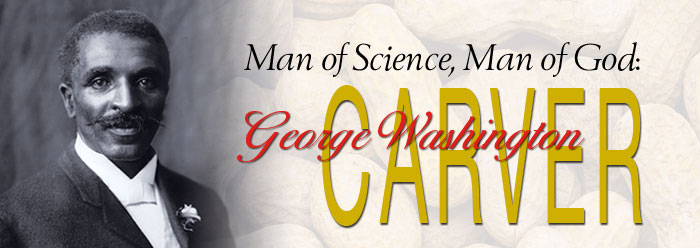
With all this anarchy and hatred that encompasses BLM it is good to review the life of a man of color and true Christian character. That man is George Washington Carver.
‘Who: George Washington Carver What: Father of Modern Agriculture When: 1864 or 1865 – January 5, 1943 Where: Diamond Grove, Missouri
Probably no other scientist has had to face as many social barriers as George Washington Carver, the black American botanist noted for revolutionizing agriculture in the southern United States. He was born towards the end of the Civil War to a slave family on the farm of Moses Carver. As an infant, he and his mother and sister were kidnapped by Kentucky night raiders.
It’s unclear what happened to his mother and sister, but George was rescued and returned to the Carvers, who raised him and his brother James. He grew up in a deeply segregated world, and very few black schools were available in the South. But his desire for learning prompted him to persevere, and he earned his diploma from Minneapolis High School in Minneapolis, Kansas.
Entering college was even more difficult, but he was eventually accepted at Simpson College in Indianola, Iowa, to study art. In 1891, he transferred to Iowa State Agriculture College in Ames (now Iowa State University) to study botany, where he was the first black student and later the first black faculty member. While there, he adopted the middle name “Washington” to distinguish himself from another George Carver. He received his undergraduate degree in 1894 and his masters in 1896, and became a nationally recognized botanist for his work in plant pathology and mycology. After receiving his masters, he joined Booker T. Washington at the Tuskegee Normal and Industrial Institute (later Tuskegee University) in Alabama to teach former slaves how to farm for self-sufficiency.
Carver revolutionized agricultural science with his cultivation of soil-enriching crops, such as peanuts and soybeans, to revive earth that had been depleted of nutrients from cotton farming. He discovered over 100 uses for the sweet potato and 300 uses for the peanut, including beverages, cosmetics, dyes and paints, medicines, and food products. He conducted numerous research projects that also contributed to medicine and other fields, and used his influence to champion the relief of racial tensions.
He was offered many honors and substantial wealth from patents, but Carver chose not to patent his discoveries: “One reason I never patent my products is that if I did it would take so much time, I would get nothing else done. But mainly I don’t want my discoveries to benefit specific favored persons.”1
Frugal in finance and humble in character, Carver was undoubtedly a deeply devoted Christian. He attributed inspiration of his work to God,2 and his studies of nature convinced him of the existence and benevolence of the Creator: “Never since have I been without this consciousness of the Creator speaking to me….The out of doors has been to me more and more a great cathedral in which God could be continuously spoken to and heard from.”3
Carver died January 5, 1943 of complications from injuries he incurred in a bad fall. His life savings of 60,000 dollars was donated to the museum and foundation bearing his name. The epitaph on his grave on the Tuskegee University campus summarizes the life and character of this former slave, man of science, and man of God: “He could have added fortune to fame, but caring for neither, he found happiness and honor in being helpful to the world.”’ https://www.icr.org/article/science-man-god-george-washington-carver
References
Carver Quotes. Posted on the George Washington Carver National Monument website at www.nps.gov/gwca.
Carver is quoted as saying, “I never have to grope for methods. The method is revealed at the moment I am inspired to create something new. Without God to draw aside the curtain I would be helpless.” Federer, W. J. 1994. America’s God and Country Encyclopedia of Quotations. Coppell, TX: FAME Publishing, 96.
Ibid, 97.
* Ms. Dao is Assistant Editor.
Cite this article: Dao, C. 2008. Man of Science, Man of God: George Washington Carver. Act & Facts. 37 (12): 8.
There is that slippery slope which the West is rushing down to its own demise. For instance, making so-called same-sex marriage legal was not the beginning down the slide but it certainly gave a BIG push! Therefore, ‘Let me totally clear at the outset. One of the purposes of this article is to say, “I told you so!” Or, more precisely, many of us have been predicting this moment for years. As reported in the New York Times, “A Massachusetts City Decides to Recognize Polyamorous Relationships.
The city of Somerville has broadened the definition of domestic partnership to include relationships between three or more adults, expanding access to health care. Is anyone really surprised?
After all, if the winning mantras of the same-sex “marriage” movement have been “Love is love” and “Love wins” and “I have the right to marry the one I love,” why limit that number to two? Isn’t that discriminating against love? Isn’t that simply carrying over the outdated, outmoded, limiting ways of the past?
To this day, in all my dialogue and debate with LGBTQ activists and their allies, I have yet to hear a reasonable explanation of why marriage should be limited to two people if any two people can marry. Why limit the union to two people? Based on what? All the solid arguments for limiting marriage to two people are, ultimately, arguments for marriage being the union of a male and a female. All other arguments fall short. Very short. (For a glaring illustration, see here.)
When it comes to polyamory, which can include virtually any combination or number of men and women, on what basis should the government not recognize such relationships? Is not love still love? Does not love still win? And is not love the only thing that matters? So the argument goes.
Today, we’re talking about just one city in Massachusetts extending health benefits to polyamorous families. But one city is all that is needed to begin a trend. That’s also why this is national news, even in the midst of an unrelenting, tumultuous news cycle.
As for warning about this for years, polyamory was mentioned frequently in my book A Queer Thing Happened to America, published in 2011, but with research for the book dating back to 2005.
In fact, in the book I drew attention to a polyamory seminar hosted by the Metropolitan Community Churches – obviously, pro-LGBT churches – back in 2005: “Yes, ‘polyamory’ – in other words, having multiple sexual partners (loving, of course!) – was also a topic of discussion at the MCC conference, and church members were encouraged to come out of the closets with their ongoing, multiple sexual relationships.”
Again, this was at a church conference in 2005. And even then, this trend had been building for years. We told you so!
In the book I also quoted polyamorous advocates who marched prominently in gay pride parades, stating, “We’re 30 years behind the gay activist movement.” They probably underestimated the timeline. (On a different but related front, I could point to articles like, “Here Come the Polygamists,” dating back to 2012.)
In my 2015 book, Outlasting the Gay Revolution, I wrote, “Perhaps we should change the wedding vows to sound more like this (with the man speaking here): ‘I take you as my wife, but probably not for life. I take you as my own, but not just you alone. I pledge myself to you, and perhaps to others too. I take you as my bride, although your name is Clyde.’
“Is this really so farfetched? If you can have a bride and a broom, if ‘husbands’ can be women and ‘wives’ can be men, if you can be married and dating and swinging and swapping, if you live together before marriage and end the marriage whenever it suits you best, then what does ‘marriage’ mean?”
Back in 2015, Stephen Colbert mocked the idea of a slippery moral slope when it came to redefining marriage. The reality of the matter, as he likely knew, was that the mocking predictions he made had already come to pass. I illustrated all that in this video. You can mock, but you can’t deny reality. (Take a minute to watch. You’ll be shocked.)
In saying all this, I am not saying that gay couples do not love each other or that gay couples will inevitably become polyamorous throuples and beyond. I’m simply stating the obvious: if two men or two women can “marry,” then there is nothing sacrosanct about the number two. Any potential number will do, as long as the relationships are based on “love.”
Already in March, 2016, Oliver Bateman wrote on Mic.com, “When it comes to marriage, three is still a crowd. But that might be changing sooner than we think. According to a 2015 Gallup poll, a small-yet-growing percentage of Americans report that they find the concept of plural marriage ‘morally acceptable,’ while polyamorous relationships are increasingly receiving mainstream media coverage. A 2014 Newsweek article even estimates that there are more than 500,000 openly polyamorous families living in the United States today.”
When a person gets saved he is going from one master (Satan) to another Master (the Lord Jesus Christ). So, it was with John Jasper.
‘ IT is as a preacher that John Jasper is most interesting. His personality was notable and full of force anywhere, but the pulpit was the stage of his chief performance. It is worth while to bear in mind that he began to preach in 1839 and that was twenty-five years before the coming of freedom. For a quarter of a century, therefore, he was a preacher while yet a slave. His time, of course, under the law belonged to his master, and under the laws of the period, he could preach only under very serious limitations. He could go only when his master said he might, and he could preach only when some white minister or committee was present to see that things were conducted in an orderly way. This is the hard way of stating the case, but there are many ways of getting around such regulations. The man who could preach, though a negro, rarely failed of an opportunity to preach. The man who was fit for the work had friends who enabled him to “shy around” his limitations.
There was one thing which the negro greatly insisted upon, and which not even the most hard-hearted masters were ever quite willing to deny them. They could never bear that their dead should be put away without a funeral. Not that they expected, at the time of the burial, to have the funeral service. Indeed, they did not desire it, and it was never according to their notions. A funeral to them was a pageant. It was a thing to be arranged for a long time ahead. It was to be marked by the gathering of the kindred and friends from far and wide. It was not satisfactory unless there was a vast and excitable crowd. It usually meant an all-day meeting, and often a meeting in a grove, and it drew white and black alike, sometimes almost in equal numbers. Another demand in the case,–for the slaves knew how to make their demands,–was that the negro preacher “should preach the funeral,” as they called it. In things like this, the wishes of the slaves generally prevailed. “The funeral” loomed up weeks in advance, and although marked by sable garments, mournful manners and sorrowful outcries, it had about it hints of an elaborate social function with festive accompaniments. There was much staked on the fame of the officiating brother. He must be one of their own colour, and a man of reputation. They must have a man to plough up their emotional depths, and they must have freedom to indulge in the extravagancies of their sorrow. These demonstrations were their tribute to their dead and were expected to be fully adequate to do honour to the family.
It was in this way that Jasper’s fame began. At first, his tempestuous, ungrammatical eloquence was restricted to Richmond, and there it was hedged in with many humbling limitations. But gradually the news concerning this fiery and thrilling orator sifted itself into the country, and many invitations came for him to officiate at country funerals.
He was preëminently a funeral preacher. A negro funeral without an uproar, without shouts and groans, without fainting women and shouting men, without pictures of triumphant deathbeds and the judgment day, and without the gates of heaven wide open and the subjects of the funeral dressed in white and rejoicing around the throne of the Lamb, was no funeral at all. Jasper was a master from the outset at this work. One of his favourite texts, as a young preacher, was that which was recorded in Revelations, sixth chapter, and second verse: “And I saw and beheld a white horse; and he that sat upon him had a bow, and a crown was given unto him, and he went forth conquering and to conquer.” Before the torrent of his florid and spectacular eloquence the people were swept down to the ground, and sometimes for hours many seemed to be in trances, not a few lying as if they were dead.
Jasper’s first visit to the country as a preacher of which we have any account was to Hanover County. A prominent and wealthy slaveholder had the custom of allowing his servants to have imposing funerals, when their kindred and friends died; but those services were always conducted by a white minister. In some way the fame of Jasper had penetrated that community, and one of the slaves asked his master to let Jasper come and attend the funeral. But to this the master made an objection. He knew nothing about Jasper, and did not believe that any negro was capable of preaching the Gospel with good effect. This negro was not discouraged by the refusal of the proprietor of the great plantation to grant his request. He went out and collected a number of most trustworthy and influential negro men and they came in a body to his master and renewed the plea. They told him in their way about what a great man Jasper was, how anxious they were to hear him, what a comfort his presence would be to the afflicted family, and how thankful they would be to have their request honoured. They won their point in part. He said to them, as if yielding reluctantly, “very well, let him come.” They however had something more to say. They knew Jasper would need to have a good reason in order to get his master’s consent for him to come, and they knew that Jasper would not come unless he came under the invitation and protection of the white people, and therefore they asked the gentleman if he would not write a letter inviting him to come. Accordingly, in a spirit of compromise and courtesy very pleasing to the coloured people, the letter was written and Jasper came.
The news of his expected coming spread like a flame. Not only the country people in large numbers, but quite a few of the Richmond people, made ready to attend the great occasion. Jasper went out in a private conveyance, the distance not being great, and, in his kind wish to take along as many friends as possible, he overloaded the wagon and had a breakdown. The delay in his arrival was very long and unexplained; but still the people lingered and beguiled the time with informal religious services.
At length the Richmond celebrity appeared on the scene late in the day. The desire to hear him was imperative, and John Jasper was equal to the occasion. Late as the hour was, and wearied as were the people, he spoke with overmastering power. The owner of the great company of slaves on that plantation was among his hearers, and he could not resist the spell of devout eloquence which poured from the lips of the unscholared Jasper. It was a sermon from the heart, full of personal passion and hot with gospel fervour, and the heart of the lord of the plantation was powerfully moved. He undertook to engage Jasper to preach on the succeeding Sunday and handed the blushing preacher quite a substantial monetary token of his appreciation.
The day was accounted memorable by reason of the impression which Jasper made. Indeed, Jasper was a master of assemblies. No politician could handle a crowd with more consummate tact than he. He was the king of hearts and could sway throngs as the wind shakes the trees.
There is a facetious story abroad among the negroes that in those days Jasper went to Farmville to officiate on a funeral occasion where quite a number of the dead were to have their virtues commemorated and where their “mouming friends,” as Jasper in time came to call them, were to be comforted. The news that Jasper was to be there went out on the wings of the wind and vast throngs attended. Of course, a white minister was present and understood that he was the master of ceremonies. The story is, that he felt that it would not be safe to entrust an occasion so vastly interesting to the hands of Jasper, and he decided that he would quiet Jasper and satisfy the public demands by calling on Jasper to pray. As a fact, Jasper was about as much of an orator in speaking to heaven as he was in speaking to mortal men. His prayer had such contagious and irresistible eloquence that whatever the Lord did about it, it surely brought quite a resistless response from the crowd. When the white preacher ended his tame and sapless address, the multitude cried out for Jasper. Inspired by the occasion and emboldened by the evident disposition to shut him out, Jasper took fire and on eagle wings he mounted into the heavens and gave such a brilliant and captivating address that the vast crowd went wild with joy and enthusiasm
There is yet another story of a time when Jasper was called into the country where he and a white minister were to take part in one of the combined funerals so common at that time. Upon arriving at the church the white minister was unutterably shocked to find that his associate in the services was a negro. That was too much for him, and he decided on the spot that if he went in, Jasper would have to stay out, and he decided that he would go in and would stay in until the time was over and leave Jasper to his reflections on the outside. For two hours the white brother beat the air, killed time, and quite wearied the crowd by his lumbering and tiresome discourse. After he had arrived at the point where it seemed that no more could be said, the exhausted and exhausting brother closed his sermon and was arranging to end the service. But the people would not have it so. Tumultuously they cried out for Jasper,–a cry in which the whites outdid the blacks. It was not in Jasper to ignore such appreciation. Of all men, he had the least desire or idea of being snubbed or side-tracked. With that mischievous smile which was born of the jubilant courage of his soul, Jasper came forth. He knew well the boundaries of his rights, and needed no danger signals to warn him off hostile ground. For fifteen or twenty minutes he poured forth a torrent of passionate oratory,–not empty and frivolous words, but a message rich with comfort and help, and uttered only as he could utter it. The effect was electrical. The white people crowded around him to congratulate and thank him, and went away telling the story of his greatness.
Tradition has failed to give us the name of the ill-fated brother who in seeking to kill time, seemed to have got knocked into oblivion. It is worth while to say that the white ministers were within the law in attending occasions like those described above and felt the necessity of care and discretion in managing the exercises, lest the hostilities of irreligious people should be excited against the negroes. It is due to the white people, and especially to that denomination to which John Jasper was associated, to say that under their influence the negroes, who were practically barbarians when they were brought into the South, were civilized and Christianized. A large proportion of them were well-mannered and nobly-behaved Christians at the time their slavery ended. The church buildings were always constructed so that the white people and the negroes could worship in the same house. They were baptized by the same minister, they sat down together at the communion table, they heard the same sermons, sang the same songs, were converted at the same meetings, and were baptized at the same time. Ofttimes, and in almost all places, they were allowed to have services to themselves. In this, of course, they enjoyed a larger freedom than when they met in the same house with the white people.
They know little of the facts who imagine that there was estrangement and alienation between the negroes and the whites in the matter of religion. Far from it. There was much of good fellowship between the whites and negroes in the churches, and the white ministers took notable interest in the religious welfare of the slaves. They often visited them pastorally and gladly talked with them about their salvation. These chapters are not intended either to defend or to condemn slavery; but in picturing the condition of things which encompassed Jasper during the days of slavery, it is worth while to let it be understood that it was during their bondage and under the Christian influence of Southern people, that the negroes of the South were made a Christian people. It was the best piece of missionary work ever yet done upon the face of the earth.
Another fact should be referred to here. Jasper was a pastor in the City of Petersburg even before the breaking out of the Civil War. He had charge of one of the less prominent negro churches and went over from Richmond for two Sundays in each month. This, of course, showed the enlargement of his liberty, that he could take the time to leave the city so often in pursuance of his ministerial work.
It need hardly be mentioned that his presence in Petersburg brought unusual agitation. He fairly depopulated the other negro churches and drew crowds that could not be accommodated. When it was rumoured that Jasper was to preach for the first time on Sunday afternoon, the Rev. Dr. Keene, of the First Baptist Church, and many other white people attended. They were much concerned lest his coming should produce a disturbance, and they went with the idea of preventing any undue excitement. Jasper, flaming with fervid zeal and exhilarated with the freedom of the truth, carried everything before him. He had not preached long before the critical white people were stirred to the depths of their souls and their emotion showed in their weeping.
They beheld and felt the wonderful power of the man. It is said that Dr. Keene was completely captivated, and recognized in Jasper a man whom God had called.’ https://docsouth.unc.edu/church/hatcher/hatcher.html





 whatyareckon