One would think a black man would not want black babies murdered in or out of the womb. Well, that isn’t true of Jamil Smith, a black man who must not know the true intent of Planned Parenthood or the love of the Saviour.
‘Rolling Stone senior writer Jamil Smith opined that the word “pro-life” has so often been used in service to racism and misogyny that it should be retired like the name “Redskins.”
Smith made the comment on Twitter while responding to an incendiary comment from Bishop Talbert Swan against pro-life voters.
“Ironically, the governors most willing to watch their citizens die are the ones who have used ‘pro-life’ rhetoric to compel people of faith to support the narrow interests of corporate greed & white political power. COVID has revealed how the ‘pro-life’ movement is killing us,” tweeted Swan.
Smith agreed and added that the word should be cancelled.
Mr. Smith needs the Lord Jesus. Psalm 139:14 I will praise thee; for I am fearfully and wonderfully made: marvellous are thy works; and that my soul knoweth right well.
The sin of sodomy is still a sin no matter what some say. Paul would still write Romans 1:24 Wherefore God also gave them up to uncleanness through the lusts of their own hearts, to dishonour their own bodies between themselves: 25 Who changed the truth of God into a lie, and worshipped and served the creature more than the Creator, who is blessed for ever. Amen. 26 For this cause God gave them up unto vile affections: for even their women did change the natural use into that which is against nature: 27 And likewise also the men, leaving the natural use of the woman, burned in their lust one toward another; men with men working that which is unseemly, and receiving in themselves that recompence of their error which was meet.
Personally, I had never heard of this man, Matthew Paul Turner, a ‘Christian’ author who has now come ‘…out as gay today on Facebook and Instagram and announced that he and his wife, fellow writer Jessica Turner, are divorcing.
Matthew Paul Turner is the former editor of CCM, a magazine covering contemporary Christian music, but he is best known for his rhyming children’s books published through Convergent, an imprint of Penguin Random House. His 2019 book “When I Pray for You” is a Today, Publisher’s Weekly and Wall Street Journal bestseller with more than 100,000 copies in print.
“(A)s someone who spent 30+ years in fundamentalist/evangelical churches, exploring God through conservative theologies, I’ve lived many days overwhelmed by fear, shame, and self-hatred,” Turner wrote in a Facebook post. “But for the first time in my life, despite the sadness and grief I’m feeling right now, I can say with confidence that I’m ready to embrace freedom, hope, and God as a gay man.”
Jessica Turner also shared a Facebook post this morning. “We are moving forward with ending our marriage, while remaining deeply committed to our family and each other,” she wrote. “We are all adjusting to a new normal, with our home now extended under two rooftops.”
The two were married in 2004 after meeting online and quickly bonding over their interest and involvement in CCM. The couple now has three children.
“I fell in love with her 17 years ago and still love her deeply,” Turner wrote. “Despite her own grief and pain, she has loved and encouraged me to be fully me.” The couple lived in Nashville, Tennessee, with their three children.
As I said in an earlier post I attended Jack Hyles’ Pastors’ School once in the early 70’s. It was pretty obvious (at least to me) what was going on there was cultish. Therefore, there was not a real surprise to read Hyles’ son in-law was involved in a sexual relationship with a 16 year old girl and eventually sent to prison.
Well, now Jack Schaap ‘…is seeking a compassionate release because of the COVID-19 pandemic and his record as a “model prisoner,” according to court records.
Jack Schaap, 62, pleaded guilty to taking a 16-year-old girl he was counseling at First Baptist across state lines for sex, and in March 2013 he was sentenced to 12 years in federal prison. He is serving his sentence in Ashland, Kentucky.
In a recent court document, Schaap wrote he asked for a pre-indictment plea “to show (he) accepted full responsibility and to avoid a lengthy trial period which (he) felt would be detrimental” to the church “and to prevent any other staff personnel from being indicted.”
“Although there were extenuating circumstances and I did not know I was violating the law, the fact is I did violate the letter of the law and I did plead guilty. I realize the seriousness of the crime and accepted responsibility for it,” Schaap wrote.
Schaap was First Baptist Church of Hammond founder Jack Hyles’ son-in-law, and Schaap became pastor at First Baptist after Jack Hyles died in 2001.
Various news articles, including Chicago Magazine and the Star-Telegram in Fort Worth, Texas, have documented the patterns of alleged abuse and sexual assault – most cases involving teenage girls – by church leadership, including David Hyles, Jack Hyles’ son.
Currently, Schaap’s release date is Feb. 2, 2023, after which he will serve time at a halfway house, according to court records.
Schaap filed for compassionate release April 23, but he was denied May 6, according to a letter from warden Allen Beard.
On June 1, he filed court records for a compassionate release because his parents are in poor health, which considers him amid the COVID-19 pandemic.
Schaap’s father, who is 86 years old, and his mother, who is 84 years old, live in Michigan “the third most severely-struck state with the COVID-19 pandemic,” he wrote.
His parents both have health issues Schaap said in the filing.
Schaap has an older sister, but that “she is in very poor health herself,” he said.
“I fear greatly for their health, knowing that there is no one to care for them and knowing that they are both in need of help in their care,” Schaap wrote. “I am the only son and I know the responsibility for my parents’ care ultimately falls upon me. For their sake I am requesting compassionate release.”
Ryder, who started the non-profit organization Out of the Shadows to provide resources for victims of sexual abuse, expressed sympathy for Schaap’s parents, but “this is about him.”
“I’m sure the others in this story – his victims and church people – would love to be granted an early compassionate release from their pain and suffering because of his actions,” Ryder said. “His incarceration is a consequence of his actions and he should serve his full sentence.”
Schaap wrote that by September he will have served 67% of his sentence, and that he has been declared eligible for the First Step Act, signed by President Donald Trump in 2018 to “reduce the size of the federal prison population while also creating mechanisms to maintain public safety,” according to the Federal Bureau of Prisons.
Under the First Step Act, Schaap wrote, he has been categorized “minimum” for the likelihood of him committing another offense.
Schaap has worked toward being “a model prisoner,” with an “excellent work record with my prison bosses,” he wrote. Schaap also said he is in a vocational apprenticeship sponsored by the U.S. Department of Labor.
For several months last year, Schaap wrote he was able to serve as chaplain “preaching in chapel and conducting the communion service for the Protestant inmates” when the prison didn’t have a chaplain.
He also teaches a business plan workshop class and Bible classes in the chapel, Schaap wrote.
“Throughout my time here I have counseled men who had no place to go upon release and have helped get them connected to church-sponsored missions and other alternate care places throughout the country,” Schaap wrote.
Ryder said Schaap seems to be arguing “look at my good I’ve done while incarcerated for doing bad.”
“We’re just supposed to sweep away all of the bad just because you’ve been a good boy – or you think you have been – in prison,” Ryder said.
If released, Schaap said his main concern would be the well-being of his parents. “As time allows,” Schaap said he’d like to help his friends with a nonprofit they established to help people struggling with alcohol and drug recovery.
In the future, Schaap wrote, the nonprofit hopes “to work to empower missionaries around the world, establish independent missionary schools to train the nationals, and help to establish churches.”
Seeming to want to reassure the judge he won’t return to Indiana, Schaap wrote: “I have no immediate family remaining in Indiana, nor do I have any interests that would make me want to return to Indiana.”
Ryder said she hopes the judge does not grant the compassionate release because the victims deserve justice.
As a young preacher in the early 70’s I went once to Jack Hyles’ Pastors’ School held at First Baptist, Hammond, IN. That one time was enough for me and since then any bad news coming out about Hyles, his son or the church has not been a surprise to me. The following is an edited article concerning Joy Ryder who lived life first hand at First Baptist Church and then Hyles Anderson College. Joy ‘Ryder recently filed a lawsuit against the estate of Jack Hyles, his son David Hyles, Hyles-Anderson College and First Baptist Church of Hammond alleging that David Hyles raped, sexually assaulted and sexually abused her and that church leadership covered it up in the late 1970s.
“You aren’t special, he does that with everyone,” Ryder said Jack Hyles, the then-lead pastor of First Baptist Church of Hammond, told her.
Ryder, then 14, recalled that was Jack Hyles’ response when she approached him to tell him that a senior-ranking member of the church — his son — was abusing her.
“He is probably the most cruel, and cunning person I’ve ever known in my life, and I don’t say that easily,” Ryder, now 57, said of David Hyles. “He knew exactly what he was doing.”
The lawsuit
Ryder’s apartment walls are minimally decorated. A calendar marking family celebrations and a few family photos hang on the wall. There are no religious symbols displayed predominantly in the living room.
Given his position and the “charismatic personality that he had,” people were drawn to David Hyles, Ryder said, and felt that “if he looked favorably on you, you were ‘in’ with the youth pastor.”
“That was something that was flattering to everyone,” Ryder said.
In 1976, when she was 14, Ryder said David Hyles started “grooming” her. A touch here, a quick hug there. David Hyles also convinced her parents that Ryder was “rebellious” and that he would counsel her, she said.
Then grooming then turned into something else, she said.
Joy Ryder, who formed the sexual assault support group Out of the Shadows, speaks about her personal experiences during an interview in her home on Wednesday, March 4, 2020. (Kyle Telechan / Post-Tribune)
David Hyles allegedly raped Ryder the first time in his office in the youth center, about a block and a half away from the church, according to the lawsuit. Ryder said she was 15 years old at the time.
Ryder joined Strength and Beauty, the church’s and school’s “traveling music group.” The group traveled for a whole summer, during which time David Hyles had “full access” to her, Ryder said.
“That’s when it really escalated, was on that trip,” Ryder said.
The lawsuit alleges Ryder “suffered sexual abuse by D. Hyles over 50 discrete instances,” some of which occurred at a Holiday Inn in Illinois.
According to the lawsuit, David Hyles would allegedly threaten to “expose” Ryder to the church as a “slut” if she didn’t comply. He would also, according to the lawsuit, allegedly threaten her parents’ jobs at Hyles-Anderson College.
“In the church, you’re taught to never question authority, to always be quiet,” Ryder said. “When that’s life to you, and your world revolves around the church and the school, there’s very little way out, as far as speaking up and speaking out for yourself.”
After two years, Ryder said she finally told her parents about what she was enduring.
Ryder brought her father with her to a meeting with David Hyles at a Holiday Inn in Lansing, according to the lawsuit. Ryder told David Hyles that she would “no longer perform any sexual acts with him ever again” and that her father was outside, according to the lawsuit.
Ryder said her father told Jack Hyles about what he witnessed, and shortly after that David Hyles relocated to Texas.
“After I told my parents, they wanted to know what happened. I told them, but I was so embarrassed by everything that I remember we talked about it once and that was it. We never talked about it again,” Ryder said.
The impact
Ryder went on to attend Hyles-Anderson College, before transferring to Tennessee Temple University, a private Christian university in Chattanooga, Tennessee, that has since closed, she said.
She didn’t graduate, and would eventually get married and have three children, she said. Ryder became a missionary and lived 20 years in Papua New Guinea, where she raised her children.
After the allegations were reported to Jack Hyles, Ryder said she saw David Hyles twice: once at the church and once at Tennessee Temple University. He came to the university to speak, and Ryder said she had to attend because it was mandatory. She said she doesn’t remember what he spoke about.
Ryder said she didn’t talk to him on those two occasions.
The experience has made her “understand that these people exist everywhere,” Ryder said. It has also taught her that it’s important to protect children and give them the “voice they deserve.”
In 2013, Ryder started a non-profit organization Out of the Shadows, which provides resources for victims of sexual abuse. Ryder said she has talked with many survivors of sexual abuse, some of whom have experienced it at a religious institution.
“A lot of them, especially abused in the church, … just don’t know what to do with God anymore,” Ryder said. “If he’s used against you, they need to have their story heard but then that’s something they have to work out.”
Ryder said she is not asking for money in the lawsuit, but if there is a judgment in her favor it will go toward her non-profit.
By filing the lawsuit, Ryder said she is showing survivors of sexual assault that she’s done “absolutely everything that I can do to seek justice,” and hopefully inspire them to speak up.
It was interesting to read Jonathon Van Marren when he said ‘I’ve always been skeptical of the “pro-life celebrity.” Not because I don’t think that celebrities who sincerely oppose abortion don’t exist, but because I believe celebrities are both unreliable and often undesirable advocates. An artist or actor may oppose abortion while creating sexually-charged entertainment that contributes to the degradation of our culture, for example. Or, as in the case of pop stars like Selena Gomez (who swapped her purity ring for abortion bling) they discard their previous views due to industry pressures or peers. Pro-life celebrities generally fall into two categories. First, there are those oppose abortion for profoundly personal reasons. Jack Nicholson, for example, discovered later in life that his “mother” was actually his grandmother and that the woman he thought was his sister was his mother, who had been pressured to abort him. As a result, he noted in one interview when asked about abortion, “I’m positively against it. I don’t have the right to any other view.” Similarly, singer Celine Dion was her mother’s fourteenth child, and initially considered an abortion before being talked out of it. Justin Bieber’s mother was also pressured to abort him, and he has stated that he thinks abortion is “like killing a baby.” Martin Sheen’s wife was conceived through rape, a fact which he has referenced with regard to his anti-abortion views. Despite this, Sheen is a dedicated Democrat, and it is important to note that many “pro-life celebrities” still vocally support pro-abortion politicians. Discovering just how close one came to becoming what Christopher Hitchens has referred to as a “forgotten whoosh” often makes it impossible for people to regard abortion as a simple matter of rights or healthcare. A near miss can be morally clarifying. There are also those who are pro-life as part of a larger worldview. Patricia Heaton, who often shares pro-life content on social media, is a Catholic. So is Mel Gibson, who has shared his pro-life views in interviews (and has also contributed financially to pro-life work in the past.) Hollywood’s handful of conservatives are generally pro-life as well, including Jon Voight, Tom Selleck, and Chuck Norris. Conservatives, of course, are becoming even rarer in Hollywood in the wake of the Great Awokening, which is accompanied by purges of those with even liberal sentiments. And then there is Kanye West, a man who defies all categories. On Independence Day, he announced that he is off the Trump Train and running for president of the United States, although thus far no campaign has materialized (he says he will be running for “the Birthday Party,” because “when we win it’s everybody’s birthday.”) Back in 2011, West tweeted that “An abortion can cost a ballin’ n**ga up to 50gs maybe 100. Gold diggin’ b**** be getting pregnant on purpose,” later clarifying that “it ain’t happen to me but I know people.” Then, an interview for his latest album, he criticized the Democrats for “making us abort our children.” Last week he expanded on those views, telling Forbes that “Planned Parenthoods have been placed inside cities by white supremacists to do the Devil’s work,” a reference to the racist and eugenicist history of the American abortion giant. “I am pro-life because I’m following the word of the Bible,” he added. Planned Parenthood’s director of Black Leadership and Engagement responded by stating that the “real threat to Black communities’ safety, health, and lives stems,” among other things, from “the criminalization of reproductive healthcare by anti-abortion opposition.” Kanye recently tweeted and then deleted a screenshot of a Google search for “what does a 6 month fetus look like.” Along with the now deleted image, he wrote, “These souls deserve to live.” It is unquestionably good for the pro-life cause that a man with such an enormous platform is using it to call out the American abortion industry, as West reaches an audience that pro-lifers have often had difficulty reaching. With that said, pro-lifers would do well to be cautious. West is notoriously erratic, and a lot of his ramblings can end up being pretty weird. In a culture obsessed with celebrity, there is a huge temptation to immediately promote and embrace any famous person saying some of the right things. While encouraging and affirming those things is essential, we shouldn’t give these folks the status of moral leadership overnight. West in particular has gone on a roller-coaster with regard to many of his different views, and his reliability, despite hopeful indicators, remains to be seen. We should not make celebrities — even those going after the abortion industry — into our heroes.’ https://www.prophecynewswatch.com/article.cfm?recent_news_id=4163
Ever since Adam made the choice to partake of eating the forbidden fruit man has been making wrong choices. Life is made of making choices. All of us have made good choices and some bad choices.
One does not have to have a medical degree to know there are two genders. However, today, there are those in education who are seeking to lead others into making the choice of being a so-called transgender. Transgenderism, like being a sodomite has been in the so-called closet for years but it is NOW OUT in the open. Allowing sodomite’s to marry OPENED the gate for transgenderism. Transgenders are now teaching your children in the schools and this is being accepted as normal. This is just another anti-Creator God worldview that is being foisted upon society.
‘It was an early January morning in Maine and the temperature outside was somewhere below zero. I don’t think it matters all that much once the mercury drops below freezing; it was cold. I was sitting in my warm car trying to find the courage to walk across the parking lot and go inside. I had cafeteria duty at the high school where I was a teacher for eight years. During my tenure at this school and at all the other schools I taught at for seventeen years, I was know as Mr. Drew, but that was all about to change.
Like many trans people, I knew from an early age that my gender identity was special, and that I was more like my two sisters and my mom, than my four brothers and my dad. I tried to explain my feminine feelings to my loving, yet bewildered parents when I was about twelve, and all I got was an invitation to talk to our priest. I passed on their offer and my life continued onward, or should I say, my two lives. I lived outwardly as a boy, man, and eventually a husband, but on the inside as a girl and woman. By the fall of 2010, I was emotionally exhausted and had come to the realization that I needed to be honest with myself, to save myself. But those words are easier said, than the reality of showing up to work, as a well known high school teacher and track coach in Southern Maine, as Ms Drew instead of Mr. Drew. What I didn’t know then was I was to become one of the first OUT transgender public school teachers in Maine, and one of the first transgender high school coaches in the country.’ https://hhrcmaine.org/blog/transgender-maine-the-kids-are-alright-by-gia-drew/
If you are a parent or grandparent you need to speak out. Make your voice heard that this is sin and you will not accept it being portrayed as normal or taught in your school. Remember, that’s how Hitler came to power, people kept their mouth shut.
Mark 10:6 But from the beginning of the creation God made them male and female.
The Democrats today like to think they are the party of the Black man but in 1901 a Southern Democrat newspaper stated ‘”The most damnable outrage which has ever been perpetrated by any citizen of the United States was committed yesterday by the President, when he invited a n—– to dine with him at the White House.
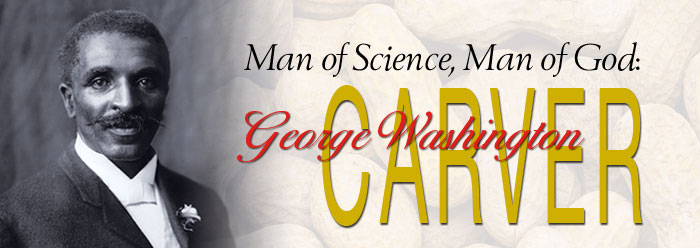
With all this anarchy and hatred that encompasses BLM it is good to review the life of a man of color and true Christian character. That man is George Washington Carver.
‘Who: George Washington Carver What: Father of Modern Agriculture When: 1864 or 1865 – January 5, 1943 Where: Diamond Grove, Missouri
Probably no other scientist has had to face as many social barriers as George Washington Carver, the black American botanist noted for revolutionizing agriculture in the southern United States. He was born towards the end of the Civil War to a slave family on the farm of Moses Carver. As an infant, he and his mother and sister were kidnapped by Kentucky night raiders.
It’s unclear what happened to his mother and sister, but George was rescued and returned to the Carvers, who raised him and his brother James. He grew up in a deeply segregated world, and very few black schools were available in the South. But his desire for learning prompted him to persevere, and he earned his diploma from Minneapolis High School in Minneapolis, Kansas.
Entering college was even more difficult, but he was eventually accepted at Simpson College in Indianola, Iowa, to study art. In 1891, he transferred to Iowa State Agriculture College in Ames (now Iowa State University) to study botany, where he was the first black student and later the first black faculty member. While there, he adopted the middle name “Washington” to distinguish himself from another George Carver. He received his undergraduate degree in 1894 and his masters in 1896, and became a nationally recognized botanist for his work in plant pathology and mycology. After receiving his masters, he joined Booker T. Washington at the Tuskegee Normal and Industrial Institute (later Tuskegee University) in Alabama to teach former slaves how to farm for self-sufficiency.
Carver revolutionized agricultural science with his cultivation of soil-enriching crops, such as peanuts and soybeans, to revive earth that had been depleted of nutrients from cotton farming. He discovered over 100 uses for the sweet potato and 300 uses for the peanut, including beverages, cosmetics, dyes and paints, medicines, and food products. He conducted numerous research projects that also contributed to medicine and other fields, and used his influence to champion the relief of racial tensions.
He was offered many honors and substantial wealth from patents, but Carver chose not to patent his discoveries: “One reason I never patent my products is that if I did it would take so much time, I would get nothing else done. But mainly I don’t want my discoveries to benefit specific favored persons.”1
Frugal in finance and humble in character, Carver was undoubtedly a deeply devoted Christian. He attributed inspiration of his work to God,2 and his studies of nature convinced him of the existence and benevolence of the Creator: “Never since have I been without this consciousness of the Creator speaking to me….The out of doors has been to me more and more a great cathedral in which God could be continuously spoken to and heard from.”3
Carver died January 5, 1943 of complications from injuries he incurred in a bad fall. His life savings of 60,000 dollars was donated to the museum and foundation bearing his name. The epitaph on his grave on the Tuskegee University campus summarizes the life and character of this former slave, man of science, and man of God: “He could have added fortune to fame, but caring for neither, he found happiness and honor in being helpful to the world.”’ https://www.icr.org/article/science-man-god-george-washington-carver
References
Carver Quotes. Posted on the George Washington Carver National Monument website at www.nps.gov/gwca.
Carver is quoted as saying, “I never have to grope for methods. The method is revealed at the moment I am inspired to create something new. Without God to draw aside the curtain I would be helpless.” Federer, W. J. 1994. America’s God and Country Encyclopedia of Quotations. Coppell, TX: FAME Publishing, 96.
Ibid, 97.
* Ms. Dao is Assistant Editor.
Cite this article: Dao, C. 2008. Man of Science, Man of God: George Washington Carver. Act & Facts. 37 (12): 8.
‘The U.S. Roman Catholic Church used a special and unprecedented exemption from federal rules to amass at least $1.4 billion in taxpayer-backed coronavirus aid, with many millions going to dioceses that have paid huge settlements or sought bankruptcy protection because of clergy sexual abuse cover-ups.
Then there is ‘Willow Creek Community Church and Harvest Bible Chapel—two churches rocked by recent scandals—have received millions in COVID relief funds.
According to a list released by the Small Business Administration (SBA), Willow Creek received between $5-$10 million as part of the Paycheck Protection Program (PPP). Harvest Bible Chapel received at least $2.5 million from PPP.
It’s always sad to come to the ending of a good story. But, as with life, there must be an end. So, here we have the last chapter of the God called negro preacher, John Jasper, 1812-1901. It can safely be said ‘There will never be another John Jasper”! To God be the Glory! Great things He hath done!
‘I NEVER heard Jasper preach a sermon on heaven, nor did I ever hear of his doing so. So far as my observation goes, sermons on heaven have failed to edify the thoughtful–sometimes proving distinctly disappointing. It was not to Jasper’s taste to argue on heaven as a doctrine. With him it was as if he were camping outside of a beautiful city, knowing much of its history and inhabitants, and in joyous expectation of soon moving into it. The immediate things of the kingdom chiefly occupied his attention; but when his sermons took him into the neighbourhood of heaven, he took fire at once and the glory of the celestial city lit his face and cheered his soul. This chapter deals only with one of his sermons which, while not on heaven, reveals his heart-belief in it, and its vital effect upon his character.
Imagine a Sunday afternoon at his church–a fair, inspiring day. His house was thronged to overflowing. It was the funeral of two persons– William Ellyson and Mary Barnes. The text is forgotten, but the sermon is vividly recalled.
From the start Jasper showed a burden and a boldness that promised rich things for his people. At the beginning he betrayed some hesitation–unusual for him. “Lemme say,” he said, “a word about dis William Ellersin. I say it de fust an’ git it orf mer min’. William Ellersin was no good man–he didn’t say he wus; he didn’t try to be good, an’ de tell me he die as he live, ‘out Gord an’ ‘out hope in de worl’. It’s a bad tale to tell on ‘im, but he fix de story hissef. As de tree falls dar mus it lay. Ef you wants folks who live wrong to be preached and sung to glory, don’ bring ’em to Jasper. Gord comfut de monur and warn de onruly.
“But, my bruthrin,” he brightened as he spoke, “Mary Barnes wus difrunt. She wer wash’d in de blood of de Lam’ and walk’d in white; her r’ligion was of Gord. Yer could trust Mary anywhar; nuvr cotch ‘er in dem playhouses ner friskin’ in dem dances; she wan’ no street-walk’r trapsin’ roun’ at night. She love de house of de Lord; her feet clung to de straight and narrer path; I know’d her. I seen her at de prarmeetin’–seed her at de supper–seed her at de preachin’, an’ seed her tendin’ de sick an’ helpin’ de mounin’ sinn’rs. Our Sister Mary, good-bye. Yer race is run, but yer crown is shure.”
From this Jasper shot quite apart. He was full of fire, humour gleamed in his eye, and freedom was the bread of his soul. By degrees he approached the realm of death, and he went as an invader. A note of defiant challenge rang in his voice and almost blazed on his lips. He escorted the Christian to the court of death, and demanded of the monster king to exhibit his power to hurt. It was wonderful to see how he pictured the high courage of the child of God, marching up to the very face of the king of terrors and demanding that he come forth and do his worst. Death, on the other hand, was subdued, slow of speech, admitted his defeat, and proclaimed his readiness to serve the children of Immanuel. Then he affected to put his mouth to the grave and cried aloud: “Grave! Grave! Er Grave!” he cried as if addressing a real person, “Whar’s yer vict’ry? I hur you got a mighty banner down dar, an’ you turrurizes ev’rybody wat comes long dis way. Bring out your armies an’ furl fo’th your bann’rs of vict’ry. Show your han’ an’ let ’em see wat you kin do.” Then he made the grave reply: “Ain’t got no vict’ry now; had vict’ry, but King Jesus pars’d through dis country an’ tord my banners down. He says His peopl’ shan’t be troubled no mo’ forev’r; an’ He tell me ter op’n de gates an’ let ‘um pass on dar way to glory.”
“Oh, my Gord,” Jasper exclaimed in thrilling voice, “did yer hur dat? My Master Jesus done jerk’d de sting of death, done broke de scept’r of de king of tur’rs, an’ He dun gone inter de grave an’ rob it uv its victorous banners, an’ fix’d nice an’ smooth for His people ter pass through. Mo’ en dat, He has writ a song, a shoutin’ anthim for us to sing when we go thur, passin’ suns an’ stars, an’ singin’ dat song, ‘Thanks be onter Gord–be onter Gord who give us de vict’ry thru de Lord Jesus Christ.'” Too well I know that I do scant justice to the greatness of Jasper by this outline of his transcendent eloquence. The whole scene, distinct in every detail, was before the audience, and his responsive hearers were stirred into uncontrollable excitement.
“My bruthrin,” Jasper resumed very soberly, “I oft’n ax myself how I’d behave merself ef I was ter git to heav’n. I tell you I would tremble fo’ de consequinces. Eben now when I gits er glimpse–jist a peep into de palis of de King, it farly runs me ravin’ ‘stracted. What will I do ef I gits thar? I ‘spec I’ll make er fool of myself, ’cause I ain’t got de pritty ways an’ nice manners my ole Mars’ Sam Hargrove used to have, but ef I git thar they ain’t goin’ to put me out. Mars’ Sam’ll speak fur me an’ tell ’em to teach me how to do. I sometimes thinks if I’s ‘lowed to go free–I ‘specs to be free dar, I tell you, b’leve I’ll jest do de town–walkin’ an’ runnin’ all roun’ to see de home which Jesus dun built for His people.
“Fust of all, I’d go down an’ see de river of life. I lov’s to go down to de ole muddy Jemes–mighty red an’ muddy, but it goes ‘long so gran’ an’ quiet like ’twas ‘tendin’ to ‘ business–but dat ain’t nothin’ to the river which flows by de throne. I longs fer its chrystal waves, an’ de trees on de banks, an’ de all mann’rs of fruits. Dis old head of mine oft’n gits hot with fever, aches all night an’ rolls on de piller, an’ I has many times desired to cool it in that blessed stream as it kisses de banks of dat upper Canaan. Bl’ssed be de Lord! De thought of seein’ dat river, drinkin’ its water an’ restin’ un’r dose trees–” Then suddenly Jasper began to intone a chorus in a most affecting way, no part of which I can recall except the last line: “Oh, what mus’ it be to be thar?” “Aft’r dat,” Jasper continued with quickened note, I’d turn out an’ view de beauties of de city–de home of my Father. I’d stroll up dem abenuse whar de children of Gord dwell an’ view dar mansions. Father Abraham, I’m sure he got a grate pallis, an’ Moses, what ‘scorted de children of Israel out of bondige thru’ de wilderness an’ to de aidge of de promised lan’, he must be pow’rful set up being sich er man as he is; an’ David, de king dat made pritty songs, I’d like to see ‘is home, an’ Paul, de mighty scholar who got struck down out in de ‘Mascus road, I want to see his mansion, an’ all of ’em. Den I would cut roun’ to de back streets an’ look for de little home whar my Saviour set my mother up to housekeepin’ when she got thar. I ‘spec to know de house by de roses in de yard an’ de vine on de poch.” As Jasper was moving at feeling pace along the path of his thoughts, he stopped and cried: “Look dar; mighty sweet house, ain’t it lovely?” Suddenly he sprang back and began to shout with joyous clapping of hands. “Look dar; see dat on de do; hallelujah, it’s John Jasper. Said He was gwine to prepar a place for me; dar it is. Too good for a po’ sinner like me, but He built it for me, a turn-key job, an’ mine forev’r.” Instantly he was singing his mellow chorus ending as before with: “Oh, what mus’ it be to be thar!”
From that scene, he moved off to see the angelic host. There were the white plains of the heavenly Canaan–a vast army of angels with their bands of music, their different ranks and grades, their worship before the throne and their pealing shouts as they broke around the throne of God. The charm of the scene was irresistible; it lifted everybody to a sight of heaven, and it was all real to Jasper. He seemed entranced. As the picture began to fade up rose his inimitable chorus, closing as always: “Oh, what mus’ it be to be thar!”
Then there was a long wait. But for the subdued and unworldly air of the old preacher–full seventy years old then–the delay would have dissolved the spell. “An’ now, frenz,” he said, still panting and seeking to be calm, “ef yer’ll ‘scuse me, I’ll take er trip to de throne an’ see de King in ‘is roy’l garmints.” It was an event to study him at this point. His earnestness and reverence passed all speech, and grew as he went. The light from the throne dazzled him from afar. There was the great white throne–there, the elders bowing in adoring wonder–there, the archangels waiting in silence for the commands of the King–there the King in His resplendent glory–there in hosts innumerable were the ransomed. In point of vivid description it surpassed all I had heard or read. By this time the old negro orator seemed glorified. Earth could hardly hold him. He sprang about the platform with a boy’s alertness; he was unconsciously waving his handkerchief as if greeting a conqueror; his face was streaming with tears; he was bowing before the Redeemer; he was clapping his hands, laughing, shouting and wiping the blinding tears out of his eyes. It was a moment of transport and unmatched wonder to every one, and I felt as if it could never cease, when suddenly in a new note he broke into his chorus, ending with the soul-melting words: “Oh, what mus’ it be to be thar!”
It was a climax of climaxes. I supposed nothing else could follow. We had been up so often and so high we could not be carried up again. But there stood Jasper, fully seeing the situation.
He had seen it in advance and was ready. “My bruthrin,” said he as if in apology, “I dun fergot somethin’. I got ter tek anuth’r trip. I ain’t visit’d de ransum of de Lord. I can’t slight dem. I knows heap ov ’em, an’ I’m boun’ to see ’em.” In a moment he had us out on the celestial plains with the saints in line. There they were–countless and glorious! We walked the whole line and had a sort of universal handshake in which no note of time was taken. “Here’s Brer Abul, de fust man whar got here; here’s Brer Enoch whar took er stroll and straggled inter glory; here’s ole Ligie, whar had er carriage sent fur ‘im an’ comed a nigher way to de city.” Thus he went on greeting patriarchs, prophets, apostles, martyrs, his brethren and loved ones gone before until suddenly he sprang back and raised a shout that fairly shook the roof. “Here she is; I know’d sh’d git here; why, Mary Barnes, you got home, did yer?” A great handshake he gave her and for a moment it looked as if the newly-glorified Mary Barnes was the centre of Jasper’s thoughts; but, as if by magic, things again changed and he was singing at the top of his voice the chorus which died away amid the shrieks and shouts of his crowd with his plaintive note: “Oh, what mus’ it be to be thar!”
Jasper dropped exhausted into a chair and some chief singer of the old-time sort, in noble scorn of all choirs, struck that wondrous old song, “When Death Shall Shake My Frame,” and in a moment the great building throbbed and trembled with the mighty old melody. It was sung only as Jasper’s race can sing, and especially as only Jasper’s emotional and impassioned church could sing it. This was Jasper’s greatest sermon. In length it was not short of an hour and a half–maybe it was longer than that. He lifted things far above all thought of time, and not one sign of impatience was seen. The above sketch is all unworthy of the man or the sermon. As for the venerable old orator himself he was in his loftiest mood–free in soul, alert as a boy, his imagination rioting, his action far outwent his words, and his pictures of celestial scenes glowed with unworldly lustre. He was in heaven that day, and took us around in his excursion wagon, and turning on the lights showed us the City of the Glorified.
What is reported here very dimly hints at what he made us see. Not a few of Richmond’s most thoughtful people, though some of them laid no claim to piety, were present and not one of them escaped the profound spiritual eloquence of this simple-hearted old soldier of the cross.
Valiant, heroic old man! He stood in his place and was not afraid. He gave his message in no uncertain words–scourged error wherever it exposed its front stood sentinel over the word of God and was never caught sleeping at his post.
When his work ended, he was ready to go up and see his Master face to face.
The stern old orator, brave as a lion, rich in humour, grim, and a dreamer whose dreams were full of heaven, has uttered his last message and gone within the veil to see the wonders of the unseen. If the grapes of Eschol were so luscious to him here, “Oh, what must it be for him to be there.”‘ https://docsouth.unc.edu/church/hatcher/hatcher.html







 whatyareckon